Wands · Six
Six of Wands
Being seen for something you have actually done
The Six of Wands shows an achievement being recognised by others. Their response can strengthen your confidence in the work you have done. Enjoying that recognition is part of the experience. Afterwards, you will still need to decide what you want from the work beyond another round of applause.
- Recognition
- Achievement
- Confidence
- Visibility
16 min read
In this guide
The result has witnesses
The message is encouraging. Your work has been chosen, and someone names the contribution you made. You may have known its value privately for some time before that acknowledgement arrived. The Six of Wands describes achievement that becomes visible to others. It is the difference between privately knowing you have improved and receiving a response that places that improvement in a shared world.
The Six of Wands often concerns being recognised for a result. You may receive a promotion, or a group may ask you to represent it because they trust your work. A positive response can strengthen your confidence. The occasion need not be large to matter: being taken seriously by people whose judgement you respect may mean more than attracting a much wider but less personal audience.
There is permission here to enjoy what has gone well. You can acknowledge the achievement before cataloguing its flaws. Advantages you had still deserve recognition, but neither they nor the existence of more skilled people erase what you did. Acknowledging a result accurately is different from declaring yourself superior. Let the positive fact have enough space to become part of your experience.
At the same time, recognition is a relationship with a particular audience and standard. People are responding to something they can see: a performance, a result, a role, a useful contribution. Their response matters, but it does not contain your entire life. A public success can coexist with private uncertainty, unfinished learning, and needs the audience knows nothing about.
As an outcome, the Six can invite you to make your work visible enough to be evaluated. You may need to present the result or submit an application. In another situation, documenting your contribution can help you ask for credit that has been overlooked. The card cannot promise a favourable response. It asks whether you are giving a real contribution a fair opportunity to be recognised.
Recognition can change what people expect from you. An invitation may be welcome, while another request assumes you can keep repeating a demanding achievement. Decide what you want to accept before those expectations become commitments. Success can give you more choices, including the choice to use your time differently. You do not have to turn every positive response into a larger obligation.
A rider welcomed by a group carrying staffs
A rider wearing a laurel wreath sits on a white horse, holding a staff decorated with another wreath. Other figures and staffs surround the rider. The image clearly gives one person prominence, but it does not show them alone. Recognition happens within a group, with witnesses who help establish what the moment means.
The horse raises the central figure above the people on foot. That elevation makes the rider visible and introduces a difference of position. Read symbolically, public success changes the relationship between a person and their surroundings. They may be able to lead, represent, or influence, while also becoming more exposed to expectation and judgement.
The wreath on the staff makes achievement portable and legible. It can be seen from a distance. This is how symbols of success often work: a title, award, published result, or formal acknowledgement compresses a complicated history into something others can recognise quickly. The symbol has value, but the labour behind it remains more extensive than the sign.
The faces and intentions of the surrounding people are not fully available to us. They should not be turned into a story of universal admiration or hidden envy. The visible scene is enough: a person is being seen within a collective setting. The quality of that relationship will depend on what happens before and after the procession.
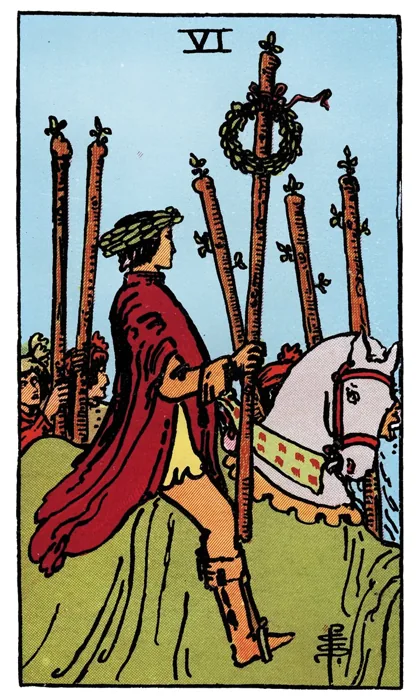
The raised wreath turns a result into something a group can recognise. Awards and titles can serve this function, but they are summaries. Remember the specific work they acknowledge and the contributions their simplicity may leave out.
The rider occupies a more visible position without existing apart from others. Recognition can create influence and responsibility. Notice how credit, attention, and opportunity are distributed around the person who appears at the centre.
Confidence that has something to stand on
The Six of Wands can describe the relief of receiving evidence that your effort reaches people. You see a practised skill work in a real situation, perhaps through a decision that helps others. Their response shows that the contribution has been understood. Confidence becomes less dependent on self-persuasion because there is an event you can point to. Let that evidence update an old assumption that you are incapable or invisible.
Receiving praise can still feel uncomfortable. You may worry that accepting it invites envy, raises expectations, or conceals how much you struggled. A simple acknowledgement is often enough. You can thank someone and allow their response to belong to them without immediately correcting it into a less generous account of yourself.
Success may also bring the fear of being exposed next time. The standard has become visible, and you wonder whether you can repeat it. Separate the particular achievement from the demand for permanent excellence. One good result establishes that something went well under certain conditions; it does not require you to become incapable of error.
Notice if your mood depends heavily on other people's response. Praise may lift you for a while, leaving silence unusually difficult to bear. Someone else's success may then feel like a judgement on your own. Wanting recognition is understandable. It helps to also have reasons you value the work privately and people whose considered feedback remains useful between public results.
As a person, the Six may describe someone confident in a recognised role. Look at how they behave with that visibility. Do they acknowledge others' contributions and remain willing to learn from them? Their achievements may help them lead generously, but you need to observe the person to know whether they do. The title alone cannot establish it.
The person and the public image cannot do the same job
Recognition creates a simplified image. You become the successful applicant, the talented colleague, the person who knows what to do. This image can open doors, but it cannot contain all the uncertainty and contradiction of being alive. The deeper task is to use the role without disappearing into it.
A public identity becomes restrictive when every action must protect the impression of competence. You stop asking questions, avoid work where you might be a beginner, or choose the familiar achievement over the more meaningful risk. The Six asks whether success is giving you more freedom to participate or making you responsible for maintaining an increasingly fragile display.
There is also a collective dimension to victory. The person most visible may represent a team, a community, or the work of people whose names are not mentioned. Accurate pride includes those relationships. Sharing credit does not erase individual effort; it places that effort in the real conditions that allowed it to matter.
The desire to be seen is not merely vanity. People need their work, care, and presence to register somewhere. Chronic invisibility can distort a relationship or workplace just as surely as excessive attention. The useful distinction is between recognition that acknowledges a contribution and recognition used as the only available proof that you deserve a place.
The card's deeper freedom lies in accepting a good response without becoming owned by it. Enjoying the wreath and learning from the achievement need not prevent you from choosing a different direction later. The audience may prefer another version of you. Their preference is information to consider, not a permanent contract governing what you are allowed to become.
Make the contribution visible and the credit accurate
At work, the Six of Wands may concern a positive review or a project attracting attention. Make a clear account of what you achieved, explaining your contribution and how it affected the result. This is useful when seeking recognition or discussing a promotion. Specific evidence gives others a fair basis for assessment, without requiring you to exaggerate or assume they already know how much work was involved.
If your work has been overlooked, consider how it becomes visible. Useful records, a concise update, a portfolio, or a direct conversation about responsibility can make a difference. The aim is to represent the work accurately. You do not need to turn every task into a performance, but important contributions should not depend on someone noticing them by accident.
When a team succeeds, recognise the different forms of labour involved. The person presenting may not be the person who solved the hardest problem, maintained the process, or prevented a quiet failure. Naming those contributions strengthens trust. It also improves the organisation's understanding of what it actually needs to repeat the result.
A new title or responsibility may follow recognition. Examine the terms instead of accepting the symbolic reward as sufficient. Does the role come with authority, time, support, and compensation appropriate to its demands? Being praised for capability can become a convenient way to assign more work without changing the conditions in which it is done.
For creative work, favourable reception can be both nourishing and distracting. You discover what reaches people, then feel pressure to reproduce it. Learn from the response without making popularity the sole measure of the next piece. A practice needs room for experiments that may initially be less recognisable to the audience that liked the previous work.
The professional shadow is protecting status at the expense of learning. You may avoid admitting uncertainty because people expect expertise. A credible leader can distinguish what they know from what needs investigation. Recognition is most useful when it gives you the authority to ask better questions, not when it makes questions feel forbidden.
To admire someone is also to see the ordinary person
In relationships, the Six of Wands can concern the pleasure of being openly appreciated. A partner notices effort you thought had gone unseen, or speaks about your shared life in a way that makes you feel valued. Such moments can interrupt a habit of taking each other for granted. Celebrating together gives that appreciation a place in the relationship.
Public affection and private care should support one another. A relationship can look admired from outside while leaving important needs unattended. Conversely, a private bond may be strong without much public display. The card asks what recognition means to the people involved, rather than treating visibility itself as evidence of intimacy.
One person's success can alter the balance of time, attention, or social standing. A partner may feel proud and unsettled at once. Make room for that complexity without immediately calling it jealousy or ingratitude. The practical changes may need discussion even when the achievement is welcome: travel, workload, privacy, and how shared responsibilities will be handled.
If you feel overlooked, name the contribution or experience you want acknowledged. A specific request gives the other person something they can understand. Repeatedly staging a test in the hope that they will spontaneously notice can turn a legitimate need into a cycle of disappointment neither person knows how to resolve.
For someone single, confidence and visibility may make participation easier. Let yourself be seen in settings where you enjoy contributing. At the same time, distinguish being admired from being known. Attention can be flattering while revealing little about whether another person is curious about your ordinary life, respects your boundaries, or wants the same kind of connection.
Friendship also needs room for uneven seasons of recognition. You can celebrate someone else's achievement without reducing your own life to a comparison. If you feel left behind, examine what you want for yourself rather than making their success responsible for the discomfort. A good friendship can hold celebration and honest vulnerability together.
Let the reward improve the life behind the image
Recognition may accompany a material reward, but the two are not interchangeable. Praise does not establish payment, and an impressive title does not explain the terms of a role. Clarify what is actually being offered. The card can prompt a conversation about value while the practical decision rests on the agreement itself.
A visible success can create pressure to spend as though your circumstances have permanently changed. You may want the celebration, wardrobe, home, or generosity that seems to fit the new role. Enjoy the achievement at a scale your resources support. The image of success should not quietly consume the benefit that made the success useful.
If money has improved, consider what you wanted the improvement to provide. More security, time, choice, or support for others may matter more than a public sign of advancement. A reward becomes meaningful when it changes lived conditions, rather than only changing how the life looks from a distance.
Where resources remain tight despite recognition, allow the discrepancy to be named. You can be proud of the achievement and still need better practical terms. Gratitude should not require pretending that symbolic appreciation has met every material need. The next useful step may be to negotiate, plan, or seek a setting where the contribution is valued more fully.
Come down from the platform
Being visible takes energy even when the attention is welcome. You may answer messages, perform confidence, attend events, or feel continually observed. Build some private time around public moments. The person receiving recognition still needs ordinary conditions in which no one expects a polished account of how things are going.
After an achievement, excitement can be followed by tiredness or flatness. The effort and anticipation have ended, and the day becomes ordinary again. This does not make the success false. Let the result settle without immediately creating another demanding goal to restore the intensity of being on the way to something.
The card cannot assess health or capacity. Its practical question is whether recognition is leading you to accept more than you want to carry. Notice the difference between a welcome opportunity and an obligation accepted because declining might disappoint the audience. Visibility should leave room for a sustainable life behind it.
Receive the praise, then decide what it asks of you
Acknowledge what went well in specific terms. Describe your contribution alongside the help that made it possible. Then consider which opportunities the result has opened. This gives pride a factual base. It also makes the achievement easier to remember later, when a difficult day might otherwise persuade you that nothing you have done has ever worked.
Make room for recognition where it is missing. Show the work, ask for feedback, or have a direct conversation about credit. Choose an audience capable of evaluating the contribution you actually want to make. Constantly seeking approval from a setting that values something else can distort the work without satisfying the original need.
The shadow is turning every experience into a referendum on status. You may feel compelled to appear more capable than everyone else, relying on admiration or a winning argument to preserve that position. This can make collaboration brittle and ordinary learning humiliating. Remember that being useful and being central are not always the same position.
After the celebration, choose your next commitment deliberately. You can accept a role, negotiate its terms, or decline an invitation that does not fit. Let success become a resource for living more freely. It need not become a machine that converts every good result into a larger demand for another one.
When recognition is difficult to receive or live without
Reversed, the Six of Wands may describe overlooked effort, disappointing reception, discomfort with visibility, or an achievement that does not feel as satisfying as expected. Begin with the actual result. Was the work unsuccessful by its relevant standard, or did it succeed without receiving the response you hoped would accompany it? Those experiences require different kinds of attention.
If recognition is absent, examine the audience and the route by which the work reached it. The contribution may be poorly communicated, evaluated by unsuitable criteria, or genuinely in need of development. Useful feedback is specific enough to distinguish these possibilities. Silence alone cannot tell you which explanation is correct.
The reversal can also describe dependence on praise. A good response briefly reassures you, then loses its effect and must be renewed. Instead of seeking a larger audience immediately, consider what the approval is being asked to settle. No amount of public attention can permanently answer every private question about belonging, adequacy, or direction.
Sometimes success arrives in a form you do not want. The admired role is restrictive, the attention feels intrusive, or the achievement belongs to values you have begun to question. You can revise your relationship with it. Accepting that a reward does not fit is different from denying the effort or opportunity that brought you there.
A constructive reversal can move recognition into a smaller, more trustworthy setting. You share with people who understand the work, celebrate privately, or choose a meaningful contribution over a visible position. The question is not whether public success is good or bad. It is whether the form of recognition helps you remain connected to what you actually value.
What does the recognition make possible?
These combinations examine achievement, visibility, and the responsibilities that may follow. They do not guarantee selection, promotion, popularity, or another person's admiration.

With The Magician
With the Magician, skill becomes visible through an effective demonstration. Show what the work can do and explain your contribution clearly. Confidence is strongest when the presentation rests on real ability, while still allowing room to acknowledge what remains experimental or unfinished.
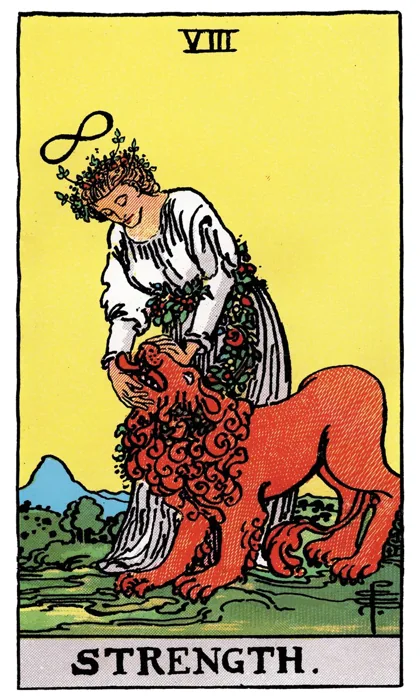
With Strength
With Strength, recognition can be held without becoming defensive or domineering. Use the confidence of a good result to stay open, generous, and steady. You do not have to answer every challenge to your status in order to retain the value of the achievement.

With The Sun
With the Sun, enjoyment and public acknowledgement reinforce one another. Let the good result be felt and shared. Notice the difference between celebrating a real achievement and demanding that the moment remove every uncertainty about the future.
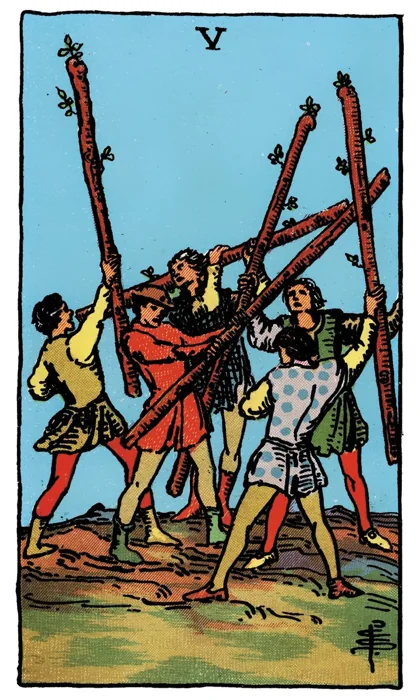
With Five of Wands
With the Five of Wands, recognition may emerge from competition or become a source of rivalry. Keep the criteria and credit clear. A successful result should help the work progress, rather than leave everyone trapped in a continuing struggle over who deserves the centre.
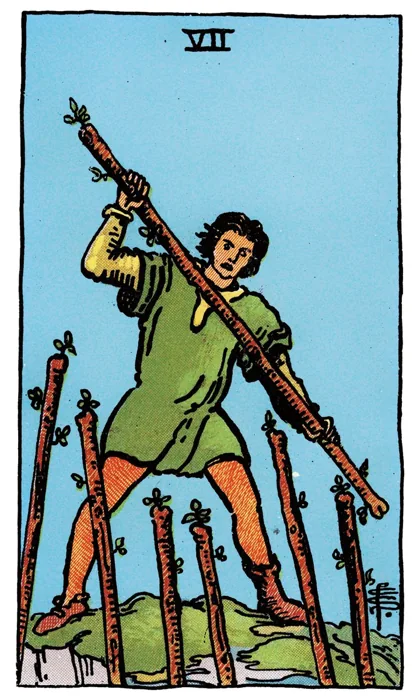
With Seven of Wands
With the Seven of Wands, a visible position may bring challenges or additional demands. Decide what needs defending and which expectations you can decline. Recognition does not create an obligation to prove yourself again to every person who questions the result.
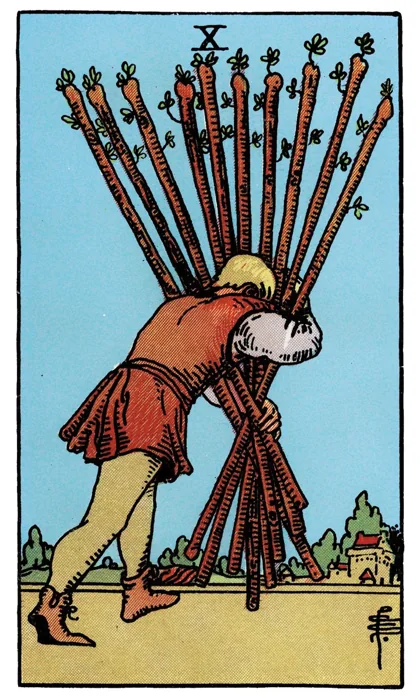
With Ten of Wands
With the Ten of Wands, success may be generating more responsibility than support. Review the new workload and negotiate its terms. Being known as capable should not mean becoming the automatic owner of every task that others would prefer not to carry.
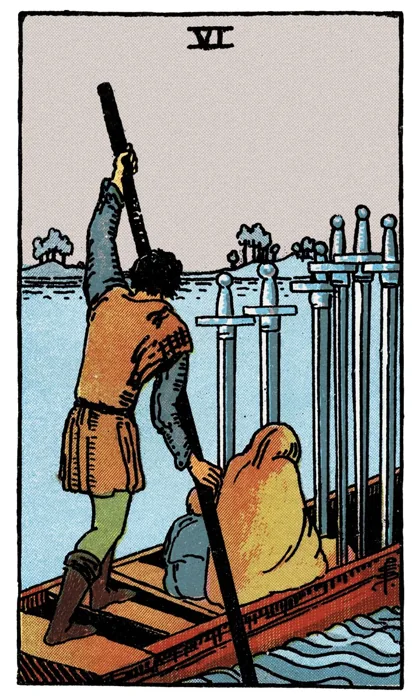
With Six of Swords
With the Six of Swords, you may be moving beyond a setting where recognition has become too costly or too limited. Carry the knowledge of your contribution with you. Leaving does not require waiting until everyone agrees on the value of what you did.

With Nine of Pentacles
With the Nine of Pentacles, visible achievement rests on cultivated independence and skill. Enjoy the result in ways that improve your actual life. The reward can include privacy, choice, and a comfortable rhythm, rather than only a more impressive public image.
The returning victor and the person taking the bow
The returning victor gives the card its obvious public shape. A group gathers around a result and places one person in the foreground. The image becomes more interesting when we ask what the representative owes the people around them, and what those people may fail to see about the person they are celebrating.
The performer taking a bow offers another echo. The work has reached an audience, and there is a moment to receive its response. The performer need not explain every rehearsal or flaw before accepting the applause. Afterwards, the costume comes off, and a whole ordinary person remains beyond the role.
The colleague whose quiet contribution is finally named provides a less theatrical version. Recognition can restore proportion to a group, making previously invisible labour part of its account of success. The ceremony may be only a sentence in a meeting, yet its effect can be substantial when the acknowledgement is accurate and followed by fair treatment.
Give one achievement an accurate account
Choose a result you tend either to minimise or to use as proof of your entire worth. Describe what happened, what you contributed, who helped, and what the result does and does not establish. Let the account be generous and precise. Share it with an appropriate person if the work needs to become more visible.
Consider what receiving the recognition would mean for you. You may want to celebrate or use the achievement to discuss fairer terms. If praise has brought an extra obligation, you can decide whether to accept it. Let the benefit support the life and work you want to continue, with room to step away from public attention afterward.
Artwork & interpretation
Waite describes a laurelled rider accompanied by people on foot, associating the scene with triumph, encouraging news, and fulfilled expectation. This original guide explores recognition, shared credit, confidence, public roles, and the practical consequences of being seen. A. E. Waite, The Pictorial Key to the Tarot: Six of Wands.
The symbolic associations and examples offer ways to read a situation. They do not establish another person’s thoughts or fix an outcome.
Let recognition confirm a real contribution without asking it to define your whole worth.
Use the cards in a spread →