Major arcana · 8
Strength
Staying steady when a feeling is powerful
Strength stays in contact with a powerful feeling long enough to choose a response. Anger can be expressed clearly, and desire can leave room for another person's answer. Patience has limits, too; courage includes recognising when you have reached them.
- Courage
- Restraint
- Vitality
- Patience
15 min read
In this guide
The feeling is strong; you still have a choice
You can feel the sharp reply arrive before you have decided whether to say it. Your breathing may change as attention narrows around the offending sentence. It can repeat in your mind while you prepare to answer. Strength belongs to the small but consequential space in which the feeling remains real and the response is still yours to choose.
In a reading, Strength can concern a demanding situation that takes patience to handle well. You may need to be firm with someone while preserving their dignity, or stay with discomfort long enough to understand it. Courage here includes giving yourself time to choose a response when the immediate impulse is strong. That steadiness allows more than one course of action to remain available.
Its force is intimate. The Chariot directs an undertaking toward an objective; Strength concerns the relationship with the energy that makes action possible. Anger and fear influence what feels possible, just as desire and pride shape what you want. Bodily appetite has a place in these decisions too. They are part of the material from which choices are made.
The card can be encouraging when you face a difficult conversation, a demanding practice, or a situation that cannot be solved in one impressive intervention. You may have more capacity to remain engaged than the first wave of discomfort suggests. That capacity is not unlimited, and it does not require you to remain available to every demand.
Strength is easily flattened into an instruction to endure. A fuller reading asks what the endurance serves and whether you have a genuine choice. It may take courage to ask for help or hold a boundary someone resists. Leaving an unsafe situation can require it too. The card's patience belongs to a person, not to an obligation to absorb whatever other people produce.
Hands close to the lion’s mouth
A figure in a white dress bends toward a lion, with both hands near its jaws. There is no weapon or heavy armour. The encounter is close enough that force remains a real presence in the image, yet the human posture does not resemble a frantic struggle. This is a relationship with power at close range.
The lion has a substantial body, a thick mane, and an open mouth. It has not become a harmless ornament. One useful reading keeps that vitality intact: instinct can be approached and given a workable place without pretending it has disappeared. An appetite loses some of its confusion when it can be acknowledged plainly.
Flowers circle the figure's head and run around the waist, while a horizontal figure of eight appears above. These details give the image a softness that would be easy to mistake for fragility if the lion were absent. Their juxtaposition makes the card interesting. Delicacy and effective influence occupy the same scene.
The landscape remains open and relatively calm. The whole world has not narrowed into an arena for the confrontation. Read symbolically, this can suggest a response that preserves perspective: the feeling is important, the encounter matters, and there is still a wider life beyond this moment.
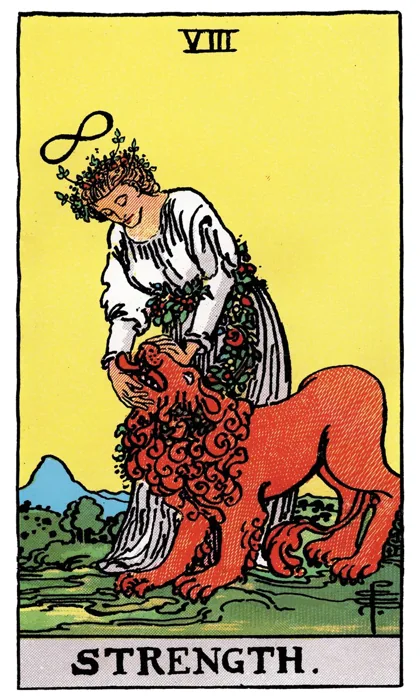
The hands meet the jaws without a visible weapon. The image supports a reading of attentive restraint, in which power is neither denied nor answered automatically with more force.
Flowers and the flowing symbol sit above an encounter with a strong animal. Their delicacy does not remove the danger; it changes the manner in which the figure meets it.
Making room for the parts that are inconvenient
Internally, Strength can describe growing tolerance for your own reactions. You are able to recognise envy, anger, longing, or fear without immediately turning the feeling into a verdict on your character. This matters because a feeling you cannot admit is harder to examine. It may continue influencing your choices while remaining unavailable for honest discussion.
Anger is an especially useful example. It may point toward a crossed boundary, exhaustion, frustration, wounded pride, or several things at once. Acknowledging it does not settle which explanation applies. It gives you a chance to distinguish the information in the feeling from the action it initially proposes.
As a person, Strength can describe someone whose confidence allows them to stay present during an uncomfortable exchange. They listen without immediately trying to stop another person's feelings or turn the conversation into a contest. That calm is useful when they remain responsive. Appearing composed while withdrawing from every difficult subject leaves the other person handling the emotional work alone.
The shadow personality is permanently patient in public and privately close to breaking. Others praise their steadiness without seeing how little room they have to express resentment or need. The role can become a trap: any ordinary anger threatens an identity built around being the person who always understands.
Mature Strength permits a wider emotional life. Irritation can coexist with generosity, just as tiredness can coexist with ability. You may still feel affection for someone while being unwilling to continue an argument. These combinations do not invalidate each other. They become easier to handle when you can speak accurately about them before pressure has made the only available expression a sudden explosion.
Power becomes more useful when it can listen
Strength asks what happens when a powerful impulse encounters a larger field of concern. You want to win the argument, but you also care about the relationship. You want immediate relief, but you recognise what the chosen action would cost tomorrow. Restraint emerges from holding more of the situation in view.
This is different from treating desire as an enemy. Appetite gives life movement and texture. Anger can help you recognise that something matters enough to defend. Ambition can sustain difficult practice. The deeper task is to give these energies a form in which they can participate without claiming authority over every other consideration.
There is a kind of courage in remaining affected. Contempt can keep disappointment at a distance. Refusing to try avoids some embarrassment, and dismissing tenderness as foolish may protect you from feeling exposed. Strength can suggest staying open enough for the encounter to matter while developing the judgement to choose where that openness belongs.
Compassion gains precision when it includes limits. Understanding why someone behaves destructively may change how you regard them; it does not require unlimited access to your life. A boundary can preserve the possibility of care by ending an arrangement in which resentment and injury have become the main forms of contact.
The card's deeper confidence is less concerned with appearing invulnerable than with knowing you can respond. You may need time, company, preparation, or a second attempt. Those supports do not cancel the courage. They are often how courage becomes available in an actual human life.
Warmth that does not require submission
In relationships, Strength can describe tenderness, trust, patience, and the willingness to stay present during difficult feelings. Someone can hear that you are upset without immediately defending every action, or make room for a vulnerable admission without turning it into a judgement. Such moments give intimacy somewhere reliable to develop.
The card also carries vitality and desire. Attraction need not be mild to be considerate. Strong wanting becomes more trustworthy when the other person's response remains fully part of the encounter. You can express interest clearly while hearing hesitation, a different preference, or a refusal without treating it as an injury that must be repaired.
During conflict, Strength may favour slowing the exchange enough that each person can choose their words. This is useful when both people are willing to return to the issue. A pause that names when the conversation will resume differs from disappearing until the other person abandons the concern. Calm should help the discussion become possible.
The difficult pattern is one person becoming responsible for regulating the whole relationship. They anticipate the other person's reaction and soften their words accordingly. Managing the atmosphere takes so much attention that their own needs rarely reach the conversation. What looks like harmony may depend on unequal freedom to express frustration. Patience is no substitute for shared responsibility.
This card should never be used to tell someone that sufficient love will tame an abusive partner. Another person's harmful behaviour is not a test of your spiritual strength or tenderness. Care for yourself may require distance, outside support, or a firm end to contact. The symbol offers no guarantee that staying will change them.
In a healthy bond, gentleness can coexist with directness. You can say that you care and that a particular behaviour must stop. You can apologise without erasing your own concern. The relationship becomes more resilient when neither person's dignity depends on the other person surrendering every difficult truth.
The patience to stay with a difficult middle
At work, Strength often belongs to the phase after an exciting beginning and before a satisfying result. The technique still feels awkward despite repeated feedback. Improvements arrive slowly, so there may be long stretches with little visible change to encourage you. The useful capacity is to remain in contact with the task without turning frustration into a verdict that you cannot do it.
Strength can be useful when a working relationship has become difficult. Take enough time to understand the friction before deciding how to respond. Someone may need an expectation explained more clearly. If they understand it and continue to disrupt the work, a firm limit may be appropriate. Professionalism includes addressing the problem; it does not require you to endure the same behaviour indefinitely.
Leadership benefits from the ability to receive an inconvenient report without punishing the person who brings it. If your reaction is frightening, people may learn to protect your mood instead of giving you accurate information. A composed response makes room for the problem to be addressed before it grows around the silence.
Creative work requires tolerance for a gap between taste and execution. You can see what is weak before you know how to improve it. Strength supports staying with that discomfort long enough to learn. It does not require calling every draft good; it allows criticism to become specific enough that the next attempt has somewhere to go.
The shadow is glorifying endurance in an arrangement that is badly designed. A workload may exceed the available time, a role may lack support, or repeated mistreatment may be presented as a character-building challenge. Naming the structural problem can be a more useful contribution than proving once again that you can survive it.
A sustainable practice leaves room for uneven days. You may need a smaller task, more preparation, or assistance with a particular part. Consistency becomes possible through these adjustments. Demanding the same output from yourself under every condition can make the whole undertaking more brittle than a flexible standard would.
Enough pause to make a deliberate choice
In material life, Strength can invite a pause before acting on an urge. You might be considering a purchase because you want relief, or making a promise because reassurance feels urgent. Give yourself a little time to ask what you expect the action to change. Then consider whether that effect would last beyond the satisfaction of the first moment.
Restraint works better when it has a humane purpose. A financial plan that treats every pleasure as weakness may produce its own cycle of deprivation and rebellion. Decide what you are protecting and what enjoyment can reasonably remain. The aim is a relationship with resources you can sustain, rather than an impressive display of self-denial.
Shared households bring many small tests of patience. Different habits become irritating through repetition, and a minor issue may begin carrying a larger history of feeling overlooked. Address the recurring arrangement while the conversation can still remain specific. Endlessly swallowing annoyance often allows it to accumulate a force the original issue did not possess.
There can also be strength in resisting pressure to give more than you can comfortably offer. A request may be sympathetic and still exceed your capacity. State what is possible without making a promise that depends on future resentment. A modest contribution freely given can be more reliable than an expansive one made under emotional pressure.
You do not have to prove that it does not hurt
Strength can prompt you to examine how effort feels in this particular situation. Learning something unfamiliar may involve discomfort that becomes easier with practice. Discomfort can also mean a demand is excessive or a pace needs to change. The card cannot tell you which is happening. Pay attention to the circumstances and your actual experience before deciding whether continuing at the same pace makes sense.
When you are hungry or exhausted, it can become harder to choose how you respond. Pain and overwhelming surroundings can have a similar effect. Before a difficult conversation, consider whether eating or moving somewhere quieter would help. Sometimes another time would work better for everyone. Making these adjustments gives you more capacity for the interaction and is a reasonable part of preparing for it.
No card can diagnose a condition or tell you that illness reflects insufficient will. If something about your health concerns you, seek appropriate care. Symbolically, Strength asks whether you can meet your limits without contempt and use the support available instead of spending additional energy proving that you should not need it.
Find the smallest response that is strong enough
As advice, Strength favours a proportionate response. You may not need to win the entire argument or explain every reason for your boundary. One clear sentence, delivered at a moment when you can stand behind it, can do more than a long speech produced under pressure. Leave room for the response to arrive.
Name the feeling privately before deciding what it means publicly. I am angry is an accurate starting point; they intended to humiliate me is an interpretation that may need checking. This distinction allows the feeling to remain legitimate while keeping your account of another person's motives open to evidence.
The shadow is superiority disguised as composure. You become the calm one, and the other person's visible emotion is used to discredit whatever they are saying. A controlled manner does not automatically make an account fair. Listen to the substance, including when the speaker cannot present it with your preferred level of polish.
The opposite shadow is indulging every impulse in the name of authenticity. A feeling may be sincere while the action it suggests is careless. Choosing how to express it does not make you false. It gives your other values a chance to participate in what happens next.
When the effort of containing everything becomes too much
Reversed, Strength can describe depleted capacity, shame about strong feelings, brittle self-control, or the sense that an impulse has more authority than you want it to have. Begin by examining the conditions. Someone operating under prolonged strain may need support and fewer demands before another technique for managing their reaction will be useful.
One expression is harshness toward yourself. You feel anxious, jealous, angry, or needy, then add a second layer of punishment for having the feeling at all. This can make it harder to look honestly at what prompted it. Try describing the experience without immediately turning it into an accusation against your character.
Another expression is suppressed resentment breaking through. Repeatedly agreeing to accommodate someone has left your own concern unspoken. Eventually, a small event draws a response charged with frustration from those earlier occasions. The immediate response may need repair. The pattern that preceded it also deserves attention, otherwise the same pressure is likely to accumulate again.
The reversal can point to a fear of your own influence. You avoid stating a preference because any firmness feels cruel, or you leave decisions to others because wanting something openly feels dangerous. A measured request can help you discover that having a position is different from forcing someone to accept it.
A constructive reversal permits softness where endurance has become compulsory. You stop insisting that you are fine, accept help, or leave a role that requires continuous emotional containment. This may initially feel like losing strength because the familiar performance has ended. It can also make room for a more sustainable use of your actual capacity.
What needs courage, and what needs a limit?
These pairings explore how patience and vitality meet different situations. They are interpretive possibilities; the actual circumstances determine whether staying, speaking, resting, or leaving is the useful response.

With The Chariot
With the Chariot, determination needs an inner pace that can sustain it. You may be able to keep moving without fighting every uncomfortable feeling. Review whether the method permits rest and adjustment, especially if the goal has become a test of personal worth.

With Temperance
With Temperance, change may depend on steady adjustment rather than one decisive exertion. Small, repeatable actions allow you to notice what helps. Patience becomes practical when it is accompanied by observation, rather than by a vague hope that time alone will solve the difficulty.

With The Devil
With the Devil, a powerful attachment deserves an honest account. Shame may make the pattern harder to examine, while indulgence may conceal its cost. Look for support, clear limits, and one manageable change that increases your freedom within the actual circumstances.

With The Moon
With the Moon, a strong feeling may arrive before its meaning is clear. Give yourself time to distinguish what happened from what you fear it means. Steadiness can help you gather information without either dismissing the unease or treating it as proof.
With Five of Wands
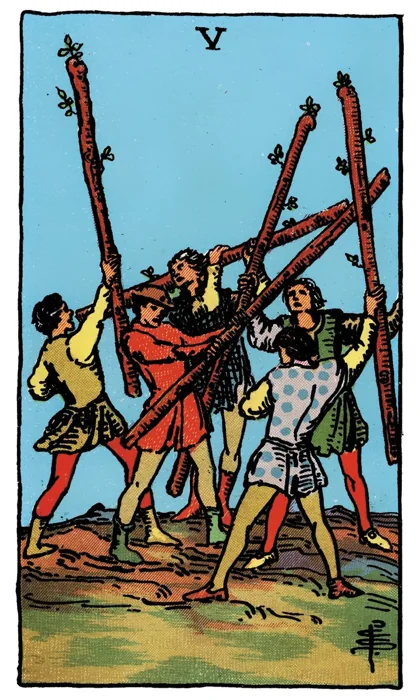
With the Five of Wands, disagreement needs room without becoming a struggle for dominance. Some friction may improve the work if people can remain specific. A clear limit on humiliation or personal attack protects the possibility of a useful exchange.
With Nine of Wands
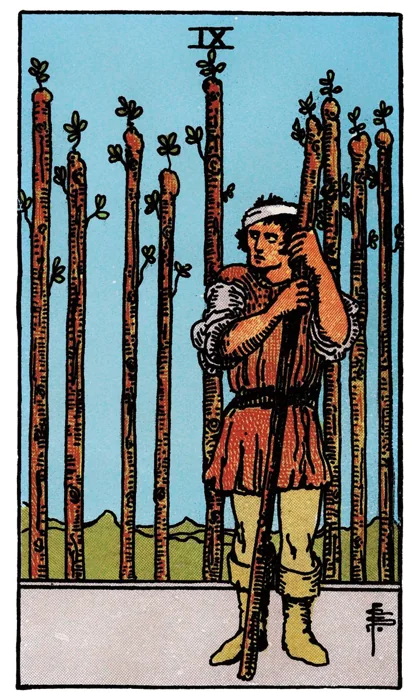
With the Nine of Wands, endurance may be approaching its practical limit. Past difficulty can make vigilance understandable, but another demand is not automatically yours to absorb. Decide what protection, assistance, or pause would make continued participation a real choice.
With Four of Swords
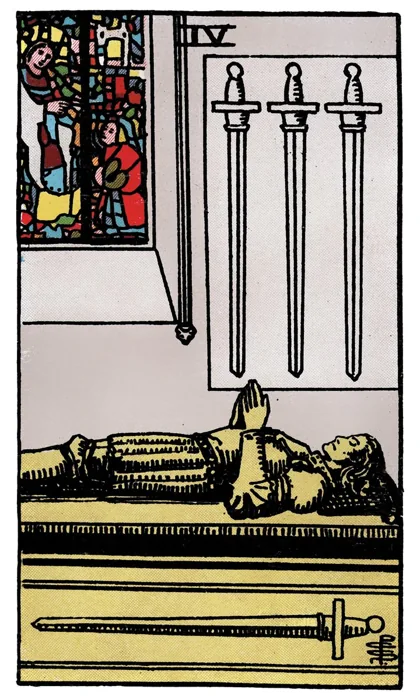
With the Four of Swords, restraint may take the form of stopping an exchange or task before exhaustion decides your response. A pause works best with a clear purpose and, where others are involved, enough communication that they understand what will happen next.

With King of Cups
With the King of Cups, emotional steadiness supports a difficult conversation. Understanding the feeling and choosing the response can happen together. Watch for composure becoming distance: the person listening still needs to be affected enough to let the information matter.
The patient hand and the untamed animal
The encounter with an animal gives Strength an important limit as a metaphor: another living being cannot be understood entirely through your intention. Attention must respond to signals, distance, and conditions. A forceful wish to be gentle is not enough; the manner of approach has to answer what is actually happening.
A craftsperson meets this kind of strength in a recurring mistake. The material resists what they are trying to do, and frustration grows with each attempt. Staying curious helps them examine why it happens and adjust their method. They may need patience for several attempts, but each can teach them something. Blaming the material or themselves makes that observation harder.
The courageous witness belongs to this card as well: someone who can stay present to a difficult truth without rushing to explain it away. Their steadiness makes room for another person's experience. It remains a gift when they can also recognise the point at which they need support of their own.
Give a strong feeling a clear sentence
Choose one feeling you have been handling through either suppression or immediate reaction. Describe the event that prompted it, the impulse it creates, and what you want the eventual response to protect. Keep those three things separate long enough to see whether they point in the same direction.
Write one sentence you could stand behind when calmer. It might be a request, a boundary, an admission, or a decision to return to the subject later. Strength becomes practical when the feeling is allowed to inform your response without having to perform the entire conversation by itself.
Artwork & interpretation
Waite describes the figure closing the lion’s jaws, the floral garland, and the symbol shared with the Magician. His account is explicitly spiritual. This guide offers an original practical reading of the image through courage, restraint, vitality, and chosen limits. A. E. Waite, The Pictorial Key to the Tarot: Strength, or Fortitude.
The symbolic associations and examples offer ways to read a situation. They do not establish another person’s thoughts or fix an outcome.
Gentleness has substance when it is freely chosen by someone who is also able to say no.
Use the cards in a spread →