Wands · Five
Five of Wands
People trying to act without a shared direction
The Five of Wands shows people struggling to work alongside one another. Different aims may collide, and rivalry can make the exchange noisy. Some friction helps people learn. Notice whether the disagreement is improving the work or simply using up attention that could go into it.
- Friction
- Competition
- Difference
- Coordination
16 min read
In this guide
Everybody is moving; not everybody is moving together
Everyone contributes to the meeting, yet little changes afterward. The messages continue because each person is working from a different understanding of the problem. The Five of Wands captures that situation: plenty of effort is present, but people have not agreed on where to direct it. Before adding another task, the group may need to discover what each person thinks they are trying to achieve.
The Five of Wands often concerns competition or difficulty coordinating people with different priorities. Several participants may be seeking an opportunity only one can receive. In other cases, clearer roles would remove much of the conflict. Examine whether the process helps people contribute to a shared aim or gives them reasons to protect their own territory at everyone else's expense.
Friction can begin when people become honest about differences previously covered by polite agreement. Learning a skill also brings resistance as you discover what you cannot yet do. Look at what changes through the struggle. Better understanding or an improved attempt suggests something useful is happening. If each encounter repeats the same collision with greater intensity, the group may need a different way to work through it.
The Five can also describe a situation with several legitimate needs and no effortless solution. A person trying to meet the deadline may disagree with someone who needs time to check accuracy. Experimenting could help the work too, if the group can agree on where it fits. Treating one concern as the enemy may simplify the argument while weakening the outcome. Coordination begins by understanding what each position is trying to protect.
As a warning, the card asks you to identify the actual stakes. Is this a disagreement about the work, a contest for recognition, or a response to feeling excluded? People often fight over the visible issue while the motivating concern remains unnamed. A minor decision can carry an enormous emotional charge when it stands in for respect or influence.
The card does not establish that others are against you. It points towards a field of competing energies that needs closer observation. Clearer participation or better rules may help. You can also decide which contest is worth your attention and leave one that no longer serves a purpose. More effort is not always the missing ingredient.
A struggle without a single clear opponent
Five figures hold long staffs at different angles. The rods cross and overlap, while the people turn in several directions. Their clothing differs, and no single figure clearly commands the scene. The image gives us a tangle of activity without showing an agreed objective, a referee, or a visible result.
The figures have raised their staffs, though the picture leaves the nature of the encounter uncertain. They could be practising together or engaged in a serious fight. What looks similar from a distance can feel very different to a participant. You would need to know whether there are agreed rules and whether someone can stop taking part to judge the scene more closely.
The varied postures suggest that each person is responding locally to what is immediately in front of them. No one appears to be standing back to coordinate the whole. This is a useful visual metaphor for reactive group dynamics: every move makes sense to its maker, while the combined result becomes increasingly difficult for anyone to manage.
The open ground leaves room around the figures, yet their attention is crowded into the crossing staffs. Read symbolically, that space suggests an overlooked possibility: the group may need to change its arrangement, not simply become better at the current struggle. A different process can reveal options that argument alone keeps obscured.
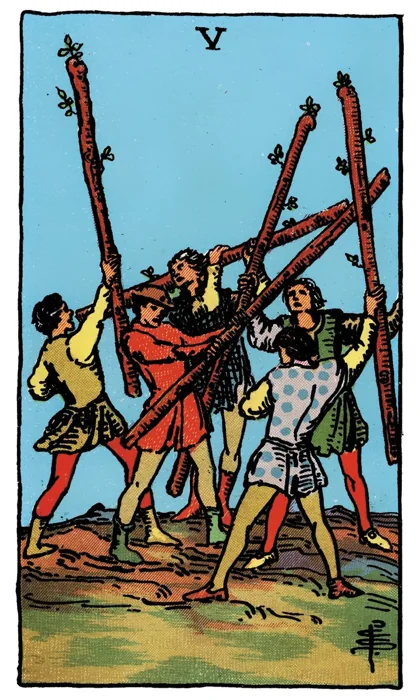
The overlapping rods make individual actions interfere with one another. Before asking everyone to try harder, examine whether the goals, roles, and sequence are clear. Energy can be plentiful while coordination remains scarce.
The different clothing and stances give each figure a separate presence. Difference can enrich a shared task when people can explain what they see. Without a way to listen, it becomes a contest over whose movement sets the terms.
When every part of you has a competing proposal
Internally, the Five of Wands can feel like agitation. Several impulses demand attention at once: work harder, rest, prove yourself, protect your time, take the opportunity, avoid the risk. Each may have a reasonable concern behind it. The difficulty is that they are all trying to direct the same body and the same limited day.
It can help to give the competing positions separate sentences. Describe the ambition and the need for rest separately. Then consider what the impulse to protect yourself fears might happen if you acted. This is a way of clarifying the decision, not a requirement to make every wish compatible. Some priorities will need a turn rather than simultaneous fulfilment.
Comparison may be especially active. Someone else’s progress becomes a challenge you did not choose, and your own work begins to feel inadequate merely because it is different. Competition can motivate improvement, but it becomes distorting when the measure keeps changing according to whoever happens to attract your attention that day.
You may enjoy testing your ability against capable people. A demanding game or lively discussion offers a challenge you would miss if everyone agreed too easily. Consider how you behave when someone else is stronger than you. Respect for the other participants and willingness to accept the limits of the encounter help keep the competition enjoyable for them as well.
As a description of another person, the Five can suggest a competitive or provocative manner. Avoid reducing them to a fixed character judgement. Notice the context: do they sharpen ideas, seek attention, defend against embarrassment, or respond to an environment that rewards interruption? The observed pattern matters more than an assumed motive.
Difference needs a form it can work inside
A group without disagreement may be genuinely aligned, or it may be suppressing the information that would make alignment honest. The Five of Wands challenges the idea that harmony is always evidence of health. Sometimes the first productive development is that people become willing to say what has not been working.
Disagreement can reveal an assumption that needs examining or establish a limit others have overlooked. It can also become a familiar source of excitement that changes very little. Ask what this particular conflict is helping anyone understand or decide. If the same exchange repeats without consequences, consider whether it has become a way to appear engaged while avoiding responsibility for the work.
Rules can make freedom more usable. Turn-taking, clear criteria, agreed roles, and a way to end the discussion do not necessarily suppress energy. They can prevent the loudest or most persistent person from defining the whole field. A fair structure gives different contributions a chance to be heard and tested.
The card also invites humility about perspective. You may be defending a real value while missing the value someone else is defending. Understanding their concern does not require agreeing with their proposal. It gives you a better account of the problem, which may make a solution possible that neither side could see while treating the other as an obstacle.
Some conflicts persist despite careful communication. Unequal authority can limit what is open to discussion, and incompatible aims may leave little basis for compromise. Repeated disrespect also matters. Consider whether another exchange has a reasonable chance of changing the situation, or whether the arrangement keeps benefiting someone else at the expense of your effort.
Find the decision hidden inside the debate
At work, the Five of Wands often describes competing priorities, unclear ownership, lively disagreement, or rivalry for a role or resource. Begin by identifying the decision that actually needs to be made. A meeting can drift into a contest of general opinions when no one has stated what must be resolved by the end.
Ask which criteria matter. A discussion about cost can go nowhere if other participants are judging the idea by speed or quality. What appears to be disagreement about the proposal may concern the standard used to assess it. Make that difference explicit. The conversation becomes more useful when people can examine the trade-off instead of repeating their preferred conclusion.
Role confusion can create unnecessary friction. Two people may both believe they own a decision; another task may belong to everyone in theory and no one in practice. Clarifying authority and handovers is often less dramatic than resolving a personality conflict, but more effective. Do not make individual temperament explain a problem the structure keeps producing.
In creative work, a demanding discussion can improve the piece if participants understand what kind of feedback is wanted. An early concept, a technical problem, and a nearly finished work need different responses. Unbounded criticism often generates heat without direction. Ask reviewers to connect their concerns to the purpose and the next practical revision.
If you are in a genuine competition, learn the rules and decide whether the prize matters to you. Prepare well, but do not let the contest become the sole measure of your ability. Selection can reflect fit, timing, and limited places as well as quality. A result gives information within a particular setting, not a complete account of your future.
A workplace can come to treat constant competition as evidence of high standards. People may withhold information to preserve an advantage or object mainly to remain visible. Consider what the organisation actually rewards. Recognising shared learning and dependable work can reduce the pressure to compete for attention, including for people whose quiet contributions substantially improve the result.
Are you arguing about the issue you actually care about?
In relationships, the Five of Wands can describe bickering, mismatched preferences, competing demands, or a lively connection that has become difficult to coordinate. The first question is scale. A disagreement about plans may need a practical compromise; a recurring struggle over whose needs count requires a more fundamental conversation.
Small disputes often carry larger concerns. An argument about dishes may concern fairness rather than the dishes themselves. A late reply can raise doubts about reliability, while a restaurant choice might be the latest occasion when someone felt they had no say. Name the underlying experience without pretending to know the other person’s intention. This gives them something concrete to respond to and reduces the temptation to litigate every minor detail.
Some couples enjoy debate and playful competition. That can be a form of connection when both people enjoy it and can stop without penalty. Notice whether the exchange leaves you enlivened or diminished. A person should not have to accept humiliation as the price of being considered fun, resilient, or intellectually equal.
When several people are involved, outside expectations may crowd the relationship. Families, friends, work, and practical obligations all want a say in the same limited time. The couple may need to agree on a shared position before answering each demand separately. Otherwise each person can become the representative of a different pressure, and the argument appears to be between them.
For someone single, the card can describe comparison, competition for attention, or dating that feels like an audition. Ask whether the setting helps you meet people or mainly makes you monitor your ranking. Attraction does not become more meaningful because it is contested. You are allowed to seek a connection in which interest can be expressed without a permanent tournament.
If conflict includes intimidation or repeated disregard for a clear boundary, do not interpret it as ordinary friction that must be endured for growth. The card cannot assess the situation for you. Its useful question is whether participation remains voluntary and respectful, and what practical support or distance would make your choices clearer.
Scarcity can turn preferences into a contest
Money questions may involve competing expenses, disagreement about priorities, or several people seeking the same limited resource. Put the actual amounts and obligations in view. Without a shared picture, each person may defend their preferred use of money as though the others are failing to recognise something obvious.
In a household, discuss how choices will be made before the next purchase becomes a referendum on respect. A budget can express priorities, but the process matters too. People need some clarity about shared costs, personal discretion, and how an unexpected expense will be handled. Repeated improvisation can keep an avoidable argument permanently alive.
Competitive spending is another possible theme. You may feel pulled to match the trips, possessions, or lifestyle of people around you. Ask whose contest you have entered and whether its terms fit your resources or values. A purchase made to restore rank can lose its satisfaction as soon as the comparison changes.
For business or negotiation, examine the practical terms and the criteria by which offers are being compared. The card is not evidence that a dispute will end in your favour. It can help you notice where rivalry is making a decision more expensive, less clear, or more emotionally charged than the underlying transaction requires.
Do not carry every argument beyond the room
Conflict can continue internally long after the conversation ends. You may keep rehearsing better replies while imagining what the other person intended, as though another round could begin at any moment. The Five of Wands can be a prompt to notice how much attention the struggle is receiving. Decide whether there is an action to take; if not, give yourself permission to leave the rehearsal unfinished.
A change of pace may help you return with a clearer response. Step away from the thread, move your body in a way that suits you, or write down the actual point you want to make. The aim is not to eliminate strong feeling. It is to stop urgency from choosing the words before you have decided what you want them to accomplish.
The card does not diagnose stress or any health condition. As a reflective image, it asks which forms of challenge are enlivening and which repeatedly deplete you. You may need more constructive engagement in one area and less avoidable friction in another. The answer is not necessarily to become either more combative or more agreeable everywhere.
Change the terms of the exchange
Before joining the next round, state the purpose. What are you trying to decide, protect, improve, or understand? If the other participants have a different purpose, that difference needs attention first. A discussion aimed at making a decision will struggle if someone is seeking reassurance or treating the exchange as a chance to win.
Make a process that fits the stakes. Allow each person to explain their concern, agree on relevant facts, and identify who will make the final decision. A small amount of structure can preserve the energy of disagreement while reducing the struggle for airtime and the repetition of points already understood.
The shadow is enjoying the contest more than the result. You may keep an argument alive because it provides stimulation, identity, or a sense of importance. Ask what would happen if the issue were resolved. If the answer includes an uncomfortable loss of attention or purpose, the struggle may be serving something beyond its stated subject.
Choose your participation deliberately. Some disagreements deserve a firm response; others are optional invitations to spend your energy. Leaving a pointless contest is not the same as conceding that every claim made inside it is correct. Your attention is a resource, and not every raised staff needs one raised in reply.
The noise may be fading, or moving underground
Reversed, the Five of Wands can describe a reduction in conflict, a withdrawal from competition, or a group finding a more workable arrangement. Look for the practical change behind the quieter atmosphere. Have roles become clearer, has a concern been heard, or have people simply stopped expecting that speaking will make any difference?
Suppressed disagreement is one possible expression. Everyone appears agreeable while resentment travels through private conversations, delays, or passive resistance. The absence of open argument may conceal a lack of permission to differ. A useful response is to make concerns discussable without immediately punishing the person who introduces them.
The reversal can also bring the contest inward. You avoid disagreeing with others but continue arguing with yourself, trying to satisfy incompatible expectations. Identify which standards you have accepted and whether they belong to the life you actually want. Internal conflict may need a decision about priorities, not another attempt to become capable of everything.
Sometimes disengagement is constructive. You leave a comparison that has become corrosive, decline a debate with no shared rules, or accept that a particular group is not the right setting for your contribution. This can release energy for a more meaningful challenge. The choice deserves to be assessed by its effect, rather than automatically labelled avoidance.
At the more difficult end, the reversal may indicate a conflict becoming less visible but more entrenched. Do not infer hidden hostility from the card alone. Look at behaviour, agreements, and the available ways to address a concern. The practical question remains whether the situation permits honest participation and whether continued effort can produce a useful change.
What is the struggle trying to resolve?
These pairings help distinguish competition, coordination problems, and differences of value. They do not prove that another person is hostile or establish the outcome of a dispute.
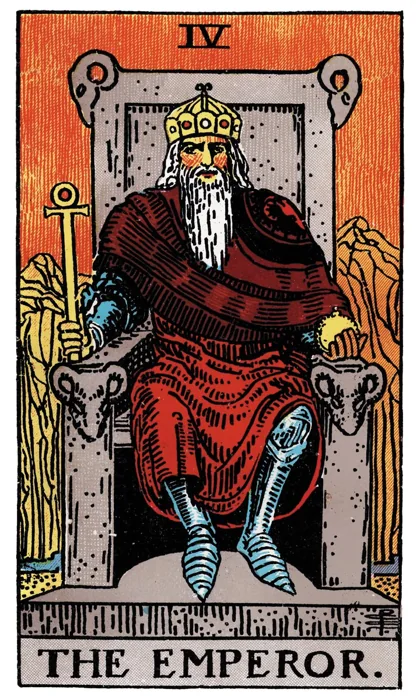
With The Emperor
With the Emperor, disagreement may need clearer authority and rules. Define who decides, what constraints apply, and how concerns can be raised. Structure helps when it makes participation fairer; it becomes part of the problem when it merely protects the loudest or most powerful position.
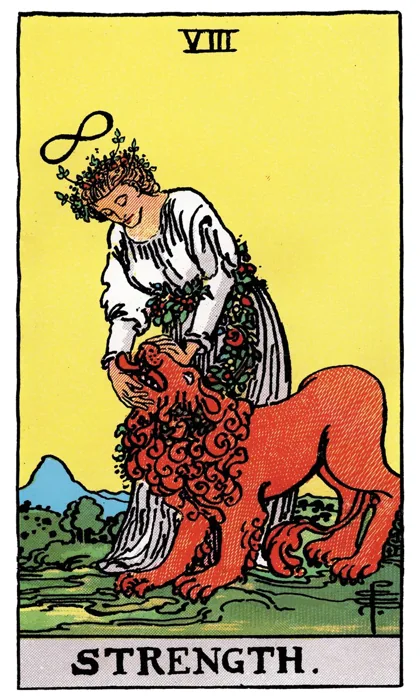
With Strength
With Strength, firmness and restraint can keep a difficult exchange usable. State the boundary without adding humiliation or unnecessary escalation. The goal is to direct the energy towards the issue, while retaining enough composure to hear information that may complicate your first reaction.

With Justice
With Justice, agree on facts, criteria, and a fair process. A disagreement becomes easier to assess when each side knows what standard is being applied. The pairing invites careful evaluation; it does not predict a legal result or establish whose account is correct.
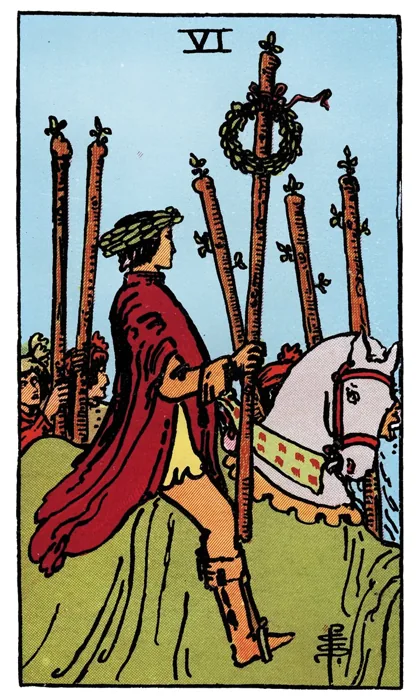
With Six of Wands
With the Six of Wands, competition may centre on recognition. Ask what counts as a meaningful achievement and how credit will be shared. Winning attention can be different from producing the best work, especially when the contest rewards visibility more than contribution.
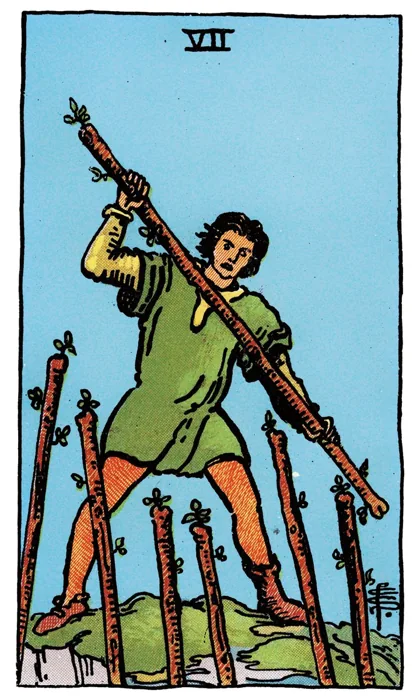
With Seven of Wands
With the Seven of Wands, a general disagreement may require a specific boundary. Identify what you are defending and whether the challenge is relevant to it. You can remain open to useful criticism without treating every objection as an equal claim on your time.
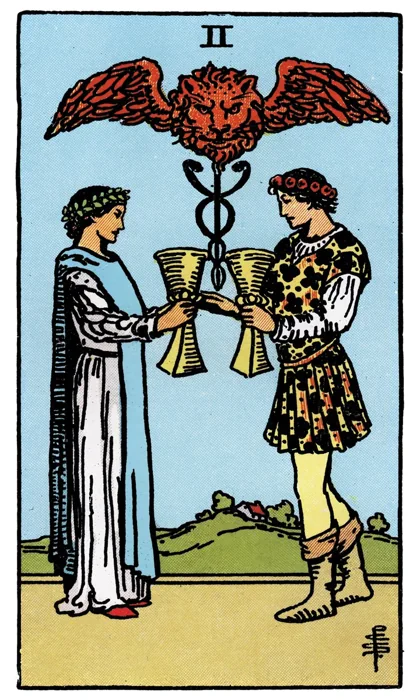
With Two of Cups
With the Two of Cups, mutual respect can help a pair work through differences. Return to the relationship’s shared purpose and make each person’s concern explicit. Agreement need not be immediate, but both people should be able to speak without their basic worth becoming the subject of debate.
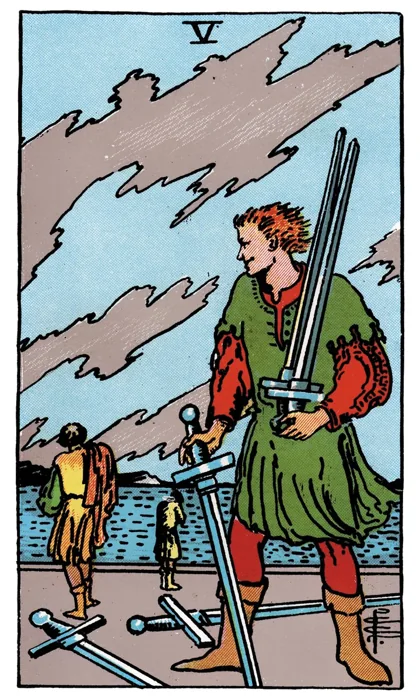
With Five of Swords
With the Five of Swords, examine whether the contest has become more important than the people involved. A technically successful argument may damage the possibility of cooperation. Consider the cost of continuing, the available boundaries, and whether the exchange still has a constructive purpose.
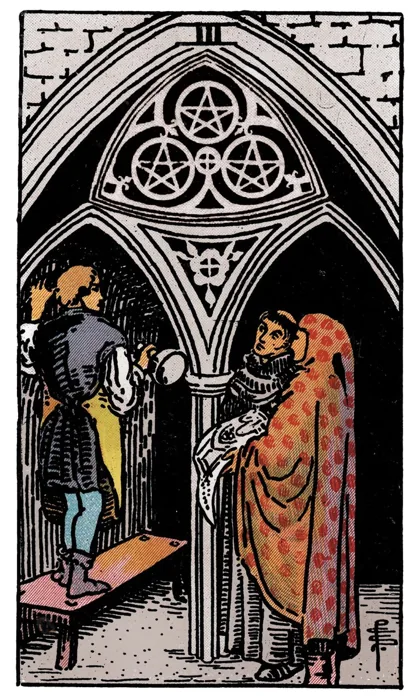
With Three of Pentacles
With the Three of Pentacles, different skills need a shared method. Clarify roles, standards, and handovers so that expertise can contribute without becoming territorial. The friction may be a coordination problem that a better working arrangement can resolve.
Where people learn to work through their differences
The rehearsal room offers a constructive version of the Five. Several people bring different instincts, and the first attempt sounds disorderly. As the group listens and tries again, its members develop a shared understanding of how the piece can work. The noise is useful when it belongs to a process capable of producing greater coordination.
The playing field gives competition a defined boundary. People can test strength and skill because there are rules, a way to stop, and some agreement about what the result means. When those conditions disappear, the same energy can become coercive or pointless. The quality of the contest depends on its frame.
The crowded committee offers the less comfortable echo. Every contribution may contain something true, yet the group cannot act because no one has defined the decision. The missing wisdom may be procedural rather than inspirational: a clear question, a fair hearing, and a point at which discussion becomes a choice.
Name the concern beneath one recurring argument
Choose a disagreement that keeps returning. Write the visible subject in one sentence, then describe what you are actually trying to protect: time, fairness, quality, autonomy, recognition, or something else. Consider what the other person has explicitly said they need, keeping observation separate from guesses about their motive.
Propose one change to the process: clearer roles, a shared criterion, a timed conversation, or a specific decision point. After the exchange, ask what became clearer and what action follows. If nothing changes except the intensity, consider whether the contest needs a firmer boundary or less of your participation.
Artwork & interpretation
Waite describes the figures as engaged in something between sport and strife, connecting the image with competition and struggle. This guide develops an original reading of disagreement, group coordination, comparison, and the conditions that make challenge constructive. A. E. Waite, The Pictorial Key to the Tarot: Five of Wands.
The symbolic associations and examples offer ways to read a situation. They do not establish another person’s thoughts or fix an outcome.
Disagreement can sharpen the work, but only if the people involved can still hear what is being said.
Use the cards in a spread →