Cups · Two
Two of Cups
A connection in which both people get to answer
The Two of Cups begins when an offer receives a response. Interest brings two people together, and each learns something about the other through the exchange. Reciprocity gives that connection room to develop. Both people's preferences need to affect what happens next as they decide how to continue.
- Reciprocity
- Affinity
- Partnership
- Agreement
16 min read
In this guide
Something passes between you, and comes back changed
You say something that matters and the other person responds to the meaning, not merely the words. An offer is met with an offer. A difference is acknowledged without either person disappearing from the conversation. The Two of Cups describes this quality of meeting: a connection becomes real through the participation of both sides.
The Two of Cups concerns an exchange in which each participant can respond freely. Romantic interest is one expression; a friendship or working partnership can have the same quality. A conversation after a disagreement may also restore it. Look at whether both people can offer something and receive a considered response, with room for their separate views within the connection.
People can care for a connection in different ways. One may speak readily about their feelings while another shows attention through practical help. They may also need different amounts of time to respond. Talk about those differences and notice whether both people are trying to understand each other. Recognising more than one way to express care can make reciprocity easier to see and discuss.
The Two is often a beginning of agreement, not proof that every question has been settled. You may recognise compatibility in one area while still learning about daily habits, values, and limits. Let the genuine point of contact matter without asking it to certify the whole future. A promising exchange deserves continued knowledge as well as enjoyment.
If the question concerns reconciliation, the card invites a conversation in which both people can acknowledge what happened and what needs to change. Warmth alone may not be enough. Repair needs people to take responsibility for what happened and agree on a workable change. Following that agreement over time gives each person a reason to trust it.
As an outcome, the Two can suggest that a situation develops through a direct, reciprocal encounter. Make the invitation clear and leave room for an answer. The card cannot establish hidden feelings, guarantee a soulmate, or make another person's consent available through interpretation. Its practical value lies in helping you recognise and cultivate mutual participation where it is actually present.
Two people facing one another with cups in hand
Two figures face one another, each holding a golden cup. One extends a hand towards the other. Above the space between them rises a staff with intertwined serpents, topped by a winged lion's head. Behind the figures, a low green landscape leads towards a small house. The central action remains the exchange at human scale.
Each person has a vessel. The image does not show one drinking while the other supplies everything, nor a single cup into which both people must dissolve. This makes a useful visual starting point for reciprocity: a relationship connects distinct participants. What is shared becomes meaningful because there are two lives capable of offering and receiving.
The cups are held at a similar height, while the figures retain different clothing and postures. Equality here need not mean sameness. Read symbolically, the scene invites attention to whether both people have standing in the exchange, even when their resources, manners, or roles differ. A fair meeting allows those differences to be seen and negotiated.
The elaborate emblem above the cups gives the encounter more weight than an ordinary greeting. We can recognise its symbolic richness without claiming that it proves a supernatural bond. The practical question remains visible below it: what are these two people choosing to offer, and can each respond without being required to surrender their own position?
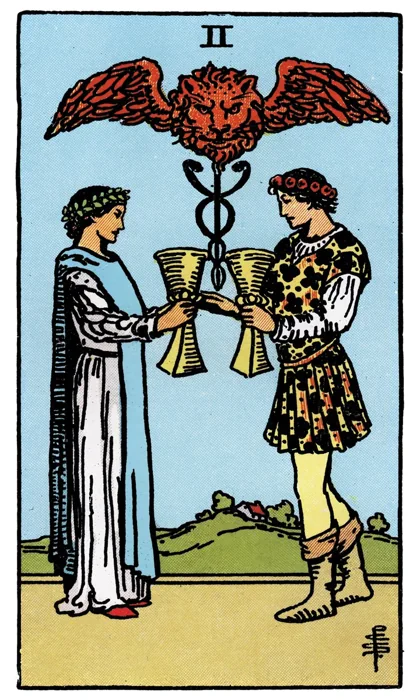
Each participant brings a vessel of their own. A close relationship can include shared feeling while preserving separate needs, preferences, and judgement. The exchange is more meaningful when neither person has to disappear in order for it to continue.
The emblem draws attention to the importance of what passes between the figures. Let that significance invite care and curiosity. It need not become a claim that the connection is destined, permanent, or exempt from ordinary communication.
Being understood without having to become identical
The Two of Cups can feel like relief at being met. You do not have to explain every detail from the beginning, yet you remain curious enough to clarify what is different. This is a useful balance: recognition makes contact easier, while continued attention prevents familiarity from becoming an assumption that you already know everything.
The card may also bring awareness of how you behave when someone matters. Do you become unusually agreeable, offer more than you can sustain, or wait for the other person to set every term? The wish for connection can make your own preferences temporarily harder to hear. A mutual bond needs those preferences to become available.
Receiving a real answer can be vulnerable. Someone may like you while wanting a slower pace or a boundary you had not expected. In a collaboration, appreciation of the work can come with a proposal to use a different method. These responses need not erase the point of contact. They help the relationship become specific enough to live rather than remain a flattering possibility.
The Two can support greater confidence in asking. Instead of guessing what another person might welcome, you make a clear invitation and let them participate in defining the exchange. This reduces the burden of trying to create perfect conditions before any contact occurs. A relationship becomes easier to trust when it can contain questions as well as intuitive understanding.
There is also a private application: bringing different needs within yourself into a more honest conversation. You may want closeness and independence, commitment and room to explore. Naming both can help you make better agreements with others. The aim is not to eliminate every tension before relating, but to stop asking the relationship to solve a conflict you have never acknowledged.
Reciprocity is a practice of noticing the other person
A relationship can feel mutual at its beginning because both people are drawn towards it. Over time, reciprocity requires more than shared enthusiasm. Needs change, contributions differ, and one person may have less capacity during a particular season. The Two of Cups asks whether the connection has ways to notice and respond to those changes.
This is different from keeping a strict account of every gesture. Care cannot always be exchanged in matching units. Yet a refusal to count anything can conceal a persistent imbalance. The useful question is whether both people recognise the contributions being made and can discuss the arrangement without one person's needs being treated as inherently less important.
The card also distinguishes recognition from projection. Someone resembles what you have wanted, and the mind fills in the rest. Actual meeting begins when they can surprise, disappoint, or differ without immediately becoming the wrong person. You learn who they are through the parts that do not fit the role you first imagined.
Agreement gains meaning from the possibility of refusal. If one person cannot say no without punishment, withdrawal, or repeated pressure, the appearance of harmony tells us little about mutual choice. A trustworthy exchange allows each participant to have boundaries. The yes becomes more substantial because it is not the only permitted answer.
The deeper promise of the Two is relationship as a place of increased reality. You become more known and gain a more detailed understanding of another life. This can be pleasurable and demanding. The connection matters because it brings two people into clearer contact, not because it allows them to remain permanently inside an ideal first impression.
Let the bond be built by both people
In love, the Two of Cups can concern attraction that both people are beginning to express. In an established bond, it may suggest a renewed agreement through which each person feels recognised. Observe how interest is returned in everyday behaviour. Shared plans and respect for limits tell you something about reciprocity that intensity alone cannot establish, especially early in a relationship.
Early compatibility deserves pleasure without premature certainty. You may have found an easy conversation or a shared value that matters. Continue learning how the connection behaves under ordinary conditions: changed plans, different preferences, a tired evening, or a small disappointment. A bond becomes more credible as it acquires a life beyond its most flattering encounters.
In an established relationship, the card may invite a return to direct contact. Logistics and assumptions can crowd out the simple question of how each person is experiencing the bond. Make time for a conversation in which neither is only reporting tasks or defending a position. Talk about the parts you enjoy as well as what has become difficult, leaving time for each person to suggest a change.
Repair requires an exchange of responsibility as well as feeling. A sincere apology names the action and its effect; a workable response identifies what would help and what remains uncertain. Forgiveness cannot be demanded as proof of love. The relationship needs room for trust to develop through behaviour, at a pace both people can discuss honestly.
If feelings are unequal, the card is an invitation to seek clarity rather than insist that the symbolism must describe hidden mutuality. Another person's limited response is information. You can honour your own feeling while deciding what kind of contact remains suitable. The worth of your affection does not depend on persuading the other person to return it.
The Two of Cups belongs to friendship as fully as to romance. Being taken seriously across a table can provide a deep sense of recognition. Dependable help over time can express loyalty just as clearly as a declaration. Allow these relationships their own significance, including the room friends can give each other to change and develop.
Shared enthusiasm needs a shared agreement
At work, the Two of Cups can describe a promising collaboration, a good client relationship, a useful mentor exchange, or a conversation that aligns two people around a task. The initial affinity is valuable because it makes communication easier. Use that ease to discuss the practical arrangement while goodwill is available.
Clarify what each person brings and what each expects. Scope, authority, time, payment, ownership, and how changes will be handled are part of the relationship. Avoid treating explicit terms as a sign of distrust. A clear agreement can protect the warmth by reducing the number of important assumptions each person must guess.
Complementary strengths can make a partnership particularly useful. Someone with an ear for tone may work well with a person who sees structure more clearly. Partnerships can also bring together the ability to open doors and the skills needed to develop the work itself. Appreciate the difference without turning it into a rigid identity. People should be able to learn and renegotiate roles instead of being permanently assigned the part they happened to perform well at the beginning.
A one-to-one conversation may resolve a difficulty that has grown vague in group discussion. Meet the person around the actual issue, compare understandings, and identify the next action. The aim is not necessarily to agree on every interpretation. It is to establish enough shared ground for the work to continue clearly.
Where authority differs, mutual respect still matters, but equal warmth does not remove unequal power. A manager, teacher, client, or mentor may have influence that changes how freely the other person can answer. Make boundaries and expectations especially clear. A friendly manner is most trustworthy when the practical arrangement also permits honest disagreement.
A promising conversation does not tell you everything about a potential collaborator. You still need to understand their capacity and whether your working methods fit. Where possible, try a limited piece of work together. You will learn how communication continues after the first meeting and what happens when a difficulty arises, giving you a firmer basis for deciding on a larger commitment.
Make the terms clear enough to preserve goodwill
For shared resources, the Two of Cups asks whether both people understand the agreement. Equal amounts are not always the fairest arrangement, but the basis for contributions should be discussable. Income, time, care, and practical labour may differ. What matters is a shared account that can be revised when circumstances change.
Money exchanged through affection can become difficult when its meaning remains unclear. Is the contribution a gift, a loan, payment, or participation in a shared expense? Name it before resentment has to explain the difference. Clarity gives generosity a better chance to remain generous and makes repayment or ownership less dependent on remembered implications.
In a household, discuss decisions that affect both people rather than assuming closeness produces identical priorities. One may value security, another flexibility or comfort. Understanding the value behind the preference can make a practical compromise possible. The budget becomes a conversation about the shared life, not merely a contest over who gets the next purchase.
The card does not establish that a financial partner is reliable. Review the actual terms and behaviour. A good personal connection can support a practical arrangement, but it should not be asked to replace records, clear ownership, or a workable plan for what happens if the partnership changes.
A good connection makes room for different capacities
Notice how you feel after an encounter. You may be tired from social effort and still feel more understood; you may be stimulated while sensing that you had no room to be yourself. Energy is not a perfect verdict on a relationship, but it can prompt useful questions about pace, expectation, and the kind of participation being asked of you.
Reciprocity includes the ability to have different capacities on different days. A person can care while needing quiet, and a relationship can remain close without constant access. Discuss the forms of contact that work rather than making availability the sole measure of affection. A suitable rhythm gives both people a way to remain present.
The card cannot assess health or make another person responsible for your entire wellbeing. Support is valuable within a wider life. Ask what kind of help the relationship can realistically offer and where other resources are needed. A bond becomes more sustainable when its importance does not require it to perform every possible form of care.
Make an offer that leaves room for an answer
State what you want to discuss or offer in terms the other person can respond to. Avoid asking them to infer the question from a test, a hint, or a carefully staged situation. Directness can be gentle. It gives both people a better chance to understand what is happening and whether they want to participate.
Listen for the answer actually given. You may hear affection with a limit, interest with uncertainty, or agreement on one part of the proposal. Do not force it into a complete yes or no before understanding its shape. A useful relationship can become more specific through negotiation, provided both people remain free to choose.
The shadow is harmony purchased through self-erasure. You become easy to be with by making your needs unavailable, then feel unseen in the relationship you helped create. Begin returning specific preferences to the conversation. Mutuality cannot develop around information the other person is never allowed to encounter.
Another shadow is turning reciprocity into constant proof. Every delay or unequal gesture becomes evidence to assess. Look at patterns and context rather than demanding symmetry in each moment. A good exchange includes generosity, but it also permits a calm conversation when an imbalance has become persistent.
When the terms of a connection need another conversation
Reversed, the Two of Cups may concern an agreement that no longer suits both people. Different expectations can become visible through communication, or one person may be more invested than the other. The card does not automatically predict separation. Identify the actual difficulty, including whether each person has room to express a difference and whether the pace feels workable for both.
Sometimes both people care but keep offering what they would like to receive. One provides advice when the other wants listening; one makes plans when the other needs unstructured time. Name the mismatch without assuming bad intent. A small change in form can make existing care more available, if both people are willing to learn.
At other times, mutuality is being imagined where the behaviour does not support it. You keep making contact and explaining the other person's limited involvement to yourself, preserving hope with little help from them. Seek clarity and decide what you can accept. The reversal is not permission to search for hidden feelings that cancel the practical reality of the exchange.
A relationship may also be too fused for honest disagreement. Difference feels like abandonment, so both people avoid the subjects that would make the bond more real. Work towards clearer preferences and boundaries at a manageable scale. Closeness becomes more durable when it can survive the discovery that two people do not always want the same thing.
A constructive reversal can end or revise an agreement respectfully. You recognise that the connection matters but its present form does not work. A smaller collaboration, different rhythm, or clear departure may preserve more honesty than continuing to perform harmony. The question is what relationship can actually be chosen by both people now.
What allows two people to meet more clearly?
These pairings explore mutuality, agreement, and difference. They do not certify romantic destiny or reveal private feelings that another person has not communicated.

With The Lovers
With the Lovers, affinity may lead towards a choice involving shared values. Discuss what each person is choosing and what the commitment means in practice. Attraction becomes more workable when the future is negotiated rather than silently assumed to look the same to both people.

With Justice
With Justice, a relationship benefits from fair terms and clear responsibility. Examine how decisions, resources, and consequences are shared. Warmth and explicit agreements can support one another, especially when the people involved have different levels of authority or practical power.
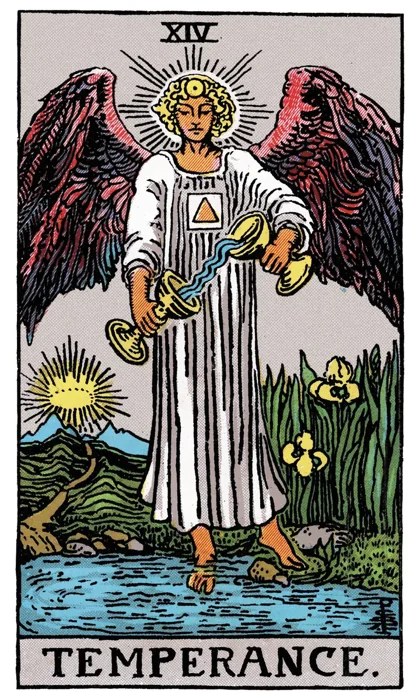
With Temperance
With Temperance, different styles can find a workable rhythm through adjustment. Listen for the need behind each preference and test a practical compromise. Harmony may develop through repeated small changes rather than through discovering that you were naturally identical all along.
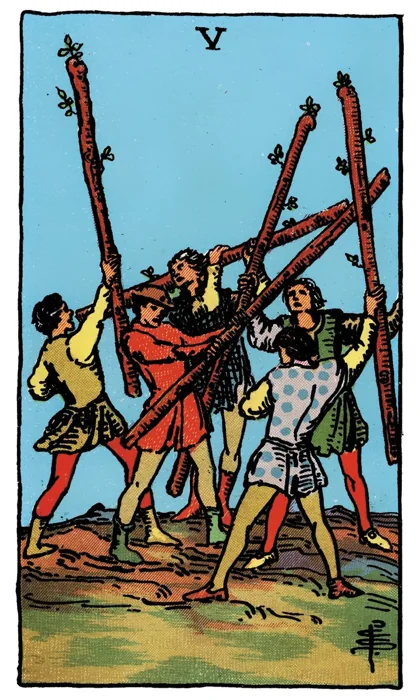
With Five of Wands
With the Five of Wands, disagreement needs a shared purpose and a fair way to be heard. Return to the actual issue and name what each person is protecting. A relationship can remain mutual while its participants argue, provided neither person's standing disappears in the process.

With Knight of Wands
With the Knight of Wands, strong attraction or initiative needs a reciprocal pace. Enjoy the energy while making room for both people to influence the direction. A clear invitation is more useful than assuming that the intensity of one person's desire establishes the other's readiness.
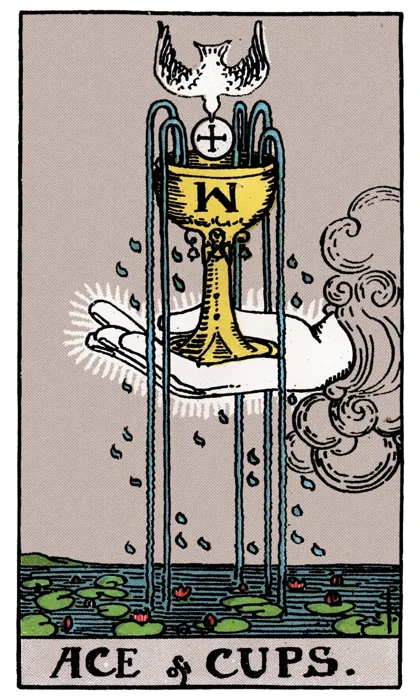
With Ace of Cups
With the Ace of Cups, a new feeling is seeking a shared expression. Offer something at a scale the connection can hold and let the response teach you more. The emotional opening matters without needing to become a complete relationship before either person has had time to learn.
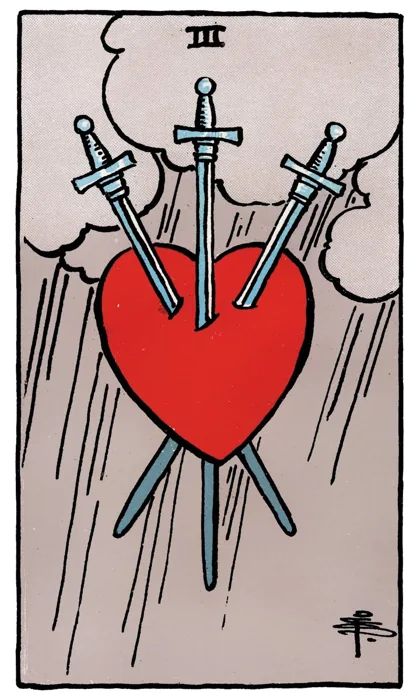
With Three of Swords
With the Three of Swords, a painful difference may need direct acknowledgement. Care does not remove the need to hear what has hurt or what cannot be agreed. Repair, revision, or separation should be considered through the actual conversation rather than decided by the cards alone.
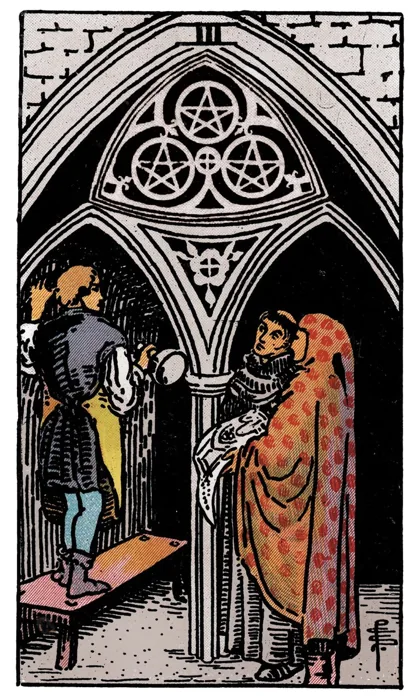
With Three of Pentacles
With the Three of Pentacles, good rapport can support skilled collaboration. Clarify roles, standards, and how decisions will be made. A partnership becomes more durable when mutual appreciation is joined by a practical method that allows each person's contribution to work.
How an exchange develops through both people's responses
The duet gives the Two a form in which separate voices create something shared. Each performer listens while retaining a distinct part. The result depends on timing, attention, and the freedom to respond. If one voice disappears entirely, the piece changes from an exchange into a solo with an audience.
The handshake marks an agreement at a human scale. Its meaning depends on what the participants understand themselves to be promising. The gesture may be warm and sincere while the terms still need language. This makes it a useful reminder that goodwill and clarity are complementary parts of trust.
A conversation that changes both people offers the deeper echo. Neither arrives only to deliver a prepared position; each can be affected by what the other says. They may leave with continued differences, yet a more accurate understanding. The encounter matters because both have been present enough to answer and to listen.
Replace one assumption with a real question
Choose a relationship or collaboration in which you have been guessing at a preference or expectation. State your own position briefly and ask a question the other person can answer honestly. Listen for the actual response, including any limit or uncertainty, before deciding what it means for the whole connection.
Agree on a small next step that both people have helped choose. You may want to change part of a routine or clarify who owns a responsibility. If more discussion is needed, arrange when to return to it. Each person should be able to see how the agreement reflects their contribution while leaving the other person room to make choices too.
Artwork & interpretation
Waite describes a pledge between two figures and associates the card with affection, friendship, affinity, and union. This original guide develops reciprocity, separate agency, clear agreements, and the practical work through which a connection becomes mutual. A. E. Waite, The Pictorial Key to the Tarot: Two of Cups.
The symbolic associations and examples offer ways to read a situation. They do not establish another person’s thoughts or fix an outcome.
Closeness becomes more trustworthy when both people remain free to give a real answer.
Use the cards in a spread →