Cups · Three
Three of Cups
Joy becomes different when someone else is glad with you
The Three of Cups enjoys the company of a circle of friends. Shared pleasure can make belonging feel tangible, especially when care moves between several people. Consider how the group maintains that welcome. There is more room for everyone when its life does not depend entirely on one relationship or the same person always hosting.
- Friendship
- Celebration
- Community
- Shared care
15 min read
In this guide
There are people with whom the moment can be shared
You have news and know whom you want to tell. As a familiar group settles into conversation, you can share what happened. A difficult experience may feel easier to hold once others know about it, while their response can add to your pleasure in good news. The Three of Cups describes this social dimension of feeling: experience changes when other people can receive and share it.
The Three of Cups often concerns the pleasure of companionship. Friends may gather to celebrate something, or simply spend time together in a way that makes each person feel welcome. That ordinary contact can be a source of support. The size of the occasion matters less than the experience of belonging: a small table may offer more connection than a crowded event where nobody knows you.
The Three moves beyond the Two's encounter into a small group. Different relationships can develop within it, so no single bond has to meet every need. This breadth may make life more resilient. It also asks people to notice how the circle works: who can join in, and whether the roles members have acquired still fit them as their needs change.
Celebration is a natural expression, but support during difficulty belongs here too. Friends may bring food, share practical work, make you laugh, or stay nearby without demanding a polished account of how you are doing. The card's warmth comes from participation that makes a situation more bearable or more fully enjoyable.
Marking an achievement gives people time to experience what their work has accomplished. Moving straight to the next obligation can make even successful work feel strangely unfinished. Ask how those involved would like to recognise the moment together. The celebration should be something they can enjoy, with enough room for people who would find a formal occasion more demanding than rewarding.
As an outcome, the card may suggest that connection with a group helps something develop. Consider how you would like to take part. You might have a result to share with the group, or need help you could ask someone there to provide. The image does not guarantee an invitation or universal acceptance. It asks where reciprocal companionship is possible and what practical acts could give it more room.
Three raised cups and a harvest beneath their feet
Three figures stand close together with cups lifted towards a shared centre. Their garments differ, and one turns away from the viewer. Flowers, fruit, and vegetation fill the ground around them. The scene suggests movement and celebration without making one participant the obvious ruler of the occasion.
The raised cups create a meeting point while remaining separate vessels. This gives the group a shape built through participation rather than imposed from above. Read symbolically, each person contributes to the occasion, yet none has to contain the whole of it. Shared enjoyment depends on the relationship among the participants.
The fruit and flowers connect the gathering with something grown or gathered. Pleasure has a material setting: food, a place, time, and the results of earlier effort. The image invites appreciation of those conditions. A gathering may feel effortless while depending on work that deserves to be recognised and distributed.
The circle is intimate, and that intimacy can be both welcoming and closed. The image does not tell us how a newcomer would enter. This makes a useful practical question: how does a group that feels easy from inside make its warmth available to someone who does not yet know its stories, habits, and unwritten rules?

No single cup replaces the others. The gathering takes shape through several contributions. Consider whether attention and care can circulate in your own circle, or whether one person is expected to provide the entire atmosphere.
The abundant ground gives the occasion a practical foundation. Food, time, space, and preparation support the pleasure. Notice the people who provide these conditions and allow the work of making a gathering possible to be shared.
You do not have to be the whole conversation
The Three of Cups can feel like relief from carrying your experience alone. Other people add perspective, humour, memory, and attention. You may not need advice so much as witnesses who understand why something matters. Being accompanied can change the weight of a situation even when its practical facts remain the same.
The card also invites enjoyment without immediate justification. You can spend time with people because you like them, not only because the meeting produces a useful result. Friendship often grows through apparently unremarkable repetition: meals, messages, shared errands, and the knowledge that another encounter is likely to happen.
If groups are tiring, belonging may need a particular shape. A small circle, a shorter visit, or an activity with a clear focus can be more comfortable than open-ended social performance. The card does not require a sociable temperament. It asks where contact feels possible and whether you can participate without pretending to have more capacity than you do.
Comparison can interrupt your enjoyment of a group. Someone else's success may make you feel less interesting, or their closeness with another member may leave you unsure of your place. The feeling deserves attention without being treated as proof of exclusion. You might need more direct contact with a friend, or some distance from the habit of continually measuring where you stand.
As an inner resource, the Three can remind you that different people know different parts of you. No one relationship needs to reflect the whole person perfectly. A wider pattern of connection can make you feel more fully recognised, provided the parts do not require you to maintain incompatible performances in order to belong.
Friendship has a depth that does not need another name
Friendship is sometimes treated as the pleasant background to more serious relationships. The Three of Cups gives it the foreground. Friends can hold history, provide practical care, witness change, and influence the shape of a life. These contributions do not become less substantial because they lack a formal institution or a conventional story of permanent commitment.
A group can support several kinds of closeness without making them a ranking. Two people may share one interest, another pair a longer history, while the wider circle has a life of its own. Trouble grows when every difference is interpreted as a contest for status. A mature community can tolerate varied bonds while maintaining basic inclusion and respect.
Shared joy also requires a kind of generosity. Another person's good news may touch your own disappointment. You can acknowledge both responses without making their achievement responsible for solving your situation. Friendship becomes more honest when celebration does not require pretending that everyone is in the same season of life.
A circle of friends stays connected through work someone does. Invitations need follow-up, and a gathering may require help with transport or food. Listening and making access easier matter too. If this effort goes unnoticed, the group's apparent ease may rely on one person. Recognising what maintains the circle makes it easier for others to share that responsibility.
The deeper question is whether the group helps people become more themselves or asks them to remain familiar. A circle can remember who you were without confining you to that version. Its warmth becomes durable when it can accommodate a changed belief, relationship, capacity, or ambition without treating growth as an offence against the group's identity.
Let care circulate beyond a single bond
In friendship, the Three of Cups can concern a circle becoming closer or the pleasure of meeting again after time apart. Consider which people you would like to see more often and what kind of contact fits your lives. An occasional meal may be enough to give the relationship a dependable rhythm. Choose something the people involved can comfortably keep returning to.
A friendship may need an explicit conversation when circumstances change. Work, distance, family demands, or limited energy can alter the available form of contact. Explain what is possible rather than leaving silence to supply the meaning. A smaller but dependable exchange may support the bond better than repeatedly promising the old level of availability.
In romance, the card can invite a relationship that belongs within a wider life. Friends, community, and separate interests can support the couple rather than compete with it. Discuss how much shared and independent social time feels good. A partnership need not become the only source of companionship in order to be important.
This card is sometimes interpreted as a third person in a romantic situation. Its appearance alone does not establish infidelity, rivalry, or a relationship arrangement. Look at actual agreements and behaviour. If there is a concern, address the concern directly rather than using a group image as evidence about private conduct.
For someone single, the Three can support meeting people through enjoyable participation, but friendship should not have to justify itself as a route to romance. The group may already be providing something valuable. Let connection develop through shared experience while allowing each relationship to find the form that its participants actually want.
When a circle feels exclusive, examine the practical pattern. Are invitations uneven, private jokes making participation difficult, or one person's needs repeatedly dismissed? A specific conversation may help. Sometimes a different level of involvement or another community is more suitable. Belonging should not require an endless audition for basic consideration.
A team needs more than a pleasant photograph together
At work, the Three of Cups can describe supportive colleagues, shared achievement, or collaboration strengthened by goodwill. Recognise what has gone well and who contributed. Specific appreciation makes the celebration credible. A general message about being a wonderful team can feel thin if the actual labour and its unequal distribution remain unnamed.
Informal relationships can improve the work by making questions and help easier to exchange. A colleague becomes someone you can approach before a problem grows. Preserve that usefulness without making social closeness compulsory. People should be able to contribute well even if they prefer fewer gatherings or keep more of their private life outside work.
A creative circle can provide encouragement, feedback, and the pleasure of making alongside others. Agree on what kind of response is wanted. Sometimes a person wants celebration; sometimes they need detailed criticism. Confusing the two can make a supportive setting feel unexpectedly harsh or leave a serious question unanswered beneath a layer of praise.
The card may also suggest drawing on a network for a practical need. Ask clearly for the introduction, information, or help you are seeking. Offer support where you can, without turning every relationship into a transaction. Reciprocity develops through a pattern of participation, not necessarily through an immediate exchange of equal favours.
After a demanding project, make the recognition fit the team. Time off, fair credit, or a manageable gathering may matter more than an event that adds another obligation. Ask what would actually feel appreciative. The people who organised and supported the work should also have a chance to enjoy the result.
The workplace shadow is an inner circle that confuses friendship with judgement. Information, opportunities, or leniency may circulate through personal closeness rather than fair criteria. Goodwill should make the workplace more humane without making outsiders less able to participate. A healthy team can be warm and transparent about how decisions are made.
An invitation should not quietly require more than people can give
Shared enjoyment often involves money, travel, or time that participants have in different amounts. Make the likely cost clear and allow alternatives without embarrassment. A circle becomes more welcoming when people can decline an expense without having to disclose their whole financial situation or prove that they still value the relationship.
Before a group meal or gift, agree on the costs people are sharing and which contributions are optional. Establish who will organise it so that responsibility is understood too. An affectionate occasion can become tense when expectations are left unspoken. Discussing the arrangements helps everyone take part without discovering afterward that they have accepted an expense they did not intend.
Friends may support each other by lending equipment or offering somewhere to stay. Shared transport can make an occasion possible for someone who could not otherwise attend. Appreciate those contributions without assuming they will always be available. Ask before relying on them and return what you borrow with care. An informal exchange still deserves thanks and consideration for the person making it possible.
At home, the card may invite a gathering at a scale you can enjoy. You do not need to produce an impressive setting before people are allowed to share it. A simple meal can support connection. If hosting falls repeatedly to you, invite others to carry part of the preparation, cost, or clean-up so that the welcome remains chosen.
Belonging should include a way to leave when you are tired
A good gathering can be nourishing and tiring at the same time. Plan a form of participation that fits your capacity: arrive for part of the event, choose a smaller group, or meet around an activity. You do not have to prove affection by staying past the point at which you can be present with any pleasure.
Celebration can also become a way of avoiding quieter feelings. Every free moment is filled with company because solitude would bring a difficult thought into view. Notice whether social activity broadens your life or simply keeps you from returning to it. Both companionship and private time may need a place in the rhythm.
The card is not a measure of health or a prescription to socialise more. Its practical question is which forms of company support you and what makes them accessible. Care can include a quiet visit, a short message, or shared practical work. The circle does not have to be loud to be real.
Make the invitation specific and the welcome usable
Choose someone or a small group you would like to see and propose a manageable plan. Include enough detail to make answering easy. Vague affection can remain indefinitely vague; a time, place, or simple activity gives it a chance to become an experience. Leave room for another suggestion rather than treating one declined plan as a verdict on the bond.
Ask how someone would like to mark an achievement or receive support with a difficulty. Their answer may point to a simple practical gesture. Let it guide what you offer, including the demands an occasion would place on them. Care is easier to receive when its form fits the person's wishes and circumstances.
The shadow is belonging built through exclusion. Gossip, shared contempt, or the repeated identification of an outsider can make a group feel close while narrowing its generosity. Notice whether people can speak freely without wondering how they will be discussed after leaving. A circle's warmth is less trustworthy when it depends on someone else being kept cold.
Another shadow is assuming that friendship maintains itself. If the usual organiser stops inviting people, others may not think to take over. Quiet members can go unasked, and a once-familiar ritual gradually loses its place in everyone's life. Take a turn at the work of connection. A small act of maintenance can protect a relationship more effectively than nostalgia for how effortlessly close everyone used to be.
The circle may need different terms
Reversed, the Three of Cups can describe social fatigue, exclusion, a strained group dynamic, or a wish for a smaller and more private form of companionship. It does not automatically mean that friendship has failed. Ask what no longer fits: the people, the setting, the expectations, or the amount of participation being required.
You may feel peripheral to a group that once felt easy. Circumstances and interests can change without anyone being deliberately unkind. Seek direct contact where it matters and notice whether the relationship can adapt. If every attempt leaves your needs outside the circle, another form of community may deserve more of your attention.
The reversal can also expose unequal maintenance. Others may enjoy the group while one person does the planning and follows up with anyone who has gone quiet. That same person often ends up resolving awkward moments too. Make the pattern visible and invite specific contributions. A group can be affectionate and still need a fairer arrangement; warmth should not prevent an honest discussion of the work behind it.
Sometimes the problem is excess: too many invitations, spending beyond comfort, or a pattern of celebration that repeatedly displaces ordinary responsibilities. Reduce the scale or frequency without denouncing pleasure itself. Enjoyment becomes more sustainable when it can remain part of life rather than requiring the rest of life to recover from it continually.
A constructive reversal can mean stepping outside a familiar social role. You are no longer always the entertainer, host, listener, or person who agrees. Let others meet a more complete version of you. Some relationships will adjust; others may reveal how much of their apparent ease depended on your willingness to remain in a single useful part.
What makes the circle nourishing?
These pairings explore friendship, celebration, and group dynamics. They do not establish gossip, infidelity, or exclusion without evidence in the actual relationships.

With The Empress
With the Empress, shared care takes a tangible form through food, comfort, creativity, or a welcoming place. Notice who provides the conditions and make room for their enjoyment. A generous circle lets care circulate instead of depending on one permanent source.

With The Hermit
With the Hermit, companionship and solitude may need a more suitable balance. Choose contact that respects reflection and limited capacity. A small, meaningful encounter can support belonging without requiring the level of social activity that a larger group might assume.

With The Sun
With the Sun, shared pleasure can be enjoyed openly. Let a good result or a welcome gathering register without immediately qualifying it. The occasion becomes more generous when people can join in their own way rather than perform an identical level of excitement.
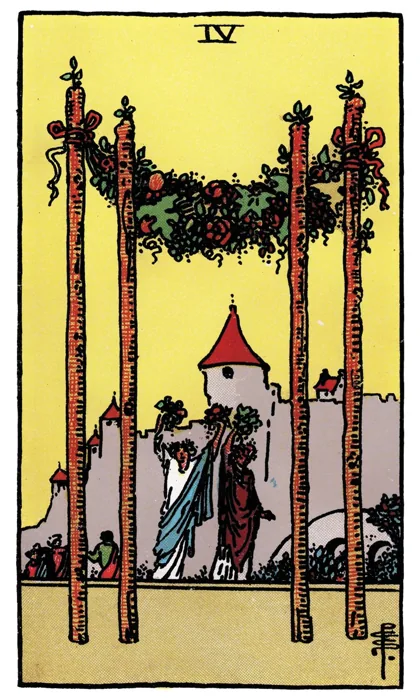
With Four of Wands
With the Four of Wands, a milestone or sense of home may be celebrated together. Make the practical welcome clear and share the work of preparation. The event matters most when the people it honours can actually inhabit and enjoy it.

With Queen of Wands
With the Queen of Wands, a warm presence can help bring people together. Allow the host or organiser to become a participant too. Confidence supports the circle best when it makes room for other voices and does not require one person to sustain every moment.

With Five of Cups
With the Five of Cups, friends may help hold a disappointment or loss. Offer company without demanding cheerfulness or a quick change of perspective. Shared care can make the experience less solitary while leaving its sadness and significance intact.

With Five of Swords
With the Five of Swords, examine whether a group is becoming organised around rivalry or exclusion. Notice the actual exchanges and their effects. Closeness built through humiliating someone else may require a boundary or a different way of participating.

With Six of Pentacles
With the Six of Pentacles, practical support can strengthen friendship when its terms remain clear. Ask what would help, offer what you can sustain, and avoid assuming that generosity creates unlimited access or a permanent debt of loyalty.
The shared table and the people who stay after the occasion
The shared table gives companionship a practical centre. Food and conversation move among people, and the occasion is made by their different contributions. The table need not be elaborate. Its significance comes from the possibility of being there together without each person having to supply the whole meaning of the encounter.
The chorus offers another echo. Several voices make something no single voice could produce alone. They need a shared rhythm, yet difference remains part of the sound. A good community similarly allows people to contribute from distinct positions without treating every variation as a failure to belong.
The people who stay after an event offer a quieter image of the Three. They help clear the room, share the last conversation, or notice who has become tired. Friendship is visible in the celebration, but it also appears in the ordinary care that allows the occasion to end without leaving one person alone with all its remains.
Take one turn at maintaining the circle
Choose a friendship or group you value and make one specific contribution to its continuity. Arrange a manageable meeting, check in with someone who is less visible, offer a practical task, or acknowledge a shared achievement. Keep the gesture proportionate to your capacity and clear enough that the other person can answer freely.
Then notice how participation is distributed. Is there a role you always carry, or one someone else carries without recognition? Suggest a small adjustment that lets care move more evenly. The Three of Cups becomes practical when belonging is something people help make, rather than a feeling everyone hopes someone else will keep providing.
Artwork & interpretation
Waite describes raised cups in a garden and connects the scene with fulfilment, merriment, and shared comfort, while also noting excess. This original guide develops friendship, community, celebration, inclusion, and the practical maintenance of reciprocal social bonds. A. E. Waite, The Pictorial Key to the Tarot: Three of Cups.
The symbolic associations and examples offer ways to read a situation. They do not establish another person’s thoughts or fix an outcome.
A circle becomes more welcoming when belonging does not depend on everyone feeling, behaving, or participating in the same way.
Use the cards in a spread →