Swords · Five
Five of Swords
Having the last word, and discovering what it cost
The Five of Swords follows an argument that stopped being a search for an answer. One person holds the field as another leaves. Consider what the winner now has, and how the way that victory was obtained affects anything the people involved might still want to preserve.
- Conflict
- Costly victory
- Humiliation
- Disengagement
17 min read
In this guide
You have proved the point. Now look around.
The perfect reply comes just in time. Its accuracy makes it devastating: any reply would leave the other person looking foolish. For a moment there is satisfaction. Then the room changes. Somebody stops trying to explain; a colleague becomes very polite; the conversation ends with an agreement nobody intends to trust. The Five of Swords lives in that gap between getting the upper hand and getting anything you actually wanted.
In a reading, it can describe a hostile disagreement, a contest with damaged relationships, a humiliating exchange, or a situation in which the terms of winning have become corrosive. It asks about methods as well as outcomes. An argument can reach the right conclusion through conduct that leaves people less able to work, speak, or live together afterwards.
The card may also describe the person who leaves. Walking away can involve disappointment, anger, or the knowledge that continued participation will only cost more. It need not mean accepting the other person’s account. Sometimes withdrawal is the decision to stop paying admission to a contest whose rules guarantee that somebody must be diminished.
Be careful with the idea that every conflict is equally shared. One person may be using power, threats, or humiliation while another is trying to protect a legitimate boundary. The Five does not require a convenient story in which everybody is equally responsible. Ask who can set the terms, who bears the consequences, and what conduct can actually be observed.
There are worthwhile fights. Challenging unfair treatment, correcting a consequential falsehood, or defending someone with less power can be necessary even when it disrupts harmony. The card’s concern is the point at which the purpose is replaced by appetite: you begin wanting the other person to feel small, and the original issue becomes a vehicle for delivering that experience.
As a practical reflection, the Five invites an audit of the aftermath. What changed, what was secured, what was damaged, and what remains unresolved? The answers may call for repair, a clearer process, outside support, or a firm exit. A quieter room is not sufficient evidence that the problem has been solved; sometimes it only means people have stopped expecting to be heard.
The person with the swords is standing alone
A figure in the foreground holds three swords and looks back towards two people nearer the water. Two more swords lie on the ground. The distribution makes possession unmistakable, but it gives us no independent account of what the dispute was about. Holding the weapons tells us who controls the immediate scene, not who has understood it most fairly.
The foreground figure’s turned head and expression give the picture its uncomfortable edge. Attention remains on the departing people, as if their defeat is part of the prize. Read psychologically, this suggests the moment when another person’s reaction becomes more important than the practical outcome. A victory that requires an audience’s humiliation may be difficult ever to feel finished with.
The two retreating figures are not identical. One stands nearer, with a lowered head; the other is further away, near the shoreline. Their different distances allow more than one response to the same conflict. One person may still be caught in the immediate hurt while another is already deciding how far away they need to go.
Jagged clouds cross the sky above the scene. Their restless shapes keep the atmosphere unsettled even though the active exchange appears over. The picture does not show reconciliation or renewed cooperation. It leaves the aftermath open, asking the reader to consider what would have to happen before the end of the contest could become the beginning of something workable.
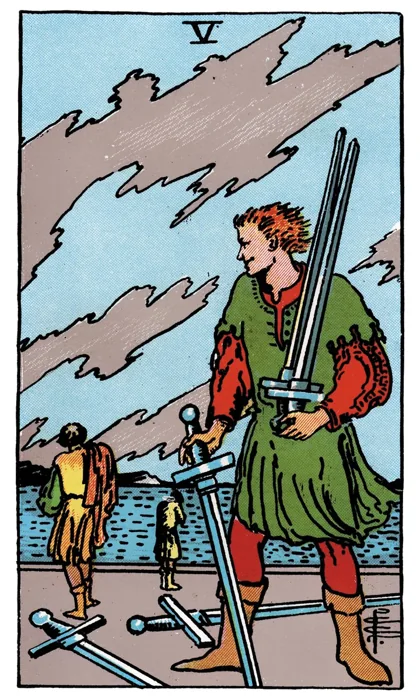
The backward glance keeps the departing people inside the victory. Ask whether you are pursuing a practical result, a necessary boundary, or the feeling of making someone acknowledge that you have beaten them.
The people who withdraw give up possession of the field, but the image does not tell us what they preserve by leaving. Consider time, dignity, safety, and future choices alongside the visible score.
The argument that follows you home
Internally, the Five can feel like an ongoing rehearsal for a conversation that has already ended. As you improve your lines, you imagine finally getting through to the other person. Each rehearsal seems to offer more evidence that your response was justified. The mind keeps the contest alive because an unsatisfactory ending feels like unfinished work. Yet another private victory rarely changes what happened between the actual people.
The apparent winner may feel pleased and uneasy at the same time. Perhaps your point was valid, yet you also enjoyed saying something cruel. Examine that action specifically and consider what responsibility it creates. You can acknowledge the harm without discarding the part of the argument you stand behind. Doing so gives you more to work with than deciding that you were wholly innocent or wholly at fault.
If you identify with those walking away, humiliation may make the event feel larger than the issue itself. Being interrupted, mocked, or defeated in public can affect your willingness to speak again. Give that effect a name before deciding what it says about your ability. A hostile setting is not a neutral examination of your intelligence or worth.
The card can reveal a habit of treating disagreement as a threat to status. Being corrected can feel like a demotion, especially when the other person's confidence seems intended to establish dominance. In that atmosphere, admitting uncertainty may feel like surrendering altogether. Notice the extra contest being added to the factual question. You may be able to answer the issue without accepting the imagined battle over who gets to be a person of consequence.
A steadier personal expression is the ability to tolerate an imperfect public ending. Someone may continue to misunderstand you. A group may never hear the reply you wish you had made. You can still decide what happens next. This is not indifference to truth; it is a refusal to make your entire freedom depend on receiving the final word.
Winning is a description that needs a definition
The Five exposes how easily a goal can change during conflict. You begin wanting a fair arrangement and end wanting an admission. You begin correcting an error and end protecting your image as the person who never makes one. Because the transition can happen gradually, the original purpose still supplies a respectable name for conduct now serving something quite different.
The card asks what victory would look like after the audience has gone. Is the work better? Is someone safer? Is the agreement clearer? Can the people involved speak more honestly? These questions bring the contest back into the life it was supposed to serve. A result that exists only as a story about your superiority may have little practical value.
There is also a question about the pleasure of moral certainty. Once you decide the other person is entirely wrong, ordinary limits on your own behaviour may begin to feel unnecessary. Contempt becomes honesty; retaliation becomes justice. The Five asks you to keep standards for your conduct even when the grievance is real, without requiring you to minimise what was done to you.
This does not make peace the highest value in every situation. Some forms of peace depend on a person remaining silent about harm. A serious reading distinguishes the discomfort of a necessary challenge from the damage of domination. The aim is a more honest arrangement, which may require conflict before it can support any meaningful calm.
The deeper task is to recover choice inside the contest. You can defend a boundary without attempting to destroy a person, admit one error without surrendering every point, or leave without agreeing that you deserved the treatment. These distinctions are easy to lose when the atmosphere insists on a single winner and a single account of reality.
A team can comply long after it has stopped trusting
At work, the Five can describe rivalry, credit disputes, public correction used as theatre, or a meeting where the strongest personality gets mistaken for the strongest argument. The immediate decision may be clear while the working relationship deteriorates. Watch what happens afterwards: missing information, reluctant participation, defensive documentation, or people no longer volunteering the uncertainty that good work needs to hear.
If you are challenging a proposal, separate the claim from the person’s standing. Explain what the evidence suggests will happen and how you would like the proposal changed. There may be no need to demonstrate that the author should have known better. An objection that leaves room for revision is more likely to improve the work than one that makes revising it feel like public surrender.
When the workplace rewards aggression, individual tact may have limits. The card may point towards a clearer decision process, documented agreements, a trusted manager, or an appropriate route for raising a concern. Ground the response in observable conduct and actual responsibilities. Tarot can help you reflect on the pattern; it cannot establish who is guilty or what formal outcome will follow.
Leadership carries a particular version of the Five. People may agree because they cannot afford the consequences of disagreeing. A leader who counts that agreement as proof of persuasive brilliance will lose access to useful information. Make room for correction that does not threaten the speaker’s standing, and notice whether your own mistakes can be discussed without everybody preparing for a confrontation.
In creative work, a rivalry can begin to choose the project for you. You make the piece that will outdo someone, answer a critic, or prove a rejection mistaken. Competitive energy can be useful, but it may gradually displace your own interest. Ask whether you would still want to make this work if the intended witness never saw it.
The practical alternative is an outcome defined before the next exchange. Perhaps you need a credit corrected, a responsibility clarified, or a decision recorded. Keep the request narrow enough to recognise when it has been met. Otherwise, the conflict can continue indefinitely because the unspoken requirement is that the other person should change who they are and demonstrate remorse through a public admission of defeat.
An intimate knowledge can become a weapon
In close relationships, the Five can appear when people know exactly where to hurt each other. A private insecurity becomes a remark made for maximum effect; an old admission returns as evidence in a new dispute. The original issue may be ordinary, but the method changes the safety of the relationship. Winning through someone’s vulnerability can make future honesty harder.
Notice the moment the conversation stops seeking understanding. Questions are designed to trap the other person, with examples assembled as though for a prosecution. A concession only invites more pressure. If both people want to change this pattern, naming the shift can help: the subject still matters, but the current way of discussing it is causing another problem.
Repair should address the particular act. Saying that the evening became heated may hide the difference between raising a difficult point and deliberately humiliating someone. A more credible apology identifies what was said or done, recognises its effect, and explains what will change. The injured person does not owe immediate reassurance that the relationship is now entirely restored.
Where there is coercion, intimidation, or repeated punishment for disagreement, a shared communication exercise may be inadequate. The priority may be confidential support and a safer arrangement. The card should never be used to insist that a person remain in a harmful exchange until they can express themselves perfectly enough to make the other person behave differently.
Friendship and family can carry contests over memory, loyalty, or who has sacrificed most. These arguments often have no finish line because the desired prize is a complete moral ranking of the relationship. Bring the question closer to the present: what agreement is needed now, what behaviour must stop, and what kind of contact is actually workable?
After a breakup or estrangement, the Five can concern the wish to control the public story. You may need to correct consequential falsehoods, but every audience need not become a courtroom. Consider where an accurate account matters and where pursuing universal vindication keeps the old conflict in charge of your new life. Let your next choices have purposes beyond answering the previous person.
Count the costs the score does not show
In practical matters, the Five asks about disputes whose emotional stakes exceed their stated subject. A small expense becomes a referendum on respect; a household purchase carries years of resentment about who decides. Separate the amount or item from the relationship it has come to represent. Both may need attention, but settling one does not automatically settle the other.
A competitive purchase can be another form of the card. You want to show that you are doing well, cannot be dismissed, or have surpassed somebody whose opinion still matters. Before spending, imagine the object without that audience. Whether it still serves your life is more useful information than the brief satisfaction of what it might make someone else think.
Shared money requires agreements that people can understand and question. If one person controls information or uses access to resources as punishment, the issue is more serious than a disagreement about taste. Start with the observable arrangement and seek appropriate practical support where needed. A card cannot determine ownership, rights, or the best formal course of action.
At home, ask what daily life is becoming while a dispute continues. The cost may include sleep, time, ordinary warmth, or the ability to use a shared room without bracing. A resolution should be assessed against those realities as well as the final allocation of objects or tasks. Being right about the dishes is a limited victory if the kitchen has become a battlefield.
Stop feeding a contest that has no new information
Conflict can occupy attention long after direct contact ends. You check for a reply, rehearse a defence, or reread the same exchange in search of a decisive interpretation. Ask whether the next review is likely to reveal anything new. If it is not, setting a limit may protect an evening without requiring you to declare the issue resolved.
An audience can intensify the pull. Group chats, comment threads, and mutual acquaintances provide fresh places to seek a verdict. Some outside perspective is useful; an expanding jury can keep the dispute permanently active. Choose the person whose judgement can help you decide what to do, rather than collecting agreement until the discomfort disappears.
After a difficult exchange, ordinary activities can restore a sense of proportion: completing a simple task, spending time with someone unconnected to the dispute, or returning to an interest that predates it. These do not settle the argument. They remind you that your attention has other legitimate destinations.
Choose the result before choosing the reply
Before re-entering a conflict, write the outcome you are seeking in one plain sentence. It should describe something more concrete than being understood completely or making someone regret their behaviour. A clear boundary, corrected record, or agreed next step gives you a way to judge whether another exchange is worth having.
Consider the method as part of the result. A humiliating reply may secure compliance while making future cooperation less likely. A firm statement can sometimes do the necessary work with less collateral damage. You are allowed to be direct; the question is whether the extra wound serves the purpose or simply expresses how much you want one returned.
The shadow is becoming attached to the identity of the wronged or victorious person. Either role can keep the opponent at the centre of your life. Ask what you would choose next if they never supplied a satisfying ending. Your answer may contain the first action that belongs to you rather than to the contest.
Another shadow is retreating from every disagreement in order to feel above conflict. Some matters deserve a clear challenge. The card asks for discrimination, not habitual surrender. Choose the fights that protect something real, and avoid adding demands that the other person’s entire character or social standing must be defeated before you can stop.
After the victory stops feeling like enough
Reversed, the Five can describe the aftermath becoming impossible to ignore. A sharp exchange has ended, but trust is missing; an apparent success feels strangely empty. This can be the beginning of responsibility. Look at the specific damage without rushing to demand that everybody acknowledge your good intentions first. Intentions matter, but they do not complete the account.
It may point towards repair or a willingness to stop competing. Someone can concede a point, apologise for a method, or agree to a different process. Treat these as actions to be assessed over time, not proof that the whole pattern has vanished. A less combative conversation is a useful beginning rather than a guarantee.
The reversal can also show conflict continuing underground. The open argument disappears while sarcasm, withheld information, or private scorekeeping carries it on. Surface politeness is then a poor measure of resolution. Ask which practical issue remains unaddressed and whether it can be discussed without recreating the same contest in a more discreet form.
Sometimes you are ready to leave but still seeking permission to call the departure something other than defeat. The card invites a different measure. What will become possible when the dispute no longer receives so much of your time? You can preserve your account of what happened without continuing to submit it to the same unwilling audience.
Choose the meaning through evidence: is there actual repair, only suppressed hostility, or a chance to disengage? The reversed card does not promise reconciliation, exposure, or punishment. Its practical question is what the aftermath is asking you to do differently now that the immediate pleasure or shock of the exchange has passed.
What is being defended, and what is being spent?
These pairings help examine the purpose and conditions of a conflict. They are prompts for assessing real conduct, not a way to identify an enemy from the cards.
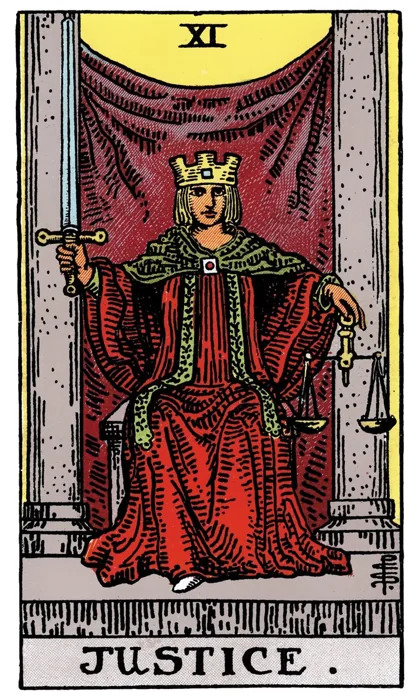
With Justice
With Justice, bring the dispute back to evidence, proportion, and an appropriate process. A fair account may include facts inconvenient to your preferred story. The pairing supports a clearer standard for decisions; it does not predict a legal result or establish that the person drawing it must be right.
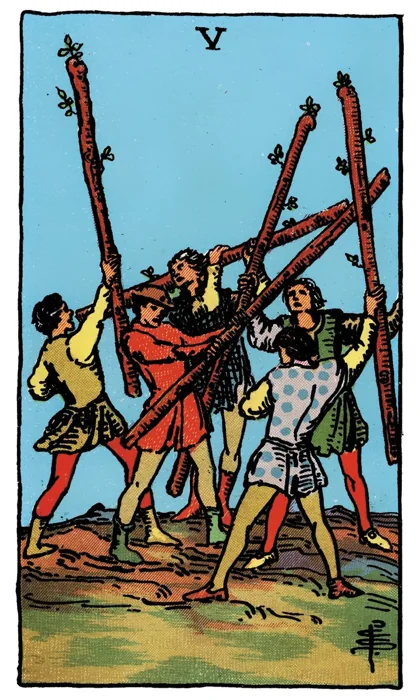
With Five of Wands
With the Five of Wands, ordinary competition may be turning personal. A lively disagreement can improve work until status and humiliation become the prize. Name the shared task and agree how a decision will be made before the group mistakes the loudest performance for a useful conclusion.
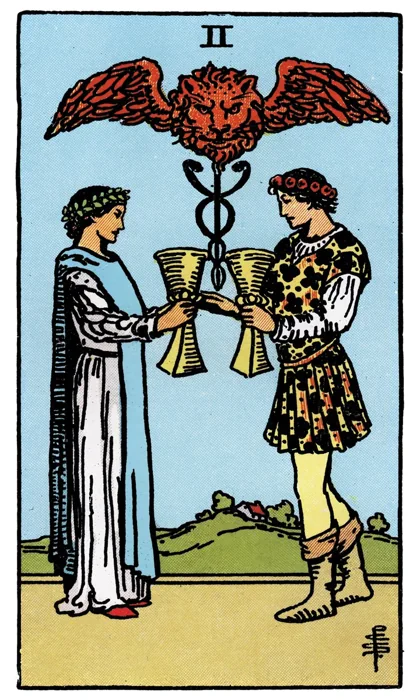
With Two of Cups
With the Two of Cups, ask whether the relationship still has a shared purpose strong enough to guide the disagreement. Repair may begin with one specific injury and one workable change. Mutual care does not require equal blame, and a wish for reconciliation cannot substitute for changed conduct.
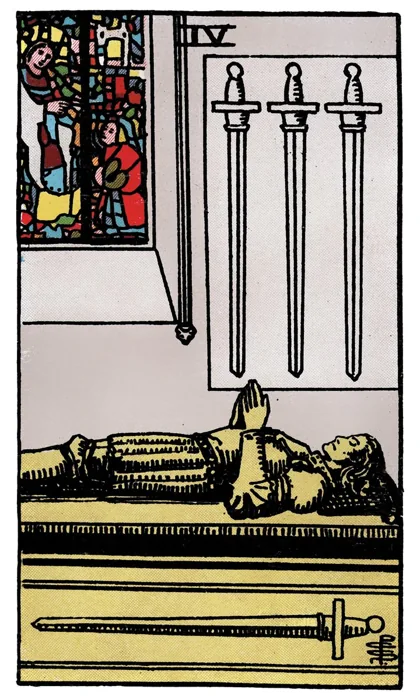
With Four of Swords
With the Four of Swords, another exchange may add injury without adding information. A clearly communicated pause can preserve the possibility of a better conversation. Decide what needs immediate attention and what can wait, so the retreat is neither a punishment nor an excuse to avoid the issue forever.
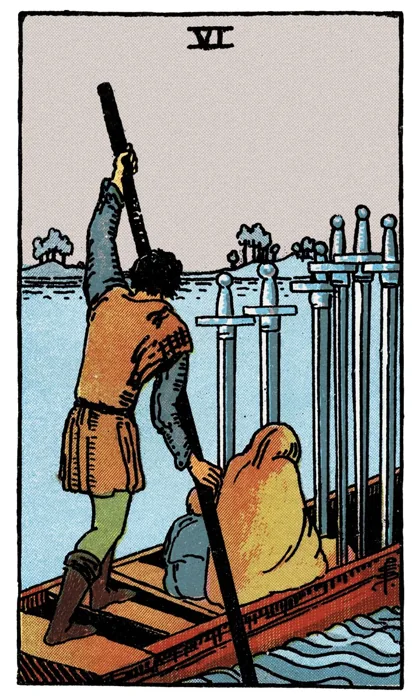
With Six of Swords
With the Six of Swords, attention turns towards leaving the conflict and arranging the passage afterwards. You may need practical help, a handover, or a quieter setting. The move can be worthwhile even if you never receive a satisfactory admission from the people remaining on the old shore.

With The Devil
With the Devil, examine a contest that keeps drawing you back despite its cost. The reward may be a moment of superiority, retaliation, or proof that you still matter to the opponent. Identify the real incentive and the practical support needed to stop repeating the exchange.
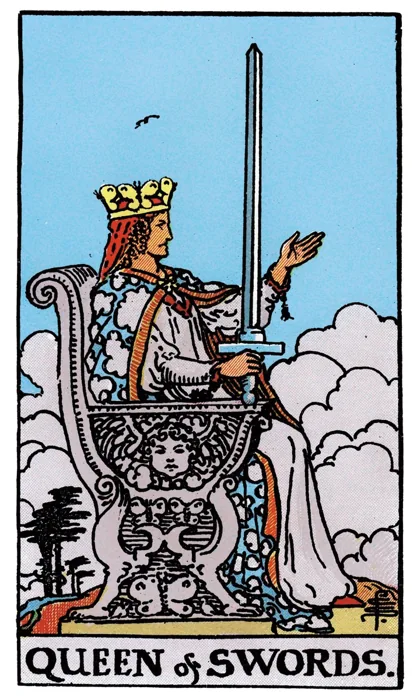
With Queen of Swords
With the Queen of Swords, a precise limit may be more useful than another devastating explanation. State the conduct you will no longer participate in and the consequence you can actually carry out. Clarity gains strength when it does not depend on making the other person feel small.
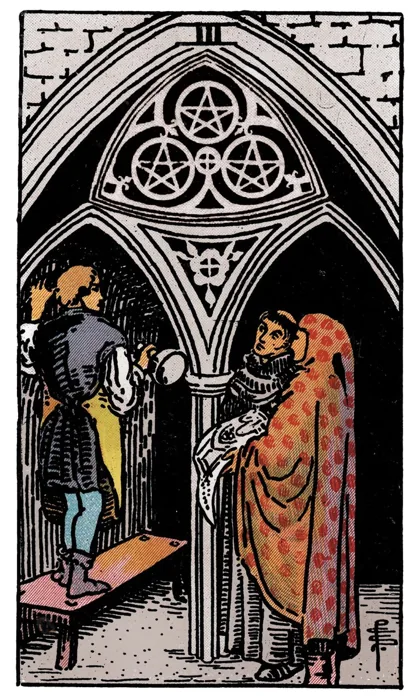
With Three of Pentacles
With the Three of Pentacles, return to the work and the different contributions it requires. A clear brief, shared criteria, or a neutral review can reduce the opportunity for personal rivalry. The aim is a result people can help build, rather than a meeting one person can claim to have won.
The empty throne and the unanswered provocation
A ruler dismisses every adviser who brings unwelcome news and finally enjoys complete agreement. With nobody left to question the ruler's authority, the orderly room supplies increasingly useless information. This is the Five’s lonely victory: possession of the field becomes complete precisely as the field loses its ability to offer anything independent.
Two neighbours argue over a narrow strip of ground until the garden itself becomes unpleasant to enter. The boundary matters, but the dispute gradually consumes what the boundary was meant to protect. The scene asks how a legitimate claim can be pursued without allowing the conflict to take possession of the whole place.
Someone receives a provocation and writes a reply that would win applause from every sympathetic witness. After leaving the draft unsent for a while, they replace it with two plain sentences about the actual arrangement. Nothing spectacular happens. The value lies in the life they keep available by refusing the more entertaining version of the fight.
Write the victory you would still want tomorrow
Choose a disagreement small enough to examine safely. Write three things separately: the original issue, the result you now want, and the reaction you wish to get from the other person. Notice where the last two differ. Then identify one action that could serve the practical result without requiring the desired emotional reaction.
Decide what would tell you the exchange has become unproductive: repeated insults, no new information, or a refusal to discuss the actual request. Prepare a proportionate limit or exit. Afterwards, assess what you preserved as well as what you gained. The Five becomes useful when winning is defined by the life that remains possible beyond the argument.
Artwork & interpretation
Waite describes the sword holder and retreating figures and gives the card severe associations with loss and dishonour. This original essay examines conflict, unequal power, costly victories, and specific repair through contemporary examples rather than treating the image as evidence against a person. A. E. Waite, The Pictorial Key to the Tarot: Five of Swords.
The symbolic associations and examples offer ways to read a situation. They do not establish another person’s thoughts or fix an outcome.
Defending what matters can require a fight; needing to defeat someone can make you forget what mattered.
Use the cards in a spread →