Swords · Queen
Queen of Swords
An open hand and a clear limit
The Queen of Swords listens carefully and says what she means. She can judge a situation clearly while feeling deeply about it; warmth and humour need not disappear when a boundary is necessary. Her authority comes partly from experience. She expects an honest account of what is known and makes her limits clear to the people involved.
- Discernment
- Direct speech
- Independence
- Clear boundaries
16 min read
In this guide
You can come closer, but the terms are real
The Queen of Swords offers a particular kind of relief: you do not have to decode a performance of agreement. You can trust a yes without being expected to negotiate every no. Even an uncomfortable fact can be named without so much reassurance that its meaning disappears. This card values the clarity that lets people know where they stand.
Upright, the Queen can represent discernment, independent judgement, direct communication, and boundaries shaped by experience. She is often associated with someone who has learned to separate what is said from what is done. That does not require cynicism. It means allowing evidence, consistency, and the actual terms of an arrangement to matter alongside attraction or a persuasive explanation.
As a court card, she may describe a person, a role, or a capacity available to you. The role is not restricted by age or gender. You might embody it when editing a confusing document, declining an unfair request, or asking a difficult question with enough composure to hear the answer. The common quality is clear attention that does not surrender its judgement merely to keep the atmosphere pleasant.
The card can also signal a need to distinguish sympathy from consent. You may understand why someone acted as they did and still decide that the behaviour cannot continue around you. Understanding gives context; it does not erase consequences. The Queen can remain humane without making every explanation a reason to abandon her own limit.
There is openness here as well as a blade. In a mature expression of the card, listening helps you distinguish between situations and revise your judgement when the facts warrant it. An automatic refusal is no more discerning than an automatic agreement. Ask whether you are assessing this person and situation as they are, or applying a verdict formed under different circumstances because it feels safer than looking again.
The Queen's invitation is to make the essential sentence available. What do you mean? What do you need? What is acceptable, and what follows if the agreement is not kept? You do not have to remove all emotion before answering. You need enough space between feeling and speech to let the answer represent your considered position.
The sword is upright; the other hand is open
The Queen sits in profile on a carved throne, holding a sword vertically. Her free hand extends outward with the palm raised. Clouds gather low in the scene while the upper sky remains open, with a small bird visible. Her posture combines authority with an invitation to approach: the boundary is visible before the conversation begins.
The upright sword suggests a standard that can be held steadily. Unlike the Knight's charging blade, it is not propelled towards an opponent. In a reflective reading, this can signify clarity that does not depend on pursuit. You can state a limit and let it stand, without chasing every disagreement until the other person admits you were right.
The extended hand complicates the stereotype of a cold or inaccessible figure. She appears available to receive something: information, a request, a person entering the conversation. The image invites a distinction between being open and being unguarded. Hospitality can have terms; listening does not require deciding in advance that the answer will be yes.
Carvings on the throne place the Queen against a sky that changes from cloud to clear air. The image can suggest judgement developed through experience, with thought remaining connected to the life around it. It cannot supply a biography for a person in your reading. Grief or independence may be relevant themes, but their relevance needs to come from the circumstances you actually know.
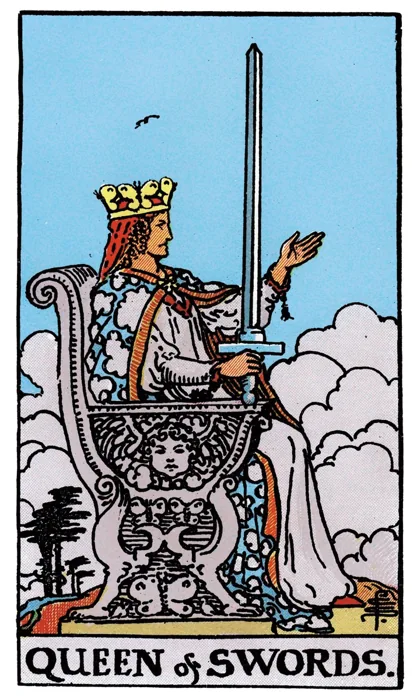
The open hand and upright blade belong together. Listening does not commit you to agreement, and a boundary need not make you unavailable to information, affection, or a request worth considering.
The seated posture suggests steadiness rather than pursuit. You can hold a considered position without following every objection into another argument. Let experience support your judgement without deciding every new case in advance.
A self you no longer need to explain into permission
The inner Queen may arrive when you become tired of making your preferences sound like unavoidable accidents. You can say that you do not want something, that a request does not work for you, or that an explanation has not answered the question. There is dignity in allowing your considered view to exist without first obtaining unanimous permission for it.
As a temperament, this card can be observant, dryly funny, articulate, and selective about closeness. The person may notice the sentence everybody is avoiding and say it with startling simplicity. In a generous expression, that honesty makes them trustworthy. They will not flatter you into a mistake, and their respect can feel substantial because it is not automatically distributed.
Their difficulty may be admitting how much they still want. Independence can become a polished way of concealing disappointment: if nothing is needed, nothing can be withheld. The Queen's growth is not a loss of standards. It is the ability to name a desire while accepting that another person may or may not meet it, without treating the desire itself as a humiliating lapse.
The card can also describe the relief of believing your own account after repeated minimisation. You do not need to exaggerate what happened to make it count. A plain description may be enough. Keep the distinction between confidence in your experience and certainty about another person's motives; the first can support a boundary even when the second remains unknowable.
Its shadow is making perceptiveness into armour. You identify every weakness before anyone can surprise you, then call the resulting distance wisdom. Sometimes caution is appropriate. Sometimes it has outlived the setting that taught it. Ask what current evidence would allow a little more openness, and whether you would recognise that evidence if it appeared.
Discernment is a relationship with reality
The Queen's deeper subject is discrimination in the careful sense: separating one thing from another. An explanation can help you understand an action without excusing it, just as an apology may be sincere before a pattern has changed. Feelings do not always need to be acted on, and disagreement may have nothing to do with disrespect. These distinctions give life more room because they prevent every event from collapsing into a single emotionally convenient category.
Her clarity is sometimes mistaken for the absence of feeling. Yet judgement often becomes better because experience has mattered deeply enough to teach it something. The task is to let feeling inform attention without requiring it to deliver the whole verdict. Grief can reveal value; anger can reveal a boundary; neither automatically supplies every fact about the present situation.
The card also asks how truth is offered. Honesty has a purpose beyond releasing whatever is in your head. An accurate statement may be irrelevant to the decision or needlessly humiliating. In another setting, the same information could be essential to someone's freedom to choose. Discernment includes knowing which truth belongs in this conversation and how much force it needs.
There is freedom in a limit that is clearly yours. You can decide what you will participate in without claiming authority over every other person's choice. That keeps the boundary from becoming a disguised command. The Queen's sovereignty concerns the life she is responsible for living, not an entitlement to arrange everyone else's life around her comfort.
Make the standard clear enough to use
At work, the Queen supports editing, assessment, negotiation, and decisions that require a clean distinction between evidence and presentation. Ask what the deliverable must achieve and which criteria actually matter. A clear standard protects the work from vague approval seeking and makes feedback easier to apply without turning every revision into a judgement of the maker.
She can represent a colleague or mentor whose comments are direct and unusually useful. They identify the missing assumption, the unsupported claim, or the sentence that avoids the point. If you occupy this role, make sure the person can act on what you say. A clever criticism that leaves no route forward may display your perception while doing little for the task.
For leadership, the card favours consistency over personal favour. Make expectations explicit, explaining decisions in enough detail for the people affected to understand them. Be clear when exceptional circumstances warrant a different response from a recurring pattern. Clarity does not require revealing private information. It does require avoiding a system in which everyone must guess which unwritten rule will apply today.
The Queen may also appear when you need to decline work or renegotiate scope. Explain the practical limit and the available alternative, if there is one. You need not apologise until the refusal sounds negotiable. A reliable no can be more respectful than an agreeable yes that transfers the eventual cost to your future self or colleagues.
In creative work, this is the editor who protects the strongest version of the piece. Remove repetition and question claims the piece has yet to support, while preserving the distinctive edges of its voice. The blade serves the work. It should not become a habit of finding fault so relentless that nothing is allowed to remain alive or surprising.
If you are considering leaving a role, separate your assessment from the need to make everyone agree with it. Gather relevant information, consider practical conditions, and communicate through the appropriate route. A decision can be well-founded without being universally approved. The Queen helps you remain responsible for the choice without becoming responsible for every reaction to it.
Closeness with enough room to tell the truth
In love, the Queen can describe a connection that values candour, independence, and intellectual respect. Attraction may grow because someone listens accurately and does not ask you to become less complex to be acceptable. There can be wit, play, and strong desire here. The card's seriousness should not be mistaken for an absence of warmth or sensuality.
For a person seeking a relationship, she may encourage clearer criteria. Which differences are workable, which needs are essential, and which warning signs have you previously explained away because the attraction was strong? Standards are most useful when they describe a life you want to share, rather than a perfect person nobody could become without ceasing to be human.
In an established partnership, the Queen supports difficult honesty. You may need to discuss unequal effort, a recurring behaviour, or a future neither person has fully named. Choose concrete examples and a clear request. The aim is to make an agreement possible, not to assemble enough evidence that the other person has no dignity left with which to respond.
When trust has been hurt, she can help distinguish remorse from repair. Listen to what is said, then observe what changes over time. You are not obliged to restore access merely because an apology was eloquent. Equally, if you choose to continue, consider what would allow the matter to be reviewed fairly rather than kept as permanent ammunition in every later disagreement.
Asked about feelings, this card cannot confirm that someone is secretly cold, wounded, or unwilling to love. It may prompt attention to a reserved or direct style, but behaviour and conversation must supply the particulars. Someone can care deeply while preferring clear language and personal space. Someone can also use coolness to avoid responsibility. The difference appears in conduct.
The shadow is contempt disguised as honesty. You become so practised at seeing through explanations that you stop seeing the person offering them. A relationship cannot thrive if one participant is permanently the examiner and the other permanently on trial. Mutual respect includes the possibility that your first reading was incomplete and that the other person's account deserves a hearing.
A clear agreement protects more than good intentions
In practical matters, the Queen invites scrutiny of terms, responsibilities, and assumptions. If resources are shared, name what is shared and what remains individual. Clarity can prevent resentment that grows when one person believes generosity created an obligation the other never agreed to. A written understanding may be useful where memory or expectation is likely to differ.
The card does not supply legal or financial expertise. When a decision has substantial consequences, use qualified advice and the actual documents. Its reflective value lies in helping you ask precise questions and notice where an appealing explanation has not answered them. You are allowed to request clarification without proving that somebody is trying to deceive you.
At home, the Queen can support a more deliberate relationship with space and possessions. Keep belongings that serve your life and agree on shared rules, including how each person's need for privacy will be respected. A calm, functional home may matter more than performing a particular image of domestic warmth. Your preferences can be legitimate without being the only legitimate way to live.
Be careful when efficiency becomes an excuse to dismiss attachment. An object may be impractical and still hold meaning for someone else. Ask before making decisions about shared belongings. Discernment considers the relevant human facts as well as the measurable ones, including what a change would cost in trust.
Choose what deserves a response
The Queen can describe the relief of no longer answering every demand merely because it has arrived. A message, opinion, or invitation can be considered before it becomes a task. Ask whether a response is necessary, whether it belongs to you, and how much attention it reasonably requires. Selectivity creates room for the commitments you have actually chosen.
Emotional clarity may need a pause. If you know that immediate speech will be accurate but unnecessarily cutting, allow time before responding. Silence used to gather yourself differs from silence used to punish. Where possible, make the distinction clear by saying that you will return to the matter when you can discuss it constructively.
The card also asks whether self-observation has become another form of criticism. You can notice a reaction without interrogating it until nothing spontaneous remains. Clear attention should help you live, not turn every feeling into a defendant. Some experiences need acknowledgement before they need an explanation.
Say the sentence you can stand behind tomorrow
Reduce the issue to its essential statement. What happened, what do you need, and what will you do? Keep those elements distinct from speculation about motive. A boundary becomes easier to understand when it does not require agreement about another person's entire character before it can be respected.
Before speaking, consider whether the sentence is both true and useful for the present purpose. You do not need to soften it until it loses meaning. You may need to remove the part intended mainly to wound. Precision can make a message firmer while making it less cruel, because the listener can identify what is actually being asked.
The shadow is treating vulnerability as an intellectual error. Wanting affection, reassurance, or company does not make you less discerning. It gives discernment something human to protect. The mature Queen can open her hand as well as hold her sword, and does not need to confuse accepting care with handing over authority over her life.
When the blade turns inward or stays raised too long
Reversed, the Queen may describe harsh judgement, defensive withdrawal, or speech that has lost its connection to care and purpose. You can see every flaw but no longer know what a constructive response would look like. Ask whether the standard is helping distinguish what is workable or simply ensuring that nothing and nobody can pass.
Another expression is the swallowed boundary. You know what you think but keep translating it into agreement because disapproval feels too costly. Resentment then accumulates behind a polite surface. The reversal can invite a clear statement before accumulated anger makes the delivery far sharper than the original issue required.
It can also show judgement shaped too strongly by an earlier wound. A present delay feels like a familiar abandonment; a small inconsistency becomes proof of a whole pattern. History deserves respect, but current evidence deserves its own hearing. Compare the situations carefully: which similarities matter, and where might further information reveal a difference?
Where communication has become cruel, repair involves more than explaining that you were technically correct. Acknowledge the delivery and its effect, then restate the underlying concern in a form that can be discussed. You do not have to withdraw a valid boundary to take responsibility for how you expressed it.
A constructive reversal can mark the return of flexibility. You allow someone to surprise you, accept help without feeling defeated, or discover that a firm limit has made closeness safer. Judgement now helps you choose when it is worth being vulnerable, instead of keeping every possibility of exposure out of reach.
What does clarity need to protect?
These pairings explore the relationship between discernment, care, and independence. They describe possible dynamics, not fixed personality diagnoses or evidence about hidden feelings.

With Justice
With Justice, seek a fair distinction between facts, responsibility, and consequence. State the standard clearly and apply it consistently. The pairing supports accountability, but it also asks whether your own preferred explanation is receiving more generous treatment than the explanation offered by someone you disagree with.
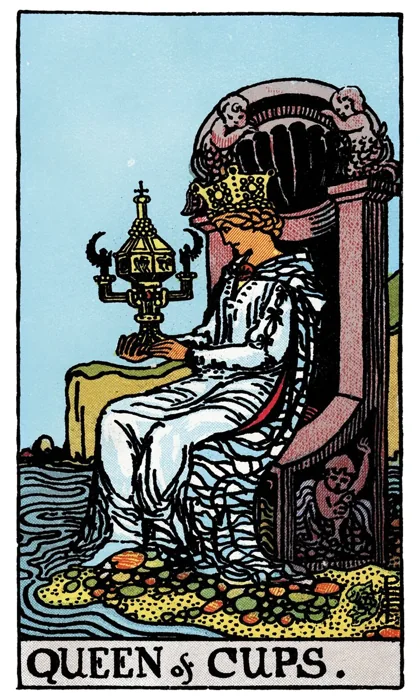
With Queen of Cups
With the Queen of Cups, emotional understanding and clear limits can strengthen each other. Listen to the experience while keeping the agreement visible. You do not have to choose between caring about someone and recognising that a particular behaviour cannot continue in the relationship.
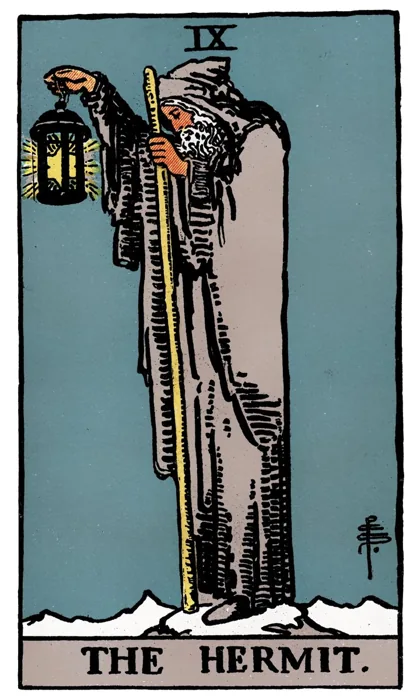
With The Hermit
With the Hermit, independent judgement may need quiet space or an experienced perspective. Take enough distance to hear your own view, but notice when reflection becomes avoidance of all contact. Solitude serves discernment best when it eventually helps you return with something clearer to say.
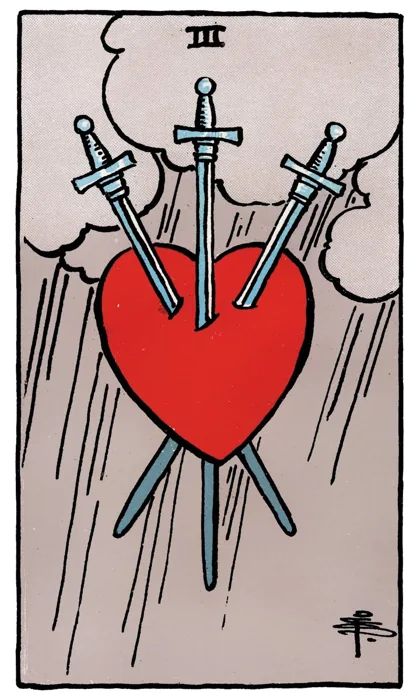
With Three of Swords
With the Three of Swords, a painful truth may need both acknowledgement and careful language. Avoid turning hurt into a universal verdict about trust. Name what happened and what it changes, while allowing grief to exist without being required to produce an immediate, perfectly reasoned conclusion.
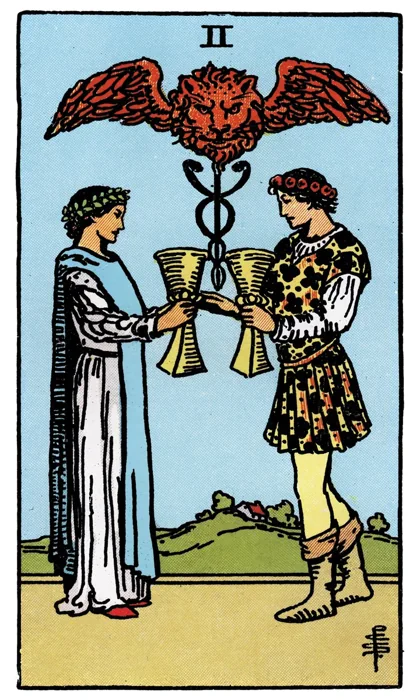
With Two of Cups
With the Two of Cups, mutual respect depends on being able to tell the truth without losing the relationship automatically. Make room for disagreement, preferences, and separate judgement. A connection becomes more substantial when neither person must perform agreement to remain welcome.
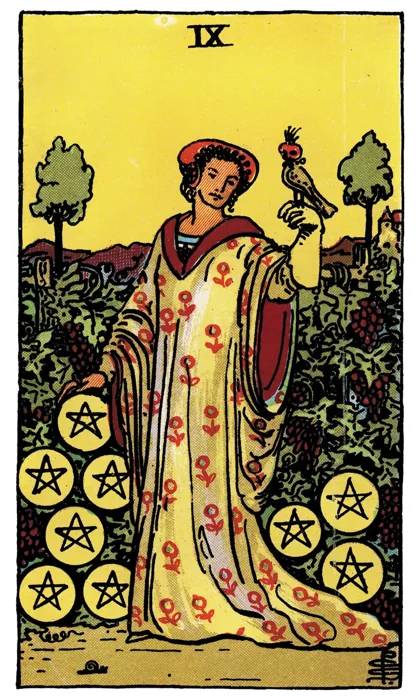
With Nine of Pentacles
With the Nine of Pentacles, independence may be something you have worked hard to establish. Consider which arrangements preserve your agency and which ask you to trade it for approval. Receiving companionship or practical help need not erase the competence that made your present life possible.
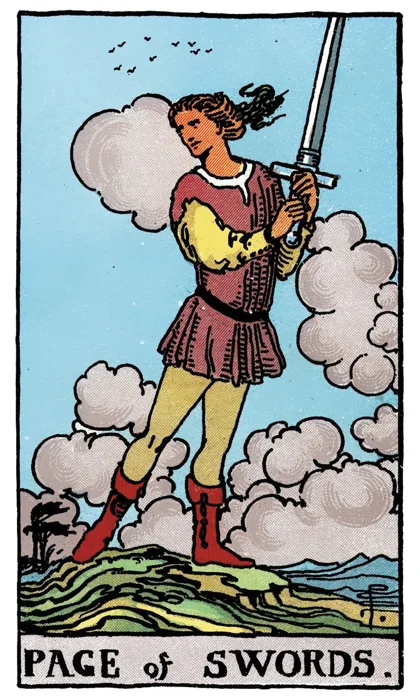
With Page of Swords
With the Page of Swords, a fresh question meets experienced judgement. Let the question challenge assumptions without discarding everything experience has taught. If you are guiding someone, answer in a way that helps them think, rather than using your knowledge to make their uncertainty embarrassing.
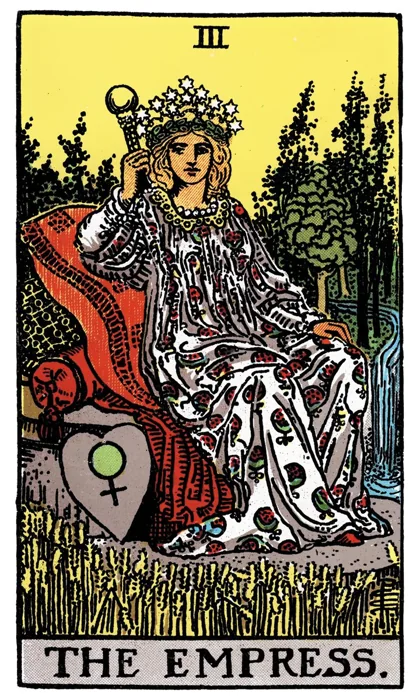
With The Empress
With the Empress, clarity can protect the conditions in which care and creativity flourish. A limit on demands may make generosity more sustainable. Ask what needs space, nourishment, or pleasure, and use discernment to prevent those needs from being dismissed as less serious than work or duty.
The editor and the open gate
An editor removes a beautiful paragraph because it repeats what the scene has already done. The cut is an act of care for the whole work, not contempt for the sentence. This is the Queen's useful severity: a standard with a purpose, capable of preserving what matters instead of cutting merely to display power.
A gatekeeper listens before deciding who may enter. The gate is neither permanently locked nor left without a boundary. The decision depends on purpose, conduct, and the needs of the place being protected. Openness and discernment operate together rather than being assigned to opposite kinds of person.
An experienced friend tells you the part of the story you have been avoiding, then stays for the difficult conversation that follows. Their honesty is trustworthy because they remain interested in your life after delivering the observation. The Queen's best truth does not abandon the person who now has to live with it.
Turn a resentment into a clear request
Choose a manageable recurring irritation. Describe the behaviour without a character label, then write the need or limit underneath it. Decide what is genuinely negotiable and what concerns your own participation. Make one proportionate request or statement through a suitable conversation, leaving room for the other person's information.
Afterwards, assess clarity rather than universal approval. Consider whether you made your meaning clear and listened while holding the essential point. Both people should now understand the next step. The Queen of Swords offers the satisfaction of a position you can stand behind, even when the conversation remains imperfect and someone needs time to respond.
Artwork & interpretation
This original interpretation draws on the upright sword, seated posture, and extended hand. It does not treat the historical entry’s gendered biographical associations as fixed identities or predictions. A. E. Waite, The Pictorial Key to the Tarot: Queen of Swords.
The symbolic associations and examples offer ways to read a situation. They do not establish another person’s thoughts or fix an outcome.
An honest boundary can keep a relationship possible; contempt can make even an accurate truth unusable.
Use the cards in a spread →