Swords · Page
Page of Swords
The question that changes what everybody assumed
The Page of Swords wants to know whether a claim holds up. Curiosity leads to questions, and asking them teaches the Page how words affect other people. An inquiry can make a connection or cause hurt. Much depends on whether the answer could change the Page's mind, or the question is only meant to catch someone out.
- Curiosity
- Vigilance
- New understanding
- Testing assumptions
16 min read
In this guide
Wait — how do we know that?
Someone asks a question the room has stopped asking. They want to know why the process works this way, or where a familiar piece of information came from. Even a phrase everyone uses may turn out to need an explanation. The Page of Swords brings fresh attention to familiar material. It can be awkward, lively, inconvenient, and exactly what a conversation needs if it has begun mistaking agreement for understanding.
Upright, the Page is often learning about a situation through observation and questions. A conversation may reveal something worth following up, even before its significance is clear. The energy to investigate is there; judgement is still developing. Compare the clue with what else you know and ask for the missing context. An interesting discovery can start an inquiry without settling its answer.
As a court card, the Page can represent a person, a role you are taking, or a quality the situation needs. It is not limited to a particular age or gender. An experienced professional entering a new field can be the Page; so can the youngest person in a meeting who notices an overlooked inconsistency. What matters is the relationship to knowledge: the Page remains engaged with a subject they have yet to understand fully, and is willing to look again.
This card can accompany a message, a conversation, or an idea that needs clarification. The news may be preliminary. Check what has actually been said, whether the source is reliable, and what remains to be confirmed. The Page's speed of attention is an asset when it leads to a better question. It becomes a liability when speed is mistaken for verification.
Vigilance is another theme. You may be monitoring a situation because it is new, uncertain, or consequential. That can be sensible. But there is a difference between observing relevant developments and searching indefinitely for a hidden threat. The card asks what you need to know, how you can know it, and what would count as enough information for the next decision.
Its constructive invitation is intellectual courage with room for revision. Ask the apparently basic question, try the unfamiliar language, challenge the unsupported claim, or make a first attempt at stating your own view. You do not need to sound fully formed. You do need to remain available to an answer that changes what you thought.
A young figure turns towards a changing sky
The Page stands on uneven green ground, holding a raised sword in both hands. The body faces one direction while the head turns to the side. Clouds gather across the sky, small birds appear overhead, and the distant trees lean with the weather. The scene is full of movement even though the figure has not charged into action.
The two-handed grip suggests effort and attention. This is not a casual ornament; the sword is something the figure is learning to handle. As a metaphor for speech and thought, it asks about skill. Having a sharp observation does not automatically teach you how to deliver it, whom it affects, or when another question should come first.
The turned head makes watchfulness visible. The Page is not absorbed solely in the blade or the path ahead. That can signify useful awareness of context, but it can also suggest attention pulled in several directions. In a reading, ask whether looking around is improving your understanding or preventing you from staying with one task long enough to learn from it.
The unsettled ground and moving clouds give the card an atmosphere of provisional knowledge. Conditions have not become still enough for a final pronouncement. Checking sources helps you make claims that the available information can support. You can act on that basis while remaining willing to revise your account. The image supports alertness without requiring suspicion to become the default explanation for everything.
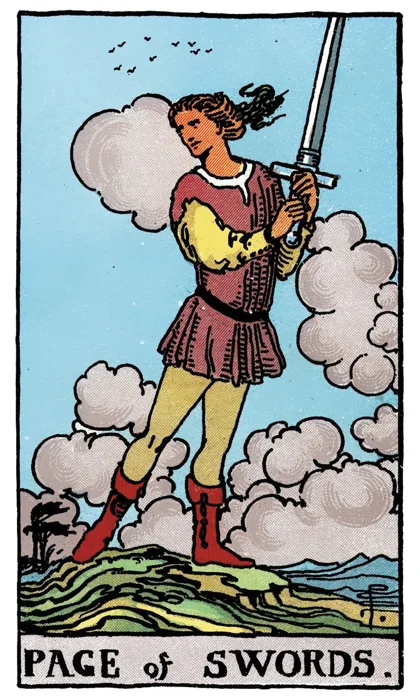
The sword demands a deliberate grip. An incisive thought needs a similar skill: finding words that help someone understand it, and choosing a moment when they can hear it. That requires attention to how it will affect them. Intelligence does not make that practice unnecessary.
The landscape suggests movement and unsettled conditions. Let a preliminary account remain preliminary while you gather context. A careful question can be stronger than a quick conclusion delivered with unnecessary certainty.
The pleasure of finding the right question
The inner Page enjoys the small click of recognition when something previously vague becomes interesting. You follow a reference, compare two accounts, or ask why an explanation leaves out a crucial step. Curiosity restores movement where habit had flattened the subject. It can also restore a sense that your own mind is allowed to participate instead of merely receiving instructions.
As a person, the Page may be witty, observant, restless, and difficult to impress with empty authority. They notice contradictions and remember exact wording. In a generous mood, this makes them an excellent learner and lively companion. In a defensive mood, every exchange becomes an opportunity to prove they were the first to spot the flaw.
There is often vulnerability beneath the cleverness. If being uninformed feels humiliating, you may learn to ask questions in a tone that sounds like an accusation. That protects you from appearing uncertain while making others less willing to help. Try allowing the question to be a real request. You can be intelligent and not yet know how this particular thing works.
The Page may also describe learning to speak after a long period of self-editing. Your first attempts can be overly sharp because the difference between silence and aggression has not yet become familiar. Practice stating the observation and the need separately. A clear sentence can have force without carrying every previous occasion on which you were not heard.
Its growth lies in becoming interested in the answer, including the answer that makes you revise yourself. A mind that can only detect other people's errors has a limited range. The more capable Page can recognise that asking was useful even when the answer disproves the initial suspicion. Learning is worth the small cost of admitting a mistake.
Knowledge begins with a gap you admit
The Page represents a threshold between noticing and knowing. A contradiction attracts attention, but several explanations may fit it. A question opens a field, but does not determine what will be found there. The card's deeper discipline is to remain at that threshold long enough for evidence to do some work before identity or excitement rushes to complete the story.
Language is part of the lesson. A phrase can make a hidden assumption visible, but it can also conceal one. Ask what a claim means in practice, what would count as an example, and what would disprove it. These are not merely academic exercises. They protect everyday choices from being governed by words that sound decisive while remaining conveniently undefined.
There is an ethical dimension to observation. Not everything that can be discovered is yours to obtain, share, or use. Curiosity does not cancel another person's privacy. A good question respects the setting and the relationship; a boundary around information is not automatically evidence that something improper is being hidden.
The Page's deeper freedom is the right to be a learner. You can enter a conversation without a final answer and change your mind as you learn, without losing credibility. The alternative is a brittle performance of certainty that must treat every new fact as a threat. Curiosity offers a more durable form of self-respect.
Make the brief precise before making the work elaborate
At work, the Page favours research, questions, early drafts, and checking assumptions. Before investing heavily in a task, establish what is being requested, who will use the result, and what a satisfactory outcome looks like. A short clarification can prevent a beautifully executed response to the wrong problem. The apparently obvious question is often the one nobody has answered consistently.
For study or a new role, the card supports active learning. Keep a record of unfamiliar terms, test an explanation against an example, and ask for feedback on a small attempt. You do not need to absorb an entire field before doing anything. Choose a task that reveals what you understand and what still needs instruction.
The Page can be valuable in a team because newcomers see procedures that experienced members no longer notice. Yet questioning everything at once can exhaust the people trying to help. Learn enough context to distinguish a senseless habit from a compromise made for reasons not yet visible. Specific questions invite useful answers more effectively than a general announcement that the whole system is foolish.
In creative work, this is the notebook, the experiment, the fragment of dialogue, the first argument that begins to organise an essay. Let the exploratory stage remain exploratory. You can gather material without deciding immediately how it will be published or defended. The work needs room to discover its own question before it is judged as a finished answer.
The shadow is endless preparation disguised as seriousness. Reading more articles or comparing tools can keep postponing the moment when an imperfect draft makes your own understanding visible. Define the question you are researching and the decision it serves. Once the information is sufficient for a small trial, let the trial become the next source of knowledge.
For communication, check tone as well as accuracy. A message that is technically correct can still be so combative that its useful content is lost. Explain the observation behind your question, allowing for the possibility that missing context will change how you understand it. Precision and cooperation can strengthen each other.
Curiosity can invite someone closer — or put them on trial
In relationships, the Page can bring stimulating conversation, teasing, shared interests, and the pleasure of discovering how another person thinks. Attraction may begin through messages or a lively exchange of views. The card values responsiveness of mind. Someone becomes interesting because they ask a question that opens a part of you nobody had thought to ask about.
It can also show uncertainty about how to communicate. You compose a message, revise it, and wonder whether every word sounds too eager or too distant. A little care is useful; elaborate strategic editing can make ordinary contact feel like an examination. Consider what you actually want to say and whether a simpler version would give the other person a fair chance to respond.
When asking about feelings, the Page cannot establish that someone is watching your social media or secretly checking on you. Those are popular stories attached to the card, but the picture is not evidence of them. It may instead prompt reflection on your own attention: are you learning through direct contact, or trying to assemble intimacy from fragments that remain ambiguous?
In established relationships, curiosity helps when familiarity has hardened into assumptions. Ask whether a preference, ambition, or worry has changed. Let the person answer as they are now. Knowing their history is useful; treating it as a complete explanation of every current choice can make them feel that growth has no place in the relationship.
The difficult expression is interrogation. You ask a question while already deciding that one answer will prove guilt and another will prove concealment. There is no safe way for the other person to participate. If trust has been damaged, name the concrete issue and discuss what repair would require. An endless informal investigation is not the same as rebuilding an agreement.
Humour needs similar care. The Page can be wonderfully funny, but a sharp observation may touch something tender. Notice whether the other person is enjoying the exchange, and accept correction without making them defend their right to be hurt. Wit becomes more attractive when it includes enough attention to know when to put the blade down.
Read the small print and ask the ordinary question
In material matters, the Page supports finding out how something works before committing. Compare terms, check the source of a claim, and ask about details that affect everyday use. An offer's confident presentation is not a substitute for understanding it. The card encourages informed inquiry; it does not establish that a purchase, contract, or investment is suitable for you.
A new skill may have practical value: learning to track household expenses, compare service options, or understand an unfamiliar process. Start with a relevant question rather than an obligation to become an expert overnight. Where the consequences are substantial, seek appropriate advice and verify the facts through reliable sources.
At home, curiosity can improve a shared arrangement. Why is one person always handling a task? Does the rule still serve the people living there? Ask without assuming the answer will reveal laziness or bad intent. Sometimes nobody has revisited a habit since circumstances changed, and a straightforward conversation can uncover a better division of work.
The shadow is shopping as research without a stopping point. You compare so many variations that the original need disappears beneath differences that barely matter. Write down the few criteria that actually affect your use. A good decision answers the practical question; it need not demonstrate that you surveyed every possible object in the world.
A mind with every window open
The Page can describe attention that is alive to everything: a phrase in a conversation, a new idea, a notification, a detail at the edge of a task. This can be productive during exploration and tiring when sustained without selection. Ask which question deserves the foreground now and which can be recorded for later.
Information has an emotional texture. Some material leaves you clearer and more capable; some leaves you watchful without improving your choices. Notice the difference after reading or scrolling. The Page's curiosity becomes more useful when you can choose a source and purpose, rather than allowing whatever is most provocative to set the whole day's agenda.
You do not need to turn every interest into a project. It is enough to enjoy an observation or find a fact interesting. A conversation need not leave you with a programme of improvement to carry out. The card's liveliness includes play. Give the mind something to explore without requiring every discovery to prove its productivity.
Ask a question that could change your mind
Choose the claim or uncertainty that matters most, then ask what evidence would help distinguish the possibilities. Keep the question answerable. What exactly happened? Who has direct knowledge? Which part is interpretation? The Page works best when curiosity produces a clearer next step rather than a growing collection of suspicions.
Before sending a sharp message, decide what you want it to achieve. Understanding, correction, disagreement, and humiliation are different aims. If you want an answer, make it possible for the other person to give one without first defending their whole character. You can be direct without turning every conversation into a contest over who is less foolish.
The shadow is cleverness detached from responsibility. A rumour becomes interesting enough to repeat; a private detail becomes useful ammunition; an unfinished idea is presented as certainty. Pause at the point where information leaves your hands. Accuracy, relevance, and the right to share it are separate questions, and all three deserve an answer.
When the question becomes noise
Reversed, the Page can describe scattered research, hasty conclusions, messages sent before they are understood, or an argument that has become more important than its subject. You may know many fragments without a reliable account of how they fit together. Return to the original question and identify which information actually bears on it.
Another expression is inhibited speech. You have something useful to ask but fear sounding inexperienced, troublesome, or wrong. The reversal may invite a smaller attempt: write the question first, choose a suitable person, or ask for clarification on one specific point. You do not need to deliver a complete theory in order to participate.
It can also show suspicion feeding on itself. Every new detail is interpreted through an existing conclusion, while contrary evidence is dismissed as part of the concealment. Ask what would count as evidence against your theory. If nothing could, the inquiry may no longer be capable of learning. Bring the question back to observable behaviour and proportionate action.
Where gossip or careless speech has caused damage, the task is correction. Check what you said, who received it, and what can be accurately clarified. An explanation of your intention may matter, but it does not replace correcting the information. The Page learns responsibility by attending to the effects of language after the excitement of saying something has passed.
A constructive reversal can be quieter attention. You stop needing to respond to every claim, win every exchange, or keep every channel open. Selectivity is not a loss of intelligence. It gives the questions you care about enough sustained attention to become understanding, and leaves other people's provocations without an automatic claim on your time.
What kind of inquiry is needed?
Use these pairings to distinguish learning, communication, and vigilance. They suggest questions about the situation; they do not prove surveillance, gossip, or hidden motives.
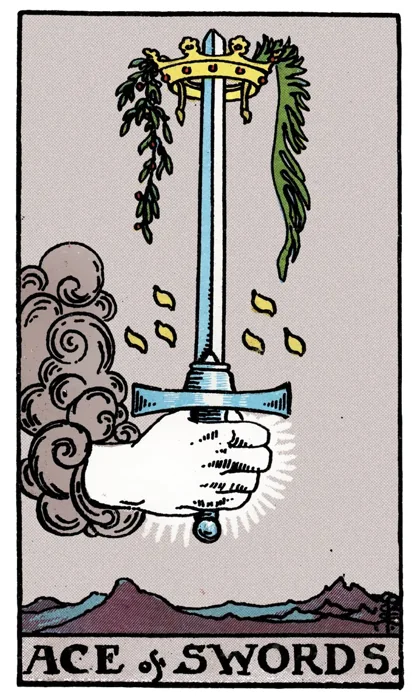
With Ace of Swords
With the Ace of Swords, a promising question may lead to a precise distinction. State the claim clearly and test it against an example. The pairing supports an emerging idea, but the excitement of clarity should not substitute for checking whether the idea holds beyond its first application.
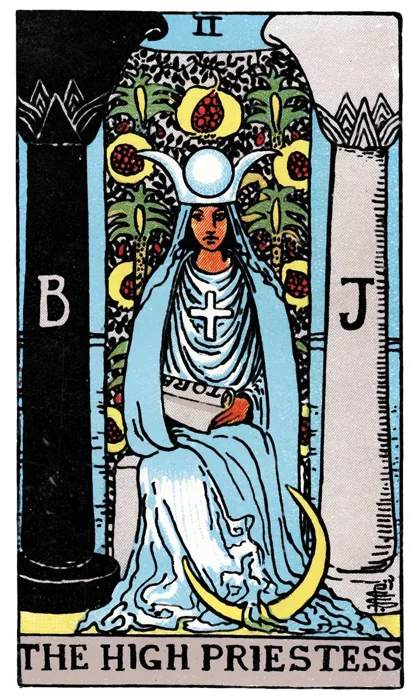
With The High Priestess
With the High Priestess, consider what can be asked directly and what remains private or unspoken. Silence is not automatically concealment. Allow observation and patience to complement inquiry, while remembering that intuition alone cannot establish another person’s intentions or grant access to information they have not offered.
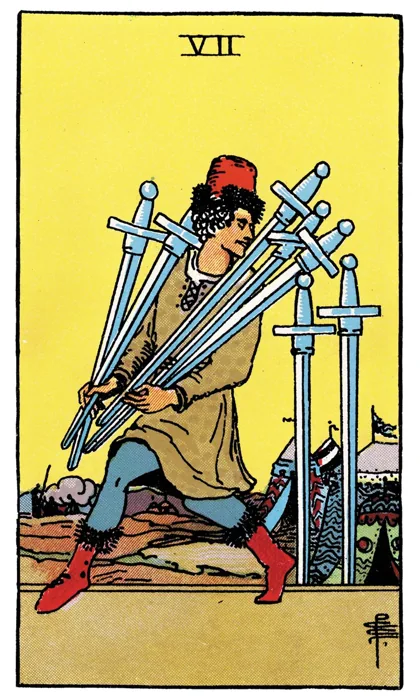
With Seven of Swords
With the Seven of Swords, examine information quality and the ethics of obtaining it. A useful investigation has a purpose and limits. Check claims through appropriate means, and avoid turning a suspicion into permission to invade privacy. Resourcefulness and deception are possibilities to distinguish, not conclusions supplied by the cards.
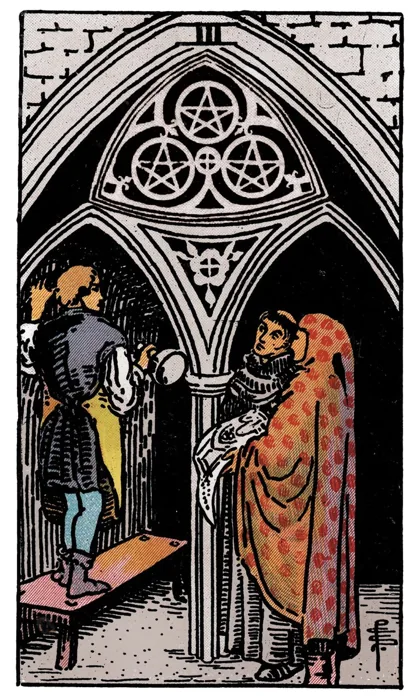
With Three of Pentacles
With the Three of Pentacles, questions can improve shared work when they reach the people who know the details. Ask the maker, the user, and the person coordinating the task. Different kinds of expertise may reveal different problems, and a good brief makes space for all of them.
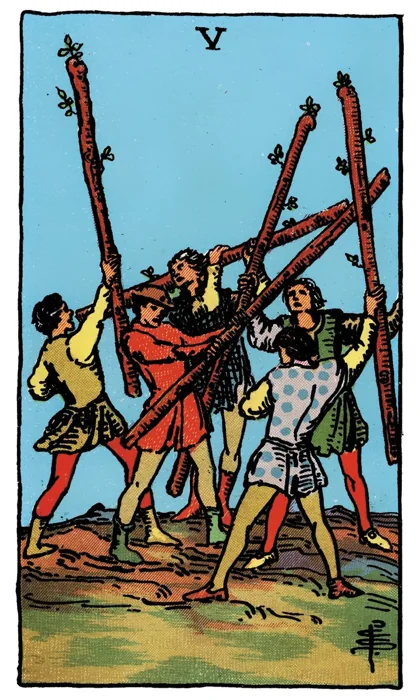
With Five of Wands
With the Five of Wands, debate may be lively and useful if everyone can still learn. Agree on the question under discussion and avoid changing the goal each time an answer becomes uncomfortable. Competition can sharpen an idea, but it should not make admitting a good point impossible.
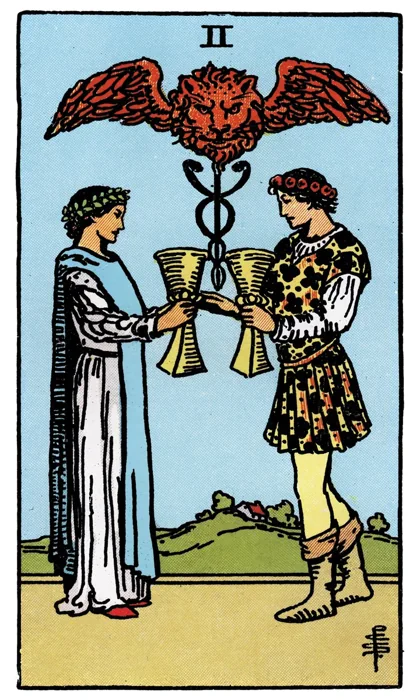
With Two of Cups
With the Two of Cups, mutual curiosity can become a form of intimacy. Ask because you want to know the person, not because you need a particular response. Give their answer room to surprise you, and offer enough of your own experience for the exchange to remain reciprocal.
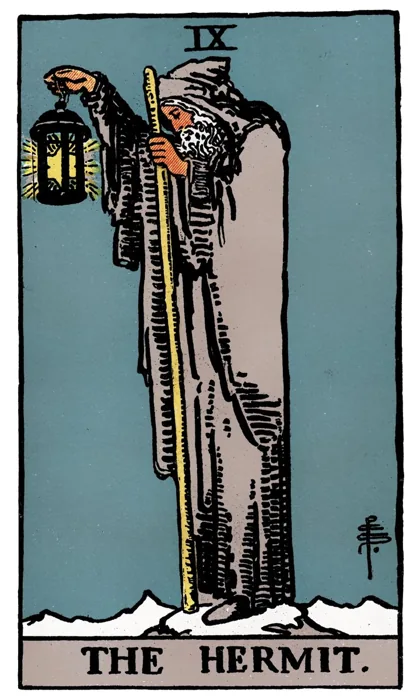
With The Hermit
With the Hermit, take a question out of the noise long enough to study it properly. A quieter source or experienced guide may be more useful than another fast exchange. Reflection helps turn the Page’s collection of observations into an understanding you can explain in your own words.
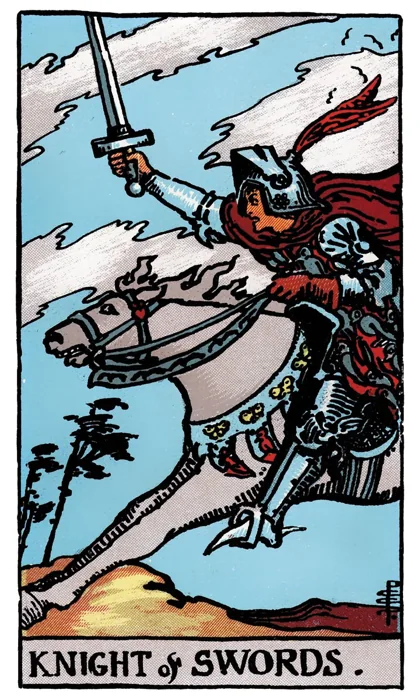
With Knight of Swords
With the Knight of Swords, inquiry may be turning rapidly into action. Before sending the message or making the accusation, check which parts are established and which are still assumptions. Speed is useful when the direction is sound; it can magnify a misunderstanding just as efficiently.
Learning to ask an inconvenient question
An apprentice asks why a tool is used in a particular way. The answer reveals both a practical reason and a habit nobody has reconsidered. Good teaching can hold both: respect for accumulated knowledge and room to test whether every inherited method still serves its purpose. The Page learns by being allowed to ask without being required to overthrow everything.
A reporter follows an interesting lead and discovers that the first explanation was incomplete. The valuable skill is not having guessed correctly at the start. It lies in listening carefully and checking the account, then making any necessary corrections before presenting it to others. Curiosity earns trust through what it does after the first spark.
A child asks a direct question at an inconvenient moment. Adults may laugh because it exposes an assumption they have learned to step around. The Page preserves something of that unembarrassed attention, while gradually learning context and kindness. Maturity need not mean losing the question; it can mean learning how to ask it well.
Follow one question to a usable answer
Choose an everyday claim you have accepted without much examination. Write what you think it means and where that belief came from. Find one reliable source or ask one person with relevant knowledge. Look especially for a detail that changes, limits, or complicates your first understanding.
Then explain what you learned in a short paragraph, distinguishing facts from your interpretation. If uncertainty remains, name it. The Page of Swords becomes more capable through this ordinary discipline: following curiosity through an investigation, then explaining the result clearly without hiding the gaps that remain.
Artwork & interpretation
The historical description emphasises alertness and observation. This original essay develops those themes through learning, language, and responsible inquiry; court cards are treated as roles and qualities rather than fixed demographic identities. A. E. Waite, The Pictorial Key to the Tarot: Page of Swords.
The symbolic associations and examples offer ways to read a situation. They do not establish another person’s thoughts or fix an outcome.
Being quick enough to notice a gap is different from knowing what belongs inside it.
Use the cards in a spread →