Swords · Seven
Seven of Swords
The plan you have not announced, and the reason you are keeping it quiet
The Seven of Swords takes an indirect route. Discretion can be useful, but a private strategy can also leave others without information they need. Look at the purpose of the manoeuvre and its consequences for everyone involved before deciding whether it is resourceful or dishonest.
- Strategy
- Discretion
- Evasion
- Selective disclosure
17 min read
In this guide
There is another way around the obvious route
You have worked out a way to do it without the meeting, the argument, or the permission you were unlikely to receive. The solution is elegant enough to be tempting. Perhaps it protects a fragile idea; perhaps it simply saves you from an awkward conversation. The Seven of Swords asks you to look at that difference before cleverness becomes its own justification.
In a reading, the card can describe a private plan, strategic timing, a workaround, independent action, partial disclosure, or an attempt to avoid scrutiny. Its ambiguity is part of its character. The same outward behaviour can serve very different purposes: keeping a job search private is not the same as concealing a commitment another person is relying on.
The card is often associated with deception, but it cannot establish that someone is lying, cheating, or planning harm. Begin with facts you can actually examine. What has been said, what is missing, what agreement exists, and what explanation would clarify the situation? Suspicion becomes more useful when it produces a precise question instead of an expanding story about invisible motives.
There is a constructive Seven: the person who sees an unconventional route through a rigid system, protects an early draft from premature judgement, or declines to announce a decision before the necessary groundwork is done. They understand that openness is not always the same as wisdom. Timing and audience can affect whether a truthful account is useful, safe, or simply too early.
There is also an evasive Seven: the person who calls every avoidance a strategy, reveals only the convenient half of an agreement, or arranges events so that somebody else must discover the decision after its consequences are already in place. The manoeuvre may succeed immediately while creating a larger problem of trust. A clever route can still lead somewhere you should have been willing to name.
The practical question is therefore ethical as well as tactical. What are you trying to accomplish, why does it require discretion, and who needs to know enough to make their own choices? A good plan can answer those questions without relying entirely on the hope that nobody will ask them.
Five swords in the arms, two still in the ground
A figure carries five swords away from a group of tents, glancing back while moving towards the left of the picture. Two swords remain upright in the ground behind them. The scene suggests an action being taken apart from the group, but it does not supply a complete account of ownership, motive, or what happened before this moment.
The backwards glance gives the movement a divided attention. The figure is travelling one way while monitoring what has been left behind. As a symbolic detail, it can describe the extra work of a concealed plan: you are managing the action and its visibility at the same time. The shortcut may therefore be less effortless than it first appears.
The five carried swords make an awkward bundle. Their points and edges occupy the space around the figure’s arms, while the two remaining blades mark an incomplete removal. A practical reading can ask about capacity and loose ends. What can this plan actually carry, and what has been left standing where others may still encounter it?
The bright yellow sky leaves the scene visible. The figure relies on how they move and where others are looking, not on darkness hiding the entire action. This gives discretion a social setting. What you arrange privately still has effects in a world other people share, and they may notice those effects even if they never saw the original manoeuvre.
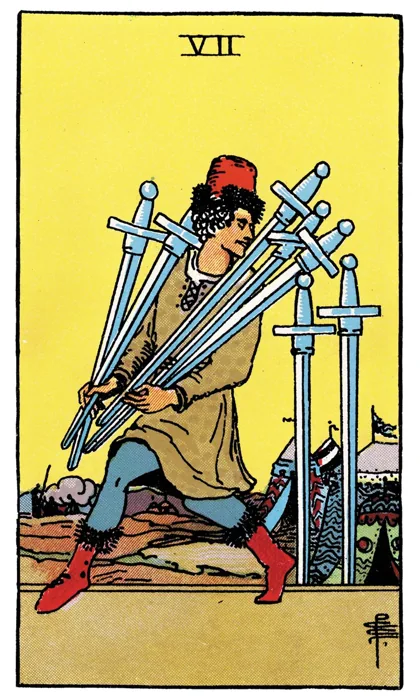
The backward glance suggests attention divided between the action and whether it has been noticed. Consider the continuing work a concealed arrangement will require, including explanations, omissions, and decisions that become harder to discuss openly.
Two swords are left behind. Read them as a prompt to inspect unfinished responsibilities, excluded people, or inconvenient facts. A manoeuvre may achieve its immediate purpose while leaving the most consequential part of the situation untouched.
Being hard to pin down can become a way of living
The inner Seven is quick to notice alternatives. While everyone discusses the front door, this person checks when the side entrance opens and considers how much they could accomplish alone. That resourcefulness can be valuable. It becomes more complicated when every shared process is experienced as an obstacle and every request for clarity feels like an attempt to take away freedom.
You may feel protective of a thought that is not ready for an audience. An early ambition, a private doubt, or a possible change can need time before it can withstand other people’s reactions. Keeping it to yourself for a while may help you hear what you actually think. Privacy can be a place where a decision develops rather than a way to prevent scrutiny forever.
Another expression is embarrassment about wanting something. Instead of making a request that might be refused, you arrange matters indirectly and hope the result will speak for itself. The manoeuvre protects you from one exposed moment, but it may leave others responding to a situation they never knowingly agreed to. Notice whether the avoided conversation has simply been transferred into the future with added complications.
The card can also describe a divided account of yourself. Different people know different versions, each carefully edited to keep the next interaction comfortable. Ordinary privacy becomes exhausting when the versions cannot coexist. Ask which difference is harmless context and which requires you to keep concealing a fact that materially changes what somebody believes they are participating in.
The mature quality is selective openness with a clear purpose. Keeping something private need not involve a misleading story. You might simply decline to answer a question, or explain that a plan is too unfinished to discuss. This kind of discretion is often less theatrical than evasion. It depends on tolerating that another person may be dissatisfied with a boundary you are nevertheless entitled to keep.
Cleverness needs a purpose beyond getting away with it
The Seven explores the distance between intelligence and integrity. Intelligence can find an effective method for almost any stated aim. Integrity asks whether the aim and method can be defended in the life they affect. A plan does not become sound merely because it is difficult to detect or because you can explain why a less inventive person would never have thought of it.
Yet absolute openness is not a sufficient ethical rule either. People need private thought, confidential advice, and room to prepare decisions without premature pressure. In unequal or unsafe situations, discretion may protect a necessary option. The relevant question is who has a legitimate claim to which information, in what circumstances, and with what consequences for the people involved.
This makes the card sensitive to power. A person withholding details from someone who routinely punishes independence is in a different position from a person concealing facts to retain another’s trust or resources. The surface resemblance should not erase the difference. A careful reading examines the actual arrangement rather than awarding virtue or blame to secrecy as an abstract category.
The Seven also exposes self-deception through convenient naming. Calling avoidance 'patience' can make it easier to continue. The same happens when fear is presented as strategy, or a broken commitment defended as flexibility. Sometimes those words are accurate. Test them against the action: what would change if you described the plan in plain terms to someone whose judgement you respect? The answer can reveal where the attractive label is doing more work than the reason.
Its deeper possibility is thoughtful independence. You do not have to submit every idea to collective approval, but you remain responsible for the effects of acting alone. Freedom gains substance when it can coexist with honest limits, clear commitments, and an account of who will bear the cost if the plan does not work.
A workaround can solve a problem or hide one
At work, the Seven may describe a resourceful route around an inefficient process. A small experiment, an independent draft, or a quiet conversation with someone who understands the system can get useful work moving. Before proceeding, check which constraints are merely habitual and which protect quality, security, fairness, or responsibilities that are not immediately visible to you.
There is a difference between simplifying a process and making the work unaccountable. If a shortcut creates a result nobody else can understand, maintain, or verify, the saved time may be borrowed from a colleague’s future. Record the important decisions and limitations. Good ingenuity leaves enough of a trail for the work to remain usable after the clever person has moved on.
Private preparation can be sensible when considering a role change or developing an early idea. You may need information before announcing an intention. Keep existing commitments clear while you explore. The card favours a thoughtful boundary around unfinished plans, but it also asks when other people will need notice in order to manage the consequences fairly.
In collaboration, the difficult Seven appears as hidden changes of scope, selective reporting, borrowed credit, or agreements that mean different things to different participants. Do not infer these from the card alone. If something feels inconsistent, ask for the concrete record: what was agreed, what changed, and who was informed? A verifiable question is more useful than a character accusation.
Creative work often needs a period without commentary. You may produce something livelier when it is not being explained in advance to a committee. Protect that stage while distinguishing it from avoiding every eventual test. A private draft can be free; a delivered piece still has to meet the promises attached to it.
The professional shadow is becoming the only person who knows how things really happen. This can feel like independence or job security, but it makes ordinary cooperation fragile. Consider whether sharing a method would improve the work and reduce your own burden. Being indispensable through opacity is a demanding position to maintain.
What does the other person need to know to choose freely?
In relationships, the Seven asks about information and agreement. People are entitled to private thoughts, friendships, and spaces of their own. At the same time, some facts materially affect a shared decision. The useful distinction is whether your privacy preserves your own room to live or depends on someone else making choices from an account you know is misleading.
A card cannot establish infidelity or hidden motives. If a real inconsistency troubles you, address that inconsistency directly and proportionately. Ask about the changed plan, the unclear agreement, or the behaviour you observed. Searching for secret proof because a symbolic image feels convincing can replace a difficult conversation with a much larger and less reliable story.
The Seven can describe indirect requests. You hope someone will offer what you cannot bring yourself to ask for, or create a situation that makes refusal awkward. This may feel safer than a direct request, yet it can leave both people unsure whether the eventual agreement was freely given. Try naming the wish with room for an honest answer.
There are also situations where direct disclosure is not safe or reasonably owed. A person preparing to leave a controlling arrangement may need confidential support and privacy. The card should not be used to demand openness to someone who could use the information to punish or obstruct them. Context and actual power matter more than a tidy rule that all secrets are harmful.
If you have concealed something consequential, consider what repair would require before making a dramatic confession designed chiefly to relieve your own discomfort. The other person may need accurate information, time, and a change in the arrangement. Taking responsibility includes allowing them a response you cannot script or immediately convert into reassurance.
In friendship and family, discretion can be a form of care when you are holding someone else’s confidence. Avoid turning access to private information into social importance. A useful question is whether sharing this detail serves the person concerned or merely makes you more interesting in the current room. Some things are kept well by refusing to make them part of the performance.
The missing detail may be the important one
In material matters, the Seven invites close attention to assumptions and omissions. A proposal may sound attractive because one cost, limitation, or responsibility has not been discussed. Read what is actually offered and ask about what remains unclear. This is an invitation to ordinary verification, not a claim that a person or opportunity is fraudulent.
Shared finances make the distinction between privacy and concealment especially concrete. People may agree to independent spending while still needing accurate information about shared obligations. The details depend on the arrangement. What matters is that everyone can understand the commitments they are making without a hidden condition changing the terms afterwards.
At home, a workaround can be clever and temporary: using what you already have, rearranging a space, or finding a less obvious way to complete a task. Notice when the temporary solution quietly becomes permanent while the underlying problem grows. The Seven asks you to remember the two swords left behind, including the repair you intended to revisit.
A purchase can also be made into a private strategy for changing your life without discussing the change. You buy the equipment before agreeing on the space, or commit to a plan before speaking to the person whose time it requires. Bring the affected person into the actual decision. Possession of the object should not be used to manufacture consent after the fact.
How much work is the concealment creating?
A hidden arrangement can demand constant maintenance. Remembering which version you told each person becomes a way to prevent accidental overlap. Certain subjects have to be avoided altogether. If this describes your situation, consider the total load rather than only the awkward moment being avoided. The strategy may be using more attention than a clear boundary or difficult conversation would require.
Private time can have the opposite effect. An unannounced walk, a notebook nobody reviews, or an interest you are not yet ready to explain can restore a sense of ownership over your attention. You need not turn every pleasure into a public identity. Some experiences become richer when they are allowed to remain yours for a while.
The distinction can be felt in what the privacy asks you to do next. Does it give you room to think, or require a growing number of manoeuvres? This is not a perfect moral test, but it is a useful practical observation. A plan that continually expands its need for concealment deserves another look.
Describe the plan without making it sound clever
Write the action you are considering in plain language. Then add why it needs to be private, who may be affected, and when any necessary disclosure should happen. This simple account can expose a useful strategy, a legitimate boundary, or an avoidance that has acquired an impressive vocabulary. Let the actual consequences carry more weight than the elegance of the method.
If you are trying to solve a problem, look for an unconventional route that still respects the relevant commitments. A smaller experiment, a different sequence, or advice from someone outside the immediate group may help. Independence can be productive when it does not quietly assign the risk or unfinished work to people who never agreed to carry it.
The shadow is pride in being the person who sees through every rule. Some rules are poorly designed; some represent other people’s experience of what goes wrong. Find out which kind you are dealing with. The ability to evade a constraint does not by itself establish that you understand its purpose.
Another shadow is assuming everyone else operates through the same hidden calculations. You may begin reading ordinary ambiguity as proof of a scheme. Ask a specific question about what you have observed, remaining willing to change your view in response to the answer. Discernment needs the possibility that your suspicion is incomplete.
The private plan meets another perspective
Reversed, the Seven can describe a willingness to bring something into the open. You ask for advice, admit a limitation, or stop maintaining a version of events that has become difficult to support. This can simplify the situation, but clarity may still have consequences. Honesty is a beginning of a different arrangement rather than a guarantee that everyone will immediately feel relieved.
It may also point to a plan whose loose ends have become visible. A missing detail is noticed, a workaround fails, or another person asks the question the strategy was designed to postpone. Resist answering only the latest discovery. Look at the underlying agreement and what needs to be made accurate before another clever explanation creates the next complication.
In a constructive form, the reversal welcomes counsel. Working alone has reached its limit, and a trusted person can see what you have overlooked. Choose someone able to question the plan rather than merely admire it. Good advice may make the route less dramatic and considerably more dependable.
Another expression is excessive exposure: feeling that every thought must be disclosed to prove you have nothing to hide. You can be trustworthy and still have a private interior life. The task is appropriate openness, which depends on the situation and the agreement. Confession is not the only alternative to deception.
The reversed card does not promise that a secret will be revealed or that somebody will be caught. It asks how your relationship with privacy, advice, and accountability is changing. Decide what needs to be clarified, what legitimately remains yours, and which part of the plan would benefit from a second pair of eyes.
What purpose does the discretion serve?
These pairings explore possible contexts for strategy and concealment. None establishes that another person is dishonest; use them to form better questions about the facts and agreements already available.
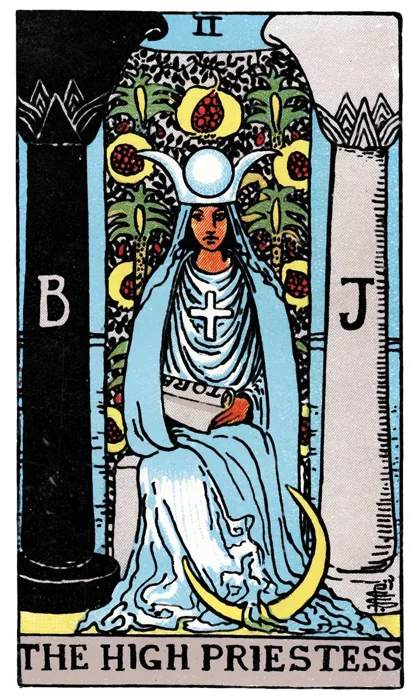
With The High Priestess
With the High Priestess, something may need privacy while it develops. Quiet observation can be more useful than an early announcement. At the same time, intuition is not evidence of another person’s secret. Be clear about where knowledge ends and a hunch begins; a question you have yet to ask may help resolve the difference.
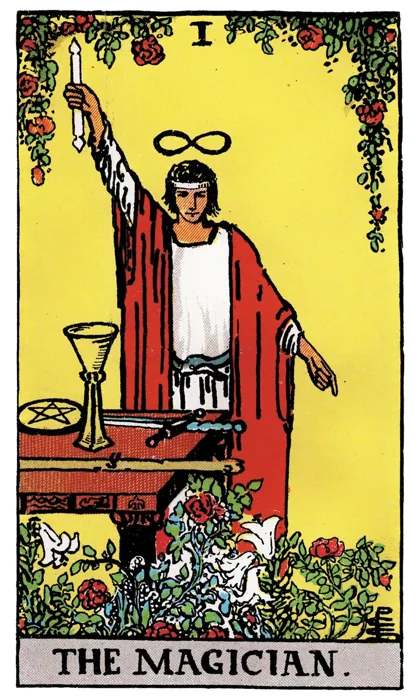
With The Magician
With the Magician, resourcefulness and presentation become especially prominent. You may have the means to shape how a proposal is understood. Use that skill to make the real idea clearer, and inspect any detail whose omission is doing most of the persuasive work.

With Justice
With Justice, examine the plan against the actual agreement and the information others need. A technically defensible manoeuvre may still frustrate the purpose of what was promised. Seek an accurate account and appropriate advice where required, rather than treating clever wording as a complete answer to responsibility.

With The Moon
With the Moon, uncertainty can encourage an elaborate story about hidden motives. Slow the interpretation down. Identify the specific missing fact and a proportionate way to clarify it. The pairing can illuminate your experience of ambiguity without confirming that the most alarming explanation is true.
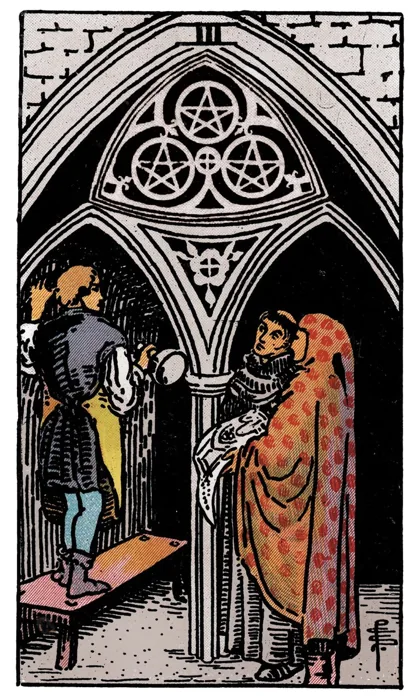
With Three of Pentacles
With the Three of Pentacles, an independent method may need to become shareable. Document enough for collaborators to understand and maintain the work. A useful private experiment can become a stronger common project when its limitations and decisions are brought into a clear conversation.
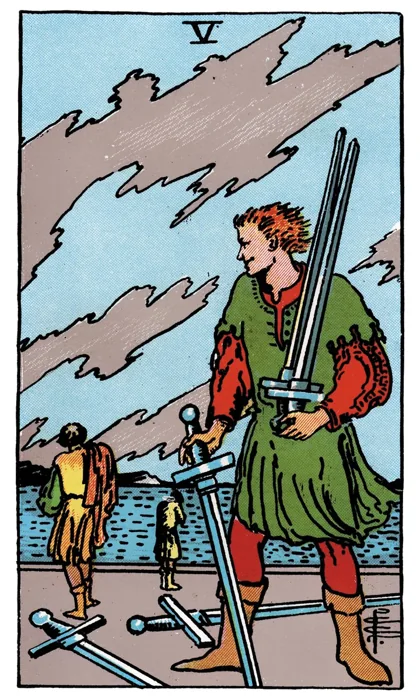
With Five of Swords
With the Five of Swords, a tactic may be serving the wish to defeat someone rather than resolve the issue. Consider who will bear its effects after the immediate contest. An indirect route can still carry aggression, even when it avoids the appearance of an open confrontation.
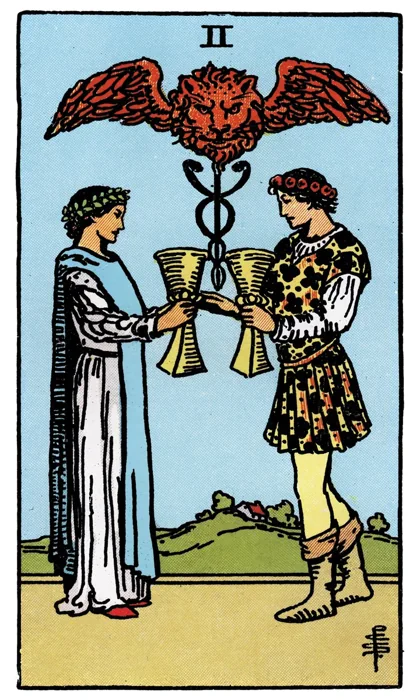
With Two of Cups
With the Two of Cups, look closely at the shared understanding. What has each person agreed to, and what information would change that agreement? A relationship can support privacy while requiring honesty about consequential commitments. The distinction becomes clearer through specific discussion than through demands for unlimited access.
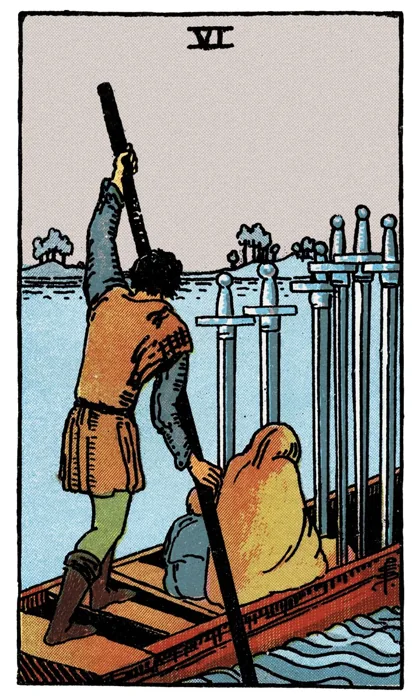
With Six of Swords
With the Six of Swords, a departure may need quiet preparation. Practical discretion can protect the route, especially where announcing every step would create unnecessary obstruction. Keep the purpose clear and arrange trusted support, while identifying any responsibilities that need a safe and appropriate handover.
When a private choice needs a closer look
A writer keeps a draft in a drawer until it has acquired enough shape to withstand another person’s opinion. The secrecy serves the work’s development and has an eventual opening built into it. This is the Seven’s protective discretion: the writer has time to discover what they want to say before responding to suggestions from others.
A resourceful traveller finds a side entrance around a blocked road. The route saves time, but its value depends on where it leads and whose ground it crosses. The scene gives ingenuity an ethical landscape. Finding a way is only the beginning of deciding whether it is a way you should take.
Someone tells a slightly improved version of a small event, then discovers that every later conversation must fit the improvement. The first alteration was easy; the maintenance becomes a job. The story illustrates how concealment can grow from a minor convenience into an arrangement that increasingly dictates the person’s freedom.
Audit one private plan
Choose a plan you are keeping quiet and feel safe examining. Write its purpose, the reason for discretion, the people affected, and the facts they would need before making a consequential choice. Identify any practical or safety reason that disclosure needs careful timing. The aim is an accurate account, not a rule that everything must be announced.
Then choose one improvement: ask a trusted person for advice, make a direct request, document the workaround, clarify an agreement, or protect a legitimate boundary without inventing a cover story. Notice whether the change reduces the amount of manoeuvring required. The Seven becomes practical when resourcefulness makes life more workable without quietly taking away somebody else’s room to choose.
Artwork & interpretation
Waite describes five swords being carried away and two remaining by a camp, and explicitly notes uncertainty among the card’s different meanings. This original essay develops that ambiguity through strategy, privacy, evasiveness, and accountability; the image is not treated as proof of deception. A. E. Waite, The Pictorial Key to the Tarot: Seven of Swords.
The symbolic associations and examples offer ways to read a situation. They do not establish another person’s thoughts or fix an outcome.
Privacy can protect a necessary freedom; concealment can take away someone else’s ability to choose.
Use the cards in a spread →