Swords · Eight
Eight of Swords
The space between having an option and being able to take it
The Eight of Swords depicts a situation in which every available move seems costly. Limited information makes it harder to judge what is safe. Begin with the part you could learn more about. A clearer understanding of one constraint may reveal a way to make the situation less restrictive.
- Restriction
- Limited perspective
- Fear of consequences
- Emerging agency
17 min read
In this guide
From outside, the way out always looks simpler
Someone says you could simply leave, refuse, apply elsewhere, tell the truth, or stop caring what people think. They can see a gap in the situation and mistake seeing it for being able to walk through it. The Eight of Swords begins closer to the person standing inside: what would help them move, given the information they have and the risks they face?
In a reading, the card can describe restriction, a sense of having no acceptable choice, limited information, fear of consequences, or a situation in which judgement from others has narrowed your room to act. The constraint may be practical, relational, institutional, internal, or a combination. A useful interpretation investigates the particular barriers before assigning the whole problem to confidence or attitude.
Some limits are real and immediate. Money, access, dependence, obligations, or unequal power can make a theoretical option difficult to use. Other limits may be assumptions that were once accurate but have not been checked recently. These require different responses. A missing resource cannot be supplied by a positive thought, while an outdated rule may become less powerful when it is carefully tested.
The Eight can describe a double bind in which each available response has a cost. Speaking might bring disapproval, but staying quiet allows the arrangement to continue. Leaving could mean losing something important. Consider whether support would make one route less costly, or whether the decision can be broken into smaller parts. Waiting for a consequence-free choice may keep every option out of reach.
The card is not evidence that you created the trap or deserve to be there. Nor does it establish that escape is impossible. It asks for a more detailed map than the statement that nothing can be done. Even when the larger situation cannot change immediately, information, an ally, or one limited decision may alter what becomes possible next.
Its hopeful element is therefore concrete rather than triumphant. A question gets answered, a rule turns out to allow an exception, someone offers help, or you recognise that one feared reaction would be unpleasant but survivable. The opening need not solve everything to matter. It only needs to be real enough to change the next step.
The viewer can see what the figure cannot
A blindfolded figure in a red dress stands bound around the body, with eight swords planted nearby. The ground is uneven and crossed by shallow water. In the distance, a building stands above the scene. The image presents several restrictions at once: limited sight, constrained movement, uncertain footing, and separation from a place that might represent shelter or authority.
The swords do not form a solid wall across the foreground. From the viewer’s position, there appears to be space in which movement might occur. But the figure cannot see the arrangement as we do. This difference is central to a careful reading. An observer’s knowledge of an opening does not automatically become usable knowledge for the person inside the scene.
The bands around the body and the uncovered feet can prompt questions about which kinds of movement remain available. They should not become an invitation to dismiss the restriction as trivial. The picture does not tell us who tied the figure, what would happen if they moved, or what help might be needed. Interpretive confidence should leave room for those missing facts.
The distant building adds another ambiguity. It might be read as a place of support, the source of a rule, or a world from which the figure feels excluded. Rather than assigning it one universal meaning, ask what institutions, people, or expectations stand in the background of your situation. Distance can make both support and authority difficult to assess clearly.
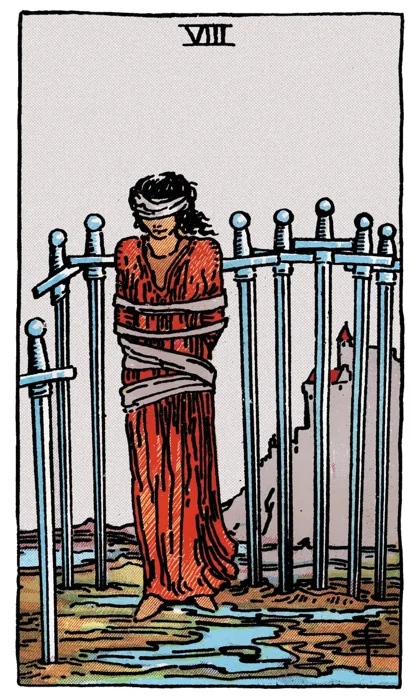
The blindfold and bindings suggest different needs. Better information may help with one part of a situation, while practical assistance or a changed arrangement is needed for another. Avoid expecting insight alone to do every kind of work.
The foreground offers space, but the footing is uncertain and the figure cannot see it clearly. Translate a theoretical option into actual conditions: knowledge, support, resources, timing, and a manageable first movement.
Every answer seems to have a reason it will not work
The inner Eight can feel like a conversation in which you have already rehearsed every suggestion and found its flaw. People offer solutions, and you explain why each one is unavailable. Sometimes your explanations are accurate. Sometimes the mind has become so practiced at locating danger that it no longer distinguishes a serious barrier from an uncomfortable possibility. The distinction deserves curiosity rather than impatience.
You may be trying to make a decision without allowing yourself any disappointing effect on others. Every route that produces anger, sadness, or disapproval is excluded, leaving only continued immobility. Consider whether the requirement is safety, fairness, or universal approval. These are different standards, and the last can make ordinary adult choices appear morally impossible.
The card can also describe a voice of judgement that has become familiar enough to sound like your own. You know in advance that the attempt will be foolish, selfish, or inadequate because that is how similar attempts have been received. A useful question is whose standard is being applied and whether you still endorse it under the circumstances you now face.
Shame can narrow the search for help. You believe you should already know how to solve the problem, or that explaining it will expose you as less capable than people assume. The result is a private burden that becomes harder to assess accurately. One trustworthy listener may help separate the situation’s actual complexity from the additional demand that you handle it invisibly.
The stronger personal expression is a careful return of agency. You name one preference, ask one question, or make one decision within your reach. This does not require pretending to feel fearless. It means allowing your experience and judgement to participate in the next step, even while the larger arrangement remains difficult.
Freedom has conditions, not just a feeling
The Eight challenges a simple account of choice. From a distance, an option can look available because it can be described in a sentence. From within a life, it may require money, safety, transport, knowledge, permission, or support that is not currently present. A serious reflection on freedom asks about those conditions instead of treating their absence as a failure of courage.
At the same time, the card questions the authority of an inherited map. You may still navigate around a prohibition that no longer applies, anticipate a punishment the present setting does not impose, or assume a request will be refused because it once was. The map had a history. It can be respected for what it helped you survive while being checked against current reality.
There is an ethical lesson for the observer. Seeing more of the scene gives you a responsibility to communicate and assist, not a licence to mock the person who sees less. Good help makes an opening more usable. That starts with asking what the person needs and explaining anything relevant they may not know. Their need for assistance must not become another means of controlling them.
The card also holds the difference between responsibility and blame. You may have choices about the next step without being responsible for every condition that created the problem. Acknowledging some agency does not require accepting an accusation that you caused the whole situation. This distinction allows action to begin without demanding a false confession first.
Its deeper movement is towards a more exact language of limitation. Instead of concluding that nothing is possible, you might find that only one route is unavailable today. Others may need support or remain untested. The revised account may still describe a difficult life. It also contains more places where information, cooperation, and time can make a difference.
Which rule is binding, and who can explain it?
At work, the Eight can describe unclear authority, a role with responsibility but little discretion, or a process in which every decision appears to require somebody else’s approval. Start by identifying the actual rule. Who owns the decision, what standard applies, and what is genuinely outside your control? Vague constraint is harder to negotiate than a specific limit.
You may be afraid to ask a question because asking seems to reveal that you should not have the role. Yet working around missing information can create more difficulty than a brief admission of uncertainty. A precise question often demonstrates attention to the task. It also gives the person responsible an opportunity to supply what has not been made clear.
For a stalled project, distinguish a resource problem from a confidence problem. No amount of private encouragement replaces missing access, an unavailable collaborator, or an impossible scope. Conversely, a small draft may be possible even while you feel unsure about its quality. The next step should address the particular obstacle rather than treating every delay as the same kind of hesitation.
A restrictive workplace can also train people to anticipate criticism from every direction. One manager asks for initiative while another punishes deviation; the deadline is fixed while the requirements keep changing. Document the conflicting expectations and seek clarification through an appropriate route. The card’s practical value is in making the bind visible, rather than asking you to become more adaptable to an incoherent demand.
Creative work has an internal version: every idea is judged before it has enough form to show what it might become. As you try to make the first mark, you are already imagining an embarrassing review that compares your work unfavourably with someone else's. A bounded private experiment can separate making from evaluation, giving the work a small space in which it is allowed to be incomplete.
The professional possibility is a negotiated margin of action. Ask for a decision you can make independently, a clearer brief, a smaller deliverable, or access to the information you need. If the environment cannot provide a workable margin, that too is useful evidence. The reading should help you assess the arrangement, not turn endless endurance into a measure of competence.
Being allowed to choose is different from being unafraid to choose
In relationships, the Eight can describe difficulty expressing a need, fear of someone’s response, or dependence that makes a decision feel inaccessible. Look at what actually happens when you disagree. Ordinary disappointment, repeated belittling, and threats are different realities. A useful reading does not collapse them into one generic instruction to communicate more confidently.
Sometimes you have become responsible, in your own mind, for keeping everyone comfortable. You edit a preference before speaking because it might inconvenience someone. A small request can help test whether the present relationship has more room than you assume. Choose an ordinary matter and allow the other person to respond, rather than doing all of their presumed objecting for them.
In other situations, the fear has a concrete basis. Someone controls resources, isolates you, or punishes independent choices. The relevant next step may involve confidential, appropriate support and careful planning. The card cannot establish the danger, but neither should its open foreground be used to insist that a person can safely leave or confront someone without help.
Family expectations may form another kind of enclosure. A role has been assigned so long that changing it feels like betraying the entire relationship: the reliable one, the mediator, the person who never needs anything. Ask which part is a current agreement and which is a story nobody has revisited. A new boundary can be specific without becoming a rejection of every bond.
If you are supporting someone who feels trapped, resist competing with their account of the difficulty. Ask which obstacle is most immediate and what kind of help they would welcome. Offering a practical choice can be more useful than insisting that they already possess unlimited freedom. The aim is to increase their room to act, not to make them act on your timetable.
The relational possibility is a connection in which uncertainty can be spoken without becoming evidence against you. You can ask for time, disagree, or admit that a decision is complicated. Notice the people who make that possible. Their presence may not solve the whole situation, but it can provide a place from which your own judgement becomes easier to hear.
An option becomes real through its practical conditions
Material constraints can sit at the centre of the Eight. A person may know what they want to change and still lack the money, access, time, or stable arrangement required. Start with an honest account of those needs. Calling the obstacle a limiting belief when it has an actual price can make the person feel more alone with a problem that needs resources.
Information can still change the picture. You may not know the terms of an agreement, the full cost of an option, or whether support exists. Identify one question that can be answered through a reliable source or appropriate adviser. The purpose is to replace a broad fear with a more usable fact, even if that fact confirms a genuine limitation.
At home, the card may describe a space that feels difficult to alter because decisions are shared, resources are limited, or every object carries somebody else’s expectations. Look for one manageable area of choice. A small change does not solve the whole arrangement, but it can reveal where negotiation is possible and where a clearer agreement is needed.
When considering a move or major commitment, separate immediate feasibility from eventual possibility. Some routes may need preparation over time. A written account of requirements can make that preparation more concrete without pretending it is easy. The Eight supports understanding your options; it does not select a financial course or promise that an unavailable resource will appear.
Give the mind a smaller question to answer
Feeling trapped can make every decision seem connected to the entire future. Choosing an email response becomes choosing your place in the relationship; making one mistake seems to confirm a permanent inability. Bring the scale closer. What needs deciding today, and what can remain undecided? A bounded question may be easier to examine accurately than a verdict about your whole life.
Repeated searching can sometimes increase uncertainty instead of resolving it. You collect more opinions until every route has an alarming objection attached. Choose the information most relevant to the actual constraint, and notice when another opinion is unlikely to change the facts. A trusted source and a precise question can be more useful than an unlimited search for reassurance.
The card can accompany difficult feelings, but it is not a diagnosis. If distress or restriction is significantly affecting daily life, appropriate support may be part of the practical picture. A reflective exercise should make room for that help rather than presenting insight, willpower, or a tarot interpretation as sufficient for every situation.
Separate the barrier into parts you can examine
Describe the constraint in concrete terms. Replace a broad statement such as I have no choice with the particular cost, rule, missing resource, or feared response involved. This does not require making the situation sound easier. Precision helps identify whether the next useful action is gathering information, seeking assistance, negotiating a condition, or testing an assumption.
Choose a step whose risk and scale you can reasonably assess. Ask a question before making an announcement, obtain information before committing, or discuss one option with someone trustworthy. A small step is valuable when it changes what you know or can do. It does not need to serve as a motivational performance of fearlessness.
The shadow is turning the card into an accusation that the prison is entirely in your head. That reading can erase real dependence and harm. The opposite shadow declares every limit permanent before it has been examined. Both replace the particulars of a life with a story that is too complete to learn anything new.
Keep the person making the choice at the centre of the process. Advice should increase their understanding and access to options, including the option to move slowly. An observer may see a gap, but the route becomes useful only when the person inside has enough knowledge, support, and safety to consider taking it.
A little more sight, a little more room
Reversed, the Eight can describe a restriction becoming clearer or beginning to loosen. You discover that a rule was an assumption, that help is available, or that a decision can be broken into smaller parts. The change may be modest. Its value lies in making one previously inaccessible action thinkable and practical enough to consider.
A new opening can also feel unsettling. When an obstacle has organised your life for a long time, the possibility of movement brings fresh questions and responsibilities. You may miss the certainty of knowing that nothing could happen, even while wanting the freedom. Give yourself time to learn the new conditions without interpreting hesitation as proof that you secretly prefer the old restriction.
Sometimes the reversal shows pressure increasing rather than release. More voices tell you what to do, the consequences feel larger, or shame makes it harder to ask for help. Return to the actual sources of constraint. The orientation alone cannot decide whether the situation is opening or closing; current evidence and your lived circumstances matter more.
It can also mark the recognition that an external barrier remains even after your perspective changes. You understand the situation more clearly, yet still need resources, an agreement, or institutional support. This is not failed insight. Clarity has done its part by identifying the next kind of work, which may require other people to participate.
Read the reversed Eight as a question about emerging room to act. Given what you can now see, where would support help you take an option that remains inaccessible? You do not need to claim complete liberation. A more accurate understanding and one additional choice can be a substantial beginning.
What would make the opening usable?
These pairings explore different sources of restriction and support. Let them direct attention towards real conditions; they do not establish danger, diagnose a condition, or decide another person’s motives.
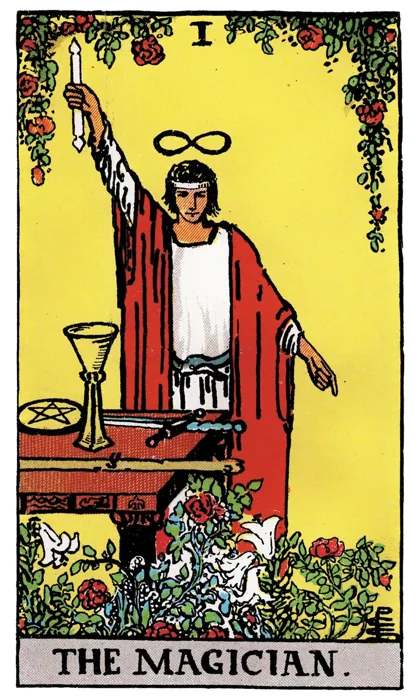
With The Magician
With the Magician, take stock of tools and skills that may be available but difficult to recognise from inside the problem. Ask which resource can address the actual obstacle. Capability matters most when it is connected to a feasible action, rather than used to insist you should already have solved everything.
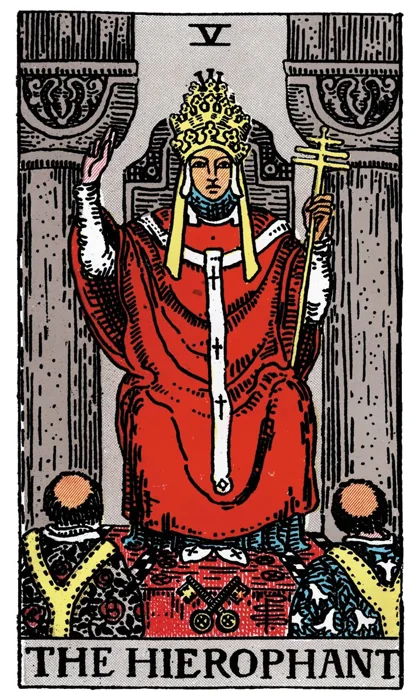
With The Hierophant
With the Hierophant, a rule, tradition, or institution may shape the constraint. Find out what is formally required, what is customary, and who can explain exceptions or alternatives. Understanding the system can reveal a route without assuming that every authority is either entirely oppressive or automatically correct.
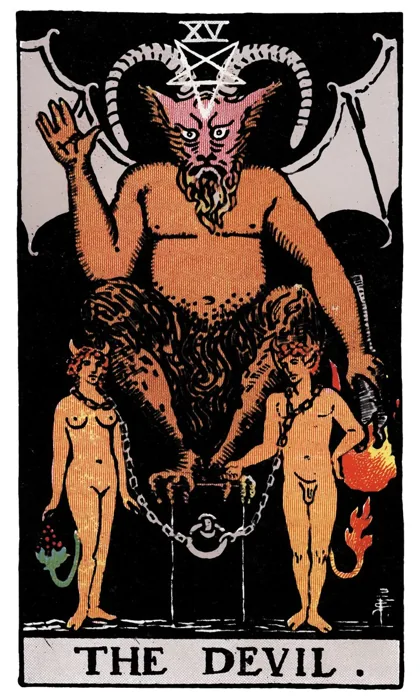
With The Devil
With the Devil, examine dependence, control, or a pattern whose immediate reward makes leaving costly. Ground the reading in observable circumstances. Practical and confidential support may matter more than an instruction to be stronger, especially where another person controls resources or punishes independence.
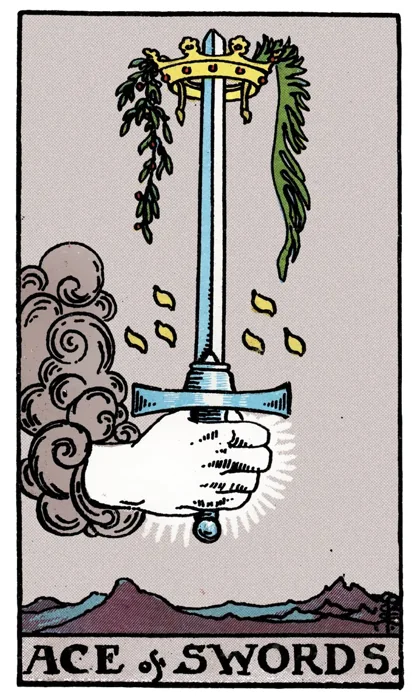
With Ace of Swords
With the Ace of Swords, one precise distinction may change the map. An option you fear may not actually be forbidden; an unknown outcome may still be possible. You might also need to distinguish an obligation from someone else's expectation. Clarity can identify an opening while leaving the practical work of using it still to be done.
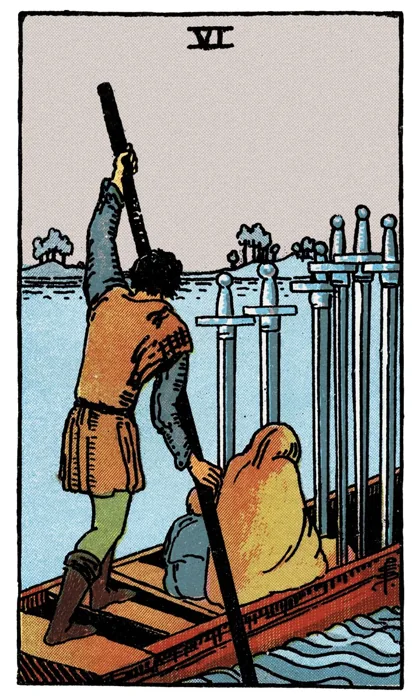
With Six of Swords
With the Six of Swords, assistance can turn a possible exit into an actual passage. Identify who knows the route and what the transition requires. The combination supports a practical plan with appropriate help, rather than a demand to move before the necessary conditions are in place.
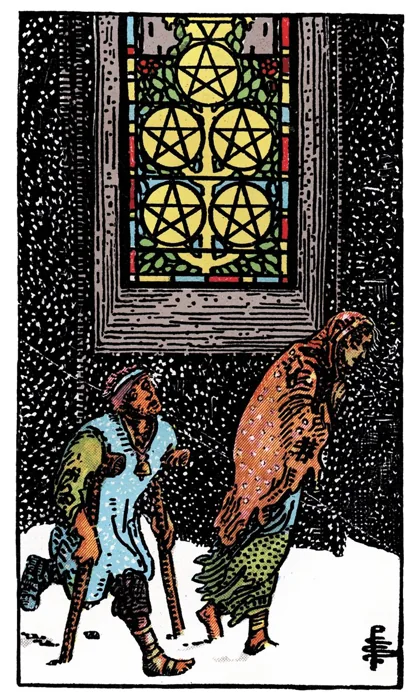
With Five of Pentacles
With the Five of Pentacles, a material barrier may be central. Access, money, stability, or exclusion deserves direct attention. Look for reliable information and suitable support while acknowledging the difficulty. The pairing should not be reduced to a claim that hardship will disappear if your attitude improves.
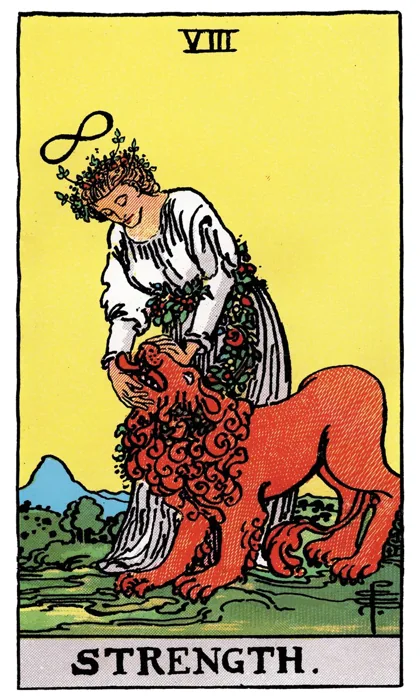
With Strength
With Strength, courage may take the form of a small, supported action while fear remains present. A calm boundary, a question, or a request for help can be significant. Avoid making endurance the only available virtue; strength can also include recognising when the arrangement itself needs to change.
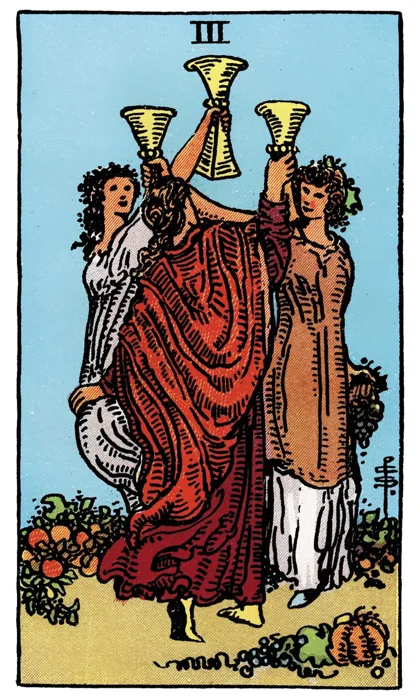
With Three of Cups
With the Three of Cups, trusted company may widen the view and reduce the burden of handling everything privately. Choose people who can listen without taking over. Practical companionship and shared knowledge can make an option more accessible while leaving the decision with the person whose life is affected.
The untranslated sign and the gate nobody has tested
A traveller stands before a sign written in a language they cannot read. A local person sees an obvious instruction; the traveller sees an obstacle. The difference is access to information, not intelligence. A few words of explanation can change the scene more effectively than a lecture about confidence.
A gate was locked for years. Someone who learned to walk around it no longer checks whether it opens. The image invites a careful test of an old assumption, while remembering that the earlier detour may once have been entirely sensible. Updating a map does not require contempt for the person who needed it before.
A person is offered a place on the other side of town but has no way to get there. The opportunity exists on paper and remains unavailable in daily life. A ride, a changed time, or another practical adjustment transforms its meaning. This is the Eight’s social lesson: freedom often arrives through details someone else could help change.
Make one constraint more specific
Choose a situation that feels restrictive and is safe to examine. Write the main barrier, then separate what you know from what you assume and what you still need to find out. Include real costs and dependencies. Identify one reliable source of information or one person who could help with a specific part of the difficulty.
Take a small step towards making an option more usable: ask the bounded question, obtain the missing detail, request practical support, or test a low-risk assumption. Afterwards, update the map rather than judging your courage. The Eight of Swords becomes useful when a person gains a little more accurate information and a little more room to choose within their actual life.
Artwork & interpretation
Waite describes the bound and blindfolded figure and distinguishes temporary restriction from irretrievable bondage. This original essay explores information, practical barriers, unequal power, and supported choice; it does not adopt the historical entry’s medical or fatalistic associations as predictions. A. E. Waite, The Pictorial Key to the Tarot: Eight of Swords.
The symbolic associations and examples offer ways to read a situation. They do not establish another person’s thoughts or fix an outcome.
An opening can exist without yet being visible, safe, or affordable to the person who needs it.
Use the cards in a spread →