Swords · Nine
Nine of Swords
When the mind keeps the night watch
The Nine of Swords describes the hours when a worry becomes impossible to put down. Regret may keep you awake, especially when you feel responsible for something you cannot resolve tonight. The distress deserves attention. Frightening thoughts can feel convincing in those hours, but they cannot tell you what will happen tomorrow.
- Worry
- Remorse
- Sleepless reflection
- Seeking support
16 min read
In this guide
A private room filled with consequences
There is a particular kind of worry that becomes more convincing when nobody else is awake. An unfinished conversation acquires a final meaning. A small mistake becomes the first event in a whole imagined collapse. You rehearse what you should have said, then rehearse what everyone will think. The Nine of Swords lives in that crowded private room, where the mind is doing a great deal of work and finding very little relief.
Upright, this card can describe anguish, regret, dread, shame, or the strain of carrying a difficult matter alone. Sometimes there is a concrete problem requiring action. Sometimes the problem is uncertainty itself, with imagination supplying the most painful possible answer. Often both are present: something real has happened, and the anticipated consequences have grown larger than the information currently available.
The distinction matters because a practical problem and a repeating fear need different kinds of attention. You might need to send a message about an unanswered invoice or apologise for a hurtful remark. The belief that one mistake has permanently disqualified you from being loved cannot be resolved by sending ever more perfect messages. Before doing anything dramatic, identify what happened and what your mind has added around it.
The Nine depicts someone suffering with worry. In an outcome position, it may help you consider whether an unspoken concern is likely to keep occupying your thoughts. Ask what support or conversation could change those conditions. The image gives no reliable information about future events; feeling frightened by a possibility does not establish that it will happen.
There can be conscience here too. You may be troubled because you recognise a responsibility you avoided. The card need not absolve you or condemn you. It can help separate useful remorse, which points towards repair, from endless self-punishment, which keeps you occupied without changing what anyone else actually needs. A feeling becomes more workable when it has a name and an appropriate destination.
The blades occupy the darkness
A person sits upright in bed with their face hidden in their hands. Nine swords stretch horizontally across the dark space behind them. A patterned coverlet lies over the lower body, and the bed carries a carved scene. The image is intimate rather than public: we have entered the moment when a person can no longer maintain the face they show to the world.
The swords do not visibly pierce the figure. They fill the surrounding darkness with sharp, repetitive lines. This makes them a powerful visual metaphor for thoughts that remain present whether or not they are acted upon. It does not mean the distress is imaginary or unimportant. Something can cause real suffering without appearing as a visible injury to an observer.
The covered face limits contact with the room. We cannot tell whether the person is crying, remembering, praying, or trying to block something out. That uncertainty should survive interpretation. A reader who immediately announces the cause of another person's pain repeats the problem of not listening. The posture tells us that the experience is overwhelming; the person's account tells us what the experience concerns.
The blanket introduces colour and pattern into an otherwise stark scene. Roses and small symbolic forms continue across it while the upper field remains almost entirely black. One contemporary reading sees ordinary life still present beneath the consuming thought: the texture of familiar belongings and the history they carry beyond this particular hour. Those details do not cancel the darkness, but they prevent it from being the whole picture.
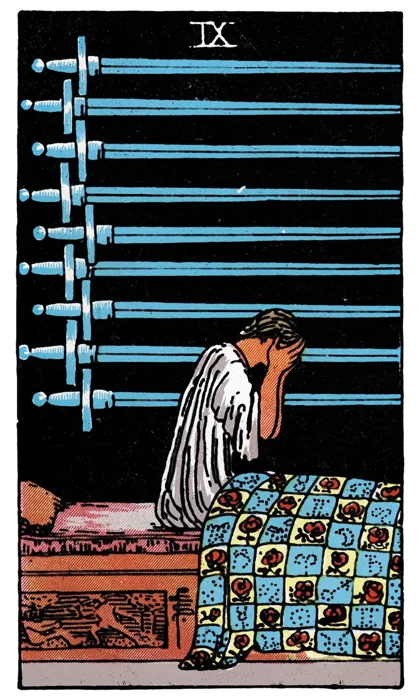
The posture communicates distress while leaving its cause unknown. Begin with the person’s experience, rather than using the image to decide what must have happened. Listening supplies information the card cannot.
The patterned coverlet interrupts the dark field. Read it as a reminder that one consuming experience is occurring within a larger life, without asking ordinary comforts to cancel what hurts.
Being your own witness and prosecutor
The inner Nine often has the voice of a relentless cross-examination. Why did you do that? Why did you fail to notice? What if everyone finally sees what you are really like? The questions appear to demand understanding, but no answer is allowed to close the hearing. Notice whether you are learning anything new or simply returning to the same accusation in different language.
As a temporary way of being, the card may describe a conscientious person who worries about the effects of their actions and hesitates to burden others. These qualities can look like competence from outside. The person arrives prepared because they have imagined every failure; they seem considerate because they have edited away every need. The cost becomes visible only in private, when there is nobody left to reassure or impress.
Shame tends to make the experience singular. You may accept that other people make mistakes while treating your own as evidence of a permanent defect. Even needing support can seem like proof that you cannot manage life, though you would not judge someone else so harshly. A useful interruption is specificity. What exactly did you do, what was within your control, and what response would you consider proportionate if someone you cared about had done the same thing?
There may also be grief that has not found a listener. The mind returns to an event because it remains emotionally unfinished, not because another hour of analysis will produce a better outcome. You can acknowledge that something still hurts without pretending it is a puzzle you ought to have solved. Understanding and being accompanied are different needs, and both can matter.
A gentler expression appears when the private account becomes speakable. You do not need to tell everyone or expose every detail. One truthful sentence to a suitable person can change the situation from an internal verdict into a shared problem. The point is not to obtain automatic reassurance; it is to stop requiring yourself to be the only source of perspective.
Pain does not have to become prophecy
The Nine asks what authority we give a thought because of how intensely it is felt. A frightening possibility can arrive with the force of certainty. The force belongs to the experience; certainty still requires evidence. Holding those two facts together allows compassion without surrendering every decision to the most alarming story available.
Its deeper conflict concerns responsibility and control. You may believe that sufficiently thorough worry can prevent loss, protect someone you love, or prove how much you care. Yet attention has limits. Beyond a certain point, rehearsal adds suffering without adding protection. Love and responsibility can be expressed through concrete acts while some uncertainty remains beyond what you can remove.
The card also questions the moral usefulness of suffering. Feeling worse is not always the same as taking something more seriously. If repair is possible, the injured person may need an honest apology, changed conduct, or restitution. If repair is impossible, further punishment may not restore what was lost. You are allowed to ask what your distress is accomplishing without dismissing its sincerity.
There is a quiet social dimension in the solitary bedroom. Some burdens become unbearable because everyone assumes they must be handled privately. A culture of constant capability leaves little room for hesitation, remorse, or fear. The Nine can therefore ask more than how an individual should think: it can ask what kind of relationships make difficult experiences safe to admit.
The review continues after the meeting ends
At work, the Nine may describe anticipating criticism, replaying a mistake, or carrying responsibility beyond the hours in which anything can be done. First establish whether there is an unresolved task. If a correction is needed, agree who will make it and when, with a clear next action they can take. A finite repair is easier to handle than an undefined obligation to remain worried until someone forgives you.
A manager's brief message can become a whole imagined dismissal when expectations are unclear. Ask for the missing context when appropriate. At the same time, examine the environment: repeated threats, humiliation, or impossible demands are not simply failures of personal resilience. The reading should leave room to question the conditions producing the fear, rather than asking you to become better at absorbing them.
For someone with authority, the card can expose private doubt beneath a confident role. You may be making decisions that affect others while believing you are not allowed to hesitate. Seek relevant expertise and communicate uncertainty where it matters. Leadership becomes more dependable when a difficult question reaches the right people before the worry has to become a crisis.
Creative work brings another version: a draft is barely finished before an imaginary audience begins tearing it apart. Revision then tries to eliminate every possible objection, often at the expense of the work's character. Ask an actual reader a specific question once the work has reached a stage where their feedback can help. An imagined unanimous audience cannot supply a workable brief.
If the Nine appears around an application or launch, it may describe the experience of waiting rather than the result. Your mind wants an answer and keeps manufacturing one. Decide what information you can obtain, when you expect it, and what you can usefully do meanwhile. Let the outcome remain unknown until there is an outcome to assess.
A silence can hold more than one explanation
In love, the Nine can reflect fear of rejection, regret after conflict, or distress about something you have not said. It cannot reveal another person's hidden feelings. A delayed reply may touch an old fear without proving that the present relationship is ending. Read actual patterns, spoken agreements, and observable behaviour alongside the feeling the situation has awakened.
After hurting someone, you may want immediate reassurance that you are still a good person. That wish is understandable, but it can move the emotional work back onto the person who was hurt. Offer an apology that names what happened and what will change. Give them room to respond without making their speed of forgiveness responsible for regulating your discomfort.
When you are the one who has been hurt, the card can describe replaying an exchange to find the moment you should have prevented it. Hindsight makes information appear more available than it was. Ask what was reasonably knowable then, and what you need now. Learning from an experience does not require assigning yourself responsibility for someone else's choices.
In an established relationship, private worry can create distance even when affection remains. One partner tries to solve everything silently; the other notices withdrawal and supplies their own explanation. A bounded conversation can help: explain the concern, including what you still do not know, and say whether you want practical help or simply someone to listen. Neither person needs to become an expert on the other's mind.
For dating or reconciliation questions, watch the temptation to use repeated readings as reassurance. A new card may soothe the fear briefly while leaving the actual uncertainty unchanged. Consider what contact, information, or boundary would make the situation clearer. The useful measure is whether your choices become better grounded, not whether every uncomfortable feeling disappears.
Care also has limits. Supporting someone does not require promising that nothing bad will happen or being available without pause. You can explain the help you are able to offer with kindness, without promising more than you can give. The Nine's loneliness is best met by dependable human contact, not by an impossible agreement that one person will prevent another from ever feeling afraid.
Turn the dread into a question with an answer
Money worries can make the future feel like a single approaching emergency. The card invites a smaller field of view: which payment, document, deadline, or missing figure is causing the concern? Write down what is known and identify where accurate information can be obtained. Numbers may still describe a difficult situation, but they offer more usable distinctions than a general feeling of impending ruin.
Avoid treating the card as a prediction of debt, loss, or disaster. If there is a concrete financial problem, relevant professional or practical support belongs in the picture. Tarot can help articulate what you fear and what you value; it cannot determine the terms of an agreement or replace checking the actual situation.
At home, the Nine may show a person surrounded by ordinary comfort who cannot access its reassurance. Someone saying that you have plenty to be grateful for may miss the point. Ask what would make the space easier to inhabit tonight: less unfinished administration, a conversation, a little privacy, or the knowledge that tomorrow's problem has a place on the calendar.
Shared worries benefit from shared facts. If you live with someone, distinguish the practical concern from the fear that naming it will make you a burden. An agreed time to look at the issue together can prevent it from occupying every evening. The household does not need perfect certainty; it needs a way to face relevant information without punishment or concealment.
You do not have to solve the night
As a reflection on attention, this card asks whether every quiet moment has become available for reviewing danger. The absence of a task is not automatically a request for another internal hearing. You might record the unresolved question and decide when to return to it, giving the concern a defined place rather than requiring it to disappear on command.
The image is associated with wakefulness and distress, but a tarot card cannot diagnose a sleep or mental health condition. If either is persistently affecting daily life, appropriate professional support can help address the actual experience. The card's role is to make the need easier to acknowledge, not to explain its medical cause.
Even a useful reflective exercise can become another demand. You do not owe the night a complete journal entry, a lesson, or a transformation. Sometimes the available act is simply admitting that this is a difficult hour and that no permanent decision needs to be made inside it. A limited, ordinary response can be enough for the moment.
Give responsibility a practical shape
Choose one concern and separate the event, your interpretation, and the action currently available. Perhaps the event is a missed deadline, the interpretation is that you have destroyed all trust, and the available action is to explain the delay and agree a new date. The action does not settle your entire worth. It addresses the part of the situation that can actually be changed.
If no action is available now, name what you are waiting for. Uncertainty is difficult, but it becomes more confusing when treated as evidence. You can be frightened and still leave a question unanswered. Find a suitable source of support if carrying the uncertainty alone is becoming too much.
The shadow is making distress into a credential: if you stop suffering, perhaps you were never sorry, responsible, or loving enough. This can keep the mind loyal to pain long after it has ceased to help anyone. The attention you give someone and your efforts to repair harm can show care in ways continued suffering cannot. It need not be measured by how thoroughly you can deny yourself relief.
The thought begins to leave the room
Reversed, the Nine can describe a worry being voiced, shame becoming less absolute, or a frightening account losing some of its authority. You tell someone what happened and discover that they can distinguish a mistake from a whole person. The circumstances may remain difficult, but there is more air around them and more than one mind available to consider the next step.
It can also describe recognising a pattern. You notice that the same fear returns regardless of the answer you receive. This observation does not make the distress foolish. It helps identify that another round of reassurance may not be the kind of support needed. The practical question becomes how to relate differently to the recurring concern and whom to involve.
Another expression is distress kept even further out of sight. You say everything is fine because explaining feels exhausting or embarrassing. The reversal is then less a release than a closed door. Look for current evidence: are you becoming more able to speak and act, or more isolated with the same burden? Orientation alone cannot decide between those possibilities.
Relief can arrive unevenly. A better day does not make the earlier suffering false, and a difficult night does not erase progress. Avoid turning recovery into another perfection test. Notice concrete changes in what you can do, whom you can contact, and how much authority a frightening thought has over your decisions.
Where remorse is involved, the reversed card can mark the transition from punishment to responsibility. After acknowledging the harm, you begin whatever repair is possible. You also accept that the response to those efforts is beyond your control. Living differently may now be more meaningful than continuing to rehearse the worst account of yourself. Let changed conduct carry some of the work.
What is keeping the worry alive?
These pairings explore the setting around distress. They are prompts for reflection, not evidence that a feared event will happen or that another person has a hidden intention.
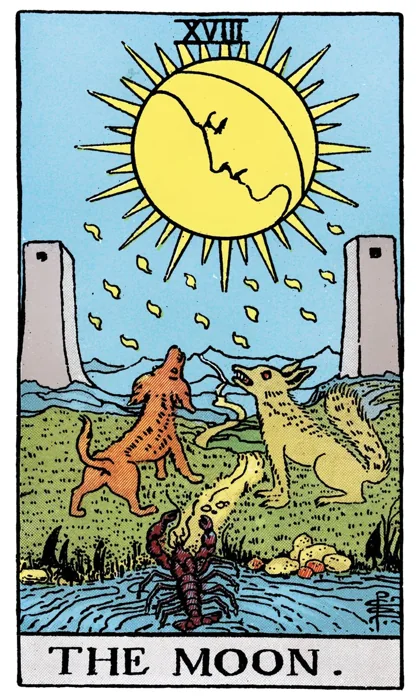
With The Moon
With the Moon, uncertainty may be giving imagination more room than evidence. Name what you have actually observed and what remains ambiguous. Neither a strong feeling nor a striking pairing proves deception. The next useful step is a reliable question, not a more elaborate account of the unseen.
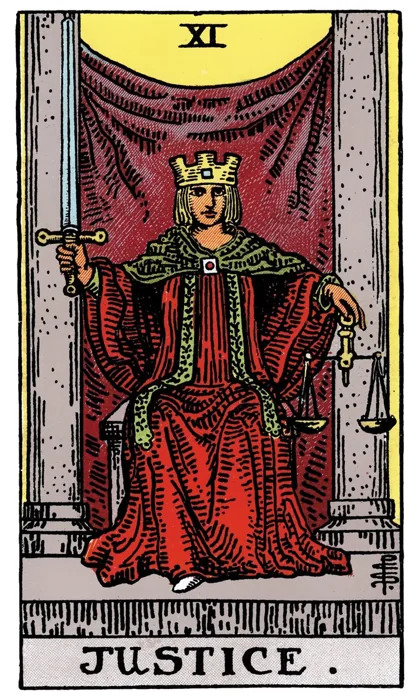
With Justice
With Justice, remorse may need a fair assessment of responsibility. What did you choose, what was beyond your control, and what repair is proportionate? Avoid both automatic absolution and an unlimited sentence. Accuracy can make accountability possible without turning your whole identity into the offence.
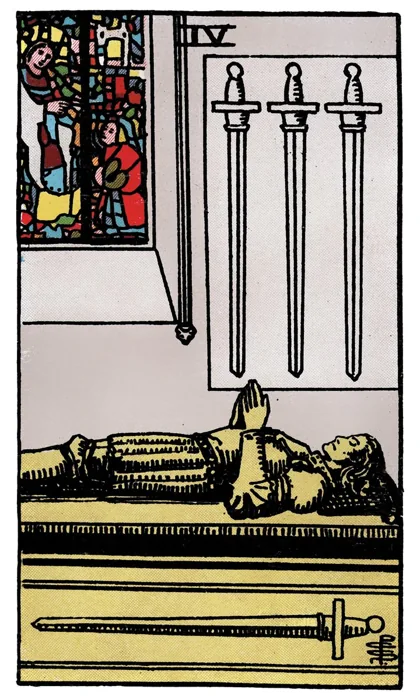
With Four of Swords
With the Four of Swords, consider whether you are asking exhausted attention to deliver a final verdict. A pause can protect the quality of your judgement. Give a real concern a time and place for review so that resting does not feel like pretending it never existed.
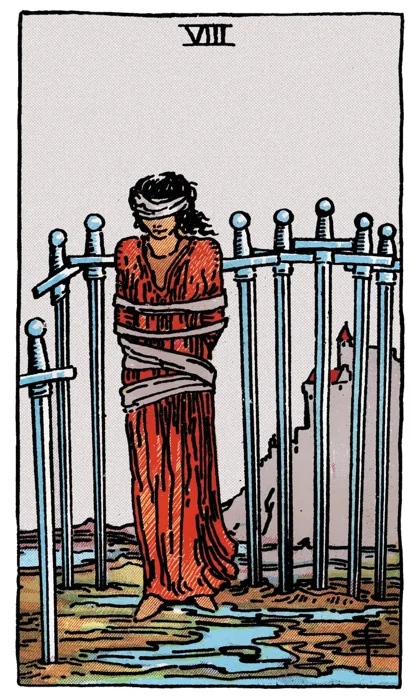
With Eight of Swords
With the Eight of Swords, worry may be narrowing an already restricted set of choices. Separate practical barriers from anticipated reactions. A usable option may require information or assistance, not merely encouragement. The pairing asks what would make one part of the situation less solitary and more navigable.
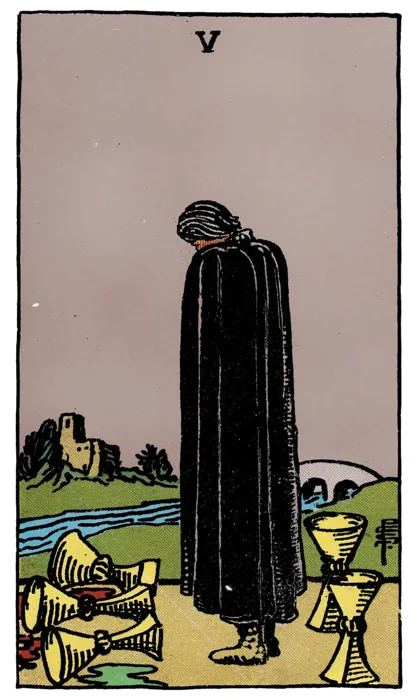
With Five of Cups
With the Five of Cups, grief and regret may be tangled together. Identify what has been lost and what you believe you should have prevented. Those questions may have different answers. Mourning deserves room even when there is no remaining action that could change the past.
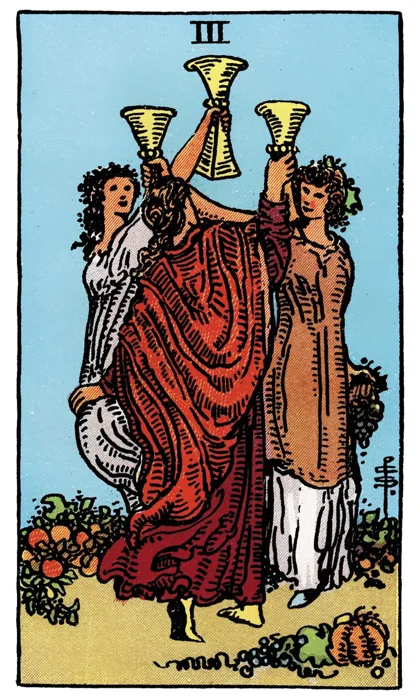
With Three of Cups
With the Three of Cups, trusted company can interrupt the assumption that you must handle everything invisibly. Choose someone able to listen without taking over or demanding cheerfulness. A modest, specific request for company may be easier to make than a complete explanation of every fear.
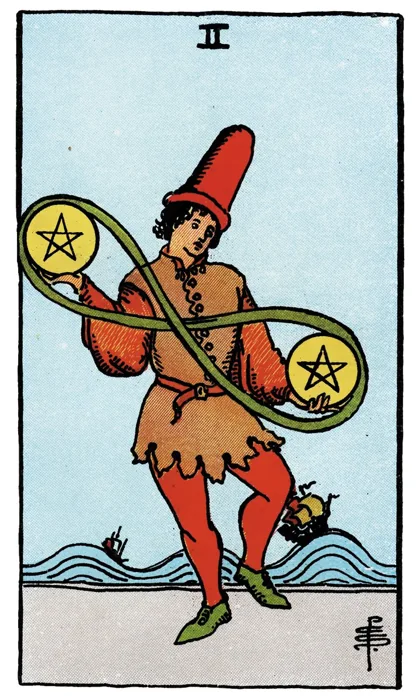
With Two of Pentacles
With the Two of Pentacles, practical overload may be feeding the night-time review. Put the actual commitments where you can see them and identify what needs renegotiating. A schedule with no margin cannot be repaired solely by learning to feel less worried about keeping it.

With The Star
With the Star, a gentler account may become possible before all circumstances are settled. Notice small evidence that help, interest, or trust still exists. Hope need not guarantee the result. It can simply make room for a next day that has not already been decided by tonight’s fear.
The night watch and the unfinished letter
A watchkeeper hears every movement beyond the wall and cannot tell which sounds matter. Vigilance once had a clear purpose; now the shift never ends. The image asks who can share the watch and what information would distinguish a signal from the ordinary noise of a world that cannot be made completely predictable.
An unfinished apology sits on a desk. Each new version becomes more eloquent about the writer's shame and less clear about the other person's hurt. Eventually a shorter letter names the act and offers repair. The Nine's moral movement lies in that change of focus: from proving how badly you feel to responding to what happened.
A room looks different after another person enters it. Nothing has been magically removed, yet the silence no longer belongs entirely to the frightening thought. This is the card's simplest counter-image. Companionship does not need to disprove pain in order to alter how alone someone is inside it.
Write the concern without writing the verdict
Choose one manageable worry. In a few sentences, describe the observable event, what remains unknown, and the consequence you are imagining. Keep those categories separate. Then identify one proportionate action or one suitable person who could help you assess the situation. If no action is needed today, give yourself a clear point at which to review it.
Finish by asking what you would need if the person sitting on that bed were someone you cared about. Do not force optimism into the answer. Perhaps you would offer company, accurate information, a chance to apologise, or permission to stop arguing with an unanswerable question for the night. Offer yourself one equally concrete response.
Artwork & interpretation
The historical entry supplies an image of private anguish. This original reflective essay does not adopt its fatalistic or medical predictions; its discussion of worry, remorse, and support is a contemporary interpretation. A. E. Waite, The Pictorial Key to the Tarot: Nine of Swords.
The symbolic associations and examples offer ways to read a situation. They do not establish another person’s thoughts or fix an outcome.
A thought can hurt intensely without being an accurate account of what will happen.
Use the cards in a spread →