Pentacles · Two
Two of Pentacles
Keeping things moving without becoming the mechanism
The Two of Pentacles adapts as demands change. Good timing helps keep several commitments moving, and finding a workable adjustment can be satisfying. Flexibility takes effort, however. Notice how much the arrangement relies on one person continually rearranging their day and whether that remains possible over time.
- Adaptability
- Competing priorities
- Changing demands
- Practical rhythm
16 min read
In this guide
Balance happens while something is changing
A plan works until a meeting moves, a payment arrives late, someone needs help, or the day takes longer than expected. You rearrange what you can to make room for the change while keeping the important things moving. The Two of Pentacles belongs to that ordinary intelligence. Its balance is active: a series of small decisions made while conditions continue to change around them.
Upright, the Two often reflects a day shaped by several commitments that need coordinating. A change in one affects when you can attend to another. You may enjoy this variety and find yourself thinking well when plans shift. Adapting successfully takes skill, particularly in circumstances that are genuinely variable. It does not necessarily mean that you organised the day badly in the first place.
The question is whether the flexibility remains chosen and sustainable. A busy period with clear limits differs from an arrangement that requires permanent improvisation because there is never enough time, money, or support. The card should not praise your resourcefulness so enthusiastically that it overlooks what the resourcefulness is compensating for.
Two commitments can also be connected in ways that are not obvious. One job supports another, a personal obligation affects work, or a household decision changes the time available for study. Treating each task as separate may hide the actual load. Look at the transitions, preparation, and administration between them as well as the visible hours spent doing each one.
The Two does not always ask you to choose one thing and abandon the other. Sometimes a sequence, a changed frequency, or a shared responsibility is enough. Sometimes a choice really is needed because the demands compete for the same finite resource. The useful interpretation depends on the conditions, not on an abstract ideal of doing everything gracefully.
Its invitation is to make the pattern visible. What rises and falls, which deadlines are fixed, where is there room to adjust, and what happens when something unexpected arrives? A workable rhythm contains some margin. If the slightest change makes the whole arrangement fail, the system may need more than another display of personal agility.
A figure moves while the sea rises behind
A figure in a tall red hat holds a pentacle in each hand. A looping band connects the two coins in a horizontal figure-eight shape. One foot is lifted, giving the stance a dancing or balancing quality. Behind the figure, ships ride pronounced waves. The foreground and background both suggest movement rather than a settled state.
The connected pentacles make interdependence visible. Raising one affects the shape of the loop around the other. As a practical metaphor, a change in one part of life often requires an adjustment elsewhere. A commitment does not occupy only its own labelled space; it can influence energy, timing, and the resources available for everything beside it.
The figure's movement can look playful. This matters because the card is not solely an image of strain. There can be skill, humour, and satisfaction in managing a lively day. At the same time, a graceful performance may hide effort from the observer. Someone appearing cheerful while coping does not establish that the load is light.
The ships introduce conditions beyond the figure's control. The person can manage the coins but cannot flatten the sea. Read this as a distinction between your own adjustments and the wider changes affecting your life. Good planning includes responsiveness, while recognising that no amount of organisation can prevent every delay, demand, or fluctuation.
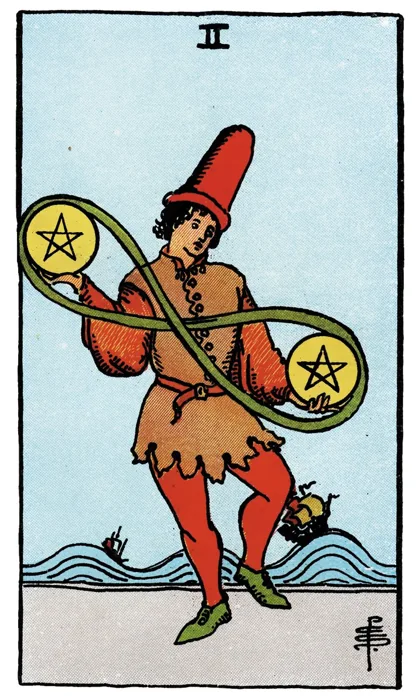
The connected coins suggest commitments that affect each other. Include the consequences of an adjustment elsewhere in your day, rather than treating every task as if it consumed only its labelled hour.
The ships make wider fluctuation visible. Distinguish the changes you can organise from the conditions you can only respond to. A good plan leaves room for ordinary uncertainty where resources allow.
The capable person everyone keeps adding things to
The inner Two often knows the answer to a practical difficulty before anyone has finished explaining it. You can see which task could move to another time and which could be shortened or handled while travelling. You may enjoy being able to make a complicated day work. The competence is real. It becomes costly when your ability to accommodate is treated as proof that accommodation requires nothing from you.
As a temporary personal style, the card can be lively, versatile, and resistant to rigid routines. You prefer enough variety to keep attention engaged and can switch between different kinds of activity. The difficulty is that switching itself uses something. If every task is counted but every transition is ignored, you may blame yourself for being tired after a schedule that looks reasonable only on paper.
There can be pride in keeping the performance smooth. Admitting strain feels like revealing that the juggling was never effortless. Yet the people relying on you may need accurate information to understand what their requests cost. You do not have to wait until something is dropped before saying that another commitment would require a trade-off.
The Two can also describe avoiding a preference by remaining busy with both alternatives. As long as you keep each possibility alive, you do not have to accept the loss involved in choosing. Sometimes that is sensible while information develops. Sometimes maintenance of the alternatives consumes the very resources that would let either become satisfying.
Its more grounded expression is permission to have priorities that change by season. Equal attention every day is not always the right standard. A person, project, or responsibility may need more now and less later. The arrangement needs to be realistic and understood by those affected, with a chance to revisit it. Otherwise, one part of life may be left indefinitely neglected without anyone acknowledging the choice.
A rhythm is different from perfect equality
The Two questions an image of balance as a motionless scale. Living systems fluctuate. A work deadline may coincide with a difficult week in a relationship, while practical needs rarely arrive at evenly spaced intervals. A useful balance may look like responsiveness across time rather than identical allocations in every moment. The question is whether the pattern supports the whole life, not whether each day can be made symmetrical.
It also reveals the hidden labour of coordination. Someone remembers when things happen, notices conflicts, anticipates needs, and changes the plan. This work can disappear precisely because it is done well. The card invites recognition of the person holding the pattern together, including when that person is you, and asks whether the responsibility can be shared more explicitly.
Adaptability has a political and relational edge. Institutions and households sometimes celebrate flexible people because flexibility lets an inadequate arrangement continue without being questioned. Praise then becomes a substitute for resources. The Two asks whether adjustment is solving a temporary problem or concealing a persistent shortage that should be addressed by more than individual effort.
The deeper freedom is the ability to set something down deliberately. You are more than the mechanism keeping the coins in motion. A commitment can be reduced, handed over, postponed, or ended because a considered life requires selection. That choice may disappoint someone while still being the responsible response to finite capacity.
A calendar is not a capacity assessment
At work, the Two can describe multiple projects, changing schedules, variable demand, or a role that requires constant coordination. Make the actual workload visible, including preparation, transitions, follow-up, and interruptions. A calendar with no overlapping appointments can still contain an impossible amount of work if each appointment depends on hours that have not been counted.
When priorities compete, ask who can make the trade-off. If a new task is urgent, which existing task moves? This turns a vague demand for greater efficiency into a concrete decision about scope. A clear answer protects both the work and the people doing it. Without one, every deadline remains officially essential while the worker privately chooses which promise to break.
The card can suit freelance or portfolio work, where several streams of activity support one another. Variety may be useful, but coordination deserves time of its own. Keep track of obligations and review whether each commitment still contributes enough value to justify what it takes. An arrangement that once worked may need changing as circumstances develop.
For collaboration, communicate adjustments before they become surprises. If one dependency moves, let the people downstream know what it changes. A small update can prevent others from planning around an assumption that no longer holds. Flexibility becomes shared competence when information travels with the change, rather than remaining in the head of the person juggling it.
In creative work, the Two may ask you to find a rhythm between making and earning, exploration and delivery, or several projects at different stages. Avoid requiring every project to receive equal daily attention. A clear rotation or a limited focus period may serve the work better than touching everything just enough to remain perpetually unfinished.
The professional shadow is mistaking responsiveness for permanent availability. If every request reaches you immediately, your work is continually being reorganised by whoever asks most recently. Consider which channels, response times, or decision rules would preserve useful flexibility while allowing some sustained attention. The aim is a rhythm that can absorb change without surrendering every priority to it.
Time together is part of the agreement
In relationships, the Two can describe coordinating schedules, sharing responsibilities, or maintaining connection during a busy period. Affection may be present while logistics make it difficult to feel. Ask what time, attention, and practical support are actually available. A relationship needs more than good intention if every encounter depends on the accidental survival of an overloaded day.
For a new connection, variable availability does not by itself prove lack of interest. It also does not require you to accept an arrangement that never meets your needs. Discuss the pattern directly. What can each person realistically offer, and is that enough for the kind of relationship being considered? Compatibility includes the practical conditions under which affection can be expressed.
The card is sometimes read as juggling two romantic options, but it cannot establish infidelity or a hidden rival. Use evidence and conversation for those questions. Its broader theme is divided attention. Work, family, uncertainty, or competing expectations may all be relevant, and the reading should not manufacture a particular explanation because it makes a dramatic story.
In established partnerships, notice who performs the coordination. One person may complete visible tasks while the other carries the less visible work of scheduling them and remembering to check that they are done. A fairer arrangement may require sharing ownership of the planning, not simply asking the coordinator to assign more jobs. Taking responsibility includes noticing when a task is needed and carrying it through without continual supervision.
Play matters too. The figure's dance suggests that everyday adjustment need not be entirely grim. A shared joke, a flexible plan, or a small ritual can make a demanding season feel more companionable. Let play be welcome without using it to insist that the person carrying too much should become more cheerful about the burden.
The difficult pattern is treating the relationship as infinitely adjustable because it is emotionally secure. The reliable person is asked to wait again, while every external demand receives a fixed appointment. Reliability deserves care, not automatic relegation. A protected interval or an honest renegotiation can communicate more respect than repeated assurances that things will eventually calm down.
Timing can matter as much as the total
In material matters, the Two draws attention to the timing of resources and obligations. An overall picture may look workable while particular dates create pressure. Look at the actual schedule, commitments, and uncertainty through reliable information. The card can prompt organisation and appropriate advice, but it cannot determine a financial strategy or predict that all obligations will be met.
Avoid turning the ability to improvise into a reason never to review the arrangement. If the same shortfall or conflict returns, ask whether it is temporary or structural. A repeated problem may need changed terms, additional support, or a different commitment. More ingenious juggling is not always the best response to a pattern that keeps demanding it.
At home, routines can be flexible without being undefined. Agree on the essentials with room for differences in what people can manage. Changes in work or family circumstances are a reason to revisit the division. A system that only functions when one person is unusually energetic is not a dependable shared system. Make ordinary days, including imperfect ones, part of the design.
The card also invites a distinction between variety and accumulation. Several useful objects, activities, or subscriptions may each seem manageable while their combined maintenance becomes tiring. Consider the whole pattern. Keeping something has a cost in attention and space as well as money, and choosing fewer things can sometimes make the remaining ones more enjoyable.
Count the space between tasks
Attention does not always change direction instantly. Finishing a conversation, travelling, preparing materials, and returning to a complex task can each require a transition. Notice where your plan assumes that you can move from one demand to another without any interval. Those invisible spaces may explain why the day feels fuller than its list of tasks suggests.
The Two can also describe alternating periods of greater and lesser capacity. A flexible routine allows some adjustment without making every change a moral failure. At the same time, persistent exhaustion deserves attention to its actual causes and appropriate support. A tarot image should not be used to explain away a condition that needs more than scheduling.
Leave some room unassigned if circumstances allow. Margin is not necessarily wasted potential; it is what lets a plan receive ordinary life. When no margin is possible, acknowledge that limit honestly and seek changes where you can. The card should help assess capacity, not add another demand to perform balance attractively.
Make the trade-off explicit
Choose the commitments currently competing for the same resource. Name what each requires and which parts are fixed. Then identify one adjustment that changes the load rather than merely changing your attitude towards it. A reduced scope, a new deadline, a shared task, or a deliberate pause can all be forms of competent coordination.
Tell the relevant people what the adjustment means. Quietly compensating may preserve the appearance of smoothness while preventing anyone from understanding the problem. A simple statement of capacity gives others useful information and creates the possibility of a real agreement. You do not need to dramatise the strain to make it count.
The shadow is pride in never dropping anything. It can keep you loyal to a performance long after the arrangement has stopped serving you. The opposite shadow abandons every structure because life is unpredictable. The Two offers a middle practice: organise around the things that matter, leaving room to respond to change. That includes respecting your own limits when the load becomes unreasonable.
The arrangement needs more than another adjustment
Reversed, the Two may describe missed details, conflicting obligations, or the point where improvisation stops being sufficient. Something has been dropped or is likely to be unless the load changes. Start with the immediate practical consequence, then examine the pattern. A mistake can reveal a system without proving that the person holding it together is generally incapable.
Another expression is rigidity in response to uncertainty. You try to make the schedule so exact that no change can enter, then experience every ordinary disruption as failure. Ask which parts genuinely require precision and which can tolerate variation. A workable plan needs a relationship with reality, including the parts that do not consult the calendar first.
The reversal can also show enforced cheerfulness. You keep appearing adaptable because admitting difficulty might threaten income, approval, or your role in the group. Notice the gap between the performance and the cost. If direct renegotiation is difficult, begin by identifying the concrete change or support that would make the arrangement less dependent on concealment.
Sometimes the card marks a useful simplification. You choose one direction, close an unnecessary commitment, or accept that two desirable things cannot both receive the same resource now. The resulting quiet may initially feel like lost momentum. Give the new pattern time to show whether fewer demands allow deeper participation in what remains.
A constructive reversed Two replaces private juggling with shared decisions. With priorities made explicit, people can take ownership of their responsibilities. Changes are communicated while there is still time to adjust, before the plan fails. The goal is not perfect control. It is an arrangement that remains workable without requiring one person to perform a small emergency every day.
Which part of the pattern needs changing?
These combinations explore practical demands, priorities, and support. They do not establish a hidden relationship, predict a financial outcome, or make an overloaded situation sustainable by naming it balance.
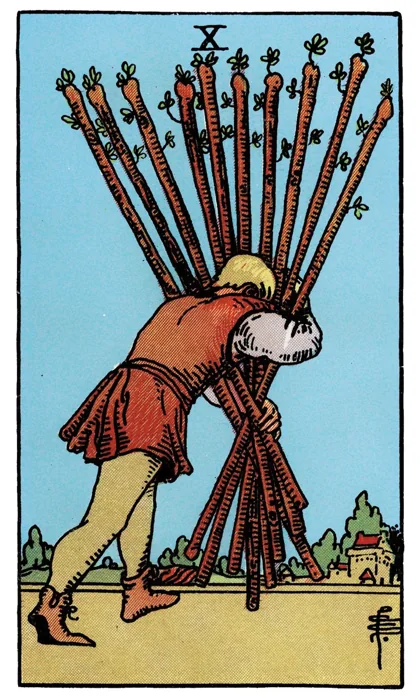
With Ten of Wands
With the Ten of Wands, the issue may be the amount carried rather than the elegance of the juggling. Identify what can be reduced, transferred, or ended. Better coordination helps only up to a point; it cannot create unlimited capacity or make every responsibility belong to you.
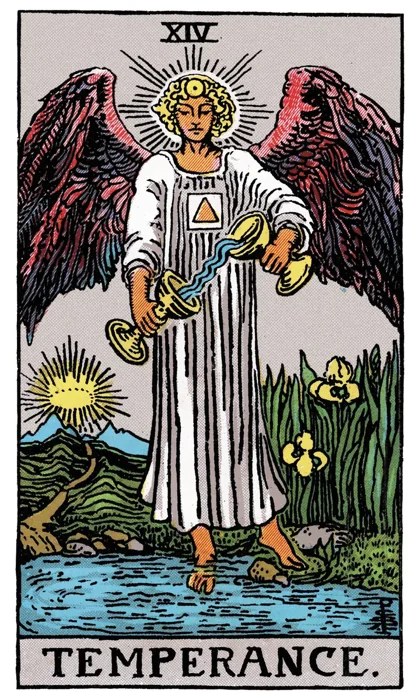
With Temperance
With Temperance, seek a rhythm that can adapt over time. Different needs may require different proportions rather than equal daily shares. Review the pattern with the people affected, and let evidence about what is working guide adjustments instead of chasing a perfectly balanced appearance.
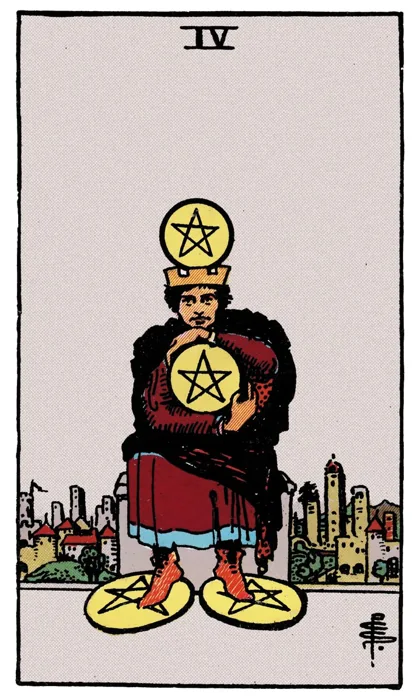
With Four of Pentacles
With the Four of Pentacles, flexibility meets a need to protect resources. Identify what must remain secure and where there is genuine room to move. Too much looseness can create strain, while an inflexible grip can make ordinary changes unnecessarily difficult to absorb.
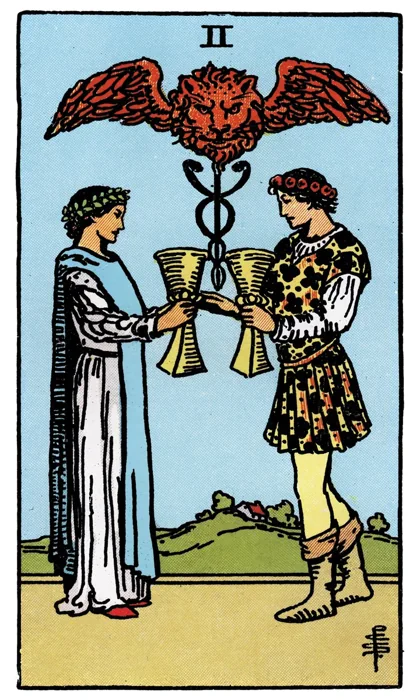
With Two of Cups
With the Two of Cups, coordination becomes part of mutual care. Discuss availability, responsibilities, and the kind of contact that helps both people feel included. A relationship can withstand a busy season more easily when the pattern is understood rather than continually excused after disappointment.
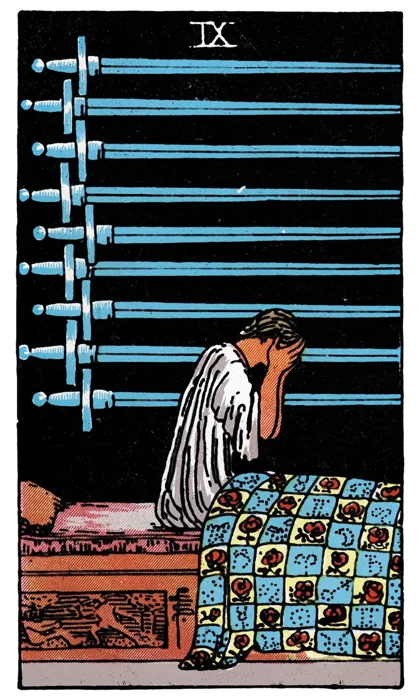
With Nine of Swords
With the Nine of Swords, unfinished coordination may be following you into the night. Put the actual commitments and uncertainties where they can be examined. Consider which decision belongs to someone else or needs renegotiation, instead of asking worry to keep an impossible schedule safe.
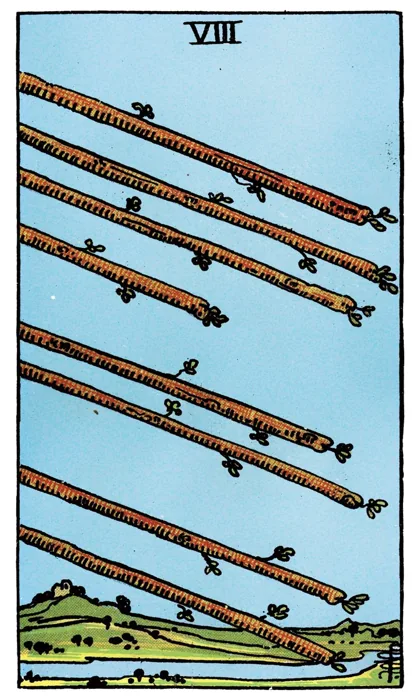
With Eight of Wands
With the Eight of Wands, changes may arrive faster than your usual rhythm can absorb. Keep priorities and updates clear, and avoid treating every incoming message as equally urgent. One short coordination pause can prevent a rapid sequence from multiplying contradictory commitments.
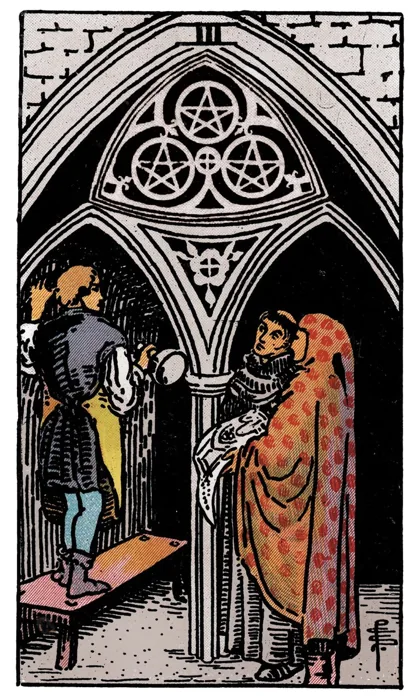
With Three of Pentacles
With the Three of Pentacles, shared expertise can reduce the burden of holding everything alone. Clarify ownership and dependencies, then allow others to manage their part. If you must keep track of every step and remind others to act before checking their work, much of the responsibility has yet to be delegated.
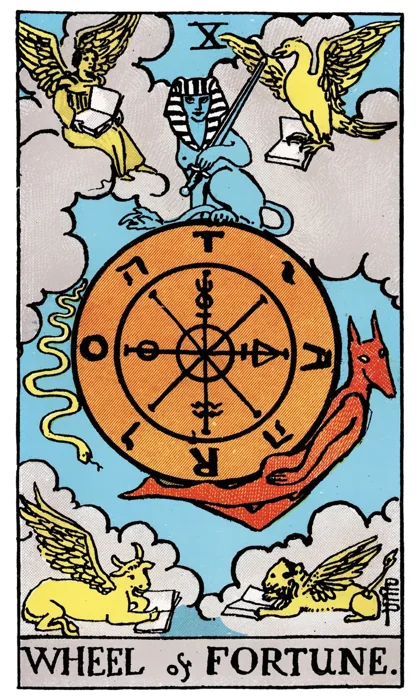
With Wheel of Fortune
With Wheel of Fortune, wider changes may require a revised plan. Separate the adjustment within your reach from the circumstances you cannot command. The pairing favours responsiveness, but it does not make every fluctuation meaningful or require you to find a personal lesson in every inconvenience.
The juggler and the stage manager
A juggler makes the movement look effortless because the work of timing has become skilled. The audience sees the objects in the air, not every correction. The Two invites respect for that competence while asking whether the performer is allowed to finish, rest, or decline the next object someone wants to throw into the act.
A stage manager knows that a delayed entrance changes lighting, sound, and the next scene. Coordination is a form of knowledge about relationships between tasks. When that knowledge stays invisible, everyone may assume the performance simply happens. Naming and sharing the work makes the whole production less dependent on one person's constant vigilance.
A sailor adjusts to the water rather than demanding a motionless sea. Yet skill also includes recognising when conditions exceed what the vessel can handle. Adaptability is not an unlimited promise to continue. Sometimes the wise adjustment is to change the route, reduce the load, or return to shelter.
Find one hidden demand
Map a typical busy day or week, including transitions, preparation, and the work of remembering. Choose one recurring point of friction. Ask whether it needs a smaller task, a different time, clearer ownership, or an honest refusal. Make one adjustment that addresses the actual demand rather than simply asking yourself to cope more gracefully.
Review the effect after a reasonable interval. Did the change create usable room, or did another request immediately occupy it? Protect some of the benefit if you can. The Two of Pentacles becomes a skill you use, rather than a role you cannot leave, when flexibility serves your chosen priorities as well as everyone else's changing needs.
Artwork & interpretation
The historical image combines a dancing figure, linked pentacles, and changing seas. This original essay develops a practical reading of coordination and capacity, including the difference between chosen flexibility and an unsustainable load. A. E. Waite, The Pictorial Key to the Tarot: Two of Pentacles.
The symbolic associations and examples offer ways to read a situation. They do not establish another person’s thoughts or fix an outcome.
Being able to keep several things moving does not mean you must keep all of them moving indefinitely.
Use the cards in a spread →