Pentacles · Ace
Ace of Pentacles
An opportunity you can put your hands to
The Ace of Pentacles begins with something you can use. An offer may provide the means to develop a skill, or a place where an idea can start to grow. This gives the possibility substance. Its future depends on how well it fits your circumstances and on the attention you can give it after the first opportunity arrives.
- Tangible opportunity
- A practical beginning
- Resources
- Conditions for growth
16 min read
In this guide
Something promising has become available
An idea has acquired a usable form. There is a room you could work in, an offer you can examine, a tool you can learn, or time that was not previously available. The Ace of Pentacles is the moment when possibility stops being entirely hypothetical. Something can now be held, tested, scheduled, planted, or begun in the material conditions of an actual life.
Upright, the card often describes a practical opportunity, a new resource, an early foundation, or the chance to build something with lasting value. Money may be involved, but the suit's territory is wider: work, home, skills, possessions, physical surroundings, and the ordinary supports that make a chosen life possible. A small improvement in those conditions can have consequences beyond its apparent size.
The Ace gives you something to begin with. Receiving a key, for instance, opens a door; making the place feel like home takes further work. An offer of training similarly needs time and practice before it becomes a usable skill. The optimism comes from having a real opportunity. Consider what you will need to sustain it once the initial excitement has passed.
There is also a question of fit. A valuable opportunity can still be wrong for your circumstances, priorities, or capacity. Examine its terms, hidden costs, and the life it would ask you to organise around it. The Ace does not require accepting everything that appears scarce or prestigious. Discernment protects the possibility of building something you actually want to inhabit.
Sometimes the card appears when progress is too ordinary to feel significant. You have saved a little, found a workable routine, received a useful introduction, or finally obtained the materials to begin. These may lack the drama of a breakthrough, but they change what can happen next. Notice the opening at its real scale rather than dismissing it because it has not already become a whole future.
Its invitation is to meet a concrete possibility with a concrete response. Ask the question, make the first appointment, inspect the terms, or set aside the time. You need not commit to every imagined consequence immediately. A well-chosen first step can reveal whether the opportunity deserves the next one.
A gift above a garden with a way through
A hand emerges from a cloud holding a large golden pentacle. Below lies a garden, with flowers, a path, and a hedge forming an archway. Beyond the opening, mountains rise in the distance. The image joins an offered object to a place where growth already has some conditions: ground, shelter, a route, and the possibility of leaving the enclosure.
The open palm presents the pentacle rather than gripping it. As symbolism, this can suggest availability: something is being offered for consideration. The card does not show the recipient, so the question of response remains with the reader. An offer becomes part of your life through a decision, not simply through appearing in view.
The garden introduces cultivation. Abundance here is not a shapeless pile of treasure. It has a setting that must be maintained. A contemporary reading can connect this to the practical work that allows an opportunity to flourish: preparation, repetition, suitable conditions, and attention to what the developing thing actually needs.
The archway and distant mountains prevent the enclosed garden from being the whole journey. A beginning can be protected and still lead towards unfamiliar work. The offered resource may make a path possible without removing its difficulty. This is a useful kind of optimism: there is a foothold, and the wider landscape remains real.
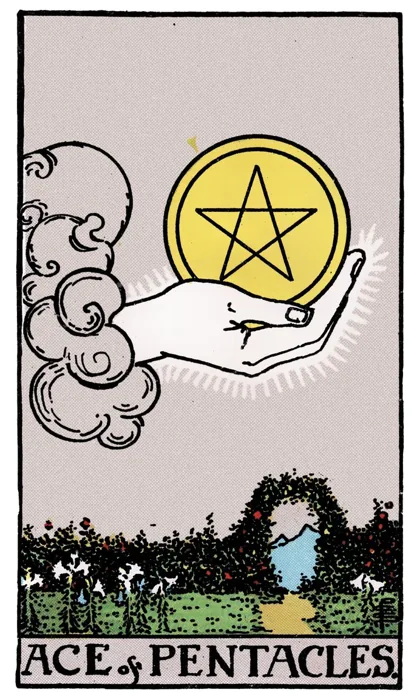
The pentacle rests in an open palm. Consider what is being offered, its actual terms, and whether you want to receive it. A promising possibility is an invitation to choose, not an obligation to accept.
The garden provides conditions for growth, while the path continues beyond it. A resource can make the next stage possible without removing the work ahead. Think about both the initial support and what continued development will require.
The relief of having something to begin with
The inner Ace can feel like a return of practical confidence. Instead of imagining how life might change under entirely different conditions, you notice one available action in the conditions you have. The scale may be modest, yet the shift is substantial. There is now a particular place or time to begin, with materials you can use or a task you can undertake.
As a temporary way of being, the card may describe receptivity to ordinary value. A well-made object, a room that works, a useful skill, or enough time to finish something can feel newly meaningful. You are less interested in the impressive account of a life and more interested in whether the life itself has the supports that make it satisfying to live.
Receiving can also be uncomfortable. An opportunity may bring the fear of wasting it, owing someone, or discovering that you cannot do what you hoped. Separate the actual terms of the offer from the obligations your mind supplies. Gratitude does not automatically require unlimited availability, and a chance to learn does not require arriving already capable of the final result.
The Ace can awaken possessiveness before anything has been built. Because the opportunity matters, you want to secure its whole future immediately. Yet early growth often needs experimentation. Let the first stage reveal information. A beginning can be taken seriously without being forced to justify every dream attached to it in advance.
Its grounded confidence is neither grand nor passive. You can recognise the promise while admitting what remains uncertain, and decide how much you are prepared to contribute. The card supports a relationship with possibility in which receiving and doing belong together. You have something to work with, and your response can begin at a human scale.
Potential needs a place to live
The Ace of Pentacles explores the conditions beneath an achievement. Ideas and desire matter, but they need time, access, materials, shelter, and the opportunity to practise. Recognising those conditions makes success less mysterious. It also makes assistance more concrete: sometimes the thing that changes a life is not advice, but the resource that allows existing intention to become action.
The card therefore has an ethical dimension. An opportunity is not equally usable by everyone who can see it. Someone may be unable to take a course because they lack the time, or reach a job without suitable transport. Even an available workspace can remain inaccessible under the conditions attached to its use. A serious reading asks what would make the opening usable, rather than treating an offered possibility as proof that every barrier has disappeared.
It also distinguishes value from status. Something can be valuable because it supports a life, even if it is not rare, expensive, or admired. The chair that lets you work comfortably, the skill that reduces dependence, or the small patch of space that is yours may matter more than an object acquired mainly to signal arrival.
The deeper movement is towards stewardship. You receive a possibility and decide how to care for it without assuming ownership grants unlimited control over its development. A growing project, relationship, or skill will reveal needs you could not fully anticipate. Attention to those needs turns possession into participation and potential into something more durable.
Examine the offer, then make the first useful thing
At work, the Ace can suggest a new role, a commission, training, equipment, or an early practical opening. Read the actual proposal carefully. What will you do, what support is available, what is expected, and what would success look like? The card encourages engagement with a promising possibility, not automatic trust in every offer that arrives while you are eager for change.
For a new project, identify the smallest result that would establish a real foundation. That might be a working sample, a first client conversation, a completed lesson, or a tested process. The point is to create evidence you can learn from. A modest functioning beginning often reveals more than an elaborate plan whose practical assumptions remain untested.
Resources deserve their own assessment. Do you have access to the tools, knowledge, and time the work requires? If something essential is missing, name it before accepting an impossible scope. Enthusiasm can help you begin, but it should not be used to conceal a gap that later becomes your private problem to solve without support.
The Ace may also describe recognition arriving in a concrete form. Someone offers paid work, gives you responsibility, or provides a resource because they see potential in what you do. Enjoy that recognition while checking the terms. Being chosen can feel powerful enough to make ordinary questions seem ungrateful; they remain part of taking the opportunity seriously.
In creative work, this is the material beginning: the first pages, the clay, the instrument, the quiet hour protected from other demands. Avoid requiring the first attempt to demonstrate the entire worth of the project. Make enough to experience working with the medium. The difficulties you encounter will help show which skills the idea asks you to develop.
The shadow is collecting beginnings. Every new tool or course promises a better version of the future, while the current work remains untouched. Ask which resource will support an existing intention and which mainly supplies the pleasant feeling of preparing. The Ace becomes productive through use, not through the number of promising objects gathered around it.
Care acquires a practical form
In love, the Ace can describe a connection beginning to show material consistency. Someone makes room for you in their ordinary schedule and keeps the plans you make together. A useful gesture may show affection more clearly than a declaration. This need not be spectacular. The card is interested in whether a possibility has conditions in which it could become part of daily life.
For a new relationship, it may invite attention to what is being offered now rather than everything the connection could theoretically become. Look at whether both people are making time to meet and putting effort into the connection. That gives you something concrete to discuss when considering the next step. Attraction matters, but a relationship also needs time, availability, and choices that give the attraction somewhere to live.
In an established partnership, the Ace can prompt a practical renewal: a shared activity, a changed routine, a home project, or a more workable division of responsibilities. Choose something both people value. A grand gesture is less useful if it bypasses the ordinary condition that has been making closeness difficult.
When asking about feelings, the card cannot guarantee commitment, marriage, or a proposal. It can suggest looking at tangible expressions and the actual offer being made. A person may care and still lack the capacity or intention for the relationship you want. Let the conversation distinguish affection from the agreement you are being invited to enter.
There can also be a question about giving. A gift may communicate attention, create welcome, or provide needed support. It should not silently purchase access, gratitude, or control. If strings are attached, they belong in the open. The Ace's open palm is a useful image for generosity that allows the recipient a genuine choice.
Its relational shadow is treating security as something that can be bought while emotional participation remains absent. A beautiful home or generous provision does not automatically answer a need for listening, respect, or companionship. Practical care is valuable in its own right. It works best as part of a relationship, rather than as a substitute for the parts money cannot perform.
A foothold deserves attention to its terms
Material opportunity is central to this Ace, but a card cannot promise income, approve an investment, or predict a windfall. Consider what concrete resource is present in your actual situation. It might be an offer, savings, access to equipment, a useful skill, or a chance to improve a basic condition. The reading becomes useful when it directs attention to something that can be checked.
If a financial opportunity is involved, understand its costs, conditions, and uncertainty through reliable information and appropriate advice. A promising beginning can still require ongoing resources. Ask what accepting it would commit you to and whether that commitment fits your wider needs. Excitement is part of the experience, not a substitute for the assessment.
At home, the card can concern a new place or a small improvement that changes daily life. Light, storage, privacy, a usable table, or an easier routine can matter more than a dramatic renovation. Think about the activity you want the space to support. The best improvement is often the one that makes a valued part of life easier to repeat.
There is pleasure in using what you have acquired. Do not preserve every good thing for a future life that never arrives. A resource has value partly through the work, comfort, or possibility it makes available now. Sensible care can coexist with ordinary use; the object need not remain untouched to remain appreciated.
Begin where the day can support you
As a reflection on energy, the Ace asks what practical condition would make a desired action easier. A prepared surface, a scheduled interval, a working tool, or a simpler starting step may help more than another promise to become disciplined. Look for the place where a small environmental change can reduce repeated friction.
The suit's material emphasis can also invite attention to bodily experience without turning the card into health advice. What feels supportive, uncomfortable, crowded, or difficult in the ordinary setting of your day? Actual symptoms or health concerns need appropriate care. The reflective question is how your surroundings and commitments make room for your needs.
Let early enthusiasm become a sustainable appointment with the thing you want to grow. A beginning does not need to consume every available hour to prove that it matters. Choose a scale you can revisit. The Ace's promise becomes more credible through a second and third encounter than through one exhausting declaration of total commitment.
Give the opportunity one real test
Identify what is actually on offer and what you would need to do next. Separate the concrete terms from the future you imagine around them. Then choose a proportionate test: ask for details, try a small version, or allocate a bounded amount of time. The purpose is to learn whether the possibility can become workable in your life.
Notice the supports already present. A skill, contact, tool, or ordinary resource may be waiting for a specific use. This is not an instruction to pretend you have everything you need. It is an invitation to inventory accurately, including both what is available and what would need to be obtained before a larger commitment becomes realistic.
The shadow is magical certainty about material results. You receive a promising sign and stop checking conditions. The opposite shadow dismisses every modest opening because it is not enough to transform everything at once. The Ace asks for a more exact response: consider whether the opening's value, within its actual limits, makes it a beginning worth tending.
The offer and the conditions do not yet meet
Reversed, the Ace can describe a delayed opening, a resource that is not yet usable, or a beginning whose practical conditions have been overlooked. An idea may be promising while the timing, access, or support remains wrong. Identify the missing condition before deciding that the whole possibility is worthless or that you simply lack enough enthusiasm.
It can also show an opportunity declined for sound reasons. A well-paid role may require a life you do not want, while an attractive project asks more than you can currently give. You might also decline a gift because its obligations are unacceptable. Refusal is not automatically fear of success. Ask whether the decision follows your actual priorities and an accurate understanding of the terms.
Another expression is neglect of a resource already obtained. You may have bought a course or equipment without starting to use it, or let an initial agreement pass without following up. Avoid turning this into a broad judgement of character. What specific obstacle stands between possession and use? Perhaps the next step is unclear, the scope is too large, or the opportunity mattered more in imagination than it does in practice.
The reversal may also reveal disappointment when the beginning does not immediately produce stability. Early work often contains trial, expense, and uncertainty. Reassess the original expectation and the current evidence. Some beginnings deserve patience; others deserve adjustment or closure. The orientation cannot make that decision without the facts of the actual undertaking.
A constructive reversal is better preparation. You clarify the terms, reduce the scale, obtain needed support, or redirect the resource towards a use that fits. The promise becomes less glamorous and more workable. A delayed or revised start can still be a good start when it respects the conditions in which the project must live.
What would help this beginning take root?
These pairings explore the conditions around a practical opening. They do not guarantee wealth, a job offer, a property outcome, or any other event that must be established through real information.
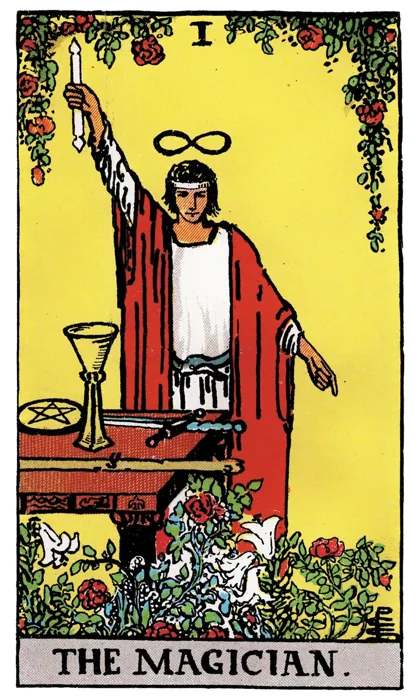
With The Magician
With the Magician, an available resource meets the ability to use it. Choose a specific application for the tool, skill, or opportunity. Capability becomes convincing through a small working result, rather than a broad promise that every future possibility will succeed once you begin.
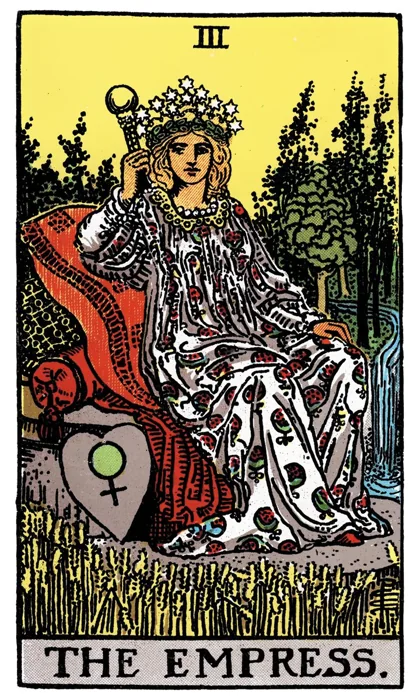
With The Empress
With the Empress, practical conditions support growth, comfort, or creative work. Ask what needs nourishment and what environment would allow it to develop. The pairing favours attention to the living process, without treating fertility imagery as a prediction about pregnancy or health.
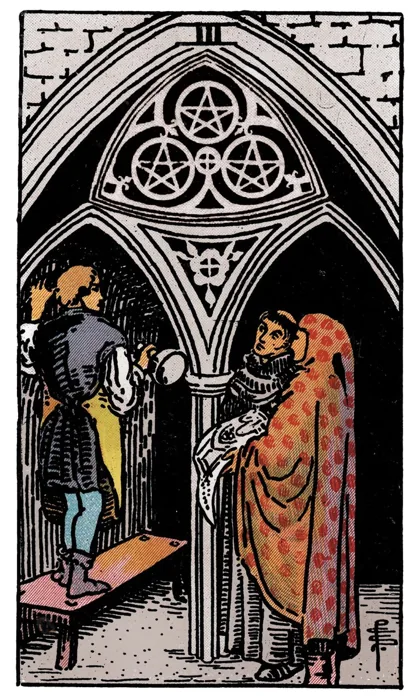
With Three of Pentacles
With the Three of Pentacles, a beginning may need shared expertise. Bring the opportunity to people who understand different parts of the work and clarify roles early. A promising resource becomes more useful when its development does not depend on one person pretending to know everything.
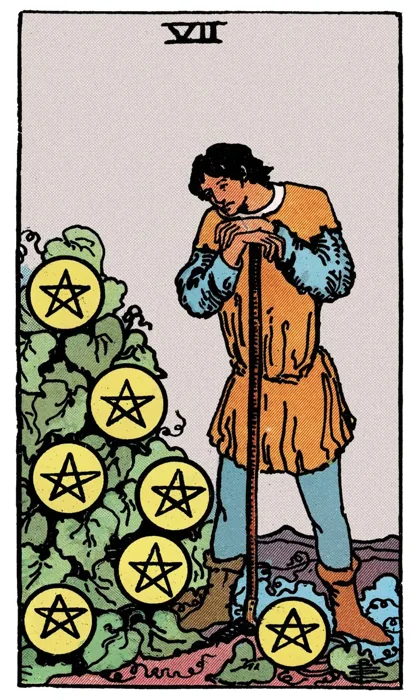
With Seven of Pentacles
With the Seven of Pentacles, consider the time between beginning and a meaningful result. Decide what you will observe as the work develops and when it makes sense to reassess. Patience is more useful when it is connected to evidence, rather than an unlimited obligation to keep investing effort.
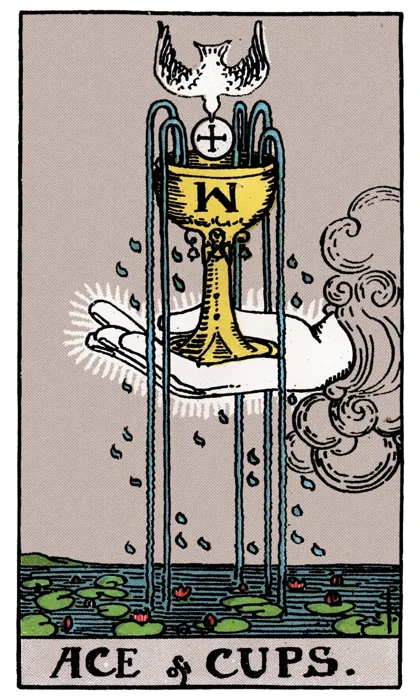
With Ace of Cups
With the Ace of Cups, emotional openness may find a practical place to grow. A new connection or creative impulse benefits from time and concrete attention. Enjoy the feeling while considering the conditions that would let it become part of ordinary life, rather than remaining an isolated moment.
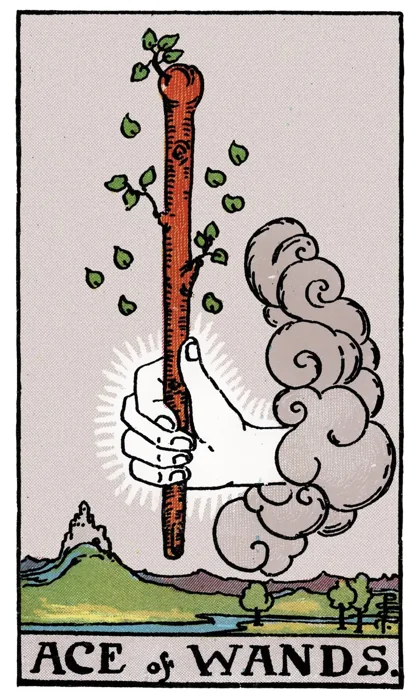
With Ace of Wands
With the Ace of Wands, enthusiasm meets a tangible opening. Use the spark to make a first trial with the materials available. The pair can be encouraging, but two beginnings still need development. Check capacity and fit before allowing excitement to make commitments your routine cannot support.
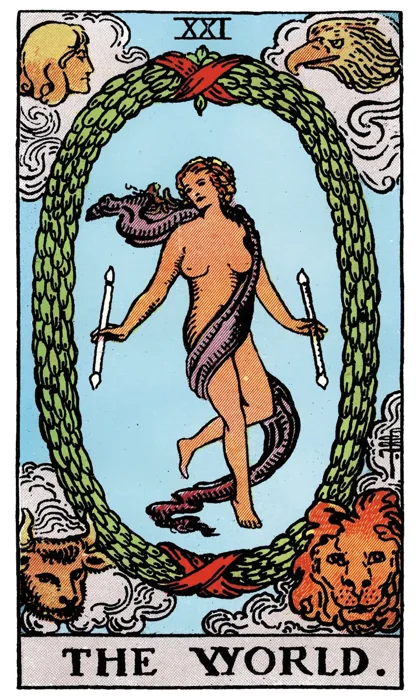
With The World
With the World, a completed phase may provide the resources for a new one. Notice the skills, contacts, or practical gains you can carry forward. The next beginning need not repeat the old achievement; it can use what was learned to support a different kind of life.
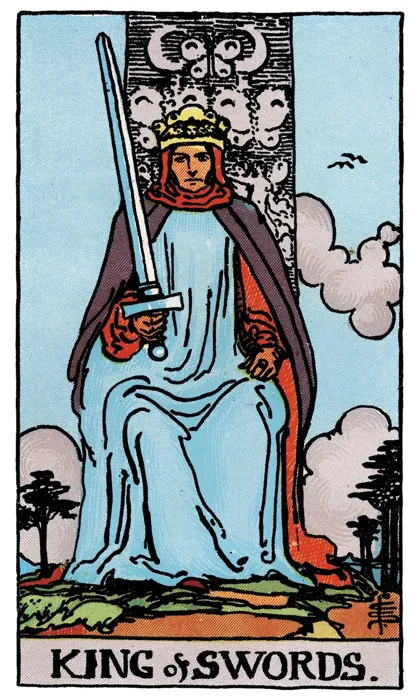
With King of Swords
With the King of Swords, assess the opportunity through clear criteria and relevant expertise. An attractive offer deserves precise questions about terms, responsibilities, and uncertainty. Good judgement does not spoil the promise. It helps distinguish a usable foundation from a story that only sounds substantial.
What becomes possible after receiving something
A seed contains possibility, but soil, season, water, and attention affect what grows. The image is useful because it gives potential both dignity and limits. You can value the beginning without pretending its future is guaranteed, and you can improve the conditions without claiming total control over the result.
A key is handed over. It opens a particular door, not every door, and the room behind it still needs to be lived in. The Ace often has this scale of promise: specific access that changes what you can do next. The meaning comes through the life built around that access.
A craftsperson receives a first commission. The payment matters, and so does the recognition that the skill can enter an exchange with the wider world. Completing the commission will teach the craftsperson something about turning that skill into a continuing practice. Being offered the beginning is significant; tending it is a different, equally real part of the story.
Make one available resource useful
Choose a practical resource or opening already within reach. Name what you want it to support and what one small use would look like this week. Check any important terms or missing information before acting. Keep the scale limited enough that the experiment can teach you something without demanding a whole new life in advance.
After the first use, ask what became easier, what was harder than expected, and whether you want to return to it. The Ace of Pentacles grows through this contact with reality. A possibility becomes more valuable when you know how it behaves in your hands, not merely how promising it looks from a distance.
Artwork & interpretation
The offered pentacle and cultivated setting anchor this original essay on practical beginnings. Interpretations concern opportunity and its conditions, not guaranteed wealth or advice on a particular financial decision. A. E. Waite, The Pictorial Key to the Tarot: Ace of Pentacles.
The symbolic associations and examples offer ways to read a situation. They do not establish another person’s thoughts or fix an outcome.
An opening can be valuable without being a guarantee, and accepting it means considering what it asks of you.
Use the cards in a spread →