Wands · Ace
Ace of Wands
The first unmistakable feeling of wanting to begin
The Ace of Wands begins with interest strong enough to make you want to participate. An idea can feel compelling before you have a plan for it. Give that enthusiasm something to work on so you can discover what the possibility involves.
- Inspiration
- Desire
- Initiative
- Potential
16 min read
In this guide
Something in you says yes before you know how
You hear about an opportunity and sit up straighter. A sentence arrives while you are doing something else. A description of an unfamiliar place can make you want to visit. Hearing about someone's project may give you the same sudden interest in a different way of living. The Ace of Wands describes this first movement of appetite: the feeling that there is something here you want to meet.
The Ace of Wands often concerns the return of enthusiasm or the urge to try something unfamiliar. You may feel drawn to a person or suddenly want to make something, without yet knowing why the interest is so strong. You have not developed a plan or assessed the possible result. The interest can still be worth exploring before you know what it will become.
An Ace begins a story whose length and importance are still unknown. A brief experiment may teach you something that changes your direction, while another beginning develops into sustained work. You learn which it is by participating. Choose an attempt that fits what you currently know and can afford to commit. Excitement supplies energy for discovery; the results will supply information about what to do next.
After a dull or difficult period, even a small interest can matter. Perhaps you want to cook again, although it has no obvious connection to your larger plans. Taking photographs might give you a similar reason to pay attention to the world. Allow the interest some space even if it is inconvenient or different from what you expected to want.
In a situation already underway, the Ace may indicate a fresh approach rather than an entirely new venture. A tired project acquires a better question. A familiar relationship finds a more playful rhythm. The useful change could be one lively element introduced into an existing structure, giving you a reason to engage with it again.
Use the card to move towards an actual attempt. Reading about an activity and collecting its equipment can keep you close to the idea for a long time without showing you how the work feels. Trying it introduces the materials and their limits. You discover how much you enjoy the activity with your present ability, including what changes when other people are involved.
The wood is already putting out leaves
A white hand emerges from a cloud and grips a large upright wand. Small green leaves grow along the wood, while others appear suspended around it. The image places a living, irregular object in the foreground. This beginning has vitality before it has refinement; it has not been shaped into a polished tool for a single predetermined task.
The hand is both an offering and a grip. Something appears, but someone must take hold of it for the scene to become an action. This gives the card a useful ambiguity: inspiration can feel received, arriving unexpectedly, while its development depends on a person making choices. You need not explain the origin of an idea before beginning to work with it.
Below, a river passes through green country, with a building on a distant height. The landscape provides scale. The immediate impulse is large in your attention, while the place it might lead remains far away. There is terrain between the offered possibility and any eventual accomplishment, even though the image lets us see both at once.
No human figure is shown labouring towards the distant building. The card suspends us before that stage, in the charged space of potential. Its symbolism becomes clearer when we allow it to remain a beginning. Asking it to promise the whole journey places a weight on the image that the visible scene does not carry.
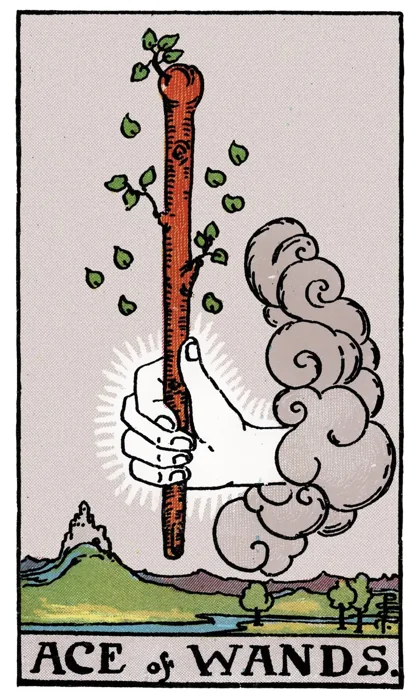
The budding wood is still recognisably part of something alive. An early idea may be rough, excessive, or difficult to explain while containing a real source of energy. Refinement can come after you discover what wants to grow.
The grip gives inspiration a point of contact. A small concrete action can test an impulse without making a sweeping promise. The first page, conversation, or experiment lets possibility encounter the world.
The return of appetite
As an inner state, the Ace of Wands feels like animation. Attention moves towards something instead of merely defending against demands. You may become more playful, curious, physically expressive, or willing to risk looking inexperienced. The important change is a sense of agency: there is something you would like to do, not only something you must get through.
Wanting something can feel awkward if you are used to judging your time by its usefulness. You may immediately wonder whether the interest could earn money or win anyone's approval. Give yourself a chance to understand the attraction before assessing its value that way. You might enjoy the activity itself, or be drawn to the freedom and possible change of identity it seems to offer.
The card can also reveal anger as a source of initiative. Something feels intolerably lifeless, unfair, or constrained, and energy gathers around changing it. Anger may identify a value you want to defend. It does not by itself decide which action is wise. Give the force a considered outlet rather than assuming its intensity guarantees its direction.
Enthusiasm can make your capacity feel temporarily larger. In your imagination, there is time to learn everything and begin right away. Enjoy considering the possibilities while allowing for the ordinary week in which you would carry them out. The person doing the work will need rest and money, and existing obligations will still take time even if they currently seem much less interesting.
As a description of a person, the Ace can point towards an initiator: someone whose interest is contagious, who opens possibilities and gets a room moving. Their gift may lie in beginning rather than maintaining. Appreciate that gift without automatically assigning them every later responsibility, or expecting their first enthusiasm to settle questions it has not yet encountered.
Desire as information, rather than an instruction
The deeper question is what it means to be moved by something. Not every valuable action begins with a reasoned argument. Curiosity, attraction, irritation, and delight can notice possibilities before deliberate thought has a language for them. The Ace of Wands gives those responses a place at the table without making them the only voice in the room.
An impulse becomes more intelligible through participation. You try the activity and discover which part absorbs you; you speak to the person and learn whether attraction survives conversation. Reflection and action inform one another. Waiting for complete self-knowledge before making any move can become a way of refusing the experiences through which that knowledge develops.
There is a distinction between aliveness and escape. Both can arrive as a sudden longing for something new. Aliveness tends to make you more available to experience, including its inconvenient details. Escape often depends on keeping those details out of view. Ask whether this possibility becomes more interesting as you learn about it, or only when you keep imagining it from afar.
The Ace also challenges the assumption that everything worthwhile must become permanent. A short creative experiment can change the way you see. A passing interest can introduce a friendship or restore confidence. Duration is one measure of value, not its sole measure. You can honour an impulse fully without insisting that it define the rest of your life.
What matters is a responsible relationship with your own fire. You can feed it, shape its conditions, and decide where it is welcome. You cannot force every spark to become the same kind of flame. A desire may belong in your work or remain a private pleasure, without needing further justification. Others are best explored in imagination or through a conversation about what has been missing.
Make the rough version while the idea is alive
For work, this Ace is well suited to a proposal, prototype, first draft, application, or new line of inquiry. It asks what can be made visible quickly enough to learn from. A sketch on a page can reveal more than a week of describing the idea. The purpose of the first version is to create a conversation with the material.
Protect the difference between testing an idea and launching a business around it. The excitement of naming, branding, and announcing can consume the energy that belonged to the actual work. Before building an identity around the project, discover whether you enjoy its central activity and whether anyone needs what it produces. Those are separate, equally useful questions.
In an established role, the card may suggest initiative within reach. Offer a better approach to a recurring problem, volunteer for a bounded experiment, or revive an abandoned idea whose conditions have changed. Initiative becomes easier to trust when its scope is clear. State what you want to try, what it will require, and when you will review it.
Creative beginnings need some protection from premature evaluation. An unfinished piece can sound foolish when asked to defend itself as a finished argument. Choose early readers who can recognise potential while identifying useful questions. At the same time, avoid surrounding the idea only with admiration. Encouragement should make the next attempt possible, not replace it.
The Ace can also describe the uneasy beginning of a vocation. You may feel drawn towards a kind of work long before you can afford to make it your livelihood. A gradual apprenticeship can be a serious response. Taking one class, building a portfolio, or helping on a real project gives the desire practical substance without demanding a dramatic rupture.
Its professional shadow is the endless sequence of exciting starts. Newness offers praise and possibility while maintenance exposes limitations. If you recognise that pattern, give this idea a small finish line before beginning another. Completing a modest experiment helps distinguish a useful creative rhythm from a habit of abandoning work whenever it starts to ask something of you.
Allow attraction time to develop through shared experience
In love, the Ace of Wands often draws attention to attraction, playful pursuit, erotic interest, or renewed liveliness. Someone becomes vivid to you. The pleasure can be direct and uncomplicated in the moment, even when its future is uncertain. You are allowed to enjoy that beginning without pretending that chemistry has answered every question about compatibility.
The practical distinction is between an invitation and an assumption. Express interest in a way that leaves room for a real response. Another person's friendliness, intensity, or appearance in a reading does not establish what they want. Mutual desire becomes known through communication and behaviour, including respect for hesitation, limits, and changes of mind.
In an existing relationship, the card can suggest making room for novelty that both people enjoy. A different setting, a shared project, a playful conversation, or time freed from routine may alter the atmosphere. The aim is to become curious about each other again, not to demand a performance of the excitement you remember from the beginning.
A mismatch in enthusiasm deserves care. One person may feel a sudden wish for more contact, adventure, or physical closeness while the other needs a slower pace. That difference need not be a verdict on the relationship. It becomes useful information when discussed without turning desire into an entitlement or lower desire into an accusation.
For someone single, the Ace may invite participation: accept the invitation, begin a conversation, or enter settings where you feel more alive. This is different from treating every spark as a rare destiny you must secure. A little room for uncertainty often makes an encounter more human, because both people can emerge beyond the roles imagined for them.
Beyond romance, this card belongs to friendships that begin around a shared enthusiasm. Making something, exploring somewhere, or learning together can give connection an immediate pulse. Let the shared activity introduce you, then notice the person. A common interest is a beginning of knowledge, rather than proof that you will agree about everything else.
Give enthusiasm a budget it can live inside
Materially, the Ace can point to an idea with earning potential or a desire to invest in a new interest. Potential needs investigation. Work out the smallest useful expense, what it will teach you, and what would justify spending more. An affordable trial often protects enthusiasm better than a purchase so large that the activity immediately has to repay it.
Notice the objects that promise a new identity: the equipment, the wardrobe, the workspace, the course bought at midnight. Some will genuinely help; others substitute possession for participation. Before buying the complete future, use what you have to attempt the central activity. The resulting experience will make later purchases more specific and less dependent on fantasy.
At home, fresh energy may appear as a wish to rearrange, repair, cook, garden, or make a corner your own. A small change can alter how a place feels. Choose an experiment you can actually finish, especially if the household is shared. Your renewed enthusiasm should not quietly become someone else's unfinished project to navigate.
When money is tight, the invitation is not to take a reckless leap in order to prove belief. Look for a version of the interest that fits present resources: borrowed tools, a free practice session, an exchange of skills. Constraints can shape an experiment without establishing the limits of your eventual ability.
Use the surge without spending tomorrow in advance
A burst of energy can make ordinary limits feel temporarily irrelevant. You stay up to finish the sketch, agree to several plans, or fill the week with new commitments. The Ace is a good image for noticing that surge. Its practical companion is pacing: leave the next session attractive enough that you want to return.
If your energy is low, the card need not instruct you to become exuberant. Interest can be quieter than stamina. Follow the smallest available thread of curiosity without demanding an immediate transformation in how you feel. Looking, listening, or making a few notes can be a legitimate beginning when a larger effort is unavailable.
No card measures health, fertility, or physical capacity. Here, vitality is a reflective theme: what makes participation feel possible, and which conditions help you sustain it? Attend to the actual signals of your body rather than using an inspiring symbol to override exhaustion or dismiss something that needs practical attention.
Make one real move before making a grand promise
Choose an action close enough to the original interest that it can teach you something. For a writing idea, a page will give you something to respond to. A possible collaboration needs a conversation about a small piece of work; attraction, too, becomes clearer through respectful communication. Keep the first move specific, because vague excitement is easy to preserve indefinitely without discovering its substance.
Give the experiment a container: a little time, a manageable cost, and a point at which to reflect. This is not an attempt to make inspiration obedient. It gives the impulse somewhere to become experience. You can then decide whether to deepen, alter, or release it on the basis of something more useful than anticipation.
The shadow is confusing intensity with importance. An idea may feel urgent because it is new, flattering, or conveniently distant from a difficult obligation. Ask what it adds to your life and what it asks you to ignore. A worthwhile beginning can usually survive a little honest examination, even if it cannot yet survive a complete business plan.
Another shadow is contempt for ordinary effort. You want to remain the inspired person rather than become the beginner making awkward attempts. Let yourself be less impressive and more involved. The willingness to do something badly for a while is often the bridge between the first thrill and a practice that becomes your own.
The spark needs a different condition
Reversed, the Ace may describe an impulse that cannot find an outlet, an unconvincing beginning, or enthusiasm that fades on contact with the work. None of these automatically means the possibility is worthless. Ask where the interruption occurs: before you begin, during the activity, or when you imagine showing the result to someone else.
If the difficulty comes before beginning, the obstacle may be fear, an oversized plan, or conditions that leave little room for exploration. Reduce the first step until it becomes available. An interest does not become less serious because it starts in twenty minutes at a kitchen table rather than in an ideal studio with a new identity.
If practising the activity consistently leaves you uninterested, that discovery is worth taking seriously. The imagined life around it may have been what appealed to you. Perhaps you wanted company, or hoped to gain freedom from a routine that felt too narrow. Look at that underlying wish and how else you might meet it, rather than committing yourself to an undertaking you do not enjoy.
The reversal can also describe too many sparks competing for limited attention. Every possibility remains exciting because none is developed far enough to become difficult. Choose one modest experiment and let the others wait in a notebook. Selection does not destroy your creative freedom; it makes one piece of that freedom capable of producing an experience.
In relationships, a delayed or unequal response calls for clarity rather than pressure. In work, a false start may need revision or release. Sometimes the wisest interpretation is simple: this is not the right moment, or not the right form. Desire can return differently. You do not need to punish yourself for failing to remain permanently inspired.
Where can the first impulse go?
These combinations explore what might support, shape, or complicate a beginning. Read them against the question and the actual circumstances, rather than as promises about a project or another person's desire.
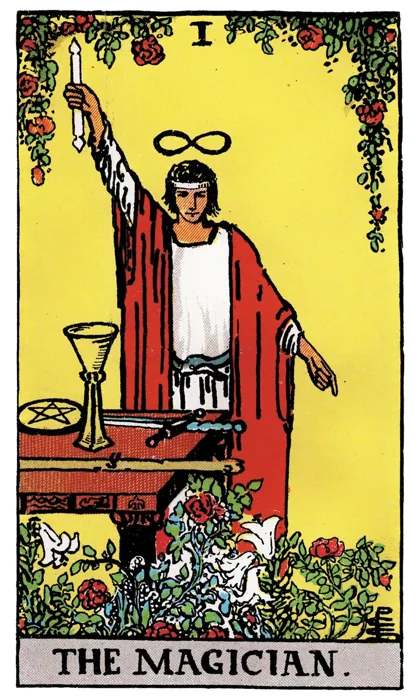
With The Magician
With the Magician, inspiration meets available skill and tools. Make something concrete with what is already within reach. The useful question is how to translate the impulse into a first workable expression, without waiting for a more impressive set of resources.
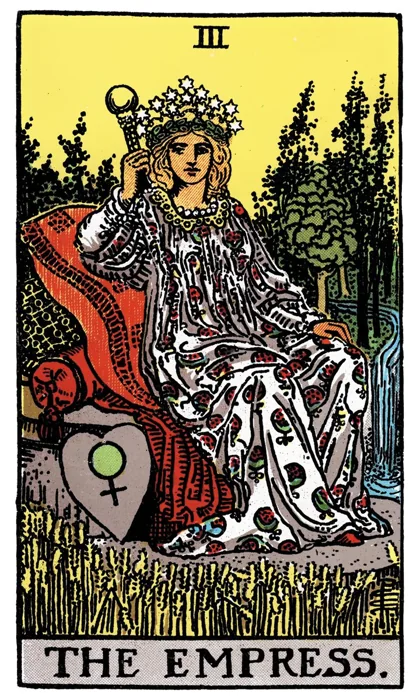
With The Empress
With the Empress, an idea needs nourishing conditions and time to develop. Attend to materials, pleasure, and the environment in which you work. The pairing can describe creative growth; it is not evidence of pregnancy or a forecast about fertility.
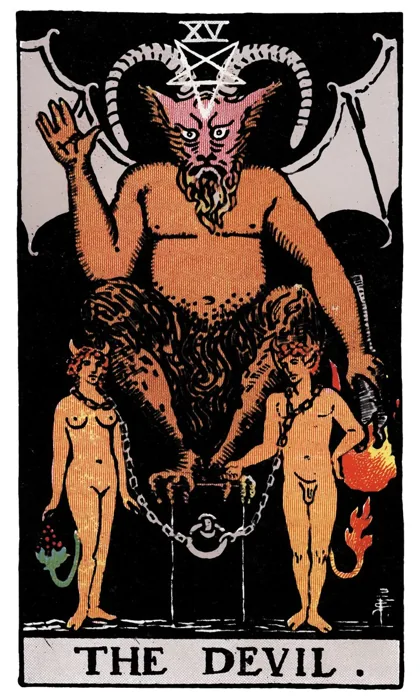
With The Devil
With the Devil, a powerful attraction deserves examination of its costs and conditions. Notice whether excitement expands your choices or narrows them. Desire can be acknowledged without accepting pressure, secrecy, dependency, or an arrangement that repeatedly leaves you less free.
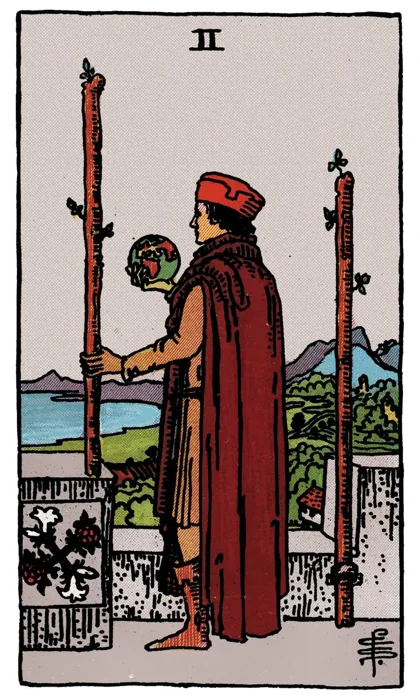
With Two of Wands
With the Two of Wands, a spark begins to require direction. Compare a small number of realistic paths and identify the information that would help you choose. Planning is useful when it leads towards an experiment, rather than preserving every possibility untouched.
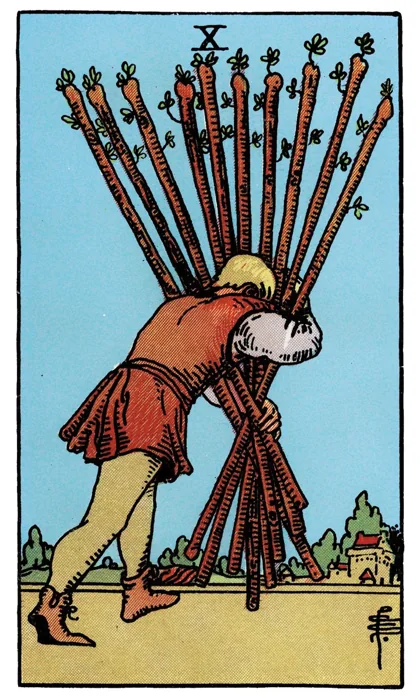
With Ten of Wands
With the Ten of Wands, new enthusiasm enters an already crowded life. Decide what will make room for it before adding another commitment. The idea may be worth pursuing, but its value does not create extra hours or remove existing responsibilities.
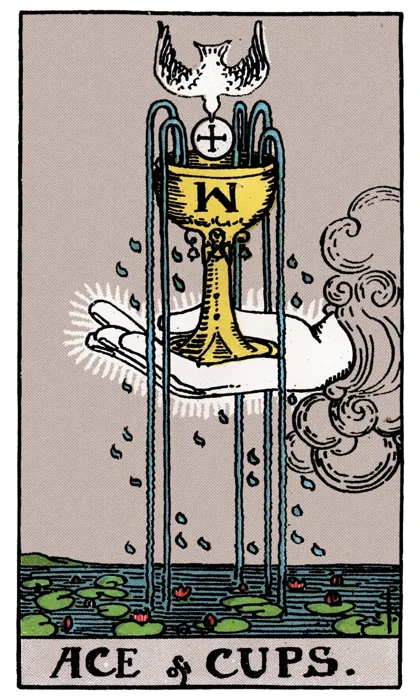
With Ace of Cups
With the Ace of Cups, emotional openness and creative or physical attraction may arrive together. Let the encounter unfold through reciprocal communication. A strong beginning can be enjoyed while you continue learning what each person wants and what the connection can sustain.
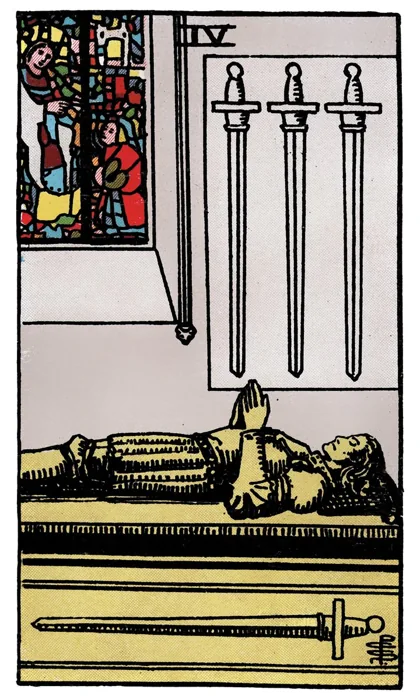
With Four of Swords
With the Four of Swords, the impulse may need quiet rather than immediate expansion. Capture the idea and give yourself time to return to it. Rest can preserve a beginning that would otherwise be consumed by the demand to act at full intensity.
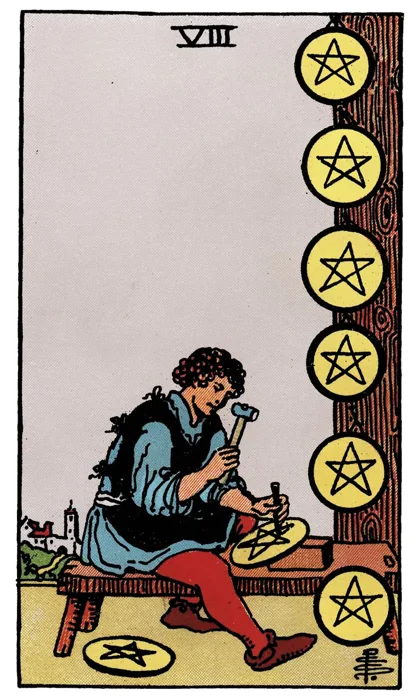
With Eight of Pentacles
With the Eight of Pentacles, inspiration finds its next expression in practice. Choose a repeatable task and accept the awkwardness of learning. Interest becomes more durable when it includes the pleasure of improving, rather than depending entirely on the thrill of imagining the result.
The first rehearsal and the open workshop
The first rehearsal captures the Ace's particular mixture of promise and disorder. People have gathered around something that does not yet exist. The opening attempt may be clumsy, but it changes the status of the idea: it now has sound, movement, and other people's responses. Possibility becomes something that can answer back.
The open workshop offers another image. You stop to watch someone using a tool and feel the sudden wish to try. For a moment, admiration becomes participation. The skill will take time, but the wish itself has already altered your relationship with the activity. What belonged to other people has become imaginable as part of your own life.
A match is a useful, limited metaphor. Its brightness is real, but brief; it needs something suitable to light. This keeps the Ace from becoming a demand for endless excitement. The first flash has done its work when it helps you establish a more sustainable source of warmth, movement, or creative attention.
Give the idea its first hour
Choose one interest you have been circling. Give it a short, affordable session devoted to the activity itself, with no requirement to announce it or purchase a new identity. Make, try, ask, or explore. Notice which part brings you closer and which part makes the original fantasy less convincing.
Afterwards, record three things: what held your attention, what you learned about the practical demands, and the next small action you genuinely want to take. You may discover a lasting interest or a brief but useful experiment. Either is a better relationship with the spark than insisting it promise a whole future before you touch it.
Artwork & interpretation
Waite associates this Ace with creation, invention, enterprise, and beginnings. The contemporary discussion here is original, exploring how inspiration, desire, experimentation, and practical limits interact, with close observations of Pamela Colman Smith’s image. A. E. Waite, The Pictorial Key to the Tarot: Ace of Wands.
The symbolic associations and examples offer ways to read a situation. They do not establish another person’s thoughts or fix an outcome.
A spark deserves attention before it deserves your whole life.
Use the cards in a spread →