Major arcana · 15
The Devil
The bargain that keeps asking for more
The Devil examines an arrangement you keep accepting because it provides something you want. The reward may be pleasure or relief from a particular fear. Look closely at what you have learned to overlook so that the reward can continue.
- Attachment
- Temptation
- Dependency
- Constraint
15 min read
In this guide
Read the bargain underneath the attraction
The arrangement has an explanation ready. You may stay in a job for its pay, or in a relationship because of how alive you feel with the person. A habit may get you through the evening; someone's approval may reassure you that you matter. None of these benefits has to be invented for the cost to become excessive. The Devil begins where the reward and the loss of freedom occupy the same relationship.
In a reading, the Devil can concern an attachment whose immediate reward makes its costs difficult to face. Dependency may be involved, and material pressure can narrow the choices available. Some arrangements also involve coercion or secrecy. Examine what you receive from the bond alongside what it asks of you. How freely you can change those terms matters when deciding what to do next.
The Devil is not a verdict that a person is evil, nor evidence of a curse or supernatural influence. Ordinary arrangements can acquire considerable power when income or status depends on them. Fear of losing relief or something strongly desired can make that dependence harder to question. Naming the mechanism makes the card more useful than treating its dramatic image as an accusation.
Pleasure gives life richness, and desire can motivate something worthwhile. The Devil asks what happens when one source of enjoyment becomes difficult to question. Can you still make choices about it and acknowledge its costs? If setting a limit threatens your sense of belonging or leaves you feeling unable to cope, the attachment deserves closer attention, without condemning what you originally enjoyed about it.
A constraint may be external and substantial. Leaving may put income or housing at risk. Threats and social pressure can make it harder still, particularly when support is limited. The card should not reduce these conditions to a failure of will. An honest account includes both the appeal of the arrangement and the practical forces that keep it in place.
Describing the bargain plainly may reveal a term you can question. You might need support to do so, especially if the arrangement has become difficult to leave. Begin with a change you can actually make and consider what would prepare you for a larger one. Regaining choice can be gradual, with each adjustment reducing the cost of continued participation.
The chains are part of a larger arrangement
A large horned figure stands above two smaller human figures, who are linked by chains to a central support. The composition makes hierarchy visible. The upper figure dominates the space, while the pair below remain related to each other through the same point of attachment.
The human figures resemble a distorted echo of the Lovers, with horns and tails added to their bodies. This can suggest a relationship in which desire has become entangled with another force: fear, possession, shame, or the need for approval. The resemblance invites comparison without making sexuality itself the source of the difficulty.
The neck loops appear roomy, a detail often used to suggest that release may be possible. A careful reading keeps the possibility without turning it into blame. An image of a loose chain cannot tell you how easy a real person's departure would be, what threats they face, or what resources they lack.
The raised hand, inverted star, dark background, and downward-pointing flame contribute to the scene's oppressive authority. The atmosphere feels complete, as though this is the whole available world. Symbolically, a powerful arrangement can narrow imagination until the alternatives seem less real than the cost of remaining.
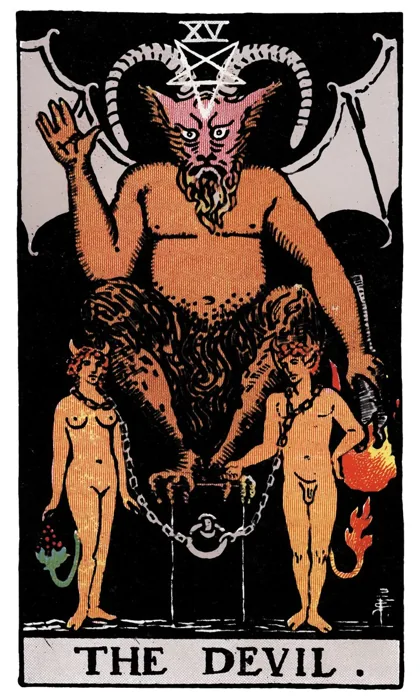
Both figures are connected to the same support. The image can invite attention to what a relationship is organised around, especially where fear or dependency has begun to govern the exchange.
The upper figure occupies most of the scene. Its scale can suggest how an attachment or controlling arrangement grows until it seems to define the whole range of possible choices.
What you need the reward to prove
Internally, the Devil can describe a strong appetite accompanied by a reluctance to examine its terms. You know the cost, at least in fragments, but the anticipated reward reorganises attention. The inconvenient information becomes something to consider later, after the purchase, meeting, promise, or familiar escape.
The pattern may depend on an emotional bargain. If you remain useful, admired, desired, or successful enough, perhaps you will not have to feel replaceable. The immediate pursuit then carries a larger task it cannot reliably complete. Each reward offers relief, and the underlying uncertainty soon asks for another one.
Shame can strengthen the arrangement by making it harder to discuss honestly. You believe that admitting the need would make you weak, greedy, foolish, or unacceptable. The hidden part of the pattern loses access to ordinary feedback and support. A less condemning description may reveal more useful detail than another attempt to frighten yourself into change.
As a person, this card may suggest charisma, appetite, pragmatism, ambition, and a clear eye for what motivates others. These qualities can be creative and effective. Their shadow appears when understanding a desire becomes a way to exploit it, or when success is treated as sufficient justification for how it was obtained.
Mature engagement with the Devil includes owning a desire without letting it dictate the whole arrangement. You can admit that you want money, admiration, pleasure, or influence. That honesty makes it easier to decide which terms you will accept and which costs would make the reward less valuable than it appears.
The story that makes the constraint feel necessary
The Devil asks how an arrangement becomes natural in your account of the world. This is just how work is. Nobody else would want me. I cannot relax without it. Everyone pays this price. Such statements may contain real observations while also closing the inquiry too early. The important question is which part is established and which part has become an unquestioned rule.
An existing need can give someone power over you. Wanting security or recognition is ordinary; the need for relief can become especially pressing under strain. When those things seem available from only one source, you may accept terms you would otherwise refuse. A useful reading takes that pressure seriously and considers what would increase your choices from within your actual circumstances.
There is a difference between chosen commitment and captivity. A commitment limits some options in order to support something valued. It remains more freely chosen when its terms can be understood, discussed, and revisited without punishment or deception. A constraint becomes more troubling when the right to question it is itself treated as a betrayal.
Having attachments is part of a life that includes other people and things you care about. Leaving a costly bond need not require giving up desire or becoming entirely self-sufficient. Consider whether an attachment allows mutual care and how much of your life it occupies. Other sources of support can make it easier to choose freely within a relationship that still matters to you.
The deeper release is often a more accurate imagination of possibility. An alternative income or a different circle of friends can change what seems possible. Sometimes the first opening is simply finding a way through a difficult evening, with help from someone who understands your options. The alternative becomes real enough to weaken the claim that the present bargain is the only one available.
What the reward makes difficult to question
At work, the Devil can concern an attractive role with increasingly costly terms. Income, prestige, access, or the promise of future opportunity makes it difficult to refuse demands that keep expanding. The relevant question is what the job actually requires now, rather than the version of it you accepted or still hope to receive.
An organisation may use belonging as a substitute for clear agreements. Loyalty is invoked when boundaries are raised, while benefits remain discretionary. Notice which obligations are treated as fixed and which promises remain vague. A warm culture can be valuable, but it should not make practical questions socially forbidden.
Ambition brings another expression. You begin measuring every choice by whether it advances your position, then discover that rest, friendship, and curiosity have become difficult to justify. The achievement may still matter. It deserves a conscious place in your life instead of quietly acquiring the authority to consume everything that does not directly serve it.
Creative work can become dependent on approval. You know which version attracts attention, and gradually make it harder to produce anything else. The audience's response becomes both reward and instruction. A private space for experiment may help you retain contact with interests that are not yet marketable or easily recognised.
If the card describes influence you hold, examine the terms you set for others. Do people have enough information to agree freely? Can they raise a concern without risking disproportionate consequences? Skill at obtaining compliance is different from creating a workable, informed agreement.
The shadow is imagining that recognition of the problem removes the need for practical preparation. You may need time, resources, documentation, or advice before changing a difficult arrangement. A deliberate plan can be more useful than a dramatic declaration followed by a return to the same terms because no alternative was made possible.
Intensity and freedom need separate questions
In relationships, the Devil can describe powerful attraction, possessiveness, secrecy, dependency, or a bond whose immediate intensity makes its wider effects difficult to assess. The card is not proof that a partner is manipulative or unfaithful. Look at specific behaviour and the actual terms of contact.
Sexual desire may be strong without being harmful. Unconventional preferences or consensual power dynamics are not made unhealthy by resembling the card's imagery. The relevant questions concern informed agreement, the ability to decline or stop, mutual respect, and what happens when someone's wishes change.
A difficult bond may alternate between distress and unusually rewarding closeness. The relief after a painful period can feel like evidence of exceptional connection, even when the original pattern remains intact. Notice what changes between one cycle and the next. A moving reunion does not by itself establish a different relationship.
Jealousy can be presented as proof of love, while monitoring or restriction gradually narrows another person's life. Care is not measured by the amount of access someone demands. If a relationship includes threats, coercion, or fear, support and practical safety matter more than interpreting the bond as a spiritual challenge.
Dependency can also develop quietly through a very small world. One person becomes the only source of affection, practical help, identity, or reassurance. The connection may be loving, yet the concentration makes ordinary disagreement feel existential. Additional sources of support can give the relationship more breathing room without diminishing its importance.
The card's useful question is what keeps each person there and how freely that can be discussed. You may discover genuine love alongside fear, habit, financial constraint, or the wish to avoid being alone. A mixed account is often more useful than deciding that the bond must be either entirely authentic or entirely false.
Name the cost beyond the price
In material matters, the Devil draws attention to obligations that reduce freedom: recurring costs, difficult terms, status spending, or dependence on a single source of support. The card cannot identify a bad investment or predict financial loss. It can prompt a careful account of what the commitment requires and what options it leaves available.
A purchase may promise more than its practical function. You are buying reassurance, entry into a group, relief from an unpleasant day, or evidence that life is improving. Those motives deserve recognition because they affect what feels affordable or necessary. The object may be enjoyable while still being unable to provide the larger change expected of it.
Shared resources can create unequal power. Someone may provide substantial help while expecting control over choices beyond the agreement. Gratitude does not make every additional demand reasonable. Clarify terms where possible, and seek appropriate support if dependence makes it difficult to question the arrangement safely.
A more workable response may begin with one concrete fact: the recurring total, the actual obligation, a missing term, or an alternative that has not been explored. Precision reduces the power of a vague dread. It also helps you distinguish a manageable commitment from a problem that needs specialised advice.
What happens after the immediate reward?
The Devil can invite attention to a habit used for relief. What happens before it, what does it provide in the moment, and how do you feel afterward? This sequence may reveal an unmet need or an arrangement that repeatedly depletes you. Looking at the pattern is more useful than treating the habit as a complete explanation of your character.
Some dependencies need qualified help and practical support; a card cannot diagnose them or prescribe how to stop. Avoid interpreting difficulty changing as proof that you do not want freedom enough. The relevant response depends on the actual behaviour, risks, circumstances, and resources available.
At an ordinary level, widening your sources of rest, pleasure, and company can reduce the pressure placed on one reward. The aim is not to make life joyless or perfectly controlled. It is to give yourself more than one route through a difficult day, so a familiar relief does not have to carry everything.
Tell the truth about both sides of the bargain
As advice, the Devil asks for an account that includes the benefit as honestly as the cost. If you pretend the arrangement gives you nothing, you will struggle to understand why it persists. Name what it provides, what it takes, and what makes a different choice difficult.
Choose one change that increases room to decide. That might mean asking for clearer terms, delaying an automatic response, seeking relevant support, restoring contact with someone outside the arrangement, or preparing a practical alternative. The scale should fit the actual constraints rather than an idealised image of effortless liberation.
The shadow is using the card to condemn someone else. It can feel satisfying to locate the entire difficulty in a supposedly toxic person while leaving your own choices and the wider conditions unexamined. Specific behaviour is more useful than a total label, especially when you need to decide what boundary or support is required.
Another shadow is moralising pleasure until secrecy becomes inevitable. A more honest relationship with desire allows you to ask about consent, cost, and proportion without first deciding that the wanting itself makes you unacceptable. Clear limits are easier to choose when they are not built entirely from shame.
The attachment is becoming visible
Reversed, the Devil can describe recognition of a costly pattern, an attempt to loosen its hold, denial that is becoming harder to maintain, or fear of what change would require. It does not automatically mean that the constraint has ended. Awareness and practical freedom may develop at different speeds.
One expression is seeing the mechanism clearly for the first time. You recognise the reward that keeps the pattern in place and the explanation used to protect it. This can bring relief and embarrassment together. Use the recognition to identify a next step rather than turning it into another reason to punish yourself.
Sometimes a change of setting leaves the underlying bargain intact. You leave a relationship where approval required you to suppress your needs, then accept similar terms with someone new. A different job may still take every available hour in exchange for status. Examine what keeps recurring in the exchange, including any instability you accept for excitement, so that a new beginning can involve different terms.
The reversal may also indicate that you are minimising a constraint because admitting its seriousness would require support or a difficult decision. You insist that you could stop, leave, or object at any time, while repeatedly postponing a small test of that claim. Consider what evidence would help you assess the actual degree of choice.
A constructive reversal widens the world around the attachment. You gain information, support, another source of income, a clearer boundary, or a more honest conversation. Progress may be uneven. The relevant question is whether your options and capacity to choose are becoming more substantial, rather than whether the old pattern has vanished from thought.
What keeps the bargain in place?
These pairings explore possible mechanisms of attachment. They cannot establish abuse, addiction, deception, or another person's motives without evidence from the actual situation.
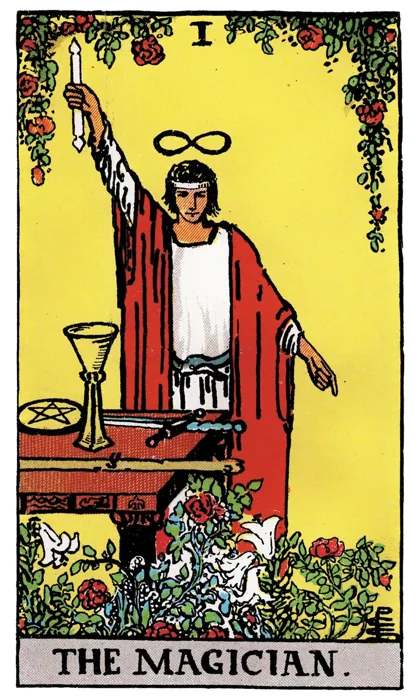
With The Magician
With the Magician, skill and persuasion may serve a powerful incentive. Examine how the offer is explained and what information is left out. The same ability can help people make informed choices or make agreement easier to obtain than understanding.
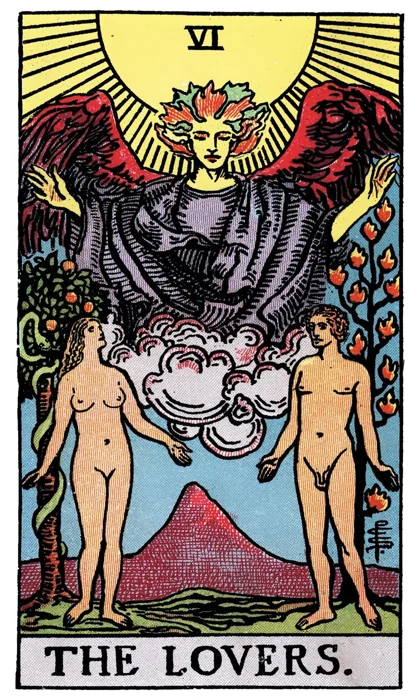
With The Lovers
With the Lovers, attraction needs a separate examination of freedom. A connection may feel significant while carrying terms that restrict one or both people. Look at the ability to disagree, decline, and revise the arrangement without punishment or manipulation.
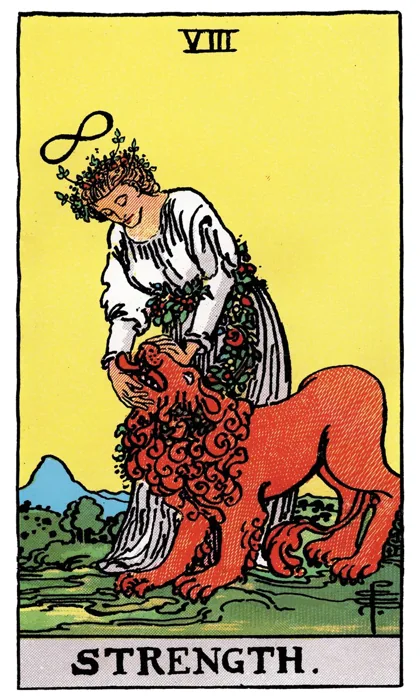
With Strength
With Strength, a strong impulse calls for patience, limits, and an honest account of capacity. Shame may obscure the pattern, while denial may preserve it. Seek support appropriate to the actual situation rather than making change a solitary test of will.
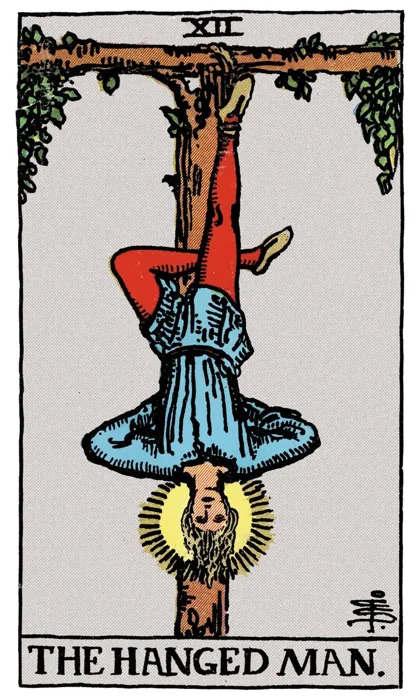
With The Hanged Man
With the Hanged Man, sacrifice may be maintaining dependency. Identify who benefits from continued waiting and what could change the terms. Practical constraints deserve attention; recognising the pattern does not prove that leaving it would be simple.
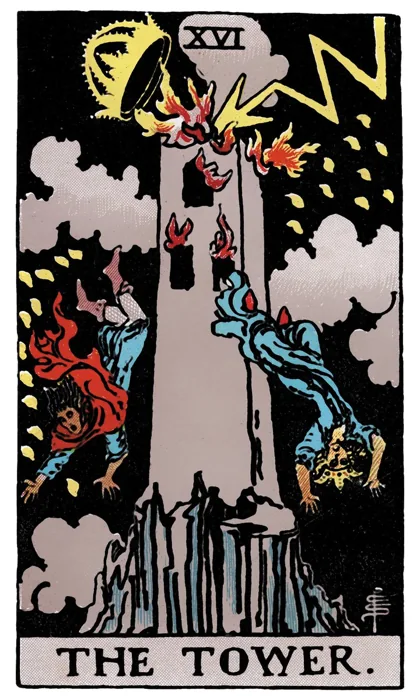
With The Tower
With the Tower, a concealed cost may become impossible to ignore. Concentrate on verified facts and immediate practical needs. The pairing does not predict catastrophe; it can prompt examination of an arrangement whose instability is already becoming visible.
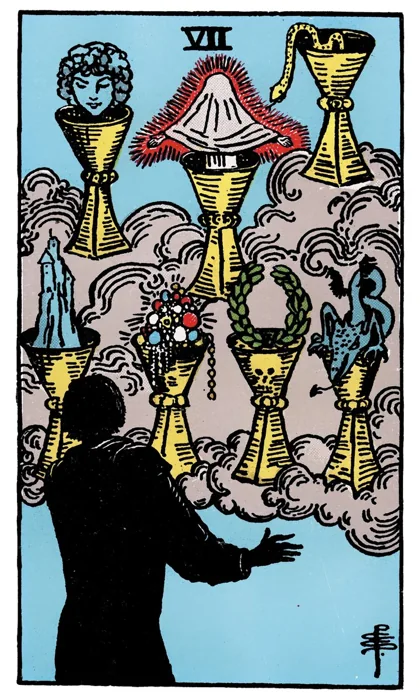
With Seven of Cups
With the Seven of Cups, the imagined reward may be more compelling than the actual offer. Clarify what is available now and what exists mainly in promises or fantasy. Desire becomes easier to assess when its object has a concrete shape.
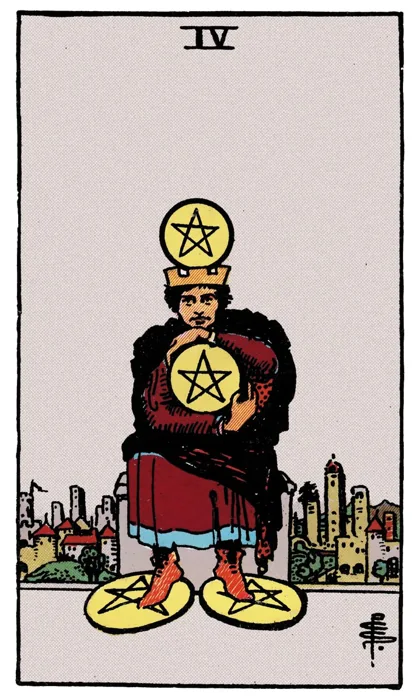
With Four of Pentacles
With the Four of Pentacles, fear of losing security may tighten a costly grip. Determine which resources genuinely need protection and which habits mainly preserve anxiety. A practical alternative can sometimes loosen the attachment more effectively than another demand to let go.
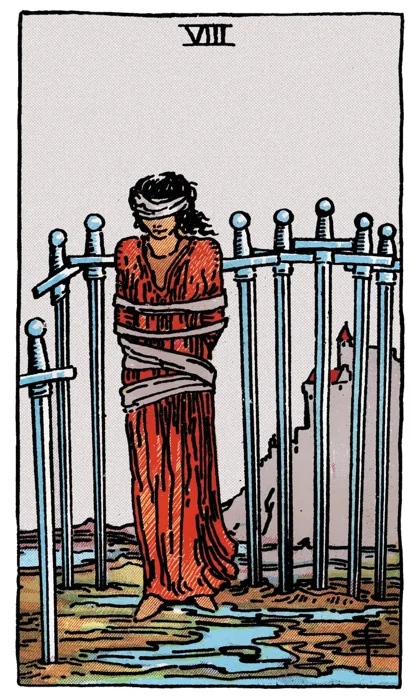
With Eight of Swords
With the Eight of Swords, a constraint may be reinforced by a narrowed view of the options. Some limits may be real and others untested. Identify one source of information or support that could help distinguish them without dismissing the difficulty.
The bargain-maker and the beautiful cage
The bargain-maker offers something sincerely wanted at a price that becomes clearer over time. The story is compelling because the desire is understandable. Its practical question is whether the person can keep examining the terms after the reward has become part of their identity.
The beautiful cage holds comfort, status, or admiration alongside restriction. Leaving may involve a real loss, which is why easy advice from outside can feel inadequate. A more useful conversation asks what freedom would require and which resources could make a different arrangement possible.
The performer who cannot leave the stage offers a quieter echo. Applause confirms their value, so ordinary life begins to feel intolerably uncertain. A skilled performer with an appreciative audience can still become dependent on that response. A person needs some place where existence does not have to be earned through the next performance.
Describe one bargain without defending it
Choose a recurring arrangement and write four things: what you receive, what it costs, what makes change difficult, and what would increase your room to decide. Include practical constraints as well as feelings. Avoid making the description either an indictment or an advertisement.
Choose a feasible action from the final part of your account. You may need information about the terms or support from someone outside the arrangement. Preparing an alternative could take longer. Begin where you can, using what you have recognised to increase the choices available to you.
Artwork & interpretation
Waite presents the horned figure with a downward torch and a chained human pair as an image of bondage. This guide considers how desire can develop into dependency, with attention to the circumstances that constrain choice. It does not condemn pleasure or assume that someone who finds it difficult to leave has failed. A. E. Waite, The Pictorial Key to the Tarot: The Devil.
The symbolic associations and examples offer ways to read a situation. They do not establish another person’s thoughts or fix an outcome.
Understanding why you stay can be the beginning of greater freedom; it is not evidence that the constraint is imaginary.
Use the cards in a spread →