Major arcana · 12
The Hanged Man
When the old way forward is no longer available
The Hanged Man remains in an unfinished situation after something has been given up or delayed. More effort cannot yet restore the familiar way forward. Staying with the pause may reveal an aspect of the problem you had overlooked.
- Suspension
- Perspective
- Surrender
- Sacrifice
15 min read
In this guide
The move you cannot force
You have supplied the information requested and pursued the route available to you. Another push produces more strain without changing the situation. The Hanged Man belongs to this uncomfortable point: your usual method has reached its limit, while the next workable movement has not yet become clear.
In a reading, the Hanged Man can concern a period when familiar ways of making progress no longer work. A delay may give you time to reconsider your approach, or you may need to loosen a condition you have treated as essential. Examine what the situation actually calls for. Waiting has no inherent value, and a sacrifice needs more justification than the fact that it is difficult.
The pause may be chosen. You step back from an argument, put a project aside, accept a temporary limitation, or stop pursuing an answer that the current method cannot provide. Such a decision can be active and difficult. It asks you to tolerate an interval without the reassurance supplied by visible movement.
Sometimes waiting is imposed on you. An unanswered request or a resource you cannot access can keep the next stage out of reach. Those constraints deserve to be recognised; changing your attitude will not necessarily remove them. Consider what support would make the interval more manageable and what preparation is worthwhile, while setting limits on how much of your life the wait can occupy.
The Hanged Man often changes the question. You begin by asking how to recover the old route and eventually notice that the destination, terms, or motive needs examination too. The valuable part of the interval is what becomes visible from it. Waiting alone does not guarantee that this understanding will arrive.
The Hanged Man asks how you will live while the situation remains unresolved. A fixed condition may resist effort for now, but your needs continue during the wait. Consider where you can still make a choice about the day. Keeping that involvement can help you avoid both exhausting yourself against the obstacle and postponing your whole life until it moves.
Suspended, with the world still alive around him
The figure hangs by one ankle from a wooden structure with leaves growing from it. One leg bends across the other, and the hands are held behind the body. The posture removes the ordinary means of going forward. The picture gives limitation a visible form before offering any explanation for it.
A bright halo surrounds the lowered head. The face appears composed, creating a tension with the uncomfortable position. One possible reading is that insight can emerge when the usual stance is interrupted. The image does not establish that suffering is required for wisdom, or that a calm appearance tells us everything about the experience.
The living leaves matter. This is a scene of suspended activity within a world that continues to grow. A project or identity may be unable to advance in its familiar form while other processes continue: observation, grief, study, or the slow revision of what you thought you wanted.
The inversion is complete enough to change the figure's relationship with the ground, yet the structure remains recognisable. A different perspective need not invent another world. It can show the existing situation from an angle that reveals assumptions hidden by the way you habitually stand within it.
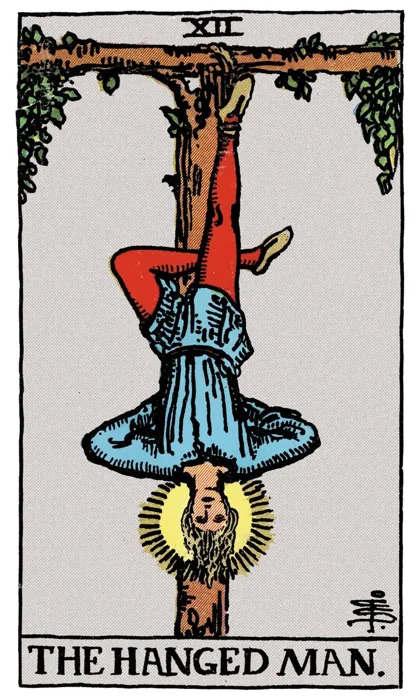
The light gathers around the head in an inverted position. The image can suggest understanding made possible by interruption, without claiming that every hardship must contain a hidden benefit.
The beam carries visible leaves. The surrounding growth complicates the apparent stillness: some forms of development may continue even while ordinary action is temporarily unavailable.
Without the reassurance of getting somewhere
Internally, the Hanged Man can feel like a loss of the usual signals that you are doing well. You are accustomed to solving, producing, deciding, or moving, and the present situation offers little reward for those abilities. A day without visible progress may feel harder to inhabit than a demanding day with a clear task.
There may be a temptation to create activity simply to escape that feeling. You rewrite the same message, check again, reorganise the plan, or reopen a conversation that has no new information in it. These actions can provide brief relief while leaving the underlying suspension unchanged. Notice what the activity is actually accomplishing.
As a person, the Hanged Man can suggest someone comfortable leaving a question open while they consider it. They are able to notice alternatives because they have less invested in proving the first approach correct. This patience is helpful when they stay involved. Other people still live with the consequences of waiting, and a thoughtful pause needs to take that into account.
The shadow personality is perpetually deferred. They keep postponing choices until circumstances are ideal and certainty feels possible. Even a conversation must wait for the other person to make it easy. The condition for action keeps moving. A life can become organised around a future permission that nobody has actually promised to provide.
Maturity here involves admitting what the pause costs. You may be gaining perspective and also feel frustrated, lonely, or tired of waiting. These reactions do not invalidate the process. They help you decide what support or limit is needed so that the interval remains something you can live through.
What are you insisting must remain unchanged?
The Hanged Man asks what you are trying to preserve while demanding a different outcome. You may hope a new relationship will work without having to risk disclosure. In creative work, you want to bypass the imperfect attempts; elsewhere, you want change without disappointing anyone who prefers things as they are. The desired movement may require surrendering one of those conditions.
Surrender in this sense is specific. You release a claim, method, timetable, or self-image that the situation no longer supports. It does not mean abandoning your judgement or accepting whatever another person imposes. A useful concession creates room for life; a coerced one may simply make an unequal arrangement easier to maintain.
Ask what a sacrifice is meant to protect. Giving time or money to something important can be a considered choice, even when it reduces your comfort or recognition. The cost alone does not prove the choice is worthwhile. If the sacrifice no longer serves its stated purpose, you may be continuing because stopping would challenge the role you have become used to occupying.
The altered perspective can reveal that the apparent problem is partly a conflict between different values. You are not merely failing to act; you are trying to protect two things that cannot both remain untouched. Seeing the conflict accurately may help you choose which loss you are willing to carry.
The deeper freedom is a reduced need to make every moment confirm your usual identity. You can be a capable person in a situation you cannot presently solve. You can be serious about your work while a piece rests unfinished. The pause does not have to become a total account of who you are.
Find out what is preventing the work from moving
At work, the Hanged Man calls for distinguishing different kinds of blockage. A task may genuinely depend on an external decision. It may be stuck because the method is wrong. Or it may remain unfinished because nobody has accepted the trade-off required to complete it. More effort helps only some of these situations.
When a delay comes from outside the project, work out what you can prepare without having to redo it later. Research or documentation may still be useful, and a smaller independent task may be able to continue. Also set a time to review the dependency. An unanswered request should not be allowed to determine the schedule indefinitely simply because nobody has revisited it.
A project may need a different perspective more than another correction. Show the work to someone who does not share your assumptions, change the order in which you examine it, or describe the actual problem without your preferred solution attached. An unfamiliar question can reveal why every improvement to the existing approach has felt strangely ineffective.
Creative work sometimes develops through a period of distance. You return and hear the awkward sentence, see the unnecessary scene, or understand what the draft has been trying to become. This is useful when the work is eventually revisited. Putting it aside forever protects the imagined version from the demands of an actual reader.
The card also concerns concessions in professional life. A temporary reduction in status or comfort may support learning or a meaningful transition. Examine the terms, duration, and actual opportunity. Being asked to sacrifice does not establish that the arrangement is worthwhile, particularly when the people benefiting do not share its cost.
The shadow is praising patience where a decision is overdue. A project can remain suspended because someone avoids responsibility, while everyone else is encouraged to stay flexible. Name the missing decision and its practical effect. A calm request for clarity can be more useful than another demonstration of endurance.
A relationship cannot live entirely in the waiting room
In relationships, the Hanged Man may describe a pause, uncertainty about direction, unequal sacrifice, or a need to understand the other person's position differently. The bond may be unable to continue on its previous terms, while neither person yet knows what a workable next stage would require.
A deliberate pause can help when its purpose is clear. You agree what contact means during the interval, what each person is considering, and when the discussion will resume. Such an arrangement gives space a form. An indefinite request to wait while all obligations remain unchanged can leave one person carrying the uncertainty for both.
Perspective-taking is useful when it allows another person's experience to complicate your own account. You may discover a need or fear that was not visible from your position. Understanding does not require agreement with every conclusion they draw, and it should not become a duty performed only by the more accommodating person.
The card's difficult pattern is hoping that enough sacrifice will eventually make you indispensable. You keep postponing your needs to show how committed you are. Even the uncertainty seems worth tolerating if your patience will eventually be recognised. They may experience the arrangement as permission to continue exactly as it is.
If you are waiting for someone to choose you, look at what is actually being offered. An explanation of why the situation is complicated may be sincere without creating a relationship you can live in. You are allowed to decide how much uncertainty you can accept and what you need to know before investing further.
Sometimes the useful release is an expectation about how love should appear. A partner may care in ways you have overlooked, or a bond may need a form different from the one you assumed. Explore that possibility through conversation. The card itself cannot establish another person's hidden feelings or justify ignoring their stated position.
What is tied up, and for how long?
In practical matters, the Hanged Man can draw attention to resources held in an unfinished arrangement: a deposit, a delayed payment, an unused room, a project waiting on permission, or time reserved for something repeatedly postponed. Identify what is unavailable and what would release it before assuming that the whole situation must remain frozen.
An apparent bargain may ask for a sacrifice less visible than the price. You give up flexibility, privacy, time, or the ability to change direction. Those costs can be acceptable, but they deserve a place in the decision. A low immediate expense does not by itself make an arrangement easy to live with.
At home, a period between stages may be particularly wearing. You are preparing to move, living around unfinished work, or unable to make a settled routine. Create some workable conditions for the interval itself. Waiting for the permanent solution should not automatically suspend every ordinary need for comfort and order.
The card cannot tell you that a financial delay will resolve or that patience will improve a commitment. Read the relevant terms and seek appropriate guidance where needed. Its practical question is what you are continuing to hold open, what that costs, and when the arrangement needs another decision.
Stillness is not always rest
A period without visible movement can still be exhausting. Uncertainty, repeated checking, and preparation for an event that keeps shifting may occupy considerable attention. The Hanged Man asks you to recognise that cost rather than assuming that you should feel rested because little has outwardly happened.
A useful pause may need less monitoring. Decide when you will check for information, what requires a response, and which hours belong to other parts of life. This gives waiting a boundary. It does not make the central uncertainty disappear, but it can prevent it from taking possession of every available moment.
The card is no instruction to ignore symptoms, delay necessary care, or regard suffering as spiritually useful. If a health concern needs attention, seek it beyond the cards. Symbolically, the question is whether you can respect a present limit while also making the interval more supported and bearable.
Release one condition, not your whole life
As advice, the Hanged Man asks what you could stop insisting on for a while. Perhaps the task must be completed by a particular method, the conversation must end with your vindication, or the next step must feel completely secure. A modest release may reveal options hidden by that requirement.
Where you choose to pause, give the interval a purpose and decide when to review it. Note any information you expect to receive before then. If the wait is imposed, look for one part of daily life you can still shape. That choice can help you remain involved without asking you to control the condition holding up the larger matter.
The shadow is martyrdom that cannot state its own terms. You keep giving while privately expecting recognition that was never discussed. The resentment is real, but the other person may not understand the bargain you believe exists. Say what you can offer and what you need in return before sacrifice becomes the main language of the relationship.
Another shadow is using complexity to avoid an ordinary act. You have developed a sophisticated account of why the situation is difficult, yet the next useful step is a request, an answer, or a boundary. Perspective has done its work when it makes that act more accurate. It need not postpone the act forever.
A pause that needs to change its terms
Reversed, the Hanged Man can describe stalled movement without new understanding, resistance to a necessary concession, or readiness to leave suspension. The reversal does not automatically mean that you should act immediately. It asks whether the current form of waiting still serves the situation.
One expression is clinging to the old method because so much effort has already been invested in it. You continue paying the cost in the hope that persistence will make the earlier sacrifice worthwhile. Review the next decision on its present terms. What has already been spent cannot by itself establish the value of spending more.
Another expression is a concession that has become one-sided. You are repeatedly asked to be patient, flexible, or understanding while the other party makes little corresponding adjustment. Clarify the arrangement and its limits. A request for reciprocity is not necessarily a failure to appreciate how difficult the circumstances are.
The reversal may also show discomfort with any period of uncertainty. You rush to decide because waiting feels intolerable, even though the relevant information will soon arrive. Consider whether a short, bounded delay could improve the choice. Relief from making a decision is different from confidence that the decision fits the facts.
A constructive reversal is the moment you can put a foot back on the ground. Perhaps new information has changed your perspective. Or you have finally accepted a trade-off that once seemed impossible. Begin at a scale that lets the new understanding meet reality. You do not need to compensate for the pause with frantic speed.
What is the interval asking of you?
These pairings distinguish reflection, delay, sacrifice, and avoidance. Their usefulness depends on identifying which of those processes is actually present.
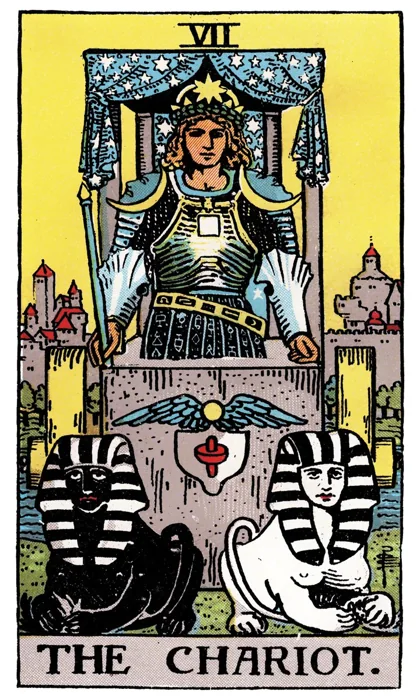
With The Chariot
With the Chariot, force meets a limit. A driven undertaking may need a pause or a different route. Examine whether the obstacle contains information about the method before deciding that the answer must be greater pressure.
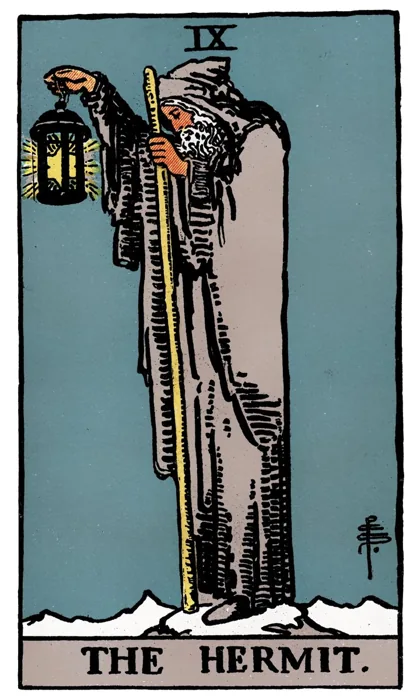
With The Hermit
With the Hermit, suspension can support careful reflection. Give the inquiry a clear question and a point of return. Private understanding becomes more useful when it eventually informs an action or conversation beyond the retreat.
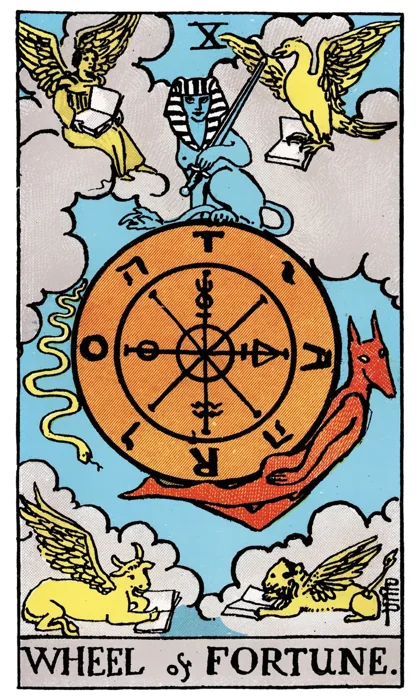
With Wheel of Fortune
With Wheel of Fortune, timing may depend on changing conditions. Separate preparation from attempts to control the turn itself. You can make the interval useful without claiming that you know when the opening will arrive.
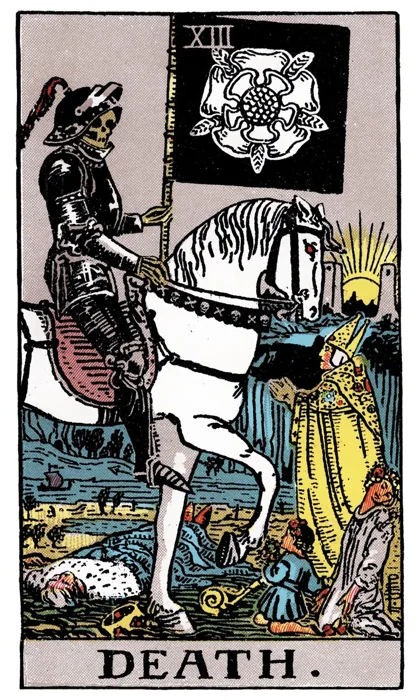
With Death
With Death, the delay may concern acknowledging an ending. Something cannot resume in its previous form, even if the next stage is unclear. Distinguish a temporary interruption from a conclusion you have not yet allowed to become real.
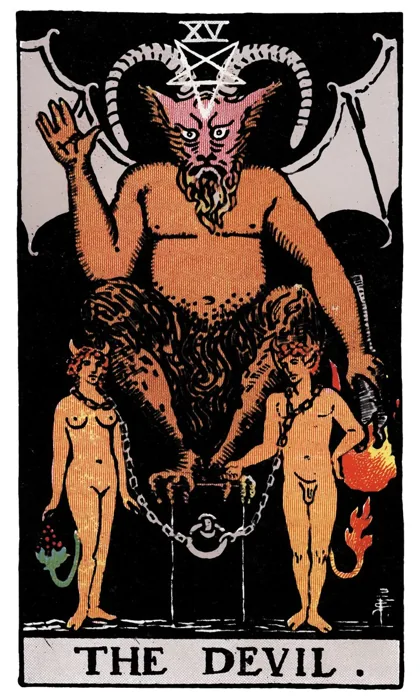
With The Devil
With the Devil, sacrifice may be maintaining a costly dependency. Look at the actual freedom to alter the arrangement and the support needed to do so. Understanding the constraint is more useful than blaming yourself for not simply leaving.
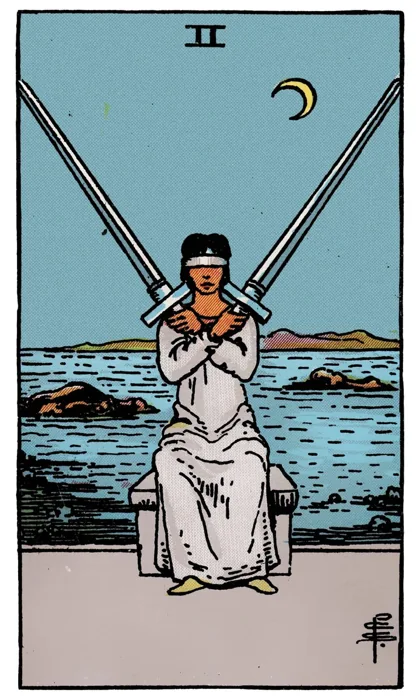
With Two of Swords
With the Two of Swords, a decision may remain suspended because both options carry a loss. Identify what information is genuinely missing. If the conflict is between values rather than facts, more waiting may not remove the need to choose.
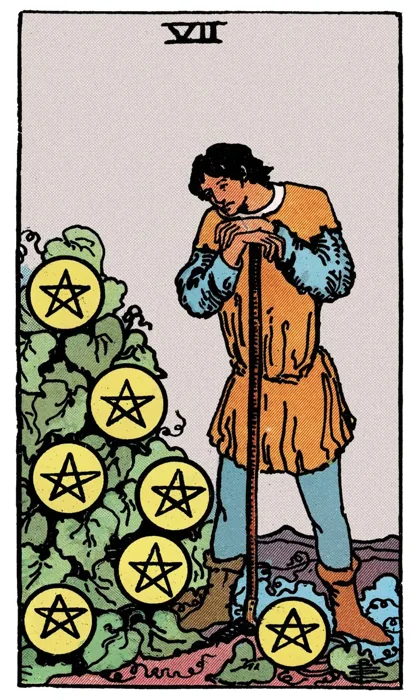
With Seven of Pentacles
With the Seven of Pentacles, patience needs an honest review of the return. Some work requires a long development period. Establish what signs would indicate growth, what would justify adjustment, and how long you can realistically continue.
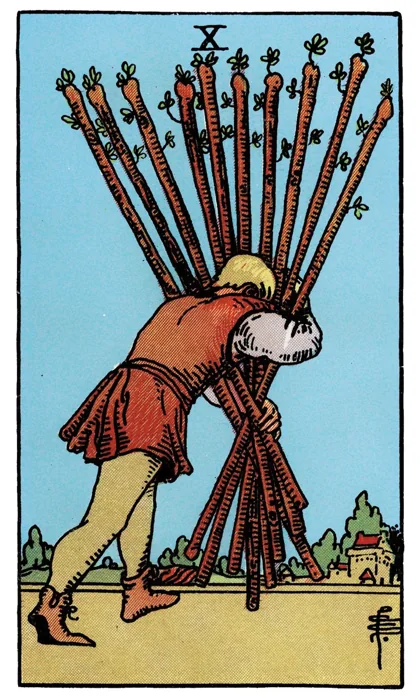
With Ten of Wands
With the Ten of Wands, postponement may come from carrying too much. The necessary sacrifice could be a commitment you cannot sustain. Reducing the load may create movement that further endurance has been unable to produce.
The apprentice who must unlearn a movement
An apprentice sometimes has to stop using a familiar technique before a better one becomes fluent. During the interval, they may perform worse than before. The Hanged Man recognises this awkward passage: the old competence is interrupted, while the new understanding has not yet become dependable in the hands.
The listener offers another image. To hear an unfamiliar account, they suspend the answer they were preparing. This is an active concession of immediate authority. It creates room for information that cannot enter while the entire conversation is being organised around the response already chosen.
A traveller between departures captures the more difficult experience of this card. They have left one place without reaching the next, and the interval may offer little chance to settle. Daily needs continue nevertheless. They must find food and rest, and may need company. Their time still deserves some purpose or enjoyment beyond listening for the announcement that will let them move on.
Give the waiting a boundary
Choose one suspended matter. Write what you are waiting for, what you have already tried, what the interval costs, and what could reasonably end it. Separate an external dependency from a condition you have imposed yourself.
Make one adjustment that would help you live during the wait. Perhaps you need a review date or a clearer answer from someone involved. A requirement you have set may be worth reconsidering. You can also attend to a present need while the larger situation remains unfinished, giving the interval some value of its own.
Artwork & interpretation
Waite describes a figure suspended from living wood, with a halo and a composed expression. He distinguishes the suspension of life from death. This guide draws on those features to consider what a pause can reveal, how waiting is experienced, and when a sacrifice serves a worthwhile purpose. A. E. Waite, The Pictorial Key to the Tarot: The Hanged Man.
The symbolic associations and examples offer ways to read a situation. They do not establish another person’s thoughts or fix an outcome.
Waiting has a purpose when you know what the pause protects or what could bring it to an end.
Use the cards in a spread →