Swords · Two
Two of Swords
The peace you are working very hard to keep
The Two of Swords holds opposing pressures in place while a decision remains unresolved. A disagreement may be temporarily quiet because nobody has acknowledged an unwelcome fact. This pause can be useful. Keeping it intact still takes effort from the people involved.
- Impasse
- Protection
- Ambivalence
- Truce
15 min read
In this guide
The situation has stopped moving, but the effort has not stopped
The Two of Swords describes a balance maintained through active restraint. Two convincing arguments may reflect needs that seem incompatible. Avoiding the conversation keeps the current arrangement intact, at least until someone is ready to acknowledge the conflict. From outside, very little may seem to be happening. Inside, attention is busy keeping either side from gaining enough force to require a response.
In a reading, the card can concern a difficult choice, missing information, a temporary truce, an unwillingness to look at part of the situation, or a need to protect your judgement from pressure. These possibilities should be distinguished. A thoughtful pause is different from indefinite avoidance, and uncertainty is different from already knowing something you do not want to act on.
Sometimes there is no obviously good option. Security may come at the cost of freedom, while speaking honestly could disturb harmony. Loyalty can also conflict with self-respect, leaving something valuable at stake whichever way you choose. In such a case, more thinking may not produce a painless answer. The work is to understand which cost you can responsibly accept and which value needs priority under the present conditions.
The card can also describe peace between people who have agreed, explicitly or otherwise, not to approach a particular subject. That agreement may prevent an unproductive argument while everyone gathers themselves. It becomes more fragile when the issue continues to shape daily life and one person is paying most of the price for keeping it unspoken.
A useful reading asks what the pause is doing. Is it allowing rest, gathering information, reducing pressure, or preserving an arrangement that nobody knows how to change? The answer helps determine the next step. Sometimes you need more time; sometimes you need to decide what the time is for.
The Two does not condemn ambivalence. Mixed feelings can be an accurate response to a mixed situation. Its warning is about turning that complexity into a permanent holding position, where no option can be tested and no consequence is admitted. The world continues to change around an undecided person, even while the internal argument remains exactly the same.
Crossed blades, covered eyes, and water behind the seat
A blindfolded figure sits on a stone bench holding two long swords across the upper body. Behind the figure, water extends towards rocks and distant land, with a crescent moon overhead. The body faces forward while much of the landscape remains behind it. The image offers an unusually concentrated form of stillness.
The swords are balanced, but they are also being held. Keeping them in that position requires effort. This makes the picture useful for thinking about an apparent peace supported by constant vigilance: choosing words carefully, refusing to consider one implication, or keeping competing commitments from meeting each other directly.
The covered eyes can suggest protection from an overwhelming field of information, a wish for impartiality, or a refusal to look. The image alone does not decide which interpretation fits. Ask whether reduced input is helping the person think, or whether it has become a way to exclude the very information the decision requires.
The water and rocks complicate any idea that a clear choice would remove all difficulty. There is actual terrain beyond the seated position. In this reading, the landscape invites a practical question: which conditions are being left out of the internal argument, and what would become visible if attention turned towards them?
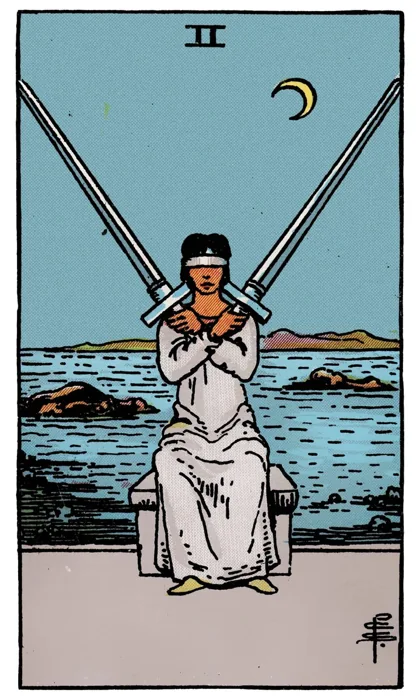
The pose is guarded and sustained. Consider what the current pause protects, what it costs to maintain, and whether the same protection could be provided through a clearer boundary.
The landscape continues beyond the held position. A practical fact, another person’s experience, or a changed circumstance may need a place in a decision that has become entirely internal.
Both sides of the argument know exactly how to reach you
Internally, the Two can feel like a conversation that never reaches its final sentence. One part of you makes a convincing case; another supplies an equally convincing objection. You may be tired of the issue while remaining unable to leave it alone. The repetition creates the sensation of working on the decision without necessarily producing new information.
Ambivalence can arise because both sides of a choice matter to you. A relationship may offer closeness while restricting a freedom you value; a secure role may leave little time for other work. Taking both attachments seriously gives you a more accurate account of the difficulty. Then consider which need takes priority now and whether any change could reduce what choosing it would cost.
The card can also describe a controlled surface maintained because a stronger reaction feels inconvenient or unsafe to express in the current setting. You keep the account neutral while privately knowing that something matters. A useful first step may be finding a place where you can acknowledge your own response without having to act on it immediately.
The shadow is making neutrality part of your identity. You want to be fair, reasonable, or impossible to blame, so you avoid the moment at which a choice would reveal a preference. Fairness does not require having no position. It requires understanding the basis of the position and taking responsibility for its effects.
There can be relief in recognising that a decision need not make every part of you agree. A person can choose a workable direction while remaining sad about what it excludes. The presence of that sadness does not automatically reopen the whole question. It may simply be part of the cost you have already understood.
A constructive Two gives uncertainty a place without giving it unlimited authority. You can acknowledge being undecided and explain what would help you choose. Agreeing when to return to the question gives that uncertainty a limit. This is different from asking the people affected to keep arranging their lives around an answer that is always about to arrive.
Some choices ask which loss you can live with
The deeper difficulty is the wish to choose without losing any valued possibility. If both options matter, neither can be selected without acknowledging what the other offered. The mind may keep searching for a decisive argument that will make the rejected option suddenly worthless. Sometimes that argument does not exist because the option really does have value.
The Two therefore asks whether you are trying to solve a practical problem or remove the emotional cost of having a limited life. A decision can become clearer when those tasks are separated. You may be able to identify the more appropriate course while still needing time to feel the loss of the alternative.
There is also a question about the authority of thought. If every feeling is treated as unreliable, the decision may be deprived of information about desire, fatigue, attachment, and meaning. If every feeling is treated as a command, the balance changes whenever the mood changes. A fuller judgement allows emotional experience to contribute without making it the only criterion.
A truce has its own value. People do not have to resolve every disagreement at maximum intensity or on demand. A period of restraint can protect dignity and make a better conversation possible. Its integrity depends on whether it creates conditions for understanding, rather than quietly making the unresolved issue somebody else's permanent burden.
Finally, the card asks what happens when a person stops claiming that inaction is outside the field of choice. Delay affects time, trust, resources, and available options. Recognising those effects need not become self-accusation. It simply brings the pause into the same honest account as the visible actions being considered.
What is the silence preserving?
In a relationship, the Two can describe an avoided conversation, a stand-off, an uncertain commitment, or a fragile peace. The absence of argument does not tell you whether the issue has been resolved. Notice whether anyone's behaviour has changed and which subjects remain difficult to mention. That may reveal whose needs are being suspended to keep the atmosphere manageable.
A temporary pause can be considerate. You may need time to settle, understand what you want to say, or choose a setting in which a conversation can be useful. Give the pause a recognisable shape where possible. Saying when and how you intend to return is different from withdrawing and leaving the other person to guess whether contact will resume.
The card can also concern the wish to know another person's answer without risking a direct question. You study the connection while avoiding the exchange that might change it. If appropriate, ask about the actual matter at a scale you can handle. A limited honest answer may be more useful than a large private interpretation of ambiguous signals.
Where loyalties conflict, you may feel required to choose between people who each have a real claim on your care. Examine whether the demand is truly binary. You might be able to set a boundary, decline the role of intermediary, or distinguish the forms of support you can offer. A third option should be practical, not another way to postpone acknowledging the conflict.
The shadow is appearing agreeable while privately withholding consent. You avoid saying no because it would disturb the relationship, then become resentful when the other person proceeds as though the agreement exists. A clearer response may be uncomfortable initially and kinder over time. It lets both people plan around what is actually available.
The Two cannot tell you that someone is hiding an affair, choosing between partners, or deliberately deceiving you. Those are specific claims requiring real evidence. Its reflective value lies in examining uncertainty, guardedness, and the conditions under which an honest conversation might become possible.
Identify what would actually change the decision
At work, the Two can describe competing proposals, unclear authority, a delayed answer, or a situation in which more than one valid concern must be held. Start by identifying what is being decided and who can decide it. Teams sometimes remain stuck because everyone is contributing opinions while responsibility for the final choice remains unspoken.
If information is missing, make the gap specific. Which fact would change your view, who can provide it, and when is a response reasonably expected? A defined question turns waiting into a useful stage. An indefinite demand for more certainty can keep a project suspended long after enough is known for a proportionate next step.
Where both options have merit, agree on the criteria before comparing them again. One may be faster, another more thorough; one less disruptive, another more suitable over time. Without a shared priority, the same arguments can be repeated indefinitely because each person is quietly optimising for a different result.
The card can also describe a professional truce. People remain polite while an underlying disagreement shapes cooperation. That may be workable for a limited period, but it should not be mistaken for full agreement. Name the practical boundaries of the arrangement so work does not depend on assumptions no one is willing to discuss.
For creative work, indecision may appear as endless comparison between two approaches. A small version of each can sometimes provide information thought alone is no longer producing. The experiment should answer a defined question. Otherwise, making alternatives can become another sophisticated form of avoiding commitment.
The shadow is leaving others to absorb the cost of a delayed decision. A provisional schedule may force others to redo work, while unresolved responsibilities drift towards whoever is most willing to accommodate them. If you cannot yet give the final answer, communicate what can be relied on now and when the unresolved part will be reviewed.
Keep the practical cost of waiting in the picture
For a practical choice, compare the options in terms you can actually understand. Identify the current resources, commitments, and unanswered questions. The card's contribution is a disciplined pause for clarity, not a prediction that either option will produce a favourable financial outcome.
Waiting may preserve flexibility, but it may also allow costs or obligations to continue. Include the present arrangement as an option with effects of its own. This does not mean rushing; it means giving inaction the same level of attention as the visible changes being considered.
In shared resources or a household, silence can create incompatible expectations. One person thinks the decision is postponed, another assumes the old arrangement will continue. State what remains undecided and what has been agreed in the meantime. Clear interim terms can protect both the practical situation and the relationship.
At home, the Two may point to a boundary that has been maintained only through vigilance: avoiding a room, working around a habit, or never raising a recurring difficulty. Consider whether an explicit agreement could provide the protection with less ongoing effort. The aim is a more usable arrangement, not a victory over the other person.
Suspension has a daily cost
A held decision can consume attention each time you return to it. You may feel tired without having made visible progress because the same opposing arguments have been rehearsed repeatedly. Write down the current position and the next useful question so you do not have to reconstruct the entire debate every time it reappears.
Reducing input can help when the situation has become crowded with other people's opinions. Choose a limited period to consider your own criteria or gather one relevant fact. The boundary is useful when it improves your ability to respond, rather than becoming a permanent refusal to let anything disturb the existing balance.
The card cannot explain persistent strain or tell you what a bodily response means. Its reflective question is whether one unresolved matter can be given a clearer container: a conversation time, a review date, or permission to defer it until a named condition changes. A purposeful pause asks less constant effort than an indefinite one.
Give the pause a job and a point of return
Write the two strongest arguments in their fairest form. Then identify the value each protects and the cost each asks you to accept. This can reveal whether you need another fact, a different option, or acknowledgement that the choice contains a genuine trade-off.
Decide what would make the next conversation or decision better. You might need rest, a particular answer, a clearer criterion, or an opportunity to try a limited version. Give the pause that purpose and choose a point at which you will return to the issue.
The shadow is demanding emotional unanimity before acting. You may require every part of yourself to agree before choosing, while also trying to prevent anyone else's disappointment. The wish to rule out future regret makes the decision harder still. These conditions can make any real choice unavailable. A more workable standard asks whether the decision is informed, proportionate, and consistent with the priorities you can currently stand behind.
Another shadow is confusing pressure with clarity. Someone may want an immediate answer because uncertainty inconveniences them. Their urgency matters, but it does not automatically determine your timing. Explain what you can decide with the information available and what remains needed. Be explicit about any demand you are declining.
The held position is becoming harder to maintain
Reversed, the Two can describe a stalemate breaking, information entering the situation, a decision made under pressure, or the exhaustion of keeping incompatible positions apart. The movement may bring relief or discomfort. Ask what has changed and whether the new response is based on understanding or simply on the need to stop feeling suspended.
Sometimes a fact arrives that makes the previous balance impossible. You may need to revise an assumption, acknowledge a preference, or speak about something that can no longer remain conveniently unclear. Let the new information have its proper weight without making it explain more than it actually establishes.
The reversal can also show decision by overload. You agree because you want the discussion to end, or reject everything because considering any option has become tiring. If circumstances allow, distinguish relief from conviction. A pause with a specific purpose may still be useful even after an indefinite pause has become harmful.
Another version concerns an outward decision followed by constant internal reopening. You have chosen, but keep comparing the actual result with an idealised version of the discarded option. Return to the reasons, information, and costs understood at the time. Review the choice when relevant conditions change, rather than whenever the unchosen possibility becomes momentarily attractive.
A constructive reversal allows a more honest position. You say that the truce is insufficient, admit what you want, or accept that a meaningful choice has a cost. The result may be less perfectly balanced and more livable. Energy previously used to hold everything still can begin supporting a real next step.
What would let the held situation move responsibly?
These pairings explore pauses, divided loyalties, and decisions. They do not establish deception or determine which choice you should make.
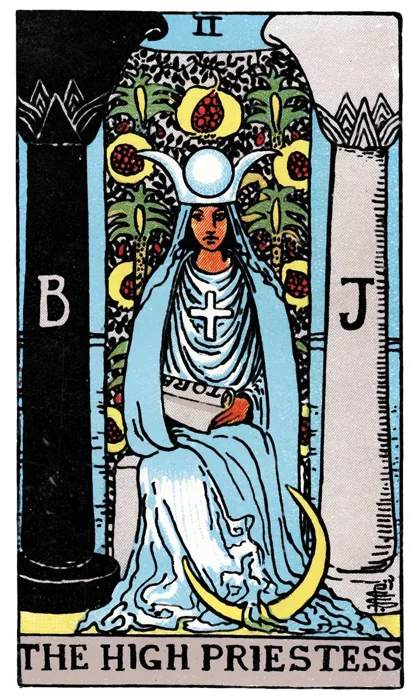
With The High Priestess
With the High Priestess, quiet attention may help distinguish a real hesitation from the pressure to answer quickly. Notice what remains unclear and what you already understand privately. Silence becomes useful when it develops awareness rather than protecting an assumption from examination.

With The Lovers
With the Lovers, the choice may concern values and commitments that cannot all be preserved in the same form. Name what each path asks you to stand behind. The decision becomes clearer when attraction is considered alongside the life and responsibilities it would create.
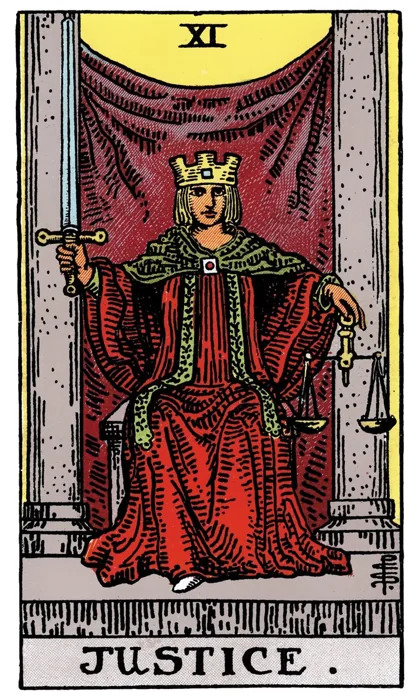
With Justice
With Justice, agree on the evidence and criteria that should guide the decision. Fairness requires more than giving every claim equal time. It asks how the facts, responsibilities, and effects fit together under a standard you can explain.
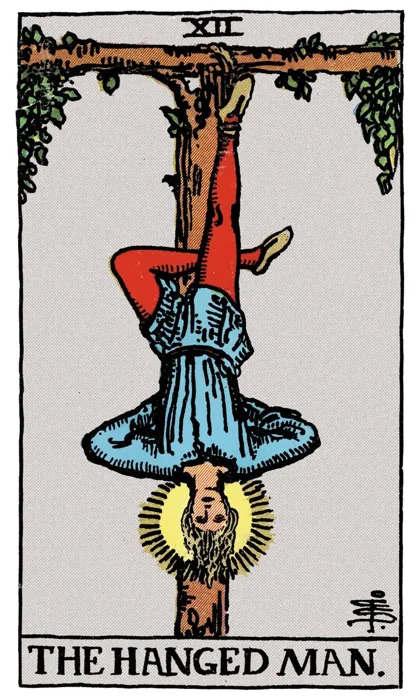
With The Hanged Man
With the Hanged Man, a pause may need a different perspective before movement is useful. Identify what the suspension allows you to see or learn. If nothing is changing inside it, consider whether waiting has become the arrangement rather than a stage within it.
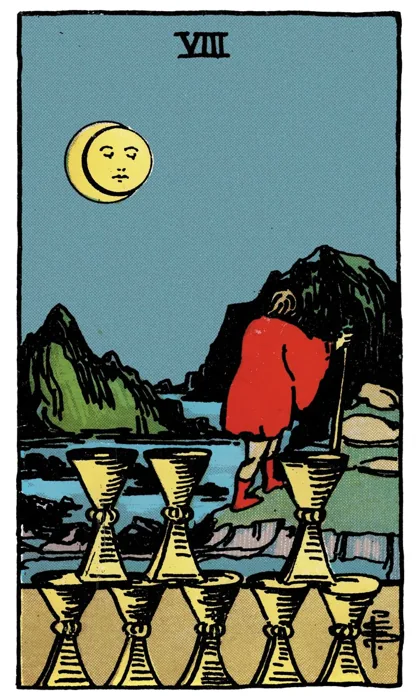
With Eight of Cups
With the Eight of Cups, uncertainty may concern whether to withdraw from something that still matters. Acknowledge both the value and the continuing cost. The choice need not wait for the old arrangement to become entirely worthless before a different level of investment is considered.
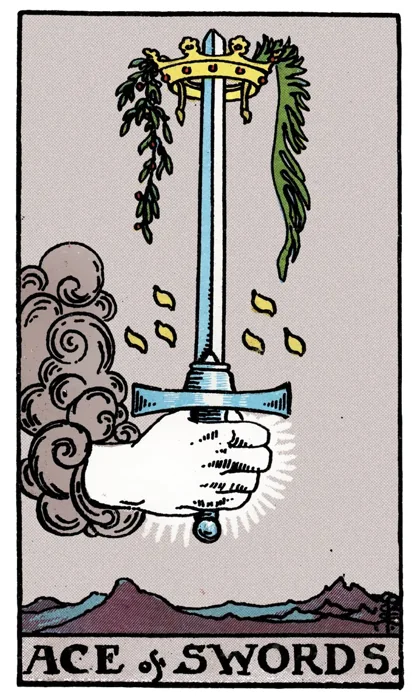
With Ace of Swords
With the Ace of Swords, a precise distinction may make the next step possible. Separate the missing fact from the feeling about its consequences. Sometimes the answer has become available before the person has become comfortable with what the answer would require.
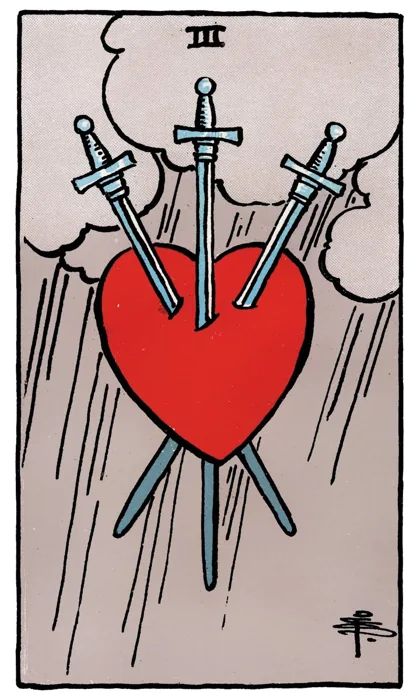
With Three of Swords
With the Three of Swords, an avoided conversation may concern a hurt that peace has not resolved. Name the particular pain without assuming that every part of the relationship must be judged at once. An honest acknowledgement can make a more useful discussion possible.
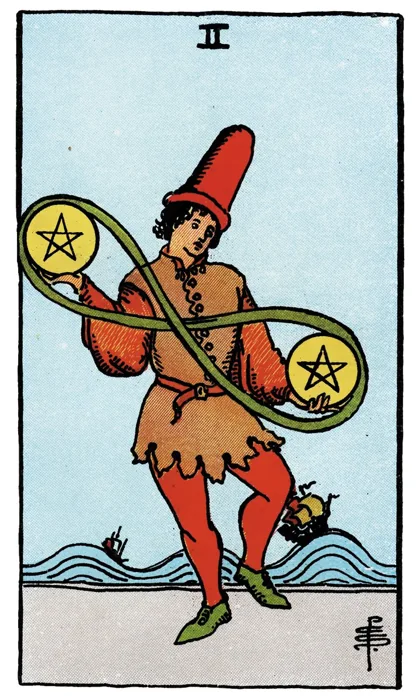
With Two of Pentacles
With the Two of Pentacles, the decision may depend on practical capacity rather than a purely internal preference. Look at time, responsibilities, and what can realistically be maintained. A flexible arrangement may help, provided it does not require indefinite juggling of incompatible commitments.
When protection becomes a holding pattern
A guarded bridge keeps movement from occurring until the conditions are understood. The guard serves a purpose when passage needs care. If nobody can say what would permit crossing, the protection has become a permanent barrier rather than a way to make movement responsible.
An armistice can prevent further damage while people prepare to address a conflict. It has value even before agreement is reached. Its weakness appears when the pause is treated as a complete peace while the underlying conditions continue to harm or restrict the people involved.
An unopened letter preserves uncertainty, but it does not preserve every possible future equally. The information already exists somewhere outside the reader's awareness. The image asks when postponing contact is protective and when it merely leaves a person organising life around what they hope not to discover.
Find the next piece of the decision, not the perfect final feeling
Choose one unresolved matter. Write what each option protects, what each would cost, and what you still need to know. Mark any question that has already been answered but remains emotionally difficult. This helps distinguish a need for information from a need to acknowledge a consequence.
Choose one proportionate next step and a point of review. It may be a conversation, a fact to gather, a temporary boundary, or a limited trial. The Two of Swords becomes practical when the pause supports a future response instead of quietly becoming the only response available.
Artwork & interpretation
Waite describes the blindfolded figure balancing swords and records a qualified form of accord or equilibrium. This original essay develops the image into questions of ambivalence, protective pauses, truce, and the cost of maintaining a held position, without treating the reversal as evidence of dishonesty. A. E. Waite, The Pictorial Key to the Tarot: Two of Swords.
The symbolic associations and examples offer ways to read a situation. They do not establish another person’s thoughts or fix an outcome.
A pause protects your ability to choose when it has a purpose; without one, it begins choosing the conditions for you.
Use the cards in a spread →