Cups · Eight
Eight of Cups
Leaving something that still has value
The Eight of Cups recognises a need to leave while there are still good things to acknowledge. You may feel grateful for a life you can explain and defend, yet find that continuing asks more than you can give. Those mixed feelings can make departure especially difficult.
- Departure
- Disenchantment
- Limits
- Searching
16 min read
In this guide
You do not have to destroy the past to leave it
The cups are still standing. This is the first thing to remember about the Eight. The person walking away has not necessarily been ruined, defeated, or driven out. Something has been built, and much of it may remain good. What has changed is the person's willingness to keep treating that arrangement as the answer to a question it no longer answers.
In a reading, the card can describe a departure, a period of withdrawal, the ending of an effort, or a shift in what deserves your emotional investment. The visible action might be leaving a job or relationship. It might also be quieter: no longer pursuing someone's approval, abandoning an ambition that has lost its meaning, or stepping out of a role nobody formally required you to keep.
There is often a discrepancy between the outside account and the inner experience. Others can list the advantages of staying. You can list them too. Yet the argument does not reach the part of you that has become tired of trying to make the arrangement sufficient. This does not automatically make departure wise, but it makes the dissatisfaction worth understanding in its own terms.
The card is especially relevant where further effort keeps producing the same absence. You improve the conditions, explain yourself again, achieve the next milestone, or wait for the promised change. Something may genuinely improve, while the central need remains untouched. The question becomes whether you are working on a solvable difficulty or repeatedly asking this particular situation to become something else.
Leaving can involve uncertainty about the destination. The figure is moving towards rough ground, not a visibly better establishment. That matters. A considered departure may begin with knowing what you can no longer sustain, while knowing much less about what comes next. Practical preparation can support this uncertainty without pretending to eliminate it.
Read the Eight as a prompt to examine commitment, not as an instruction to end whatever you asked about. A pause, a changed responsibility, a candid conversation, or a boundary may be the appropriate movement. The card's central act is withdrawing an investment that has become misaligned. The scale of that withdrawal belongs to the real circumstances.
The intact cups and the person already turning away
Eight cups remain in the foreground as a cloaked figure walks into rocky ground. Water cuts through the landscape, and the traveller uses a staff for support. The route ahead is narrow and dimly lit. There is a sense of deliberate effort in the departure, with attention needed for the next step. The scene gives little sign of a triumphant arrival waiting just beyond it.
The arrangement of cups contains a visible gap in its upper row. One possible reading is the persistent sense that something is missing even in an otherwise substantial structure. It is also worth noticing that the cups themselves are intact. Dissatisfaction does not require a verdict that every part of the former life was false or worthless.
The moon combines a round face with a crescent shape. Its light suits an incomplete understanding: enough to move, insufficient to reveal the whole landscape. The image allows uncertainty to remain part of departure. It does not offer a map proving that the search will end exactly where the traveller hopes.
The staff gives the scene an ordinary practicality. Whatever the emotional significance of leaving, there is still uneven ground to cross. Support, provisions, timing, and a workable next stage deserve attention. They do not diminish the meaning of the decision. They help a person carry it beyond the moment in which it was made.
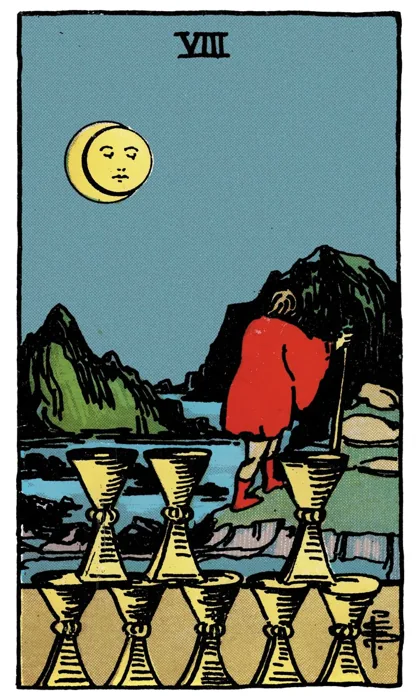
The cups have not been smashed. The image leaves room for a departure that acknowledges what was good, even when the arrangement can no longer supply what is now needed.
The traveller has a staff, not a guarantee. Consider the concrete support that would make a change possible, including the time or preparation needed before movement becomes sensible.
The effort to remain convinced has become exhausting
The Eight of Cups can feel like a quiet loss of persuasion. Explanations that once helped you stay no longer restore conviction. You repeat them because they are familiar, then notice that you are listening to yourself from a distance. The change may precede any visible action by a considerable time.
Disenchantment is not always dramatic. Sometimes a person simply stops arranging their whole emotional life around the next response, promotion, reconciliation, or sign of recognition. There can be grief in this loosening, because hope has provided structure. There can also be an unfamiliar amount of space once the waiting no longer occupies every room.
Guilt often appears where the situation is partly good or where someone has invested in you. You may feel required to prove serious harm before your wish to leave becomes legitimate. Gratitude deserves a place in the account, but it cannot by itself determine every future commitment. A benefit received is not an unlimited claim on the rest of your life.
The personal shadow is using departure to avoid every stage at which enthusiasm becomes ordinary work. Some people leave when the situation has become empty; others leave whenever it becomes demanding enough to reveal their limits. Look at the pattern across more than one chapter. Does leaving follow honest attempts to understand the difficulty, or repeatedly replace those attempts?
As a constructive state, the Eight brings a sober capacity to stop bargaining with a reality that has become clear. You may care deeply about the people involved and wish the situation could be different. The change is that those feelings no longer have to prove that the original arrangement can be restored.
Meaning can be completed before the story looks finished
We often expect an ending to justify itself through a visible event: a failure, a betrayal, a completed contract, an unmistakable final scene. The Eight concerns endings that arrive through a change in relationship to something. The outward story remains available, but the person can no longer inhabit it honestly in quite the same way.
This asks for a difficult distinction between value and permanence. A role can have taught you something without being yours forever. A relationship can have contained real affection without being sustainable in its former shape. When permanence becomes the only proof that something mattered, every necessary ending starts looking like an accusation against the whole past.
The card also touches the identity organised around endurance. Someone who has survived by staying capable, loyal, or undemanding may find withdrawal morally alarming. They know how to give more; they have less practice recognising a limit. The deeper question is whether commitment includes an honest account of the person making it, or requires that person to disappear.
The journey beyond the cups can be read as a search for meaning that no longer arrives through familiar rewards. It need not be grand, spiritual, or publicly impressive. A quieter life, a different kind of work, or a less performative relationship may answer the need. The search becomes clearer when it is allowed to want something other than a more prestigious version of the same dissatisfaction.
A useful ending leaves room for mixed feelings. Relief does not prove you never cared; sadness does not prove you made the wrong choice. Different parts of the experience can remain true together. The Eight matures when you can carry that complexity without using it as a reason to return automatically to the old arrangement.
The successful version may still be the wrong work for you
Professionally, this card can describe leaving a role, closing a project, declining further advancement, or recognising that a particular definition of success has lost its hold. The work may still be respectable and well executed. The question is what participation asks of you now, and whether the reasons for continuing remain reasons you can actually live by.
A common version appears after achieving something you expected to settle the dissatisfaction. Even after a successful project brings the title or praise you wanted, the underlying experience may remain much the same. This does not make the achievement unreal. It reveals that the reward and the need were never quite the same thing.
Before making a large change, separate the parts of the work. Consider whether the difficulty lies with the management or workload before rejecting the profession itself. A particular obligation may also be the problem, leaving other forms of the role worth considering. A precise account can reveal a smaller adjustment worth trying. It can also clarify why smaller adjustments have repeatedly failed.
The Eight is relevant to unfinished work that continues only because so much has already gone into it. Past effort explains why stopping hurts; it cannot decide whether more effort is useful. Describe what another month would realistically accomplish and what it would displace. The answer should concern the current project, not a defence of the person who began it.
A considered exit includes handover, boundaries, and communication proportionate to your responsibility and circumstances. You do not need to remain indefinitely available to prove goodwill. Nor does the emotional truth of being finished remove every practical obligation. A clear ending reduces the chance that the old role will continue through requests you never explicitly agreed to accept.
Sometimes the movement is internal while the employment remains necessary. You stop expecting the job to provide identity, belonging, and proof of worth, and treat it as one part of a larger life. This can be a meaningful change in investment. It should not be confused with pretending that difficult conditions are harmless or that you have unlimited capacity to endure them.
Love and willingness to continue are separate questions
In a relationship, the Eight may describe emotional withdrawal, a need for space, a changed commitment, or a possible ending. It cannot establish that someone is secretly leaving. Start with what has actually become distant or difficult to sustain. Sometimes the person still participates in every routine while no longer expecting the connection to meet them.
One painful version involves giving up the argument for being understood. You have explained yourself in conversations that briefly renewed hope, only to find the same problem still waiting. A limit can emerge before affection disappears. Caring about someone does not guarantee that the existing relationship can carry the needs of both people.
The card can also concern leaving a role within the relationship: the permanent rescuer, the one who apologises first, the person who never has inconvenient wishes. The connection itself may survive if both people can meet the change. What ends is the assumption that closeness depends on one person remaining in a position that costs them too much.
If a departure is being considered, examine whether the need is for ending, rest, repair, or a different arrangement. These are distinct possibilities. A direct conversation may clarify what remains available, when such a conversation is appropriate and safe. The card does not require one final explanation in every circumstance, especially where repeated explanations have become another way of prolonging the same harm.
Friendships and family relationships can change through a reduction in access rather than a dramatic break. You may choose shorter visits, fewer responsibilities, or contact that no longer revolves around an old conflict. A boundary can acknowledge continued affection while making participation more sustainable. It does not have to persuade everyone that your limit is the only reasonable one.
After an ending, the urge to return may be strongest when the unfamiliar life feels empty. The old arrangement had routines, landmarks, and a known role for you. Missing those structures is not the same as discovering that the original difficulty has changed. Give the new life something concrete to grow around before asking loneliness to judge the whole decision.
Give the departure a practical shape
A change of direction often has material conditions. Housing, shared possessions, income, and continuing obligations may limit the speed of movement. Acknowledging those conditions is part of taking the desire seriously. A decision can be emotionally clear while its implementation requires time and ordinary preparation.
The card may invite a review of spending that maintains a life you no longer want to organise around. A possession, membership, or repeated expense can preserve an identity long after the activity has stopped giving much back. Examine the current use and meaning. You need not keep paying for continuity simply because ending the expense makes the change visible.
Leaving a place can bring grief that is easy to underestimate. The home may have been limiting and still contain familiar light, routes, objects, and memories. Carrying selected parts of that history can make a move less absolute. A different home need not prove that every earlier place was a mistake.
The practical question is which resources are actually available for a transition and which remain hoped for. The card does not promise that money will appear once you decide to leave. Let the desire inform preparation, and let the preparation reflect real conditions rather than an idealised story about courage being rewarded.
Notice what you keep trying to revive
Some commitments consume energy through the repeated effort of making yourself care in the old way. You try to put yourself in the right mood by recalling the original reasons. When enthusiasm does not return, shame can add to the effort. The Eight invites attention to that labour. A changed appetite may contain information that another round of self-persuasion will not resolve.
Withdrawal can also be restorative when it is a bounded pause. Time away from a demanding setting may help you distinguish exhaustion from a more settled wish to change direction. If possible, allow the difference to emerge through experience rather than requiring yourself to decide everything at the most depleted moment.
The card cannot diagnose the source of persistent tiredness or loss of interest. Its reflective use is narrower: identify what you are continuing out of habit, fear, or an outdated promise to yourself. A useful change might be reducing one demand, asking for help, or allowing an activity to end without immediately replacing it with another obligation.
Be precise about what you are leaving
Name the investment that has become difficult to sustain. Is it a particular arrangement, an expectation of another person, a role, or a whole direction? Precision matters because a vague wish to escape can make every part of life look equally responsible for the dissatisfaction. A clear description makes a proportionate change possible.
Look back at attempts to improve the situation. Which changes lasted, and where did the same difficulty return? This need not become a courtroom case in which you prove that staying is impossible. It is a way to distinguish a considered limit from a momentary wish to avoid discomfort. Include the cost of continuing as well as the cost of leaving.
The shadow is romanticising the departure while leaving its consequences to other people. Another shadow is waiting for complete certainty until all capacity for movement has been spent. A useful middle ground gives the next stage a practical shape without demanding knowledge of the entire future.
If you choose to stay, let it be a present choice with understood reasons and boundaries. Staying after examining the situation can be different from staying because you believe no other response is allowed. The Eight's question concerns honest investment; it does not award moral superiority to the person who leaves.
A delayed departure, a return, or a different reason to remain
Reversed, the Eight of Cups can describe difficulty leaving, repeated returns, an exit made too quickly, or a renewed decision to stay. The direction of movement matters less than the reason. Ask what is pulling the person towards the old arrangement and whether anything relevant has changed since it became difficult to sustain.
Sometimes the reversal shows a departure that exists entirely in thought. You repeatedly imagine leaving, gain temporary relief from the imagined freedom, and then continue without altering the conditions. If immediate movement is not possible, identify one preparatory action or boundary. Otherwise the fantasy of departure can become part of what keeps the arrangement unchanged.
A return may be constructive when it follows new information, changed conditions, or a clearer agreement. It may also repeat the same cycle because the unfamiliar stage became uncomfortable. Compare present behaviour and terms with the earlier difficulty. The intensity of reunion does not establish that the structure has changed.
The card can also reveal a pattern of abandoning situations before a necessary conversation or an ordinary period of effort. In that case, remaining long enough to understand the difficulty may be the useful movement. Commitment becomes more mature when it can survive disappointment without treating every loss of excitement as proof that the whole direction is wrong.
A hopeful reversal can mean that meaning has returned in a changed form. You no longer ask the role or relationship to provide everything, and some valuable part becomes available again. This should emerge from actual experience rather than a requirement to feel grateful. Renewal deserves evidence in the same way that departure deserves an honest account.
What is ending, and what can support the transition?
These combinations explore withdrawal, limits, and changing commitments. They do not instruct you to leave a relationship or job, or reveal another person's undisclosed plans.
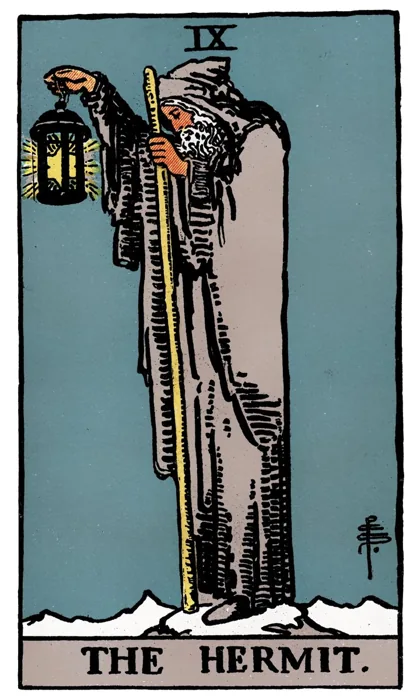
With The Hermit
With the Hermit, a period away from familiar demands may help you hear your own reasons. Make the withdrawal purposeful enough to provide perspective. Solitude is useful when it clarifies participation, rather than becoming an indefinite way to avoid every difficult exchange.
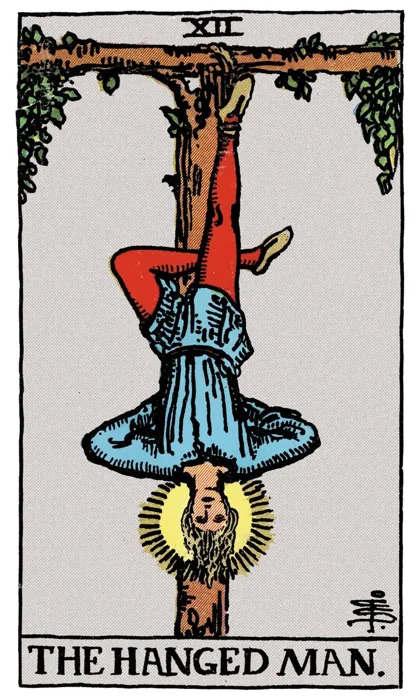
With The Hanged Man
With the Hanged Man, movement may be delayed by uncertainty or practical limits. Use the pause to examine what you are still hoping will become different. Waiting gains meaning when something can be learned or prepared during it, rather than merely extending the same suspended life.

With Death
With Death, a former arrangement may require a more complete ending than another adjustment can provide. Identify what is actually over and what responsibilities remain. Read the pairing symbolically as change and closure, never as a prediction of physical death.

With The Star
With the Star, space left by a departure may gradually become available for a different hope. Let the new direction begin modestly. You do not need an immediately inspiring replacement for the old life before a quieter form of trust can start developing.
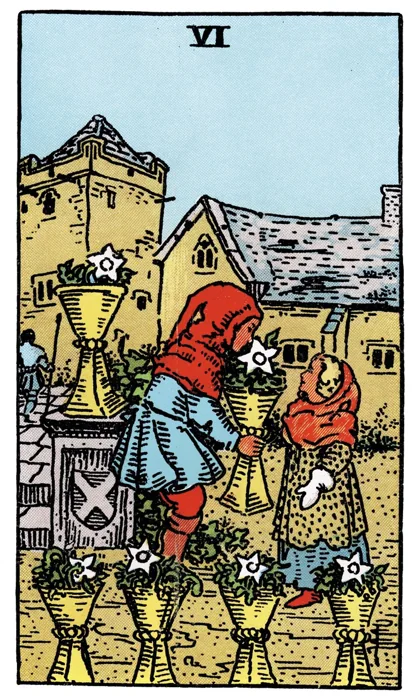
With Six of Cups
With the Six of Cups, familiarity and shared history can make a necessary change especially difficult. Decide what can be carried as affection, skill, or memory without restoring the entire former arrangement. Keeping something meaningful does not require keeping every old obligation.
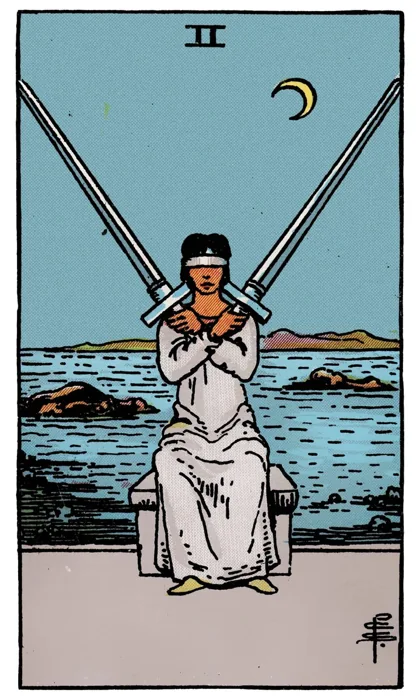
With Two of Swords
With the Two of Swords, a decision may be held in suspension because either outcome has a cost. Name those costs plainly and identify the information still missing. An indefinite pause is also shaping the situation, even when nobody calls it a decision.
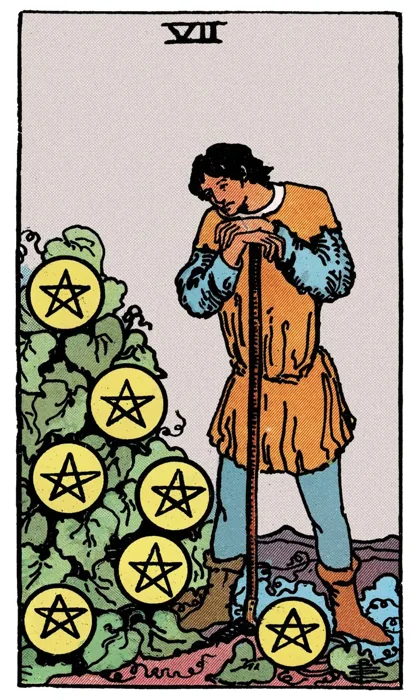
With Seven of Pentacles
With the Seven of Pentacles, review whether continued investment is likely to produce something you still want. Past effort deserves recognition, but it cannot make every future hour worthwhile. Consider the present conditions and the value of the next stage on their own terms.
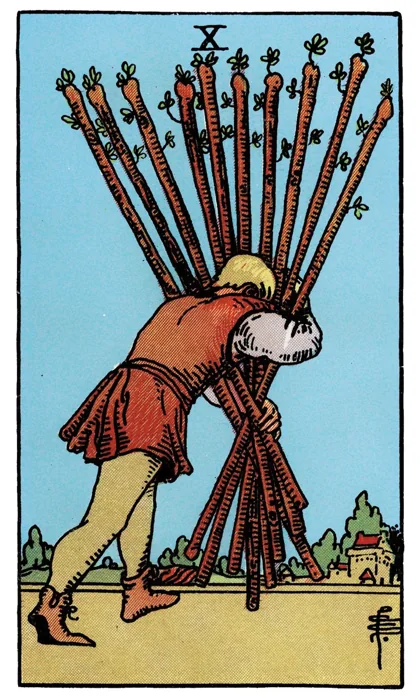
With Ten of Wands
With the Ten of Wands, exhaustion may be making the whole direction feel uninhabitable. Separate the burden from the underlying activity before deciding what to leave. Reducing or redistributing responsibility may reveal whether the work itself still has meaning for you.
The finished apprenticeship and the room after the guests leave
An apprentice eventually outgrows the arrangement that made learning possible. Leaving can feel disloyal precisely because the teacher mattered. The mature departure recognises the gift while accepting that its purpose was never to keep the learner permanently in the same place.
A room after a gathering holds evidence that something real happened. With the conversation over, the chairs and cups waiting to be washed are reminders of the company that filled the room. Trying to keep the evening alive indefinitely would not honour it. Some experiences retain their meaning because people eventually allow them to be complete.
The traveller setting out before sunrise carries another aspect of the card. The route is not yet fully visible, and the former shelter remains close enough to return to. What makes the departure consequential is the willingness to meet a different day, together with enough practical care to keep walking when the initial conviction becomes quieter.
Write an honest account of continuing and leaving
Choose one commitment whose place in your life has become uncertain. Write what remains valuable, what is repeatedly absent, what you have tried, and what continuing in the same form would ask of you. Then describe the smallest meaningful change, including what support or preparation it would require.
Allow the next step to be an inquiry, a boundary, a pause, or a considered ending. Review what that step reveals before turning it into a statement about your whole life. The Eight of Cups becomes practical when you can acknowledge the past and still make a present decision about where your attention belongs.
Artwork & interpretation
Waite describes a figure departing from an earlier concern and records notably varied, sometimes opposing interpretations. This original guide develops the pictured withdrawal into questions of meaning, limits, preparation, and the value that can remain after an ending; its reversal is not presented as a fixed historical rule. A. E. Waite, The Pictorial Key to the Tarot: Eight of Cups.
The symbolic associations and examples offer ways to read a situation. They do not establish another person’s thoughts or fix an outcome.
Something can have mattered deeply without remaining the place where your life belongs.
Use the cards in a spread →