Cups · Nine
Nine of Cups
The surprisingly difficult art of having enough
The Nine of Cups sits down to enjoy what is already there. If you are accustomed to working towards the next result, taking satisfaction in the present one may require an unfamiliar kind of attention.
- Satisfaction
- Pleasure
- Pride
- Enough
16 min read
In this guide
Let the good thing actually happen to you
Something has come together. Perhaps you have finished work you care about and can enjoy a meal in a room that suits you. Something you once spent a great deal of time wishing for has become an ordinary fact. The Nine of Cups belongs to the moment in which you can receive that fact as pleasure. There is no immediate requirement to make it useful, impressive, or the first step towards something larger.
In a reading, the card can describe personal satisfaction, a welcome result, enjoyment of a chosen life, or the question of what would feel sufficient. Its emphasis is close to the person experiencing it. An achievement may be modest in public terms and still answer a private desire with remarkable precision. What matters is that the person can recognise it as theirs.
The Nine is often associated with a wish fulfilled. Start by looking at what has actually arrived and how it compares with what you wanted. There may be a part you can already enjoy while another remains uncertain. Using the image this way keeps attention on the experience of satisfaction. It cannot guarantee that circumstances will deliver a particular result simply because you have wished for it.
This is also a card of appetite. Good food, comfortable surroundings, affection, beauty, leisure, and the pleasure of doing something well all belong here. Enjoyment need not be justified through productivity. A life organised entirely around preparation can become very efficient at postponing the experiences the preparation was meant to support.
There is a settled confidence available in the Nine. You can like what you like without presenting a defence of your taste, and acknowledge a success without pretending it was nothing. This is different from requiring others to admire the result. Satisfaction becomes sturdier when it can exist before the audience arrives and remain after the audience has gone.
The limitation is that one fulfilled wish cannot be made responsible for the whole of life. A good evening can be good while other matters remain unresolved. A successful project can be satisfying without repairing every earlier disappointment. Letting a particular pleasure remain particular often makes it easier to receive in full.
The seated figure and the careful display behind him
A person sits on a simple bench, arms folded, with nine cups arranged in an arc behind a draped structure. The posture is compact and self-contained. The figure occupies the foreground comfortably; the cups are already present. Unlike a scene of pursuit, this image gives us someone who has stopped moving long enough to survey what has been gathered.
The cups also form a display. They may suggest abundance, hospitality, achievement, or the satisfaction of having things in order. The image leaves open whether the person is sharing that abundance, guarding it, or simply enjoying a private moment. None of those possibilities can be settled by the crossed arms alone.
The red cap and bright background give the scene a warmth that suits pleasure and self-possession. Yet the seat is an ordinary wooden bench. The good moment does not require every surrounding condition to become luxurious. There is something useful in that disproportion: satisfaction may be available well before the entire setting matches an ideal.
The drape introduces a distinction between what is displayed and what remains out of view. This need not imply a secret problem. It can simply prompt a question about how much of your attention is going towards the visible account of happiness and how much towards the experience itself. An attractive arrangement becomes more valuable when somebody is actually enjoying being there.

The cups have been gathered and arranged. Before adding another ambition, consider which existing result, resource, or pleasure has yet to receive your full attention.
The figure is neither reaching nor hurrying. Try enjoying a result before explaining why it matters. You can leave both its defence and possible improvements for another moment.
Pride can be quiet enough to live with
The Nine of Cups can feel like an unembarrassed yes. An ordinary preference, such as what to eat or how you want a room to feel, may become easy to recognise. You may also trust your sense that a piece of work is finished. The usual committee of imagined opinions has become less important. This clarity of appetite can be restorative for someone accustomed to organising every preference around other people's comfort.
There may be a sense of having earned the right to relax. Let the relaxation arrive, while noticing whether enjoyment is always required to produce a receipt. If every pleasure must be purchased through exhaustion first, the conditions of permission may deserve revision. The card's satisfaction can include receiving something good simply because it is available and welcome.
As a person, the Nine may be generous, convivial, sensuous, proud of their arrangements, and good at making an occasion feel complete. They know the pleasure of enough food, a well-chosen gift, or a comfortable evening. Their confidence can be inviting when it makes room for other people's tastes as well as their own.
The more difficult version is a person who needs the room to confirm how satisfied they are. Success becomes something to display, and other ways of living are dismissed. A guest's lack of admiration may provoke a sharp response. The performance becomes tiring because private uncertainty has been given a public job: everyone must help keep the image convincing.
A mature version can acknowledge both pleasure and limitation. You can be pleased with your life and still want something to change. You can admit a disappointment without losing the whole achievement. Satisfaction becomes less brittle when it no longer depends on maintaining an uninterrupted account of how well everything has turned out.
What would enough feel like from the inside?
The Nine asks whether enough is a condition you could recognise if it arrived. Some people have a clear sense of it: time for an activity, a room of their own, a reliable relationship, or a completed piece of work. Others keep moving the threshold as soon as they approach it. Desire remains active, but satisfaction has no place on the schedule.
This can happen when achievement carries an impossible secondary task. The next success is expected to settle worth, silence an old judgement, or make future disappointment impossible. No ordinary result can complete that assignment. The card invites you to separate the actual reward from the larger emotional verdict you have attached to it.
Pleasure also involves a kind of attention. You can possess the desired thing while mentally continuing to pursue it, comparing it with better versions or checking whether it appears impressive enough. Receiving it requires a different movement: contact with the experience that exists now. The taste of the meal has little to do with its position in an imagined ranking.
There is room for self-sufficiency here, but a private source of satisfaction need not become a claim that other people are unnecessary. The ability to enjoy your own company can make connection freer. It becomes defensive when every need for support is treated as a humiliation that would disturb the carefully composed picture.
The deeper generosity of the card is allowing happiness to be specific and unheroic. A good afternoon does not have to prove that your life is solved. You may enjoy something while grieving something else. This gives pleasure an ordinary place in a complicated life instead of reserving it for an imaginary period when all difficulties have been removed.
Finish the work, then recognise that it is finished
At work, the Nine can describe a result you are pleased with, recognition that lands well, or a project whose outcome matches your intention. Give the achievement a definite form. Describe what is complete and how it can now be used. Include the improvement that makes the result worth recognising. A concrete account helps the satisfaction survive beyond the brief moment of praise.
For someone who routinely minimises success, the card may ask for a pause before the next task. There is a difference between remaining willing to learn and refusing to acknowledge competence. A result can be good without being beyond criticism. Receiving credit need not require claiming sole responsibility for everything that made it possible.
Creative work brings a particularly useful distinction between your satisfaction and its reception. You may know that a piece has achieved something important even when the audience is small. You may also receive praise for work that no longer interests you. Both kinds of information matter, but neither should automatically erase the other.
The card can suggest choosing work partly by the quality of daily experience rather than only by status. Which activities give you the pleasure of using your abilities well? Which conditions let you enjoy the result rather than immediately recovering from the cost? These questions can refine an ambition without making it smaller in any meaningful sense.
The professional shadow is complacency after a good result. A method that worked once becomes proof that no further listening is necessary. Enjoy the success and remain curious about its conditions. Confidence is more useful when it supports experimentation than when it makes every suggestion feel like an attack on the trophy shelf.
In a team, make space for different experiences of the same outcome. A successful launch may have been satisfying for one person and exhausting for another. Shared celebration becomes more credible when it does not require everyone to conceal the cost. Recognition can include thanks, rest, and changes that make the next effort more sustainable.
Enjoy the connection without making it a display case
In relationships, the Nine can describe pleasure in another person's company, comfortable affection, satisfying intimacy, or the relief of being able to enjoy what has already developed. There may be no urgent lesson to extract from the evening. Sometimes the useful response is to let a good exchange remain good and participate in it with your full attention.
It can also concern satisfaction in your own life before a relationship is added to it. You have routines, tastes, and sources of pleasure that belong to you. This can support a connection between people who are choosing each other without asking the relationship to manufacture every part of their identity.
The question of mutuality still matters. A person may be delighted with an arrangement that suits their needs while failing to ask how it feels to the other participant. Contentment is not automatically shared because the household looks peaceful. Make room for the other person's account, including wishes that complicate your comfortable version of the story.
Romantic desire can turn someone into the final cup on the shelf. An attractive partner and a visible commitment begin to stand for proof that your life has come together. The relationship becomes more humane when the person can have preferences and limits that do not serve that display. Being wanted is different from being required to complete someone else's account of success.
In friendship, hospitality is a natural expression of this card. You know something enjoyable and want to share it. The generous version offers without requiring the guest to admire your taste or feel exactly as happy as you do. A good host allows the other person to be present as themselves.
If you are dissatisfied, the Nine can help define what pleasure would actually mean in this particular connection. More time, a different kind of attention, affection expressed in a recognisable way, or freedom to pursue your own interests may matter more than an impressive milestone. A specific wish gives a conversation something workable to address.
Use what you have for a life you can enjoy
Materially, the Nine asks about the relationship between resources and lived pleasure. You may have acquired something you wanted but barely use it, or kept postponing a modest enjoyment until every other condition is perfect. Consider whether the resource is serving your life now or mainly preserving the possibility of a better life later.
There is room for a chosen indulgence, but pleasure becomes easier to enjoy when its practical terms are understood. Decide what fits your actual circumstances. The card does not establish that a desired purchase is affordable or that a good outcome will cover its cost. Its question concerns satisfaction, not a prediction of available money.
At home, comfort may come from arrangements that suit your habits rather than a polished image. The reading chair needs to be where you use it; the beautiful dishes may deserve to come out on an ordinary evening. A home can become more satisfying when its good things are allowed to participate in daily life.
The shadow is increasing consumption after the original appetite has been met, because the act of acquiring briefly recreates the anticipation. Ask whether you want more of the thing or more of the feeling that preceded it. The answer may point towards using, sharing, or simply enjoying what is already there.
Rest can be an experience, not merely preparation
A satisfying activity need not leave you improved. The meal, music, bath, game, or quiet hour can have value as an experience in itself. The Nine gives pleasure room to exist without immediately being recruited into a plan for greater efficiency. This can matter when every part of the day has acquired a task.
Notice the difference between enjoyment and continuing automatically after enjoyment has faded. The useful measure is your actual experience, rather than a rule that more must be better or that pleasure should always be restricted. Stopping when something feels complete can preserve its quality and your willingness to return to it.
The card cannot assess health from an image of contentment. For reflection, ask what leaves you pleasantly restored and what merely keeps you occupied while postponing a need. A good-looking leisure routine may still fail to provide the quiet, company, movement, or unstructured time you were hoping to find in it.
Give satisfaction a clear place to land
Name one thing that has gone well and describe why it matters to you. Resist adding an immediate qualification about what should have been better. You can review imperfections later. For now, allow the actual achievement or pleasure to be acknowledged at its proper size.
Choose an available enjoyment and participate in it without turning the experience into evidence for anyone else. The experience can remain private and unmeasured. It does not have to represent how your whole life is going. Notice what changes when the pleasure has no job beyond being something you welcome.
The shadow is using satisfaction to close conversation. If you are content, it can be tempting to treat another person's dissatisfaction as ingratitude. Their account may reveal a real difference in experience. Listening does not require surrendering your pleasure; it requires accepting that the same arrangement can affect people differently.
Another shadow is treating gratitude as a command to stop wanting. A person can appreciate what they have and still recognise a serious absence. The Nine becomes more honest when it permits both. Enjoyment is strengthened by contact with reality, including the parts that remain unfinished.
The wish arrived, but the expected feeling did not
Reversed, the Nine of Cups can describe disappointment after attainment, difficulty receiving pleasure, excess that has lost its enjoyment, or a revision of what satisfaction means. The useful question is where the expected feeling and the actual experience have separated. The answer is usually more specific than a verdict that you are incapable of being happy.
You may have achieved something that mattered more to an earlier version of yourself, or to the people whose approval once organised your choices. The result can remain valuable while its personal meaning changes. Give yourself room to discover what you want now without having to ridicule the ambition that brought you here.
Sometimes the reversal shows a private success that cannot yet be comfortably displayed. You are pleased with an unconventional choice, a small achievement, or a life others would rank differently. The work may be learning to let the satisfaction count without obtaining a unanimous verdict from an imagined audience.
Another version concerns compulsive repetition of a pleasure whose original effect has faded. You keep increasing the same pleasure when a different kind of experience may be what you need. Pause long enough to identify the appetite underneath: rest, recognition, company, stimulation, or a break from a demanding role. A clearer need may suggest a more fitting response.
The constructive reversal can be a release from performing happiness. You admit that a celebrated outcome has limits, or that an ordinary pleasure matters more than the impressive one. This may look less successful from outside while making your actual life easier to inhabit. Satisfaction begins returning when it is allowed to tell the truth.
What makes the pleasure yours, and what keeps it alive?
These combinations explore satisfaction and its conditions. A favourable-looking pairing is still a reflective prompt, not a promise that a wish, financial result, or relationship outcome is assured.

With The Empress
With the Empress, enjoyment may come through the senses, care, creativity, or a welcoming environment. Let something good be used and experienced. The pairing asks whether the life you are cultivating has room for pleasure, as well as for the labour that makes it possible.

With Temperance
With Temperance, satisfaction benefits from proportion and an attentive rhythm. Notice when an experience is complete rather than continuing because more is available. Balance here can preserve pleasure by allowing it to fit into a wider life without taking responsibility for every unmet need.

With The Devil
With the Devil, an enjoyable thing may have acquired a hold beyond the pleasure it still provides. Examine choice, cost, and your ability to stop or change the arrangement. The cards do not diagnose a dependency; they can prompt an honest look at what the repeated return is doing for you.

With The Sun
With the Sun, satisfaction may become easier to express and share. Enjoy recognition without requiring the moment to prove that every difficulty is over. A clear, uncomplicated pleasure can be allowed its full place even within a life that remains mixed and unfinished.
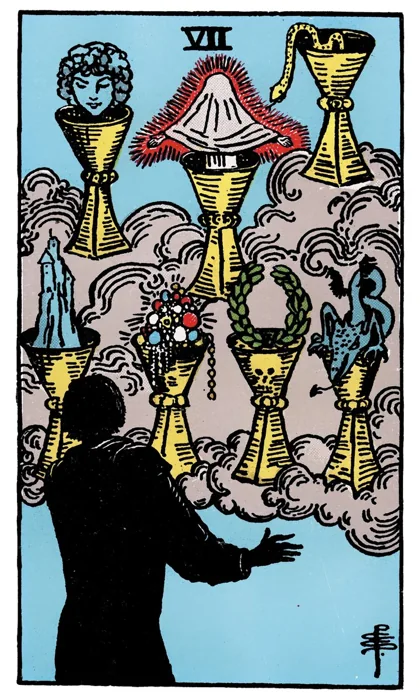
With Seven of Cups
With the Seven of Cups, a vivid wish needs a concrete definition of fulfilment. What would you actually be doing, and what part would remain enjoyable after the novelty faded? This helps the desired future become a lived experience rather than another attractive image.
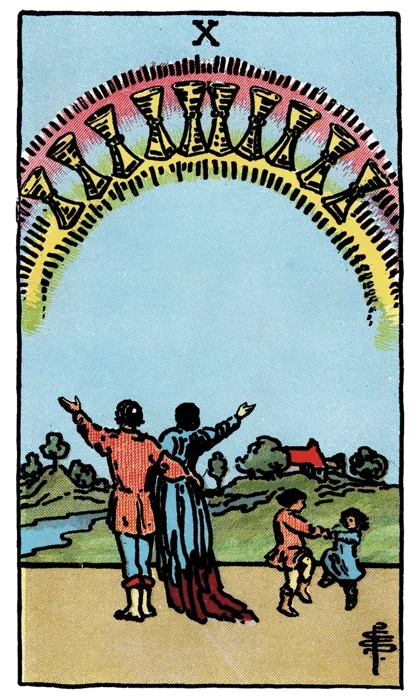
With Ten of Cups
With the Ten of Cups, private contentment meets the quality of shared life. Ask whether your satisfaction has room for the needs and wishes of the people around you. The combination can suggest a pleasure that becomes richer through mutual participation rather than a display everyone must applaud.

With Nine of Pentacles
With the Nine of Pentacles, enjoyment may rest on independence, cultivated skill, and an environment shaped to your own preferences. Acknowledge the work that made it possible without making further work the price of every pleasure. Let the result become part of how you live.

With Six of Wands
With the Six of Wands, public recognition and private satisfaction may meet — or reveal a gap. Receive appreciation, then ask what you yourself value in the result. The applause is welcome information, but it need not become the sole measure of whether the work was worthwhile.
What happens after the desired thing arrives
The host knows how to create an evening people want to remain inside. Food, comfort, and attention give pleasure a shared form. The generous host enjoys the guests' experience without needing to control every response. Their skill creates room for life rather than an exhibition of their own perfection.
The collector has gathered objects that once existed mainly as wishes. The question is whether the collection remains a source of contact and delight or has become a structure that must constantly expand. Possession and enjoyment can support each other, but they are not the same activity.
The person who finally sits down after finishing something offers the simplest echo. Nothing new is being achieved in that minute. The meaning lies in allowing the body and attention to arrive where the effort has brought them. Completion becomes real because someone has stopped long enough to experience it.
Enjoy one good thing before improving the terms
Choose something already available that you genuinely enjoy. Give it a definite period of attention, without comparison, reporting, or a simultaneous task. Afterwards, describe what was satisfying in concrete terms. This can be small: the taste, the quiet, the ease of a conversation, or the pleasure of using a skill well.
Then look at one current ambition. Write what you hope it will provide and how you would recognise that it had provided enough. If the answer keeps expanding, consider which part of the wish belongs to the actual result and which part asks for a different kind of care or recognition.
Artwork & interpretation
Waite connects the seated figure and cups with contentment, success, and satisfaction, and records varied reversed meanings. This original essay explores how pleasure is received, displayed, shared, or deferred, without turning the card into a guarantee of a fulfilled wish. A. E. Waite, The Pictorial Key to the Tarot: Nine of Cups.
The symbolic associations and examples offer ways to read a situation. They do not establish another person’s thoughts or fix an outcome.
Satisfaction grows when you can inhabit what you have; it shrinks when the display must keep proving something.
Use the cards in a spread →