Cups · Seven
Seven of Cups
The lives you can imagine, and the one you can actually enter
The Seven of Cups makes a possible future feel almost lived. You can imagine the person you would become there in convincing detail. Comparing these attractive lives can occupy an afternoon before you have tried any part of one.
- Possibility
- Projection
- Desire
- Discernment
16 min read
In this guide
An entire life can fit inside an untested possibility
A new city comes with a new version of you. So does a profession, a relationship, a beautifully photographed room, or a project you have yet to begin. In imagination, each arrives furnished with the feelings you want to have there. The Seven of Cups describes this compelling abundance. The difficulty is that the imagined result has started to count as information about the actual undertaking.
In a reading, the card can describe several attractive options, an unusually fertile period of invention, a confusing offer, or a wish that has acquired more detail than its supporting facts. There may be real opportunities in the mixture. The task is to discover which parts are available, which are still proposals, and which belong entirely to the story being told around them.
The options often answer different needs. You may be drawn to admiration or money in one option and relief in another. Elsewhere, the attraction is a chance to become unrecognisable to people who believe they already know who you are. This makes comparison difficult: you appear to be choosing between jobs or partners while privately choosing between forms of emotional rescue. Naming the underlying wish makes the visible decision easier to understand.
There is an enjoyable version of the card in which nothing needs deciding yet. A writer can enjoy gathering possibilities without choosing a plot yet. Friends imagining an improbable journey may similarly be giving themselves room to want more than they previously admitted. Exploration has its own value. It becomes troublesome when the person has a deadline, a limited resource, or an agreement with someone else, and continues behaving as though every door can remain open indefinitely.
The card may also describe an environment designed to keep desire moving. Each new offer makes the last one seem inadequate. You stop asking whether something suits you and start asking whether a more exciting version is about to appear. Under those conditions, collecting options can feel like progress while steadily reducing the attention available for any one of them.
A useful interpretation therefore looks at the stage of the situation. At the beginning, allow a generous field of possibilities. Before committing, ask for the ordinary details. When already committed, notice whether a stream of imagined alternatives is helping you improve the choice or preventing you from inhabiting it. The same imaginative capacity can serve very different purposes.
The cups contain attractions, threats, and something still veiled
A dark figure faces seven cups suspended among clouds. Their contents refuse to belong to one sensible collection: a face, a concealed figure, a snake, a building, jewels, a wreath, and a strange creature. Some invite approach; others suggest danger. The scene gives the spectator plenty to react to and almost nothing solid to stand on besides the foreground.
The figure reaches towards the display, but no cup has been taken. That interval between fascination and contact is the card's territory. From here, each object can carry an enormous meaning because it has not yet had to survive a practical question. The castle has no maintenance bill. The wreath has no account of what winning required.
The veiled figure leaves much of its identity unknown. That blank space can make it especially attractive: we imagine it possessing the qualities we hope to find. Consider which parts of an offer have actually been explained and which you are supplying yourself. Mystery does not prove deception, but learning more may change the reasons you find the possibility appealing.
Even the frightening contents belong to the same display. Imagination can elaborate a catastrophe as vividly as a reward. A decision may be held between an idealised future and an equally embellished disaster. Neither image becomes evidence simply because it is emotionally persuasive. The picture asks what would remain if the atmosphere were removed and the particulars set on a table.
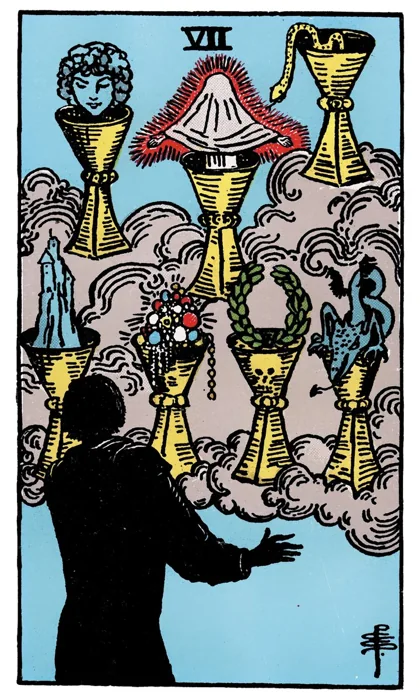
The covered figure leaves its identity open. Consider which qualities you are adding to an uncertain possibility, and what you would need to learn before treating those qualities as present.
The hand reaches, but the objects remain suspended. Desire has become active; commitment has not. What small contact with reality would let one possibility become more than a compelling image?
Wanting everything can protect you from discovering what you want most
Internally, the Seven of Cups can feel exciting and tiring at the same time. You keep arriving at a convincing new direction. For an hour, the answer seems obvious. Then another possibility reveals a different part of you, and the whole argument reorganises itself. The problem may be less an absence of desire than too many desires being asked to settle one question.
Some of the attraction lies in remaining untested. While a project is still possible, your talent inside it can be almost unlimited. Beginning introduces awkward sentences, imperfect work, and other people's responses. A person may sincerely love the imagined activity while avoiding the ordinary experience of learning it. The distinction usually becomes visible in what happens when a small attempt is available.
There can also be a hunger to escape an overdefined identity. If everyday life allows you to be only the reliable one, the provider, or the person who manages everyone else's needs, extravagant alternatives offer breathing room. Dismissing them as nonsense misses their message. Ask which forbidden quality they contain: visibility, leisure, adventure, privacy, pleasure, or the right to disappoint someone.
At its generous end, this is a person who can see possibilities others overlook. Connections between unlikely ideas can bring life to a dull project. Such a person helps others question the assumption that the current arrangement is the only one available. Their contribution becomes stronger when someone, including themselves, helps distinguish invention from an undertaking that has already been promised.
At its more difficult end, the person repeatedly offers a future instead of participating in the present. Everything is expected to change next year, once the right opportunity makes consistency possible. Until then, another discovery always seems necessary before a choice can be made. Listen to the size of the story and the size of the current action. A widening gap between them deserves attention without requiring contempt for the dream.
Every choice leaves some imagined selves unlived
The deeper difficulty is that choosing makes a life particular. A person who becomes a musician gives less time to becoming an architect; someone who builds a home in one place cannot simultaneously inhabit every other place. Even a good choice carries this small grief. Endless possibility can postpone meeting it, although postponement also uses up the very life it intends to preserve.
The card therefore asks what you believe an adequate life must contain. No actual life can express every talent or satisfy every appetite. Requiring it to be free of regret as well leaves you with a standard that no choice could meet. You may keep rejecting workable happiness because it arrives with limits. A more livable standard allows a meaningful choice to be incomplete without declaring it a mistake.
Fantasy also offers information about values, though indirectly. The imagined palace may be about being left alone; the applauding audience may be about finally being heard. Once the underlying need is recognised, it may have less spectacular and more available expressions. The dream need not be discarded. It can be translated into terms your present circumstances can answer.
Discernment is especially useful when the desired object seems to promise an entire personality. Owning the instrument will not automatically create a practice; entering the relationship will not provide every form of belonging. Separate the thing itself from the life you have placed inside it. This makes room to enjoy what it can offer without punishing it for failing to deliver the rest.
There is no need to make imagination answerable to usefulness at every moment. Some images deserve to remain play, art, private pleasure, or an impossible thought. The distinction is about the kind of claim being made. A dream can be valuable as a dream. Trouble begins when it quietly starts spending money, making promises, or overriding evidence as though it were an established plan.
The idea becomes clearer when it has to do a day’s work
At work, the Seven of Cups often belongs to brainstorming, career exploration, a crowded project list, or an attractive proposal whose scope remains vague. Early abundance can be useful. The trouble comes when every idea is promoted to a commitment and all of them begin competing for the same hours. A list of possibilities needs different treatment from a schedule.
A new profession is easy to imagine through its most rewarding scenes. You picture the designer making beautiful things or the teacher seeing a student finally understand. Owning a business may look appealing mainly because you imagine deciding how each day will run. Look for the repetitive and administrative parts as well. They are not humiliating exceptions to the real work. They are a substantial part of the experience you are deciding whether to enter.
If several directions remain attractive, make the next comparison concrete. Produce a short sample, talk to someone doing the ordinary version of the work, or try a bounded task. The purpose is to discover what you enjoy and tolerate in practice. A modest experiment can tell you more than another week spent refining the imagined success.
In a team, unclear enthusiasm can create accidental promises. One person thinks an idea was casually discussed; another has begun arranging their workload around it. Make clear when you are exploring an idea rather than agreeing to it, and name any checks needed before a commitment. This protects inventive conversation from becoming a source of resentment later.
The creative shadow is perpetual preparation: collecting references, buying tools, researching methods, and finding a more exciting concept just as the current one becomes difficult. Keep a separate place for new ideas and finish one small piece under the present brief. Completion provides information that a constantly expanding preparation phase cannot.
The card can also describe a persuasive opportunity that relies heavily on atmosphere. Warm language, impressive associations, and a beautifully told future may conceal unanswered questions about responsibilities or resources. Request the plain version. A sound proposal should retain some appeal when described without the story that made everyone lean forward.
Meet the person who exists outside your imagined future
In an emerging connection, very little information can carry a great deal of hope. An easy conversation and shared tastes can suggest compatibility before you have much experience of each other. After one attentive evening, you may already be imagining the home you could share. Enjoy the excitement while leaving room for discovery. The other person should not have to arrive already matching a role written before you know them.
The Seven of Cups may indicate attraction to several people or several kinds of relationship, but it does not establish hidden partners or disloyalty. Its more useful question is what each possibility represents. The appeal may be intensity with one person and a sense of safety with another. A different connection might seem to offer freedom from an old identity. Those meanings deserve examination alongside the actual quality of each exchange.
In a settled relationship, an imagined alternative can become unfair competition. The hypothetical partner always seems understanding because you have never shared a difficult morning with them. Even the laundry disappears from this imagined life elsewhere. Compare real arrangements with real arrangements. This does not mean dismissing a serious unmet need; it means describing that need without using an invented person as proof.
Another version concerns promises that remain pleasantly indefinite. There is always talk of the trip, the commitment, the conversation, or the change, but no movement towards making it possible. Ask how the intention will become a chosen action. If something stands in the way, it needs to be explained clearly enough for you to understand the delay. An honest uncertainty is more useful than a future repeatedly offered as reassurance.
Friendships can also become places where imagined closeness substitutes for contact. You know what someone means to you but have not asked what their current life is like. Curiosity brings the connection back into the present. A relationship becomes richer when the person can surprise your image of them.
For your own wishes, distinguish the experience you want from the person you hope will supply it. Wanting to feel wanted, understood, or adventurous is understandable. It still leaves questions of mutual interest, capacity, timing, and consent. A strong feeling gives you something to communicate; it does not settle the other person's answer.
Price the ordinary version of the dream
The card draws attention to purchases that seem to contain a future self. A new room seems to promise better habits, while equipment carries the hope of becoming productive. Even a trip may appeal because of the interesting person you imagine returning as. Sometimes the object genuinely supports a change. Ask what behaviour or condition it supports and whether that condition will exist after the initial excitement has passed.
When comparing practical options, put them in the same units. A vague promise of freedom cannot be compared directly with a monthly cost, and a beautiful photograph says little about daily use. Gather the missing particulars before allowing the most vivid option to appear superior merely because its inconveniences have not been described.
At home, an imagined ideal may help you discover what you value: quiet, light, privacy, welcome, or room to make things. Those qualities can guide smaller changes as well as large moves. The whole picture does not need to be affordable at once for one useful part of it to become available.
Materially, the warning is against treating an appealing possibility as a resource already in hand. An expected payment, unconfirmed offer, or hoped-for saving remains uncertain. Keep actual resources separate from projected ones. The reading is a prompt to examine the story around a decision, not a basis for predicting returns or choosing an investment.
Mental movement is not always movement in your life
An hour spent imagining possibilities can be restorative when it restores appetite for living. It can also leave you strangely depleted, as though you have negotiated ten lives without entering any of them. Notice the after-effect. Does the exploration make a small action easier, or does the actual day now seem too ordinary to touch?
Constant comparison gives attention no settled place to land. You begin one activity while continuing to monitor all the others you might be doing. A temporary boundary can help: choose what this hour is for and let the other possibilities remain available later. The choice is a container for attention rather than a declaration about your whole future.
If you are exhausted, a dramatic new direction may look attractive partly because it has no history of effort attached to it yet. Give tiredness its own consideration before making it explain everything about your life. The card cannot assess health; it can help you separate a need for rest from a considered wish for a different arrangement.
Choose a question that an actual experience can answer
Take one appealing possibility and describe it without adjectives. What would you do, with whom, using what time and resources? Then name what you hope it would feel like. Keeping those two accounts separate reveals where the practical proposal ends and the emotional promise begins. Both matter, but they require different kinds of examination.
Choose one uncertainty that can be tested cheaply and reversibly. You do not have to settle your whole direction. You might need to discover whether you like the work itself, whether the invitation is real, or whether the promised time is actually available. Let the result change the picture. An experiment used only to confirm the fantasy has missed its purpose.
The shadow is confusing intensity with reliability. An image can move you deeply and still be inaccurate. This applies to fears as well as wishes. Ask what you have observed, what someone has explicitly said, and what you have supplied. The distinction helps preserve imagination without handing it every practical decision.
Another shadow is making other people carry the cost of your open options. You remain undecided while someone else waits, plans around you, or repeatedly absorbs the cancellation. If uncertainty is real, communicate it clearly. Freedom becomes more honest when the people affected know what has and has not been offered.
The fog can lift, or the choice can become an escape from thinking
Reversed, the Seven of Cups can describe a narrowing of possibilities and a return to something definite. An option loses its glamour when the details arrive; another becomes more attractive because it can actually be attempted. This is often a relief. You do not need a perfect answer before a workable direction begins to stand apart.
The reversal may also show a disappointed encounter with reality. The desired role includes dull work, the admired person has limits, or the purchase has not changed your habits. Allow the discovery to be specific. It may require adjusting one expectation rather than declaring the entire undertaking worthless.
Sometimes the movement towards certainty is too abrupt. Overwhelmed by choice, you grab the first firm answer and stop asking questions. The fact that choosing feels relieving does not by itself make the choice sound. Keep enough space to check the conditions, especially if someone is pressing you to commit before you can understand them.
Another version is a refusal to imagine anything at all. After disappointment, every unfamiliar possibility is dismissed before it can be examined. This may protect you from embarrassment while closing off useful change. Begin with a small, credible experiment rather than demanding either total belief or total rejection.
The constructive reversal gives desire a place in the calendar. The dream becomes a draft, a conversation, a modest attempt, or a deliberately deferred project. You keep the capacity to imagine other lives while beginning to know this one through participation. Something has been lost in the narrowing, but something else can finally acquire substance.
What helps an attractive possibility become a real choice?
These pairings explore how imagination meets evidence, commitment, and appetite. They describe possible tensions to investigate, rather than proving that an offer is false or that a desired future will arrive.
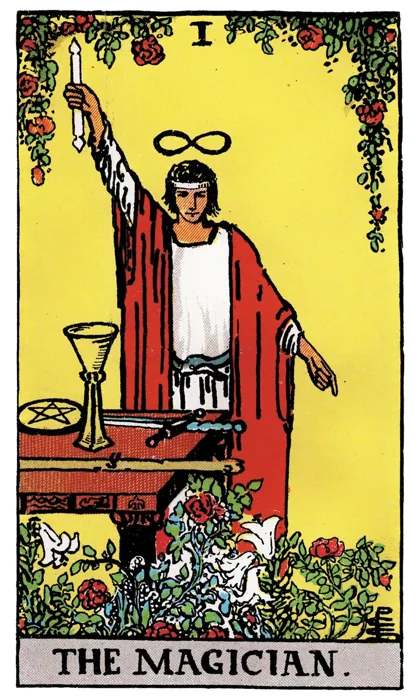
With The Magician
With the Magician, an idea has tools available to it. Identify one thing you can actually make or demonstrate, using what is already at hand. The pairing becomes productive when invention meets a visible attempt instead of another persuasive explanation of what might eventually be possible.
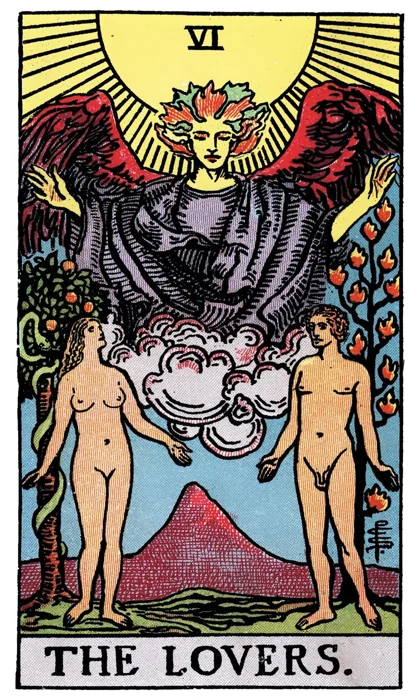
With The Lovers
With the Lovers, several attractions may conceal a question about values. Which choice asks you to live in a way you can stand behind? Consider the commitments involved, including other people's freedom to choose, rather than selecting only the future that gives you the strongest immediate feeling.

With The Devil
With the Devil, an offer may be especially compelling because it speaks to a familiar appetite or insecurity. Examine what keeps pulling you back and what each return costs. The combination invites scrutiny of the attachment; it does not establish manipulation or addiction by itself.
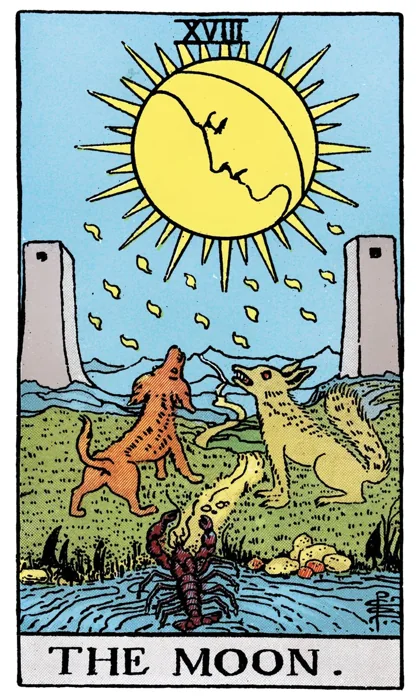
With The Moon
With the Moon, uncertainty can generate elaborate explanations in both hopeful and frightening directions. Keep observations separate from interpretations. Seek one checkable fact before making the atmosphere of the situation carry a conclusion it cannot yet support.
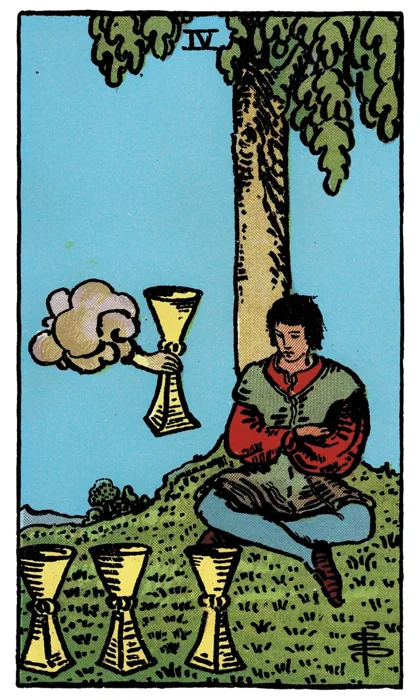
With Four of Cups
With the Four of Cups, imagined alternatives may make an available experience seem flat before you have met it. Ask whether disinterest belongs to the actual offer or to the comparison being made. You are free to decline, but give the present option a fair description first.
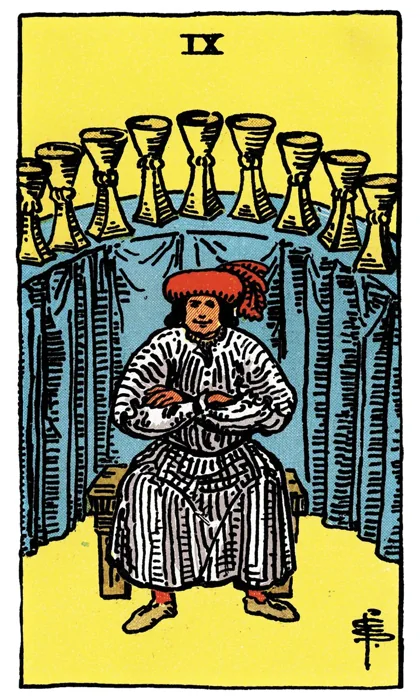
With Nine of Cups
With the Nine of Cups, the question is what satisfaction would actually look like once the wish became ordinary life. Name the part you would enjoy even without an audience. This helps distinguish an appetite of your own from a future designed mainly to impress.
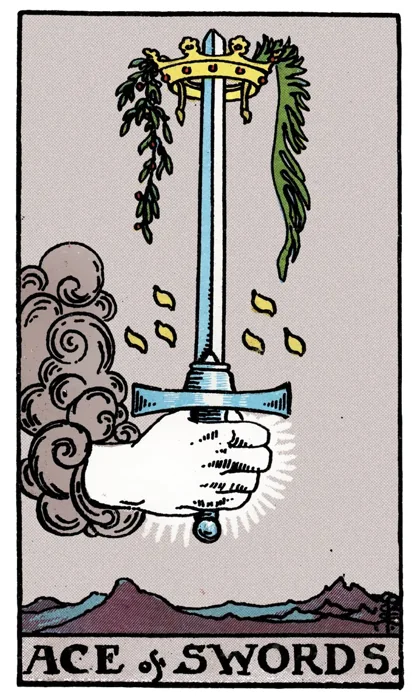
With Ace of Swords
With the Ace of Swords, a clear distinction can cut through an overgrown field of possibilities. Define the problem, the available evidence, and the criteria that matter. Clarity is useful here when it makes a next inquiry possible, rather than merely producing a dramatic declaration.
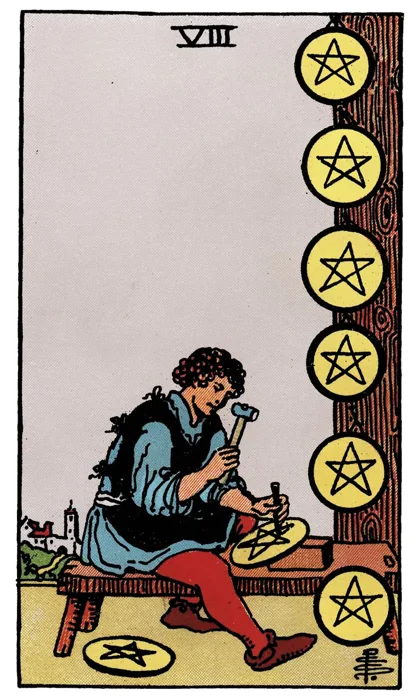
With Eight of Pentacles
With the Eight of Pentacles, the dream meets repeated work. Try the unglamorous part of the activity and notice whether interest survives contact with it. A worthwhile direction need not be enjoyable every minute, but it should offer more than the imagined identity of having mastered it.
Places where possibility remains untested
An enchanted shop displays exactly what each visitor most wants. Its danger lies in the private story attached to each object. Customers bring different longings to the same display, from recognition to revenge. An object may even seem to offer a beginning untouched by earlier mistakes. Before buying, the traveller needs to discover what the object itself can do and what has been added by longing.
A map covered with possible routes can be an expression of curiosity. At some point, however, the traveller must meet a road with weather, distances, and a body that gets tired. The map remains useful, but the journey starts teaching things no amount of studying its alternatives could supply.
The room of mirrors offers many versions of a person, each briefly convincing. A chosen action provides a different kind of knowledge. Through practice, you discover which interests hold your attention and which are worth revising when the first attempt falls short. The self becomes less spectacular than the reflections and more capable of having an actual life.
Give one possibility a fair, limited trial
Choose three possibilities currently occupying your attention. For each, write what is known, what is imagined, and what feeling you hope it would provide. Select one unanswered practical question from the option that still interests you after this separation. Find a small way to answer it through contact, observation, or an attempt.
Set a point at which you will review what happened. Let yourself continue, revise, or release the option without turning the result into a judgement about your whole capacity. The Seven of Cups becomes useful when a rich field of desire can produce one piece of knowledge you did not have before.
Artwork & interpretation
Waite associates this card with imaginative visions and their lack of permanence, while his reversed meanings include determination and a project. The artwork observations and practical examples here are an original interpretation of possibility, projection, and the move towards a lived choice. A. E. Waite, The Pictorial Key to the Tarot: Seven of Cups.
The symbolic associations and examples offer ways to read a situation. They do not establish another person’s thoughts or fix an outcome.
Imagination opens the field; a choice gives one part of it somewhere to grow.
Use the cards in a spread →