Major arcana · 18
The Moon
When the feeling is vivid and the facts are incomplete
Under the Moon, a familiar situation can seem strange. A silence may acquire a meaning it did not have yesterday; a dream can leave a detail feeling unusually significant. Notice the impression while allowing time to check your interpretation.
- Ambiguity
- Imagination
- Unease
- Uncertainty
14 min read
In this guide
The mind fills the part it cannot see
A message arrives without its usual warmth. In the space before an explanation, several stories become possible. Perhaps the person wrote quickly because they were tired or distracted. You might instead wonder whether they are upset, or whether their interest in you has changed. One account may feel much more convincing than the others because it touches something already alive in you. The Moon concerns that charged interval.
In a reading, the Moon can concern an uncertain situation whose emotional atmosphere is stronger than the available facts. Dreams and imagination may contribute to it, including fears you project onto what you do not know. It invites careful attention to the difference between an experience and the explanation you attach to it. Both matter, but they do different work.
A feeling may begin with an inconsistency you have noticed repeatedly but not yet put into words. It may also be shaped by what you remember or hope will happen, and fear can make one explanation seem especially convincing. The Moon cannot decide which applies. Keep the question open while looking for information that would help you understand the feeling's source.
The Moon is therefore no proof of deception, betrayal, supernatural influence, or an approaching danger. A situation can feel strange because it is unfamiliar or incompletely understood. Suspicion becomes more useful when translated into a specific observation and a proportionate way to check it.
Imagination also has a generous place here. A dream, image, or association may reveal what occupies your attention and help you express an experience that ordinary explanation has not captured. It can be meaningful without being a literal report about another person or a prediction of the future.
The Moon asks you to respond with care while some facts remain unavailable. A strong impression deserves examination, but you can hold more than one explanation open. Look for a next step that would help you learn something. Complete certainty may be out of reach even when a proportionate response is possible.
The path continues beyond the available light
A path runs from a pool between two animals and two towers toward distant hills. The scene offers a route without showing its full destination. The image can be read as movement through uncertainty: enough is visible to recognise a direction, while much of what lies ahead remains outside immediate knowledge.
A dog and a wolf raise their heads beneath the moon. The familiar and the wild occupy the same foreground. One possible interpretation concerns different responses within a person: learned expectations beside reactions that feel less domesticated or easy to explain. Neither animal supplies a complete account of the landscape.
A crayfish-like creature emerges from the water at the bottom of the card. It adds something awkward and unfamiliar to a scene that already feels unsettled. Read symbolically, an unformed concern or old association may be entering awareness before you have language for it. Its appearance does not tell you what conclusion to reach.
The moon has a face and radiating light above the restless foreground. The scene is illuminated, yet it does not offer the direct clarity of daylight. This supports a distinction between noticing an outline and knowing the object. Attention can be genuine while its interpretation remains provisional.
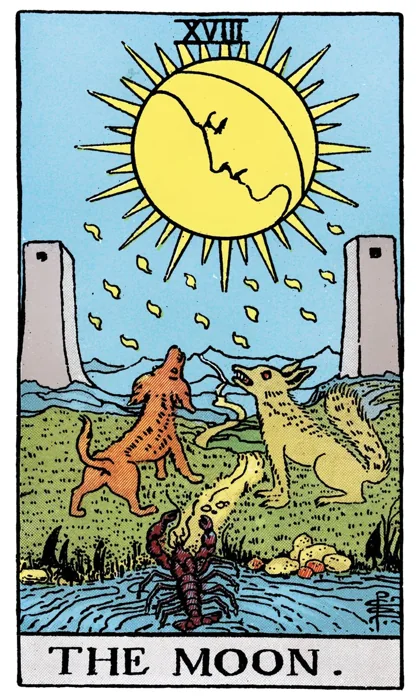
The two animals share a landscape without becoming identical. The image can suggest that familiar expectations and less understood responses may both shape how a situation feels.
The creature reaches the edge between water and land. One possible reading is an impression entering awareness before its source or significance has become clear.
An atmosphere that follows you into the room
Internally, the Moon can feel like sensitivity without a settled explanation. Ordinary details carry unusual weight; a silence seems loaded, a dream lingers, or a memory changes the tone of the present. You may be aware that your response is larger than the immediate event and still find it difficult to separate the two.
This state can be fertile for imagination. Associations arrive, familiar scenes become strange, and the mind notices relationships it usually passes over. Creative attention can use this material without asking it to become factual evidence. A powerful image may be valuable because it expresses a feeling accurately, not because it describes an external event.
An expectation can begin to shape the very evidence you use to support it. If you expect rejection, an ambiguous reply may prompt you to withdraw. The resulting distance then seems to confirm your fear. Trace the sequence with curiosity about how it developed. Look for the moment when an untested assumption influenced your behaviour; that may be a place where a different response becomes possible.
As a person, the Moon may suggest imagination, sensitivity to atmosphere, an indirect style of expression, or a strong relationship with symbolic material. These qualities can deepen art and conversation. They become less reliable when emotional resonance is treated as sufficient evidence for claims about other people's motives.
Maturity includes the ability to say that you do not yet know. Acknowledging the feeling may help you ask a clearer question, provided you can also hear an ordinary explanation in the answer. This does not make the inner experience less important. It gives it a place in the inquiry without requiring it to settle the matter alone.
An impression can matter while its meaning remains uncertain
The Moon asks how you know what you think you know. Direct observations mingle with what you infer from them and what you remember. Stories that make the world feel coherent also influence your understanding, sometimes without your noticing. These sources are often mixed together so quickly that the final conviction seems more immediate than its actual construction.
A symbolic image can reveal an emotional truth without establishing an external fact. Dreaming of abandonment may express a fear, a recent experience, or an association you have not considered. It cannot tell you that a partner intends to leave. Keeping those functions separate allows the image to remain useful without giving it authority it does not possess.
The card also concerns the discomfort of ambiguity itself. You may prefer a painful certainty to an open question because certainty offers a role and a response. Yet selecting the most frightening account does not make you better prepared if the account is unsupported. Preparation can be proportionate while the explanation remains unsettled.
There are situations in which full clarity will not arrive. Another person's interior life may remain partly inaccessible; a memory may contain gaps; the future cannot be inspected in advance. The task becomes choosing a responsible response with the information available, while leaving room to revise as circumstances become clearer.
The deeper freedom is a less literal relationship with every passing story. As an interpretation forms, you can pause to consider why it feels so compelling. That may help you decide how much weight it deserves. The mind remains imaginative. It simply no longer has to turn every vivid possibility into an instruction about what must be happening.
Ask what the work requires before guessing at expectations
At work, the Moon can concern a task whose expectations remain vague. Indirect communication may leave you spending more time interpreting hints than doing the work. Ask what the finished result is meant to achieve and who will decide whether it does. Clarify the audience and deadline as part of that conversation, so the next step rests on something more definite than a guess.
An uneasy atmosphere can contain relevant information, but it should be separated from claims you cannot verify. A colleague seems distant, a meeting changes tone, or a project is discussed less openly. Notice the pattern and ask appropriate questions. Rumour can create additional uncertainty by giving guesses the social weight of shared knowledge.
Creative work may benefit from the Moon's indirectness. An image, scene, rhythm, or fragment can carry meaning before you can explain it in a neat sentence. Give the material some room to develop. You do not need to reduce every interesting ambiguity to a message in order for it to belong in the work.
The later stage asks for a different kind of attention. Ambiguity in art can be deliberate and productive; ambiguity in an agreement or instruction can obstruct the task. Decide what should remain open and what needs precision. A project can contain mystery without making the people working on it guess what their responsibilities are.
The card may also describe uncertainty about how your work is being received. You may read silence as failure and dismiss praise as mere politeness. A brief comment can then take on the weight of a judgement about your whole ability. Seek feedback specific enough to use. A clear example can provide more information than repeatedly analysing the tone of a short response.
The shadow is presenting intuition as professional certainty. You sense a problem and leap directly to a confident account of its cause. Translate the impression into an observation, a question, or a small investigation. This gives the useful part of your perception a chance to be tested and developed.
Ask before the imagined conversation becomes the real one
In relationships, the Moon often draws attention to unspoken feelings, mixed signals, projection, or uncertainty about what a connection means. The card cannot reveal a person's hidden intentions. Its useful question is what you know through direct contact and what you have been supplying in the gaps.
Early attraction can be especially imaginative. A small amount of information supports a large inner picture, and the person becomes associated with a hoped-for life. Enjoy the interest while allowing the actual individual to complicate the image. Knowledge develops through ordinary encounters, including the less charged details that fantasy tends to omit.
If something in an established relationship makes you uneasy, begin with the behaviour you have noticed. Ask about it without claiming to know the motive behind it. What you learn may settle the concern or show you where a further conversation is needed. A real disagreement may emerge too. Allow the explanation to add information before deciding what the behaviour means.
The difficult pattern is indirect testing. You withhold affection to see whether someone notices, ask a question whose acceptable answer has already been decided, or expect them to disprove a fear you have not named. These tests can create confusion even where both people care. A clear request gives the relationship a more workable task.
The Moon can also describe genuine ambiguity maintained by another person. They avoid defining the arrangement, give incompatible accounts, or make reasonable questions feel intrusive. You do not need certainty about their motive to decide that the present terms are difficult for you. A boundary can be based on the observable arrangement.
If fear or distress is becoming persistent, seek grounded support outside repeated readings. Drawing more cards may add stories without improving knowledge of the relationship. The aim is to understand your experience and the actual interaction, rather than find a symbol strong enough to eliminate all uncertainty.
Give the unclear part a concrete question
In material matters, the Moon can prompt attention to missing details, assumptions, and offers whose appeal depends more on atmosphere than understandable terms. Read what is actually being agreed and ask about the part you cannot explain. The card does not establish deception; it identifies clarity as a practical need.
You can feel excited about an opportunity and uneasy about the seller at the same time. Fear of missing out may add urgency, especially if the purchase seems to promise reassurance. Acknowledge those reactions, then gather the information needed to assess the commitment itself. Where the stakes are substantial, relevant expertise is a better basis for deciding than a reassuring interpretation of the card.
At home, unclear expectations can make small events feel personal. Someone's habit may be interpreted as disregard when the expectation was never discussed. Equally, a recurring problem may have been raised and repeatedly dismissed. Reconstruct the actual conversation before deciding which account fits.
An environment can affect how a situation feels without providing evidence about its cause. Clutter, noise, unfamiliar surroundings, or lack of privacy may increase unease. A practical adjustment can help you assess the underlying question more clearly instead of treating the atmosphere as a message about what must be wrong.
Reduce the number of stories competing for attention
The Moon can describe the strain of continually interpreting ambiguous signals. Rereading messages can lead to yet another check for changes, followed by a rehearsal of the conversation you imagine having. This activity can feel like preparation while keeping the question emotionally active without adding much information. Notice when another review is simply repeating the same material.
A bounded pause from speculation may help. Return to ordinary tasks, give yourself a specific time to revisit the question, or ask one grounded person to help distinguish observation from inference. The purpose is to create enough space for judgement, rather than force the feeling to disappear before you are allowed to continue the day.
The card cannot diagnose a psychological or physical condition, and dreams are not reliable medical warnings. If distress, sleep difficulties, or other symptoms concern you, seek appropriate support. Symbolically, the Moon invites care with uncertainty and with the attention consumed by trying to make it vanish.
Keep the observation; loosen the conclusion
As advice, the Moon asks you to write what you noticed before writing what it means. Then offer more than one plausible explanation. This does not require treating every explanation as equally likely. It prevents the first emotionally compelling account from becoming the only one you are able to examine.
Choose a proportionate way to gain information: ask, check the relevant source, observe whether the pattern repeats, or wait for a defined event that will clarify the situation. Avoid turning uncertainty into an invitation to monitor another person's private life. The information you need should relate to a decision you are entitled to make.
The shadow is fascination with obscurity. A situation feels meaningful because it is difficult to understand, and clear answers begin to seem disappointingly ordinary. Depth can survive explanation. Confusion does not automatically make a person, relationship, or belief more profound.
You may dismiss an image or dream because it cannot tell you what is happening outside your own experience. It can still reveal something about a fear or wish you have struggled to express. Explore that possibility without requiring the image to establish a fact. Imagination has a useful place in understanding yourself even when it cannot answer questions about another person.
The uncertainty is clearing — or being forced into certainty
Reversed, the Moon can describe a clarifying detail, a fear becoming easier to name, confusion that has intensified, or an attempt to impose certainty prematurely. The direction depends on the actual situation. Ask whether you have gained information or merely found an explanation that feels relieving to repeat.
One expression is recognising the source of an uneasy reaction. A present event resembles an earlier experience, and the resemblance has been doing more interpretive work than you realised. This recognition can help you respond to the current circumstances more accurately without dismissing why they affected you.
Another expression is information finally becoming explicit. Someone explains a change, an agreement is clarified, or a pattern can be discussed directly. Let the new fact revise the account, including where it is less dramatic than the version you had imagined. Clarity should be allowed to reduce a story as well as confirm it.
The reversal may also describe insistence that you already know. Ambiguity has become so uncomfortable that every contradiction is interpreted as further concealment. If nothing could change your view, seek a grounded perspective and reconsider how the conclusion was reached. A belief that cannot receive correction cannot become more accurate.
A constructive reversal restores proportion. The feeling remains part of the experience, but it no longer determines every action. You can tolerate an unanswered question, make a limited decision, or let an ordinary explanation stand without continuing to search for a hidden meaning beneath it.
What is shaping the interpretation?
These pairings offer ways to examine uncertainty. They do not reveal secrets, confirm suspicions, or establish supernatural causes.
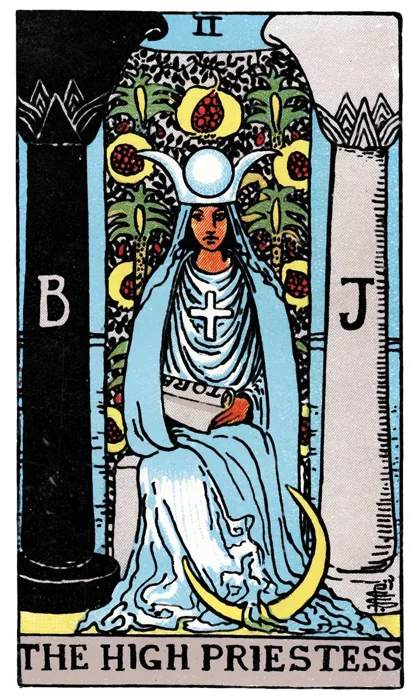
With The High Priestess
With the High Priestess, an impression deserves patient attention and careful limits on what is claimed. You may be noticing something not yet understood. Preserve the observation while allowing more than one explanation to remain possible.
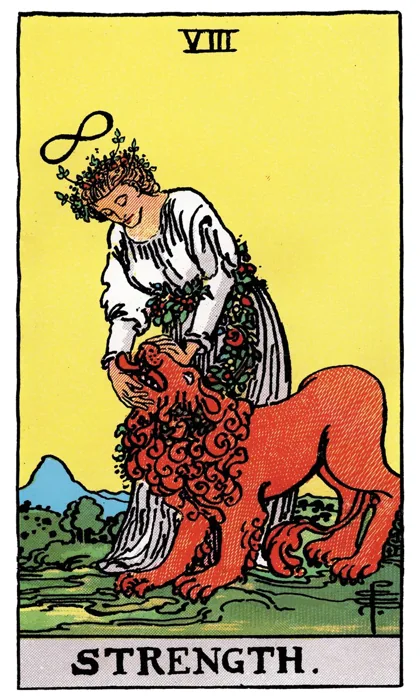
With Strength
With Strength, a vivid feeling needs room without becoming the sole authority. A measured response can help you gather information. You do not have to dismiss the unease or act on its most urgent interpretation immediately.
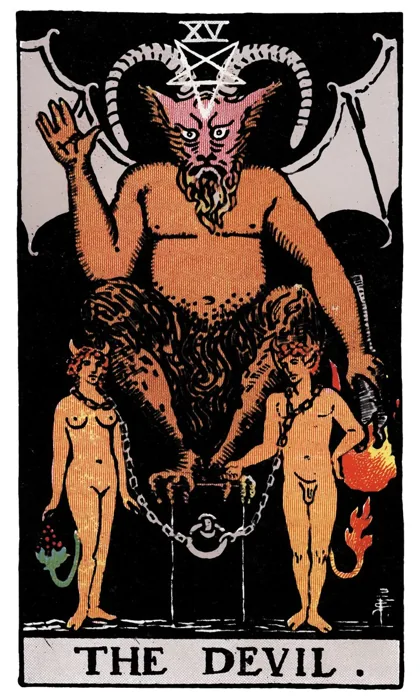
With The Devil
With the Devil, desire or fear may be making an unclear arrangement difficult to assess. Name the reward, the cost, and the information missing. Strong attraction or anxiety can narrow attention without proving that the imagined story is true.
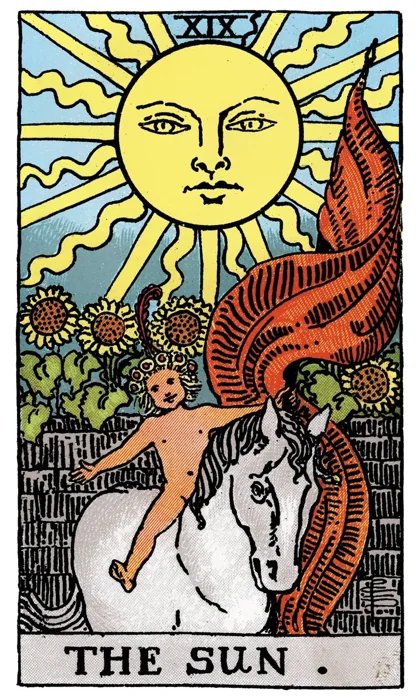
With The Sun
With the Sun, the situation may benefit from a more direct exchange or a clear fact. Move from implication toward something both people can understand. Openness helps when it adds usable information rather than simply insisting that everything is fine.
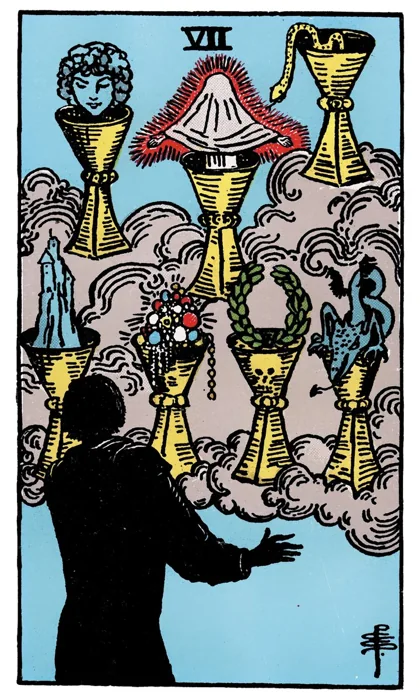
With Seven of Cups
With the Seven of Cups, imagined possibilities may be multiplying faster than knowledge. Choose one real encounter or source of information that can distinguish them. A vivid option becomes easier to assess when it has to answer practical details.
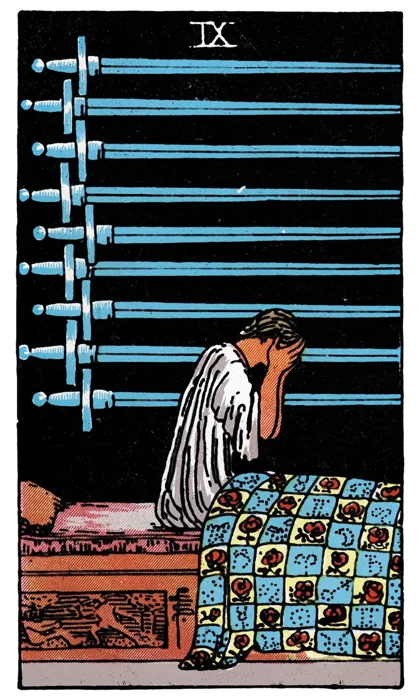
With Nine of Swords
With the Nine of Swords, uncertainty may be feeding repetitive worry. Separate the established problem from the feared possibilities and seek grounded support where needed. More interpretation is not always more preparation, especially when no new information is being added.
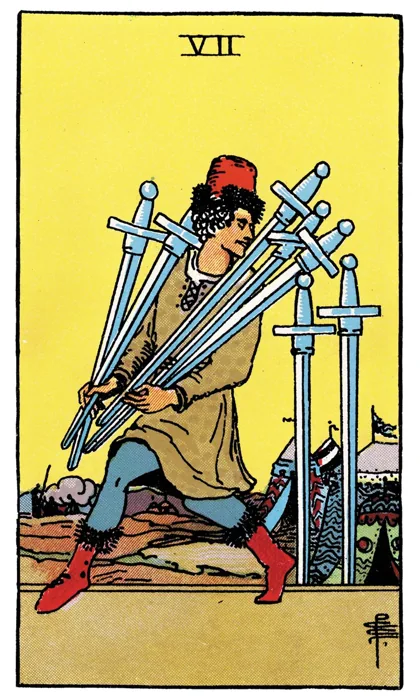
With Seven of Swords
With the Seven of Swords, selective disclosure may be a concern, but the cards cannot establish deceit. Ask what information is relevant to your participation and whether it has been made available. Base your decision on the actual terms and behaviour.
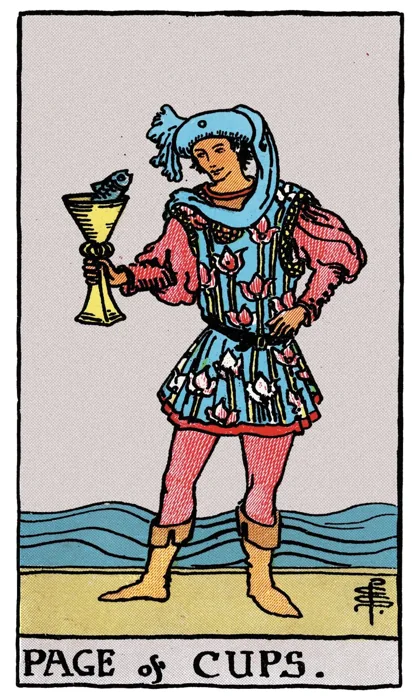
With Page of Cups
With the Page of Cups, a vivid feeling or dream may give you something to explore creatively. Try writing about it, or choose another form that helps you express it. What you make can matter as an expression of your experience without needing to predict what happens next.
The night traveller and the storyteller
The night traveller sees enough to move carefully, but familiar objects have altered outlines. They need attention and a willingness to revise what they first thought they saw. The image captures a form of courage that includes uncertainty instead of pretending the road is fully known.
The storyteller connects fragments into an account that feels coherent. This is a valuable human ability, especially in art. The difficulty arises when the satisfaction of the story is mistaken for proof that its account of events must be correct.
The dreamer receives images whose emotional force may exceed their literal sense. Approaching them as material for reflection can be fruitful. Treating them as instructions or privileged knowledge about other people gives the image a different authority, one the experience itself cannot establish.
Make three versions of the same uncertain moment
Choose one event you keep interpreting. Write what happened without explaining why, then write three plausible accounts of it. Mark the evidence supporting each and the information that would help you distinguish them. Include an ordinary explanation as well as the one that feels most charged.
Take one proportionate step toward clarity, or decide when the question can usefully be revisited. The Moon becomes practical when imagination remains available while your decisions stay accountable to what can actually be known.
Artwork & interpretation
Waite connects the path, towers, animals, and reflected light with imagination and fear before the unknown. This guide develops an original contemporary reading that distinguishes emotional meaning from evidence, without treating the card as proof of hidden danger. A. E. Waite, The Pictorial Key to the Tarot: The Moon.
The symbolic associations and examples offer ways to read a situation. They do not establish another person’s thoughts or fix an outcome.
You can take an impression seriously without treating the story it suggests as an established fact.
Use the cards in a spread →