Cups · Page
Page of Cups
Taking a small, surprising feeling seriously
The Page of Cups looks into a cup and finds a fish looking back. An ordinary moment has become unexpectedly strange. There is tenderness in the willingness to stay curious about something that does not fit the day's sensible explanation.
- Curiosity
- Tenderness
- Imagination
- First expression
15 min read
In this guide
Something small is trying to enter the conversation
The Page of Cups often begins with an impulse you could easily dismiss. A message you almost send, an image that stays with you, an unexpectedly affectionate thought, a wish to make something for no particularly sensible reason. The impulse is not yet an explanation of your life. It is a small piece of experience asking whether you will give it any room.
In a reading, the card can describe an invitation, a tentative expression of feeling, a creative beginning, an apology, or the discovery that you care about something more than you expected. Its scale is often modest. The importance lies in the opening: something previously private or unformed has begun to find a way into the world.
The Page is a learner in the territory of Cups. They are learning to recognise a feeling and find words for it, then discovering how another person might respond. Sincerity may arrive before fluency. A clumsy sentence can contain real care, while a polished one may contain very little. The reading benefits from attention to the intention, the behaviour, and the room left for a response.
As a court card, the Page can describe a person, an aspect of your own approach, or the quality needed in a situation. It need not identify someone young or of a particular gender. An experienced adult can be a beginner in a new relationship, art form, or way of speaking honestly. The title concerns a mode of participation more than a demographic.
There is often playfulness here. An unlikely association, gentle joke, or small act of imagination can make contact easier. The Page gives the unexpected a chance before deciding whether it is useful. This is particularly valuable in a setting where every idea is usually required to justify itself before it has had time to become interesting.
The card's limitation is its early stage. An early feeling may change even though it is sincere, and a heartfelt apology still leaves repair to be done. A promising idea is similarly an opening that needs work before it can develop. Receive the opening at its proper size. The Page offers something worth meeting, without yet supplying the whole account of what it will become.
A fish in the cup, and a face turned towards it
The figure stands by water in brightly patterned clothing, holding a cup from which a fish has emerged. The head turns towards this unlikely visitor. The scene is peculiar, but the Page does not appear to be fleeing or forcing it back into a familiar category. Their attention is caught, and they are willing to remain with the surprise.
The cup is held steadily enough for the encounter to take place. Read symbolically, receptivity still has a form: attention, time, a place to record an idea, or a small conversation. Openness does not have to mean surrendering every boundary. It can mean making a suitable container for something that has not yet been understood.
The sea behind the Page gives the image a larger field of movement than the single cup can hold. The small encounter belongs to a wider emotional or imaginative life. There is no need to explain every wave before responding to what is immediately present. One feeling or image can be approached on its own terms.
The ornate clothes and flowing headwear contribute a sense of pleasure in expression. The Page is allowed to be a little theatrical. The useful distinction is whether the expression invites contact or becomes a performance that must receive a particular response. In the generous version, there is room for surprise on both sides.

The fish gives the familiar object an unfamiliar occupant. Notice the thought, feeling, or idea that does not fit your usual plan but continues asking for a little curiosity.
The Page looks towards the surprise. For a moment, you can receive the experience before deciding whether to dismiss it or how to explain it. Its significance for the future can remain open.
Tenderness can be embarrassing before it becomes familiar
The Page can feel like discovering an unguarded part of yourself in public. You have said something affectionate, shown someone a draft, or admitted that a small event mattered. The immediate temptation may be to turn it into a joke or pretend you did not mean it. The card asks whether the expression can be allowed to stand at its honest size.
Sensitivity here can be perceptive and imaginative. You notice a shift in atmosphere, a detail that moves you, or an association others pass over. The useful next step is curiosity. A strong impression can begin an inquiry, but it does not automatically explain another person's motives or the meaning of an ambiguous event.
As a person, the Page may be warm, funny, shy in an unexpected place, quick to become absorbed, and surprisingly inventive. They can make a small gift feel personal because they noticed something specific. Their attention has a freshness that does not depend on being inexperienced in every part of life.
The difficult version struggles to tolerate an ordinary response. A tentative offering secretly requires immediate enthusiasm, and disappointment becomes proof that the feeling should never have been expressed. Emotional learning includes discovering that a sincere gesture can be received imperfectly without becoming worthless. Other people may need time, have different tastes, or be unable to return the same feeling.
Good intentions can become difficult to examine when being a caring person matters deeply to your self-image. You may explain what you meant while missing what the other person is trying to tell you about its effect. The Page has room to learn here. Acknowledge the intention, then listen for the behaviour that needs to change. Sincerity becomes useful when it can affect the next attempt.
A beginner’s relationship with feeling
The Page represents the stage at which an inner experience begins seeking expression. Before there is a confident account, there may be an image, a sentence fragment, an attraction, or a small discomfort. Giving it attention can help it become intelligible. Demanding immediate coherence may silence something that could have developed through a little patient contact.
This is especially relevant for people who are competent in many areas and therefore expect themselves to be equally skilled at every kind of vulnerability. You can manage a complex project and still be awkward when asking for affection. The awkwardness does not cancel the competence. It identifies a different field in which practice is still possible.
Imagination offers a language for experience before direct explanation is available. A story, drawing, joke, or unexpected comparison may carry something you cannot yet say plainly. That expression can be valuable without being treated as a hidden message that must predict or reveal something outside you. Its first task may simply be to make an experience available to attention.
The Page's openness also asks for discernment about audience. A new idea or feeling may need a receptive setting before it can withstand broad exposure. Choosing whom to tell is part of caring for the opening. Privacy can support development without turning into permanent concealment.
The deeper movement is from embarrassment towards participation. You let your care become visible through an imperfect offering. The answer can then teach you something that would have remained unknown if you had kept it to yourself. This is a modest form of courage. It does not require intensity, eloquence, or a grand declaration; it requires remaining present after something honest has been said.
A small honest message can be enough for now
In a new connection, the Page can describe a tentative approach: a thoughtful message, a gentle invitation, an admission of interest, or the pleasure of discovering an unexpected affinity. Let the exchange develop through actual responses. The first sign of warmth can be enjoyed without turning it into a complete account of the other person's intentions.
The card is well suited to affection expressed through specific attention. You remember a detail, send something that made you think of the person, or ask about an experience they mentioned. Such gestures can create closeness because they show that the person has occupied a real place in your attention. Their value does not depend on being elaborate.
An apology is another possible expression. The Page may be learning to say that something was hurtful without hiding behind a polished explanation. A useful apology names the behaviour and leaves the other person free to respond. Tenderness supports repair when it does not require immediate forgiveness as proof that the apologising person is still good.
In a settled relationship, the Page can restore play where contact has become entirely practical. A shared joke, an unfamiliar activity, or a small surprise can make the other person available to curiosity again. This does not replace a needed conversation. It reminds both people that the relationship contains more than the management of its difficulties.
The shadow is indirectness that asks the other person to do all the interpretation. A hint is followed by withdrawal, while you wait for the other person to work out the reassurance you have not requested. A clearer sentence can be kinder to both people. Learning to express a need does not make the feeling less spontaneous or less meaningful.
When reading about someone else, keep the court card open. It may reflect your wish for a message, your own readiness to reach out, or a quality of the exchange. It cannot establish hidden love, pregnancy, or an imminent confession. Let observed behaviour and direct communication determine what is actually happening between you.
Give the odd little idea a place to develop
At work, the Page can describe the beginning of a creative interest, a new perspective, a learner with a useful question, or an idea that does not yet fit the brief neatly. Early ideas often arrive in an inconvenient form. Record what is interesting before demanding that it become a finished proposal.
A small experiment can preserve the freshness of an idea while allowing it to learn from reality. Make a sketch, draft a scene, try a variation, or describe the concept to one appropriate person. The aim is to discover what is alive in it. A premature demand for a marketable result may miss the quality that made it worth exploring.
The Page is also relevant to work involving attention to people's experience. A thoughtful detail, a warmer explanation, or a more imaginative invitation can change how a task is received. This is not merely decoration. It can help people understand that the work has been made with someone in mind.
For a beginner, the card supports asking a question without performing confidence you do not yet have. Curiosity can reveal assumptions that experienced people have stopped noticing. It becomes professionally useful when accompanied by willingness to learn the context rather than treating freshness as an exemption from preparation.
The shadow is taking every response to the work as a response to your whole inner life. A draft can need revision without making its original impulse foolish. Separate the part that matters personally from the practical choices that can be changed. This gives the work a better chance to communicate what first moved you to make it.
Another difficulty is waiting for a particular mood before beginning. The Page brings an opening; a working practice gives it somewhere to return. A simple practice of collecting ideas and trying them out creates somewhere to begin. Inspiration then needs less help from a perfectly timed burst of confidence.
The small gesture and the impulse purchase
A gift can carry a great deal of feeling without being expensive. The Page's strength lies in noticing what would be personal, playful, or welcome. Ask what the gesture is intended to express and whether the recipient is likely to enjoy that form. Care becomes clearer when it attends to the other person's taste as well as your wish to give.
The same imaginative freshness can make a purchase feel unusually meaningful in the moment. An object seems to open a hobby, a mood, or a new version of home. Give the impulse enough time to reveal what you actually want from it. Sometimes the small purchase fits; sometimes the wish can be met through something already available.
At home, a modest change may create room for play or personal expression. A place to draw, a shelf for something loved, or materials left accessible can make an interest easier to enter. The value lies in actual use rather than in assembling a convincing picture of yourself as a creative person.
The card is not evidence of a coming payment, gift, or financial opportunity. Its practical use concerns the emotional meaning of an exchange. Keep the terms clear where resources are shared, especially if a generous gesture risks carrying an unspoken expectation of affection, gratitude, or a particular response.
Let curiosity be small enough to follow
A brief moment of interest can be worth meeting without converting it into a new commitment. Look at the unusual object, write down the line, listen to the song, or spend ten minutes with an activity that attracts you. The Page's freshness often disappears when every spark is immediately assigned a long-term goal.
Sensitivity can become tiring when every impression demands interpretation. You do not need to settle what every mood, dream, or change in atmosphere means. Some experiences can be noticed and allowed to pass. Others become clearer after rest, conversation, or a little distance from the immediate feeling.
The card cannot assess health or explain persistent emotional difficulty. As a reflective prompt, it asks what kind of gentle attention is currently possible. A small source of play, beauty, or honest contact may be useful without being required to fix the whole state you are in.
Offer something sincere and leave room for an answer
Choose one small expression that matches what you actually feel: a clear invitation, a personal thank-you, an apology, a question, or a first creative attempt. Keep it proportionate. You do not have to explain everything that led to it before the other person is allowed to respond.
If the opening is private, give it a modest container. Write a few lines, make a rough image, or tell one trusted person what has caught your attention. The purpose is to let the experience become more knowable through expression. It can remain tentative while still being taken seriously.
The shadow is making vulnerability into an unspoken contract. Because showing the feeling was difficult, you may believe the recipient owes you the response you hoped for. A sincere offering still leaves another person their freedom. This is part of what makes the eventual exchange real.
Another shadow is dismissing an experience before it can embarrass you. A joke can rescue you from discomfort and also prevent anyone from knowing what mattered. Notice whether humour is making contact easier or repeatedly removing the very thing you wanted to share.
The feeling is present, but its expression is getting tangled
Reversed, the Page can describe shyness, a withheld message, sensitivity to criticism, an immature response, or an imaginative opening that has been dismissed too quickly. Ask what is difficult about letting the experience take a form. The obstacle may be timing, audience, embarrassment, or uncertainty about what the feeling actually means.
Sometimes the person speaks indirectly because they fear a clear answer. Hints allow hope to continue while keeping the exchange ambiguous. If this fits, a small direct question may be more useful than further interpretation of signals. It gives the relationship a chance to exist outside the private story around it.
The reversal can also show emotional expression that outruns consideration for its effect. A dramatic apology seeks comfort from the person who was hurt; a confession arrives without room for the recipient's circumstances. Sincerity still matters, but it needs a form that recognises another person's experience.
Creatively, the card may indicate an internal critic arriving before the idea has had time to develop. You judge the first attempt by standards appropriate to a finished work and stop. Give exploration a limited period in which it is allowed to be awkward. Evaluation can return when there is something substantial enough to evaluate.
A constructive reversal can mean protecting a private opening while learning how to express it. You do not have to disclose every feeling as soon as it appears. Taking time becomes useful when it helps you understand the experience, rather than becoming an indefinite strategy for ensuring that nobody can ever answer it.
What does the opening need in order to grow?
These pairings explore early expression, curiosity, and emotional learning. Court cards can describe approaches and roles as well as people; none of these combinations identifies a hidden admirer or promises a message.

With The Fool
With the Fool, a new interest may benefit from an unembarrassed first attempt. Let curiosity lead far enough to produce experience. Keep the scale suitable to what you know, so openness has a chance to learn rather than becoming a demand that enthusiasm make everything work.

With The High Priestess
With the High Priestess, an experience may need quiet attention before public expression. Notice what continues to matter after the first impression settles. Privacy can help a feeling become clearer, provided it does not turn every unanswered question into a secret certainty.
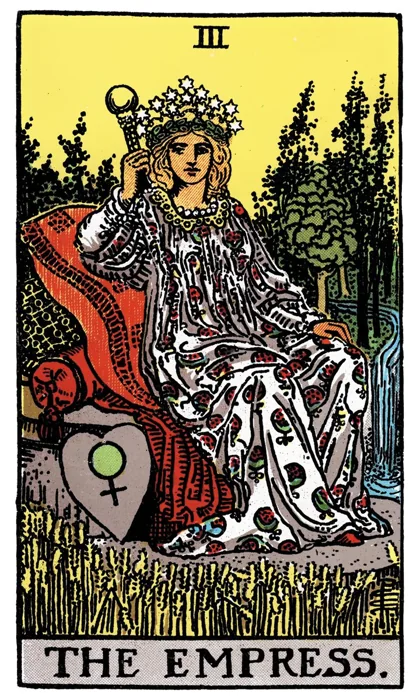
With The Empress
With the Empress, a small creative or affectionate impulse benefits from a welcoming environment. Give it time, materials, and a form of care it can actually use. The pairing supports development through attention rather than pressure for an immediate impressive result.

With Two of Cups
With the Two of Cups, a tentative offering may become a mutual exchange. Listen to the actual answer and allow the other person to bring something of their own. The connection grows through reciprocity, rather than through one person performing all the feeling for both.
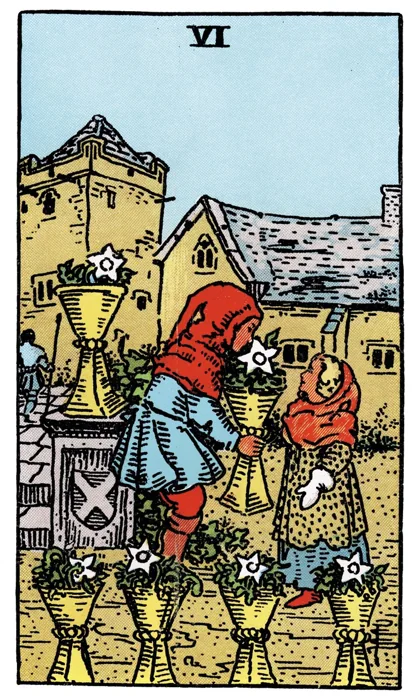
With Six of Cups
With the Six of Cups, play or an old interest may reopen a softer way of participating. Return with curiosity about who you are now. The pleasure can be familiar without requiring you to resume every old role or recreate the original setting exactly.

With King of Cups
With the King of Cups, a vulnerable beginning may need steadiness and proportion. Give the feeling room while choosing a responsible form for its expression. The combination can describe learning how to remain open without making every emotional shift someone else's emergency.

With Page of Swords
With the Page of Swords, feeling and inquiry can help each other. Ask a clear question about the impression that caught your attention. Curiosity becomes more useful when it can investigate without mocking tenderness or treating every intuition as established fact.
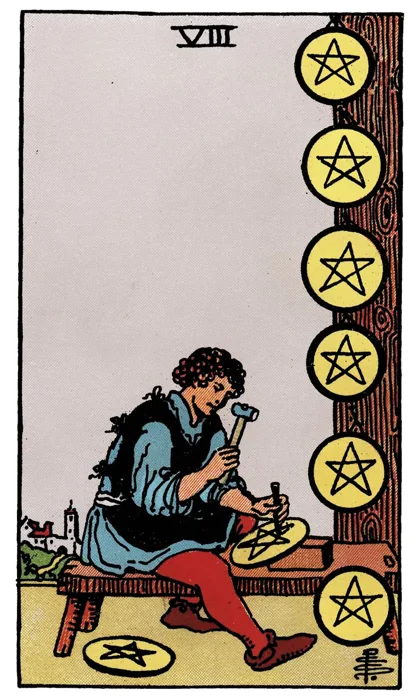
With Eight of Pentacles
With the Eight of Pentacles, the first spark needs a practice. Make small, repeated attempts and let feedback improve the work. The original sensitivity can remain present while skill gives it a more precise and communicable form.
A welcome for something still taking shape
An awkward note can carry more life than a flawless speech. Its writer has found a form, however provisional, for something that previously remained private. The value lies in the attempt to make contact. The note becomes an opening when it leaves the recipient room to answer as themselves.
The unexpected visitor interrupts a room that had been arranged for familiar purposes. Curiosity asks who has arrived before deciding what the interruption means. This is the Page's relationship with an unusual feeling or idea: a brief hospitality extended to something not yet understood.
A beginner's sketchbook contains attempts that would look strange beside finished work. Inside it, however, noticing is becoming a practice. The person learns what they see by trying to give it form. The pages matter because they let a developing perception exist before it has learned how to impress anyone.
Give one small impulse an honest form
Notice an affectionate, imaginative, or curious impulse you would usually dismiss. Choose a modest expression that fits its stage: a few lines, a question, a small invitation, or an unfinished sketch. Avoid making the gesture larger simply because expressing anything at all feels vulnerable.
Afterwards, attend to what actually happened. What became clearer through expression, and what remains unknown? Let the experience teach you without turning the response into a verdict on whether your feelings or imagination deserve a place in the world.
Artwork & interpretation
Waite describes the Page contemplating a fish in the cup and connects the image with the mind taking form, reflection, and messages. This original guide develops emotional learning, playful attention, and tentative expression, without adopting historical assumptions about gender, appearance, or a predicted event. A. E. Waite, The Pictorial Key to the Tarot: Page of Cups.
The symbolic associations and examples offer ways to read a situation. They do not establish another person’s thoughts or fix an outcome.
A feeling deserves room to speak before it is asked to become a promise.
Use the cards in a spread →