Cups · King
King of Cups
Feeling deeply without handing every feeling the reins
The King of Cups remains able to respond while the sea around him moves. Feeling is part of the situation he must handle responsibly. Steadiness can help other people trust him, although a composed appearance may also conceal what he has chosen not to express.
- Composure
- Compassion
- Responsibility
- Emotional authority
15 min read
In this guide
The feeling is real; the response can still be chosen
The King of Cups describes the capacity to remain in relationship with feeling without being governed by its immediate demand. You can be angry without punishing someone, or sad without expecting everyone else to fix it immediately. Strong affection, too, can be expressed with respect for another person's boundary. The feeling has a place, and so does judgement about what to do with it.
In a reading, the card can concern a steady person, a responsible use of influence, a difficult conversation handled with care, or the need to bring emotional depth into a decision. It may ask you to listen beyond the first reaction while remaining clear about the practical situation. Compassion and a definite answer can occupy the same sentence.
Emotional steadiness can be visible in someone who laughs openly or speaks about grief. They remain responsible for their conduct while allowing the feeling to be expressed. A quiet voice, by contrast, may reveal little about how a person is handling what they feel. Look at whether they acknowledge the emotion and respond responsibly to its effects on others when judging their composure.
As a court card, the King can represent an approach available to anyone, a role someone is occupying, or a person whose behaviour resembles the theme. It need not indicate a man, an older person, or a professional adviser. Its authority comes from the quality of response, not from demographic features or a title.
The card often becomes relevant when other people are looking to you for the emotional temperature of a situation. You may be able to slow an escalation, hear a difficult account, or give a clear answer without humiliating anyone. That influence carries responsibility. The room should not have to become dependent on your mood in order to function.
The King's limitation is that being the steady person can become an identity too valuable to disturb. You know how to make room for everyone else's feelings, but have little practice allowing your own needs to be visible. The card's fuller maturity includes receiving care and admitting limits, so that the people close to you know something of your experience as well as the support you provide.
The throne stands where the water is moving
The King sits on a stone throne surrounded by moving water, holding a cup in one hand and a short sceptre in the other. A vessel appears on one side of the scene and a leaping sea creature on the other. The setting is active. The figure's composure exists within movement rather than because movement has been removed.
Cup and sceptre offer a useful pairing of receptivity and authority. The King can receive experience and make a decision. In this reading, neither capacity needs to cancel the other. Listening does not mean agreeing to everything, and a firm limit does not have to be delivered without regard for its human effect.
The throne is substantial, but its position is strange: an ordered seat in an unstable setting. Symbolically, this can suggest a way of remaining grounded through habits, values, or responsibilities while emotional conditions change. It can also ask whether the person is so invested in remaining composed that contact with the surrounding life has become distant.
The cup is present without being lifted in a toast or extended as an invitation. The image feels less concerned with the first expression of feeling than with its place in an established way of responding. The King has to decide how the contents are carried through the day, including when the sea does something inconvenient.

The two objects can prompt a practical balance: hear what is happening, then choose a response you can stand behind. Care does not require abandoning judgement or concealing a necessary limit.
The water has not become still. Consider which values, boundaries, or ordinary practices help you remain responsive when the emotional atmosphere is changing around you.
Composure has an inner life
The King may feel a great deal while showing only the part that is useful in the moment. There can be a brief pause between the first impulse and the chosen response. Inside that pause, the person considers context, consequence, and what they actually want to preserve. The outward simplicity may rest on substantial inner work.
At its best, this is emotional confidence: the knowledge that a feeling can be strong without becoming the whole truth about a situation. Anger need not undo love, and disappointment can coexist with respect for the work. You can also be moved by someone's account while questioning parts of their interpretation. Complexity becomes tolerable enough to think within.
As a person, the King may be tactful, generous, perceptive, and reliable under pressure. People tell them things because they do not immediately turn the disclosure into a performance of their own reaction. Their presence can give another person room to hear themselves more clearly.
The difficulty is that the listener may become known only through what they can contain for others. Nobody asks what the King needs, partly because the King has become skilled at making that question seem unnecessary. Over time, steadiness can become loneliness. The relationship knows the person's capacity and very little of their unguarded experience.
The shadow can also be pride in being the reasonable one. You remain calm while quietly deciding that everyone else's emotion makes them less credible. This confuses a style of expression with the quality of an argument. Maturity includes hearing a valid need even when it arrives awkwardly, while still setting limits on harmful conduct.
A developed King can name an emotion without surrendering authority: that was painful, this is too much, I need time, or I cannot offer what you are asking. These statements make composure more trustworthy because it no longer depends on pretending that the speaker has no stake in the exchange.
Authority over your response is different from control over the room
The deeper theme is the relationship between emotional understanding and power. Knowing what moves people can support kindness, good leadership, and careful communication. It can also make pressure more subtle. The same perceptiveness that notices a vulnerability can choose either to protect it or to use it. The card asks how influence is being exercised.
A responsible emotional authority does not need everyone to adopt its preferred mood. People may be distressed, unconvinced, or disappointed, and the relationship can remain intact. The task is to make room for those responses while keeping behaviour and decisions accountable. Calm becomes restrictive when it is used to declare every inconvenient feeling unacceptable.
Compassion also has to include reality. You may understand why someone acted as they did and still recognise that the action cannot continue. An explanation can enlarge the account without removing the consequence. The King becomes useful where understanding and a boundary need to be held together rather than traded against each other.
There is a question of emotional ownership. You are responsible for how you respond, but you cannot guarantee that nobody will feel hurt, disappointed, or angry. Trying to manage every reaction can turn care into concealment, appeasement, or control. A more honest approach gives people the truth they need and respects their right to have a response.
The King's own humanity remains part of the ethical picture. A person who must always be infinitely patient may eventually have no honest way to acknowledge resentment or fatigue. Sustainable care includes limits, reciprocity, and places where the responsible person can be supported. Authority becomes more humane when it is allowed to remain a capacity rather than an entire identity.
Be dependable without becoming impossible to know
In a relationship, the King can describe affection expressed through steadiness: listening, remembering what matters, keeping a difficult conversation from becoming cruel, and remaining present after the first reaction. Such care may be less theatrical than pursuit, but it can make closeness feel dependable.
The card also asks whether steadiness is accompanied by disclosure. A partner who never escalates can still be emotionally difficult to reach if they speak only as an adviser or mediator. Intimacy needs some access to what the person wants, fears, enjoys, and finds painful. Being understood should not remain a service offered in only one direction.
During conflict, the King supports a response that distinguishes feeling, interpretation, and behaviour. You can recognise that someone is hurt without accepting every accusation, and acknowledge your own anger without making it a licence to punish. The conversation becomes more useful when each person can describe a particular experience and a particular need.
A caretaking pattern may need attention. A relationship can appear calm because one person is always making allowances and explaining feelings for everyone else. That responsibility may conceal a substantial inequality. Shared responsibility might mean taking turns, learning a clearer way to communicate, or accepting that one person cannot be endlessly available as the other's emotional interpreter.
The shadow is emotional expertise used to retain control. A person explains your feelings to you, speaks gently while dismissing your account, or makes disagreement look like evidence that you are less mature. Assess the pattern by whether your perspective can affect the conversation and whether your boundaries are respected. A calm presentation does not settle those questions.
For friendship and family, the King can model care with a definite edge. You can listen, offer what is genuinely available, and decline a role you cannot sustain. A limit stated clearly may protect affection better than repeated overextension followed by a withdrawal nobody understands.
Keep people in view while making a clear decision
At work, the King can describe leadership, negotiation, creative judgement, or a role requiring careful attention to people's experience. The person can hear a difficult account without immediately defending the system or making the conversation about their own discomfort. This gives problems a better chance to become understandable.
A steady leader communicates decisions in a way people can use. They explain the available information and what should happen next, acknowledging the difficulty people may face in carrying out the decision. Reassurance is most useful when it does not obscure uncertainty or replace information people need in order to plan.
In a team conflict, the King may help separate the immediate heat from the issue requiring action. Who needs to do what, which agreement was unclear, and what should change? This is different from asking everyone to calm down so the matter can disappear. Emotional tact should improve the quality of the decision.
Creative work benefits from the ability to remain close to feeling while choosing its form. You may draw on powerful material without putting every raw reaction directly into the finished piece. Revision becomes a way to communicate more precisely, not a betrayal of the original emotion.
The professional shadow is becoming the unofficial container for every difficulty. You are approached because you listen well, then expected to absorb tensions beyond your authority or available time. Clarify which support belongs to your role and what requires another process or person. Competence at care does not create unlimited capacity.
Another shadow is diplomacy that makes accountability disappear. Everyone leaves the conversation feeling understood, but the same harmful pattern continues because nobody has named a change. A mature King can pair a considerate manner with a definite expectation and return later to see whether the agreement has been carried out.
Make generosity something you can sustain
The King may bring attention to resources offered in care: time, hospitality, practical help, or money. Ask what you can give freely and continue to stand behind. An offer made to settle someone else's distress can become resentment if it exceeds your real capacity.
Shared practical decisions often carry feelings that need to be named separately. A discussion about spending may also concern trust, autonomy, recognition, or fear of becoming dependent. Hearing that emotional meaning can improve the conversation, while the actual terms still need to be clear.
At home, steadiness may be expressed through reliable routines and a climate in which difficulties can be discussed without humiliation. This does not require the household to be peaceful at every moment. It requires a way to return to practical cooperation after feelings have become strong.
The card cannot establish that a person is a trustworthy financial adviser or that a proposal is sound. Warmth and composure are qualities of presentation, not proof of expertise. Its reflective question is how emotion and responsibility are interacting in the exchange you are considering.
The person who steadies others also needs somewhere to put things down
Being able to remain composed does not mean the experience costs nothing. Listening carefully, containing an immediate reaction, and choosing a considerate response all use attention. Notice how much of this work is occurring and whether there is any place in your life where you are not expected to perform it.
A pause before responding can be useful when it has a clear purpose and an eventual return. You may need time to understand what you feel or decide what can be said constructively. The pause becomes less useful when it turns into indefinite silence that leaves the other person trying to interpret your absence.
The card does not diagnose suppression, exhaustion, or emotional health. Its practical invitation is to give your own experience a recognisable place: private reflection, an honest conversation, a boundary, or support appropriate to the situation. Care becomes more sustainable when the caregiver is included in the account.
Acknowledge the feeling and decide what the situation needs
Before responding to a charged situation, name what you feel and what you want to protect. These may point in different directions. You may want to discharge anger and also preserve a working relationship; you may want to comfort someone and also state a limit. Naming both helps you choose a response with a fuller account of its purpose.
Listen for the need or concern inside an imperfect expression, then be clear about what you can and cannot offer. A considerate answer need not be indefinite. Where appropriate, say when you can return to the conversation rather than leaving availability to be guessed.
The shadow is treating your ability to remain calm as authority over someone else's experience. A person can be upset and still have a valid point. Attend to the content and the pattern of behaviour, including your own, rather than allowing tone alone to decide who deserves to be heard.
Another shadow is understanding everyone so thoroughly that you never act on what the understanding reveals. Sympathy can become a way to postpone a necessary boundary. Choose the practical change that would make care more honest, even if it produces a feeling you cannot immediately soothe.
The steady surface may be carrying more than it can hold
Reversed, the King can describe emotional overwhelm, concealed resentment, withdrawal behind a composed surface, or influence used without sufficient care. These are different possibilities. Begin with the observable pattern rather than turning the card into a diagnosis or an accusation about someone's character.
A person may have been the stable one for so long that they no longer know how to state a need before it becomes an abrupt refusal. The reversal can invite earlier honesty: naming strain, asking for a change, or acknowledging that the usual level of availability cannot continue. A limit does not have to wait until composure fails.
Sometimes the problem is distance disguised as wisdom. Each feeling becomes a subject for analysis or another explanation, leaving little room to experience it together. The useful movement may be a simpler personal statement: this hurt, I care about this, or I do not know what I need yet. Explanation should not become the only permitted form of intimacy.
The card can also raise questions about emotional pressure. Someone's understanding of another person's needs may be used to keep them compliant, indebted, or uncertain of their own account. Look for whether disagreement and boundaries are allowed. The interpretation should follow actual conduct, not a conclusion drawn from the reversal alone.
A constructive reversal may involve relinquishing the role of permanent emotional authority. You ask for support, admit a mistake, or let someone else remain responsible for a feeling you usually rush to manage. This can make the relationship less smoothly controlled and more genuinely reciprocal.
How can depth and responsibility work together here?
These combinations explore emotional authority and its uses. They offer questions about behaviour and relationships, rather than identifying a person's hidden motives or psychological condition.

With The Emperor
With the Emperor, care needs a structure that people can understand. Pair considerate attention with clear responsibilities and boundaries. The combination becomes constructive when authority provides dependable conditions, rather than requiring others to trust the leader's mood or private judgement.
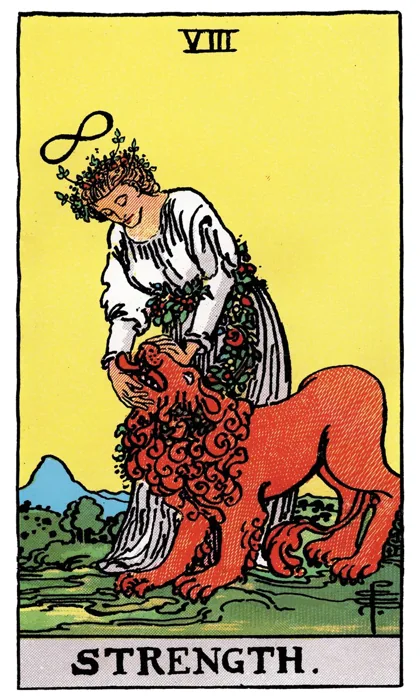
With Strength
With Strength, a powerful reaction can be met without either indulging or shaming it. Stay close enough to understand what is happening while choosing conduct that does not cause further harm. Patience becomes more credible when it includes your own limits.

With Justice
With Justice, compassion and accountability need to remain in the same conversation. Hear the circumstances, then consider the actual responsibilities and consequences. Understanding why something happened can deepen the response without making every outcome equally acceptable.

With Temperance
With Temperance, emotional steadiness benefits from an adjustable rhythm. Let care, rest, expression, and restraint find proportions that fit the situation. The aim is a workable response over time, rather than a perfect performance of calm in one difficult moment.

With Page of Cups
With the Page of Cups, a tender or awkward expression may need a steady reception. Give it room without immediately correcting its form. The exchange can also remind the responsible person that they are allowed to be inexperienced and vulnerable in some part of their own life.

With Queen of Cups
With the Queen of Cups, emotional understanding and responsible action can support each other. Listen carefully to the experience, then ask what response is actually needed. Sensitivity becomes more useful when it remains connected to boundaries, reciprocity, and the real circumstances.

With Queen of Swords
With the Queen of Swords, warmth and precision can make a difficult truth easier to use. State the particular issue without withdrawing care. The pairing asks for clarity that respects the person, and compassion that does not conceal the answer.
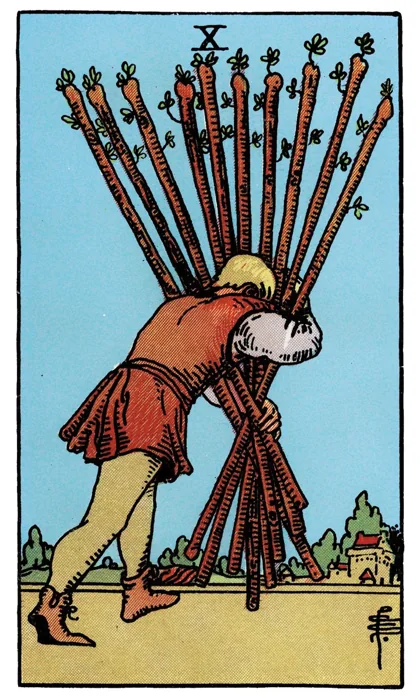
With Ten of Wands
With the Ten of Wands, being the dependable person may have become an excessive load. Identify which responsibilities are actually yours and which have accumulated through habit. Reducing the burden can preserve the quality of care better than continuing until there is no capacity left.
Steadiness in difficult company
The harbour master cannot make the sea calm. They study the conditions and communicate what travellers need to know, so that movement can happen with appropriate care. The image gives authority a practical purpose: providing a place from which people can respond to reality, rather than pretending that reality is under complete control.
The mediator listens for more than the loudest sentence. They help competing accounts become clear enough to address. Their value depends on fairness and an ability to name what cannot continue, rather than on producing a pleasant atmosphere at the expense of the actual issue.
The person who can hear bad news without making the messenger look after them offers an ordinary form of emotional strength. They may feel shaken, angry, or sad. What matters is that the first response leaves room for the information and the person bringing it. Their own feelings can receive care without taking over the entire exchange.
Make one caring limit or honest feeling visible
Choose a situation in which you are expected to remain steady. Name what you feel, what is actually your responsibility, and what you can offer without resentment. Then identify one sentence that would make the arrangement clearer: a limit, a request, an acknowledgement, or a definite next step.
Use that sentence at an appropriate moment and notice the response without trying to control every feeling it produces. The King of Cups becomes practical when emotional depth informs responsible conduct, and when the person offering steadiness remains fully included in the relationship.
Artwork & interpretation
Waite describes the sea-set throne, cup, sceptre, vessel, and sea creature, and associates the King with responsibility and creative intelligence. This original guide develops emotional steadiness, influence, boundaries, and reciprocal care, without using the card to diagnose character or infer concealed misconduct. A. E. Waite, The Pictorial Key to the Tarot: King of Cups.
The symbolic associations and examples offer ways to read a situation. They do not establish another person’s thoughts or fix an outcome.
Steadiness becomes care when it makes room for truth, including the feelings of the person being steady.
Use the cards in a spread →