Wands · Ten
Ten of Wands
The point where carrying everything becomes the problem
The Ten of Wands shows how responsibilities accumulate until they become difficult to carry. You may care about every promise you made and still find the total unmanageable. Even successful work can consume the life it was meant to support when too much of it falls to one person.
- Burden
- Responsibility
- Capacity
- Release
16 min read
In this guide
There are too many worthwhile things in the same pair of arms
Nothing in the load has to be absurd on its own. Necessary tasks sit alongside help you freely offered someone. Work for a project you wanted to pursue also has to fit into the day. The difficulty appears when all of them must be carried together by the same person. The Ten of Wands describes that accumulation: the sum has become heavier than the individual promises suggested.
The Ten of Wands concerns a load that has become difficult to carry. There may simply be too much work, especially near the end of a demanding undertaking. It may also be distributed badly, leaving one person to maintain an arrangement that has outgrown them. Examine how responsibility accumulates and whether you feel able to release something once it has become yours.
Success can be part of the story. As the project grows, people trust you with more work. Each welcome opportunity also adds an obligation to the schedule. What began as freedom becomes a schedule with no unclaimed space. The Ten asks whether the achievement is still serving its original purpose, or whether maintaining it has become the purpose of your life by default.
Sometimes a heavy load is temporary and freely chosen. The final stage of a move may require concentrated effort, as a period of caring for someone can. Check how definite the endpoint is and what support you can draw on until then. Recovery needs a place in the plan too. If the end keeps moving, reassess the commitment as it now exists.
The card should not turn overload into a personal failure of time management. You may have had little choice about accepting some responsibilities. Limited resources and difficulty finding help can leave few ways to reduce them. Start with the actual circumstances. A practical reading identifies where change is possible without pretending that every burden can be dropped through a more confident attitude.
As an outcome, the Ten invites a review of how the work will be sustained or concluded. Completing the task matters, but so does the condition in which you arrive. The useful next step may be delegation, a revised agreement, a smaller scope, an explicit ending, or the admission that the current arrangement cannot continue unchanged.
The destination is visible; the carrier can barely see it
A bent figure carries ten long staffs towards buildings in the distance. The rods spread upward in a broad fan while their lower ends crowd the space in front of the body. The person is moving, but the posture looks awkward. Effort is unmistakable; ease and visibility are not.
The bundle obscures much of the figure's forward view. This is a precise image of overload: the tasks that must be managed become the only things you can see. The larger purpose, the route, and possible help can disappear behind the work itself. You keep advancing because stopping to reassess feels like one more demand.
The figure holds the staffs together without any visible binding or cart to help carry them. That detail invites you to consider the method being used. In your own situation, equipment might reduce a repeated effort, or a simpler process could remove unnecessary work. Sharing responsibility is another possibility. Examine the arrangement before concluding that the person carrying it only needs to become stronger.
The buildings ahead suggest a destination, but the image does not show the distance still to travel or what will happen on arrival. Avoid promising yourself that relief is just one final push away unless the circumstances support it. A finish line becomes useful when it is defined clearly enough to change what happens afterwards.
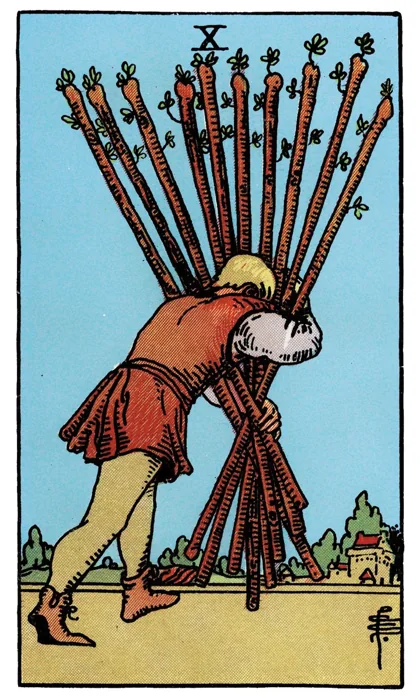
The posture shows how a load can begin to shape the person carrying it. Over time, a demanding arrangement may feel normal simply because you have learned to function inside it. Familiarity does not establish that the arrangement is sustainable.
The buildings keep the idea of arrival visible to the viewer. Ask what completion would actually require and which responsibilities would end there. A destination that generates another identical load may need a different plan for unloading.
The person who can always be relied on
The Ten of Wands can feel like a mind full of unfinished obligations. Even when you stop working, the next task remains present: the message to answer, the detail to remember, the problem no one else has noticed. The load includes anticipating and coordinating, not only the visible action someone might count as work.
Reliability can become part of identity. People rely on you to remember what needs doing and see it through, especially when someone else's plan has fallen apart. This role may contain real pride and generosity. It can also make a limit feel like a moral failure, as though needing help would invalidate every occasion on which your competence has mattered.
There may be resentment that you immediately judge yourself for feeling. The work matters, the people matter, and still you are tired of being its automatic owner. Resentment can be information about an arrangement before it becomes a verdict on the relationship. Ask which expectation needs to be made visible and which responsibility needs a different home.
Sometimes doing everything yourself protects a preferred way of working. Letting another person take over requires time for them to learn, and their result may be adequate without matching yours exactly. Examine whether this applies to a particular responsibility. It is one possible source of overwork, not an explanation for everyone who lacks support. Some people have asked clearly for help and still have nobody available to provide it.
As a description of another person, the Ten may suggest someone overextended or carrying responsibilities you cannot fully see. A useful response is specific: offer a defined task, clarify an expectation, or ask what would genuinely reduce the load. General admiration for their strength can leave the actual burden precisely where it was.
Responsibility needs a boundary to remain meaningful
Responsibility connects action with consequence. It becomes distorted when every consequence is treated as yours to prevent, absorb, or repair. The Ten of Wands asks where your actual obligations end and where an unlimited sense of duty has begun. Without that distinction, care can expand until it occupies every available part of life.
A promise has a context. You agreed to a task under certain conditions, with a certain understanding of its scope. When those conditions change substantially, reviewing the agreement is not necessarily a betrayal. It may be the most responsible way to preserve what still matters. Silent endurance can conceal an arrangement that neither side has consciously chosen.
The card also questions the moral glamour of being overburdened. Constant effort can look admirable and feel purposeful, especially when a culture rewards visible busyness. Yet the point of work is rarely to remain permanently exhausted. A useful contribution should be judged partly by what it makes possible, including the possibility of a life for the person making it.
Letting go may involve grief. A commitment can represent an earlier hope, a relationship, or a version of yourself you wanted to become. Reducing the load is therefore not always a simple scheduling exercise. You may need to acknowledge that something mattered before deciding that it cannot remain active in its current form.
The deeper invitation is to return responsibility to proportion. Consider which obligations are yours and how much of the shared work others could take on. Even after that division is clear, some outcomes will remain beyond what greater effort can control. This is an ongoing judgement, not a permanent formula. The aim is a relationship with duty that leaves room for choice, affection, and ordinary human limits.
Make the full load visible before deciding what else fits
At work, the Ten of Wands can concern a successful project whose maintenance has outgrown the support available. Start by recording everything it takes to keep the work going. Include the time spent coordinating with others and chasing unanswered requests, along with small recurring tasks that formal plans overlook. A discussion about capacity becomes more useful once the full load is visible.
Distinguish essential work from inherited habit. Some tasks continue because no one has asked whether they still serve a purpose. Others exist to compensate for an unresolved process problem. Removing unnecessary work can be more effective than completing it faster. Ask what would happen if a task stopped, and verify the answer rather than assuming catastrophe.
Delegation needs ownership, authority, and enough context to act. Passing a task while continuing to remember every detail, approve every step, and repair every result may leave the mental load unchanged. Where possible, agree on the outcome and boundaries, then allow the other person to use their own method. Shared work requires room for actual responsibility to move.
If you lack authority to reduce the load, make trade-offs explicit to the person who sets priorities. Present what is currently required and ask which task should move if another is added. This does not guarantee a fair response, but it replaces the fiction of unlimited capacity with a concrete decision about time, quality, or scope.
For self-employed or creative work, success may have produced a collection of roles you did not originally seek. You are making the work, marketing it, answering enquiries, managing accounts, and maintaining every system. Consider which parts can be simplified, shared, or limited. Growth is useful only if the resulting work remains a life you are willing to inhabit.
A final push can be appropriate when its terms are clear. Define the finish, limit additions, arrange help where possible, and decide what happens afterwards. Without that final step, completion can become merely the transfer of one burden into another. The Ten asks not only how the work gets done, but how the carrier gets to put it down.
Care should not require one person to hold the whole household in mind
In relationships, the Ten of Wands can describe unequal practical responsibility, a demanding season, or a bond maintained through one person's continual effort. The load may include remembering dates, anticipating needs, arranging contact, managing conflict, and keeping shared life functioning. These contributions matter even when they do not appear as a neat list of completed tasks.
If one person says they are happy to help when asked, examine who remains responsible for noticing and organising the work. Assistance can be valuable while still leaving ownership unchanged. A more balanced arrangement may require each person to take charge of a whole area, including planning and follow-through, rather than waiting for instructions.
Caring for someone through a difficult period can be meaningful and tiring at once. You do not have to choose between love and an honest account of strain. Look for practical support, realistic expectations, and small forms of relief where they are available. The difficulty of obtaining help should not be translated into a personal obligation to need none.
The card may also describe carrying the emotional future of a relationship alone. Difficult conversations happen only when you begin them. Once you have explained a problem, it also falls to you to work out how the relationship might recover. Ask whether the other person is willing to participate in the work of the connection. A relationship cannot become mutual solely through one person's increasingly skilful effort to make it so.
For someone single, obligations may leave little room for meeting or knowing another person. That is a practical fact, not evidence that you are unlovable or insufficiently open. Consider whether any space can be made and what kind of connection fits your current life. You do not need to add dating as another performance you are failing to maintain.
With family and friends, generosity can become expected through repetition. A role you once accepted freely may no longer fit your circumstances. Communicate the change with as much clarity as the relationship allows. You can care about the people affected while acknowledging that the old arrangement depends on more than you can continue to give.
Include the ongoing effort when you count the cost
In material questions, the Ten can draw attention to recurring obligations, the expense of maintaining an achievement, or responsibility for more than your resources comfortably support. Put the full pattern in view: payments, upkeep, time, and practical commitments. A possession or arrangement can be affordable at the point of acquisition while costly to sustain.
If you support others financially, clarify what is possible and what has become assumed. The conversation may be emotionally difficult, particularly where needs are real. A limit does not make those needs unimportant. It makes the available resources visible, so that the arrangement can be discussed without depending on one person's silent overextension.
A simpler home or routine may reduce demands, but avoid treating simplification as effortless or universally available. Moving, replacing equipment, or arranging support can itself require resources. Identify a change within reach: one recurring cost reviewed, one maintenance task shared, or one unused obligation ended. Small reductions can matter when the load is already crowded.
The card is not a forecast of financial loss. It is a prompt to examine commitments and their carrying costs. Decisions about borrowing, contracts, or major expenses need the actual terms and figures. The useful symbolic question is whether the proposed arrangement gives you something valuable or mainly adds another responsibility to a life already at capacity.
A tired person may need less work, not a better attitude towards it
The Ten makes the cost of sustained effort difficult to ignore. You may still complete tasks while having little attention left for pleasure, conversation, or decisions that are not urgent. This narrowing matters. A life can continue functioning externally while becoming increasingly difficult to inhabit from within.
Look for a reduction in demand alongside any attempt to recover. Rest is harder to receive when every pause creates a larger pile of unattended work. Sharing a task, extending a timeline, or lowering a nonessential standard may make care more possible than adding another personal routine to an already full schedule.
The card cannot diagnose exhaustion, injury, or any other condition. Attend to actual symptoms and needs rather than using the image as an explanation for everything you feel. As a practical reflection, it asks whether your environment permits human limits or repeatedly expects you to compensate for an arrangement that does not contain them.
Sort the bundle before lifting it again
Make the load visible in enough detail to distinguish its parts. Which responsibilities are essential, chosen, shared, temporary, inherited, or no longer useful? These categories may overlap, but naming them can reveal options. A single undifferentiated burden feels impossible to change; individual commitments can sometimes be renegotiated, concluded, or carried differently.
Choose one meaningful reduction rather than attempting to redesign the whole life while already tired. Return a task to its owner, simplify a process, ask for a specific form of help, or stop an obligation that no longer serves its purpose. The best first change is often the one that creates capacity for the next decision.
The shadow is making burden a proof of goodness. You feel valuable because you are needed, then resent the needs that leave no room for you. A more honest arrangement may require tolerating disappointment, accepting help imperfectly delivered, or allowing others to experience consequences you have repeatedly prevented. These changes can be uncomfortable without being unkind.
Another shadow is dropping everything abruptly because no smaller limit has been permitted. Where possible, act before that point: communicate capacity, define an ending, and transfer responsibilities clearly. If choices are constrained, focus on the relief actually available. The card's advice should reduce the burden of living, not add guilt for failing to unload it elegantly.
The load is shifting; make sure it is really leaving your hands
Reversed, the Ten of Wands can describe release, delegation, a commitment ending, or the recognition that an arrangement has become untenable. It may be a welcome reduction or an uncomfortable reckoning. The useful question is what is actually changing. Relief becomes real when tasks, expectations, or responsibility move, not only when you decide that you ought to feel less burdened.
Sometimes the work has been delegated in name while you continue to supervise every detail. Ask whether the other person has enough authority, information, and space to own the task. You may need to tolerate a different method or a learning period. At the same time, genuine unreliability should be addressed rather than dismissed as your inability to let go.
The reversal can also describe a dropped responsibility whose consequences still need attention. Avoid turning release into a slogan that ignores people affected by the change. Where possible, communicate, hand over, and distinguish what you are ending from what remains agreed. A responsible ending can reduce future confusion as well as present strain.
Another expression is hidden overload. You appear to be managing, minimise the demands, or continue promising more because admitting the limit feels dangerous. Make the reality visible to someone able to help where you can. The burden may need a practical response from the surrounding arrangement, rather than another private effort to become more efficient.
A constructive reversal can be the discovery that some responsibilities were never yours in the first place. You stop managing another adult's feelings, carrying an obsolete role, or maintaining a standard no one actually needs. The resulting space may initially feel unfamiliar. Let it become part of life before filling it with another duty that makes you feel indispensable.
Which part of the burden can change?
These pairings explore the origins, distribution, and possible release of responsibility. They do not decide which obligations you can safely leave; the actual people, commitments, and resources remain essential to that judgement.
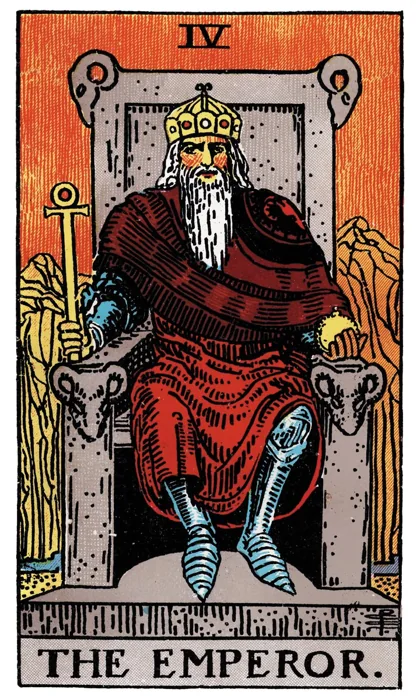
With The Emperor
With the Emperor, authority and responsibility need to match. If you are accountable for an outcome, clarify whether you have the resources and decision-making power to deliver it. A structure that assigns duty without control can create a burden that personal effort alone cannot resolve.
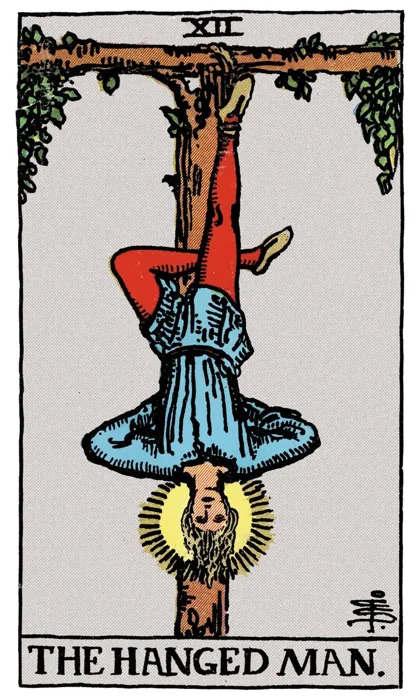
With The Hanged Man
With the Hanged Man, a pause may reveal a different way to carry or conclude the work. Step back from the assumption that more effort is the only available response. The useful change may involve scope, perspective, or an obligation that no longer needs to continue.
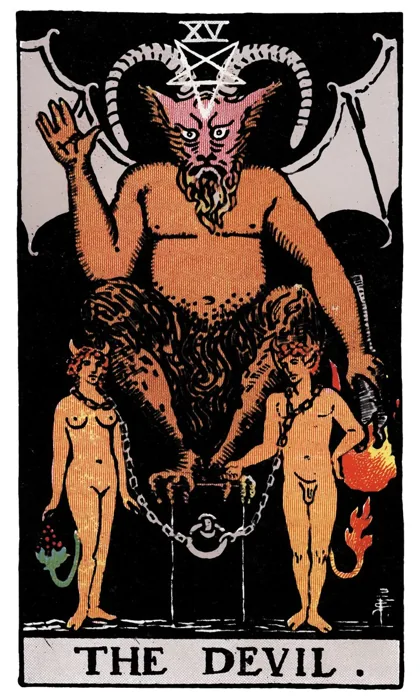
With The Devil
With the Devil, examine what keeps an exhausting commitment in place. Money, status, fear, dependency, or habit may be involved in different ways. Name the actual constraints and available choices rather than treating either total freedom or total helplessness as an established fact.
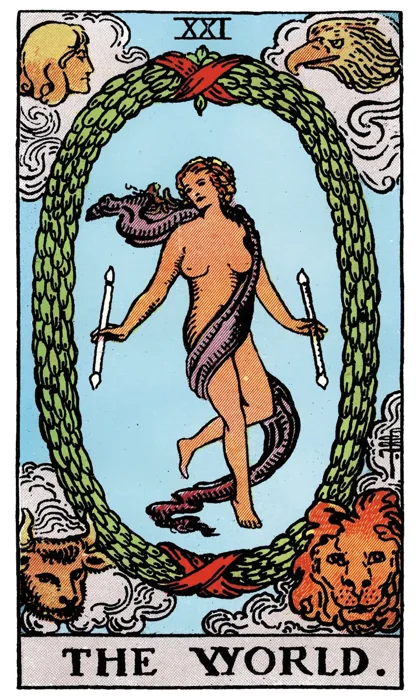
With The World
With the World, a chapter may be ready for a defined completion and handover. Identify what genuinely remains, finish the essentials, and establish which responsibilities end. The achievement becomes more complete when the person who carried it is allowed to move into a life afterwards.
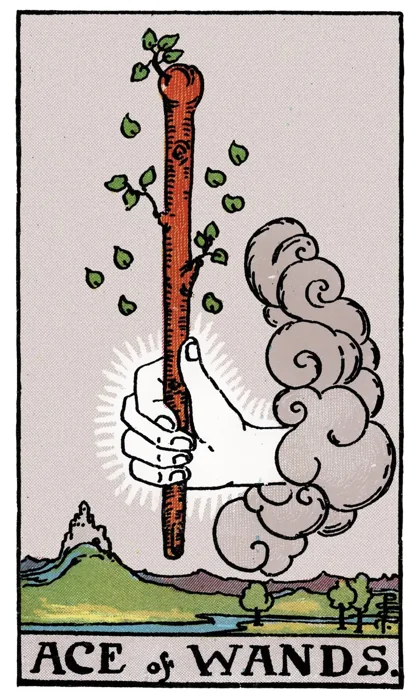
With Ace of Wands
With the Ace of Wands, new interest appears inside a crowded life. Make room before making promises. The spark may be valuable precisely because it reminds you what you want, but it still needs a realistic place among the responsibilities already present.
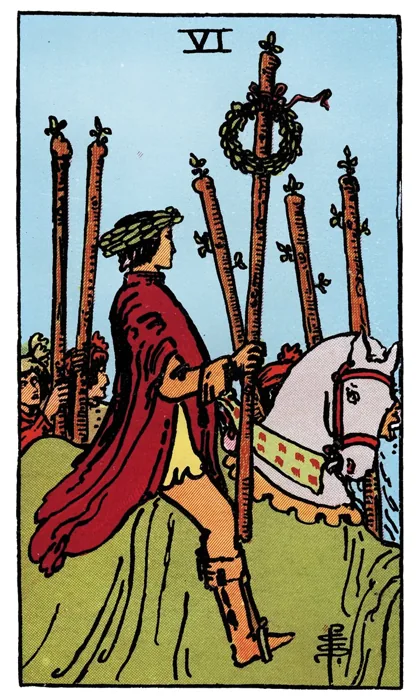
With Six of Wands
With the Six of Wands, recognition may be bringing extra demands. Accept the achievement while reviewing the terms of the next role. Praise should not become a substitute for support, resources, fair credit, or the ability to decline work beyond your capacity.
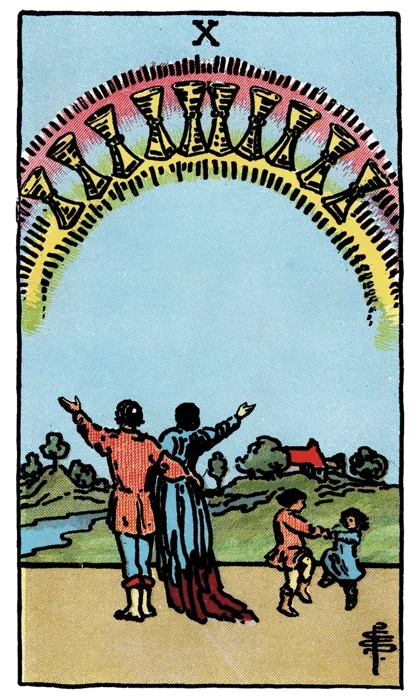
With Ten of Cups
With the Ten of Cups, the effort of sustaining a happy shared life may need a fairer distribution. Look behind the picture of harmony to the planning, care, and maintenance that support it. Shared wellbeing is stronger when its costs are also acknowledged and shared.
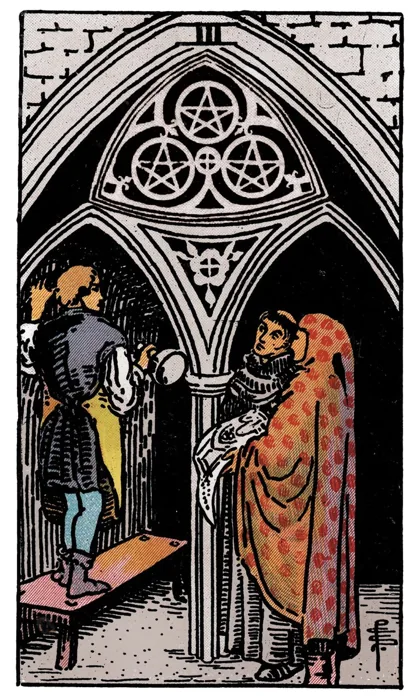
With Three of Pentacles
With the Three of Pentacles, look for work that can be owned by someone with the relevant skill. Agree on the outcome and provide a usable handover. Sharing the work brings relief when each person can carry their part without requiring one central person to keep directing every action.
People carrying work that has grown beyond their capacity
The porter carrying an awkward bundle offers the most direct image. Strength matters, but the method and destination matter too. Another pair of hands, a cart, a binding, or a shorter route could change the task. The image resists the assumption that the only possible improvement is a stronger carrier.
The keeper of the household gives the card a less visible form. They hold schedules, supplies, relationships, and future needs in mind, often while others see only isolated actions. The load becomes easier to share when this coordinating work is named. Care is not less real because its successful performance prevents a problem from becoming visible.
The successful founder offers another echo. They created something because it promised freedom or meaningful work, then became responsible for every process required to keep it alive. The next stage of maturity may be building a form that can support both the undertaking and its maker, rather than asking the maker to remain its permanent source of emergency energy.
Put one responsibility down in a way that lasts
Write down the responsibilities taking up your attention. Count the effort of remembering tasks and checking that they happened, as well as doing them. Select something you can reduce or genuinely share. Agree on who will own it and what counts as sufficient work. Pass on the necessary information, making clear when your part in that responsibility ends.
Protect some of the time or attention the change frees up. You do not need to fill it immediately with another obligation. Notice what you can now do outside the work you have been carrying. A more manageable responsibility should leave room for the person meeting it, including parts of life that produce no additional task.
Artwork & interpretation
Waite describes the burdened carrier and explicitly connects the card with the weight that can accompany success as well as difficulty. This original guide develops questions of capacity, shared responsibility, maintenance, practical limits, and meaningful release. A. E. Waite, The Pictorial Key to the Tarot: Ten of Wands.
The symbolic associations and examples offer ways to read a situation. They do not establish another person’s thoughts or fix an outcome.
Being able to carry something does not settle whether you should carry it alone, indefinitely, or at all.
Use the cards in a spread →