Wands · Nine
Nine of Wands
Still standing, and deciding what deserves the strength you have left
The Nine of Wands recognises that continuing has already cost you something. Experience has made you cautious about what comes next. That caution may protect work you still value. It also needs to leave room to recover, so that being prepared does not become a state of permanent vigilance.
- Persistence
- Caution
- Boundaries
- Experience
16 min read
In this guide
You know more about the cost now
The work is not new anymore. Delays and mistakes have shown you how much time the commitment requires, including work you did not anticipate at the start. Now another demand appears, and your first response is not excitement but a careful assessment of what remains. The Nine of Wands describes this experienced persistence: you are still present, but you no longer mistake willingness for unlimited capacity.
The Nine concerns continuing after difficulty has made you more cautious. Experience can strengthen your boundaries while leaving you watchful about what might happen next. It can acknowledge a real achievement in simply having stayed with something demanding. Yet acknowledgement should not become an automatic instruction to keep going. The situation still needs to be judged on its present terms.
There is often a history behind the current hesitation. A previous disappointment makes a new promise harder to trust. A task that was described as nearly finished has repeatedly expanded. Your caution may contain useful knowledge about the pattern. The question is which part of that knowledge applies now and what evidence would justify updating it.
The Nine can describe the later stages of a project, but it does not guarantee that only one final effort remains. That promise can be tempting when you are tired. Look for an actual finish line: a defined deliverable, date, agreement, or condition. Persistence becomes easier to evaluate when the endpoint is something more concrete than another assurance to hold on.
In a boundary question, the card may support protecting what has been built. You do not need to reopen a settled limit merely because someone asks again. At the same time, a boundary works best when it is specific. Defending everything with equal intensity can leave too little attention for the things that genuinely require protection.
In an outcome position, the Nine raises the question of how to continue sustainably. A commitment may become manageable with help or a narrower scope. You may need a pause to decide what conditions would make the next stage worthwhile. Your existing strength is part of that decision, along with the cost of using it. Some responsibilities may be ready to set down.
An injured figure standing watch beside the staffs
A figure with a bandage around the head stands in front of eight upright staffs, holding a ninth close to the body. Their face turns to one side. The feet are planted, the grip is firm, and the posture is watchful. The scene communicates that something has already happened and that the person is preparing for what may happen next.
The bandage makes the cost visible without explaining its cause. We should not invent a precise story of injury or conflict from it. As a symbol, it is enough to recognise experience that has left a mark. The person does not meet the present with the innocence of someone who has never had reason to be careful.
The row of staffs forms a kind of palisade, with space between the rods. It can be read as protection, accumulated effort, or a boundary that the figure is responsible for watching. The same structure might support them or keep them stationed in one place. Its meaning depends on what is being guarded and whether the watch can ever end.
No approaching opponent is visible. This absence matters. The image shows readiness, not proof of an external threat. A practical reading should keep that distinction intact: the feeling of needing to defend may be understandable, but the current situation still deserves observation before the past supplies the whole interpretation.
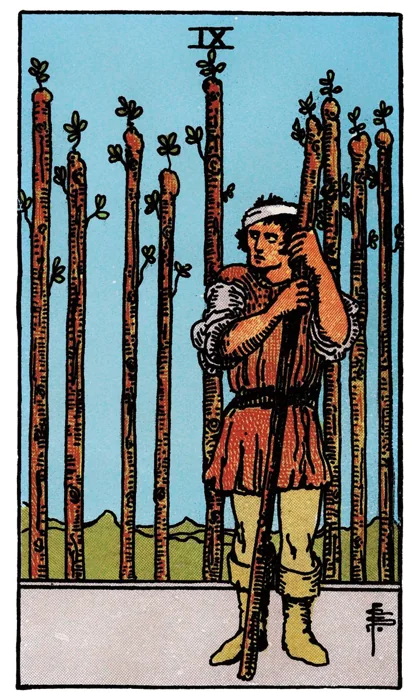
The bandage acknowledges a cost already incurred. It can prompt respect for what you have been through without turning the image into a diagnosis or a prediction. The next decision should include that history while still examining the present.
The held staff and the row behind it suggest a defended position. Ask what the boundary protects, what it costs to maintain, and whether someone else can share the responsibility. A useful defence should serve a life beyond the watch itself.
How experience can make reassurance harder to accept
The Nine of Wands often feels like resolve mixed with weariness. You know you can manage a great deal because you already have. That knowledge can be reassuring, but it can also become a trap: every new difficulty is assigned to you on the assumption that you will find a way. Capability needs a boundary if it is to remain available.
You may be alert to inconsistencies that others overlook. Experience has taught you which promises tend to expand, which conversations repeat, or which early signs deserve attention. This discernment is valuable when it stays connected to observable behaviour. It becomes less useful when every unfamiliar situation is treated as a disguised repetition of the old one.
You may find it difficult to relax after conditions improve. Trusting too quickly can feel like risking the same mistake again. Give yourself time to observe what happens now. Someone repeatedly keeping an agreement can provide evidence you can use; seeing a responsibility properly shared may do the same. Let confidence change in response to those experiences at a manageable pace.
There may also be pride in being the person who endures. You have survived what others might not understand, and surrendering the role of the strong one can feel like losing the meaning of that effort. Consider whether strength could now include receiving help, changing the arrangement, or choosing a life that requires less constant proof of resilience.
As a description of another person, the Nine may suggest guardedness, experience, or a need for clearer conditions before committing. Do not assume that reserve conceals hostility. Someone may simply be careful about what they can offer. Respectful consistency is more informative than trying to persuade them into immediate openness.
The past should advise the present, not occupy it completely
Experience helps you recognise a familiar problem early. It can also lead you to expect the old pattern before enough evidence is available. The Nine of Wands asks you to examine how well the earlier lesson fits this situation. You can retain what it taught you while allowing new information to show where the circumstances differ.
A useful lesson identifies the condition that would help next time, such as a written agreement or support for a demanding workload. It can also identify behaviour that calls for stepping back. When the lesson becomes a rule about everyone being untrustworthy, or every commitment ending badly, it stops distinguishing between situations. Even rest can begin to seem dangerous. Specificity preserves protection while leaving more of the world available to you.
The card also asks what endurance is for. Persistence is meaningful when it serves a value, relationship, or undertaking you still choose. It becomes hollow when continuing is the only acceptable proof that the previous effort mattered. Time already spent cannot decide the future by itself. The remaining cost and possible value deserve their own assessment.
Boundaries can free attention. A clear limit means you do not have to reconsider the same demand every time it appears. But if maintaining the boundary consumes all your energy, the wider arrangement may need attention. A fence is useful partly because it allows life to happen behind it, not because it provides an endless occupation of standing watch.
The deeper movement of the Nine is towards informed choice. You have learned that effort has consequences and that not every invitation deserves equal access. Now the challenge is to use that knowledge in the service of a livable future. You can honour the person who got through the difficulty without requiring them to remain permanently prepared for its return.
Do not accept another final push without defining the finish
At work, the Nine of Wands can describe a demanding project in its later stages, a team worn down by repeated changes, or a person protecting the quality of something they have built. The first practical task is to define what remains. List the actual deliverables and distinguish them from additions that have quietly attached themselves to the original agreement.
Repeated last pushes can destroy confidence in a finish line. If the scope has changed, name the change and reconsider time, resources, or priority. Asking people to draw on commitment while leaving the endpoint vague turns dedication into a resource that can be consumed without limit. A credible plan needs an observable conclusion.
Experience may make you the person who notices risks early. Present those concerns specifically: what happened before, what resembles it now, and what adjustment would help. This makes caution useful to others. A general warning that everything will go wrong may be understandable after a difficult history, but it gives the team little practical guidance.
If you are returning to a task after a setback, reduce the first stage to something testable. You do not have to rebuild total confidence before participating. Establish clear conditions, use what you learned, and watch how the new arrangement behaves. Trust in the process can grow through evidence rather than through a demand to feel optimistic.
In creative work, the Nine can concern staying with a project after the initial excitement has passed. Revision may take longer than you expected, and administrative work can occupy time you would prefer to spend making something. Ask how each remaining task serves the piece. A clear reason for continuing helps you judge the effort more usefully than assuming exhaustion means you must be near the end.
The professional shadow is becoming indispensable through permanent vigilance. You check everything because others have missed things before, and the organisation never develops another way to function. Where possible, turn personal watchfulness into shared processes, documentation, or clear ownership. Your knowledge becomes more valuable when it can support the work without requiring your uninterrupted presence.
Let trust grow through what is actually repeated
In relationships, the Nine of Wands can concern remaining cautious after disappointment. You may need a clearer boundary to stay engaged during a difficult period. Whether the other person is trustworthy cannot be established by drawing the card. Look at how they have kept your agreements over time and what happens when you tell them that something is beyond your limit.
If trust has been damaged, reassurance may be less persuasive than consistent action. Discuss what would make the arrangement more workable and what responsibility each person is taking. A repair cannot depend entirely on the hurt person becoming less guarded. The conditions that created the difficulty need attention as well.
For someone entering a new connection, the card can invite a pace that allows observation. Warmth can coexist with privacy while you decide how much to disclose. Showing interest need not involve immediate promises, and caution is fairer to both people when it does not rely on hidden tests. Clear boundaries give both people a fairer chance to discover whether the connection is suitable.
In an established relationship, endurance may be valuable, but the fact that you have stayed through much does not answer every question about staying now. Examine the present pattern. Is there shared effort, change, and room for your needs? Or does the language of loyalty repeatedly ask one person to absorb the same cost?
The card can also concern defending the relationship from excessive outside demands. Families, work, or other commitments may need clearer limits so that the connection has room to exist. Agree on those limits together. Otherwise one person may become the permanent gatekeeper while the other enjoys the protection without sharing the work of maintaining it.
Friendship and family bonds sometimes require a smaller, more sustainable level of contact. You can care about someone while limiting the situations in which you repeatedly become depleted. A boundary is more useful when it states what you can do, what you cannot, and how you will respond if the same pattern continues.
Protect the reserve without making fear the whole plan
In material matters, the Nine may concern caution learned through an expensive experience. Consider how to apply that knowledge to the arrangements you now make. Understanding recurring costs can help you protect a reserve, and clearer records may make commitments easier to manage. The lesson has a practical use when it changes what you do instead of leaving you with more to worry about.
A difficult financial history can make every expense feel like the beginning of another crisis. The card cannot tell you whether that fear matches current circumstances. Put the actual figures in view and distinguish essential protection from restrictions that no longer serve a clear purpose. A reserve exists to support a life, not only to remain untouched.
For a shared expense or commitment, clarify what each person is responsible for and what happens if circumstances change. Prior disappointment may justify firmer terms. It does not require guessing at hidden motives. A transparent agreement allows trust to rest on something more durable than a promise that this time will be different.
At home, maintenance and security can become a continuing burden if only one person notices what needs attention. Make that work visible and share it where possible. The goal is a place that supports you, rather than a place whose stability depends on your ability to remain watchful every hour.
Rest should not have to wait for collapse
The Nine acknowledges that you may still be functioning while having little spare capacity. Because you can continue, others may assume that you are comfortable continuing. State your limits before they become visible only through a missed task or an abrupt withdrawal. Capacity is easier to work with when it is communicated rather than repeatedly tested to its edge.
Include pauses in the plan while the work is underway. Shorter sessions may let you continue more comfortably, or you may need someone else to share the responsibility. Sometimes the scope itself needs reducing. These changes can protect a commitment you value. Continuing does not have to depend on repeatedly finding enough willpower to work beyond exhaustion.
The bandaged figure is not a medical assessment and cannot establish what you can safely endure. Attend to actual needs and seek appropriate help when something requires it. As a reflective image, the card asks whether your arrangements allow care and recovery, or whether every sign of strain is being converted into another reason to prove your strength.
Choose what to protect and who can share the watch
Name the commitment you still want to serve and the cost you are no longer willing to absorb. This distinction can turn a vague sense of being overwhelmed into a workable boundary. You may remain committed to the project while declining added scope, or care about a relationship while refusing a repeated pattern.
Use experience to design conditions. Ask for the agreement in writing, establish a review point, limit the duration, or identify someone who can help. These are practical ways to respect what you have learned. You do not need to choose between blind trust and complete refusal when a clearer arrangement is possible.
The shadow is identifying so strongly with endurance that relief feels like a loss of character. You keep defending a position because you are the person who never gives up. Ask whether continuing still serves your values. Sometimes the most faithful response to what you have been through is to stop reproducing its demands.
Another shadow is expecting the next person or situation to repay the debts of the previous one. Let the present provide its own evidence. This does not require dropping a necessary boundary. It means applying the boundary clearly, without making someone pass an invisible test whose rules belong to a history they do not know.
The guard may need relief, or a different assignment
Reversed, the Nine of Wands can concern reaching the limit of what you can sustain under current conditions. Constant defensiveness may have become exhausting, or the resolve that kept you going may be depleted. Consider what would need to change for you to continue. Support or a revised agreement might help; you may also need to pause or end the commitment. Perseverance is one possible choice among others.
Sometimes the boundary has become difficult to maintain because it is too broad or too vague. You are trying to prevent every disappointment rather than address a specific pattern. Refine the limit. What behaviour or demand actually requires a response, and what can be allowed to remain uncertain without constant monitoring?
The reversal can also indicate a boundary that has repeatedly been ignored. In that case, explaining it with greater eloquence may not be the missing step. Consider what action is within your control and what support would help you take it. The useful focus is on your available choices, not on persuading the card to reveal another person's intentions.
A constructive reversal can be the gradual release of an old defensive position. Conditions have changed, responsibility is shared, or you no longer need to organise your whole life around preventing a familiar difficulty. Let the change become real through repeated experience. You do not have to prove recovery by becoming immediately unguarded.
There may also be a wise decision to stop before completion. If the remaining cost outweighs the value, or the purpose no longer belongs to you, departure can be considered carefully. Earlier effort is not erased by a changed decision. It becomes part of the knowledge that helps you choose what deserves your strength next.
What supports persistence, and what changes its terms?
These pairings explore endurance, caution, and boundaries. They do not establish that a threat is present or determine how much difficulty a person should tolerate.
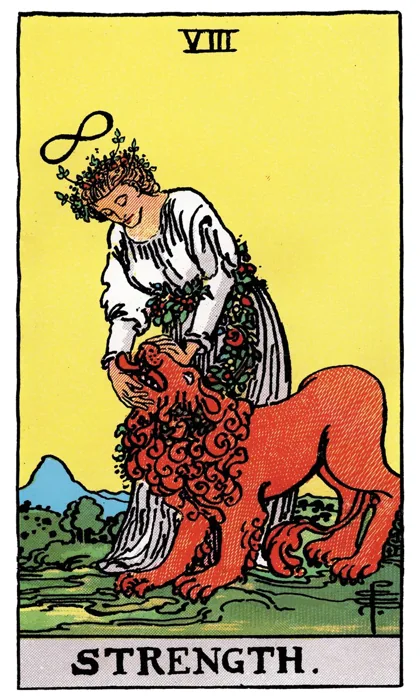
With Strength
With Strength, persistence benefits from restraint and self-respect. You may be able to continue more effectively by reducing unnecessary struggle. Direct your effort towards the chosen purpose and allow care, patience, and help to be part of what strength looks like.
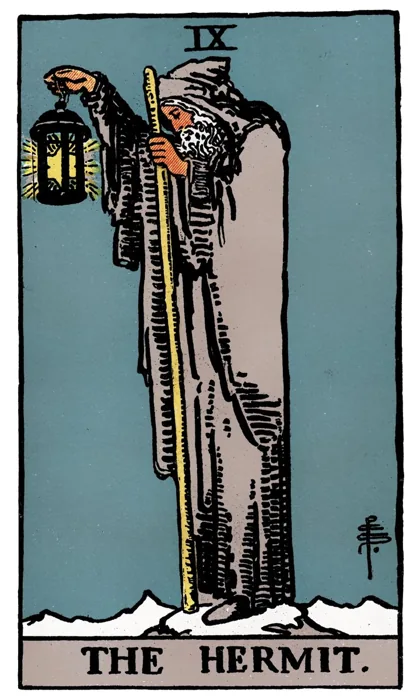
With The Hermit
With the Hermit, step back long enough to distinguish useful caution from accumulated noise. A period of reflection can clarify which commitments still matter. Solitude is helpful when it restores judgement, rather than becoming a permanent withdrawal from every possible source of support.

With The Star
With the Star, hope may return gradually after a demanding period. Let small evidence of improvement register without asking it to guarantee the future. You can remain discerning while becoming more available to support, possibility, and experiences that differ from the old pattern.
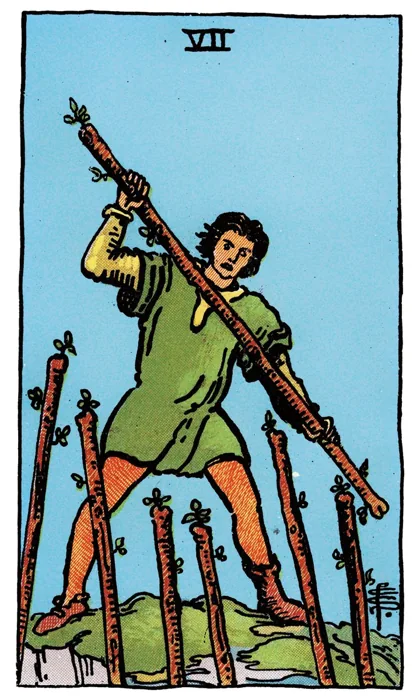
With Seven of Wands
With the Seven of Wands, a boundary may need both clarity and a sustainable way to maintain it. Identify the specific position you are defending. Repeated challenges do not automatically require repeated explanations, especially when the terms have already been made clear.
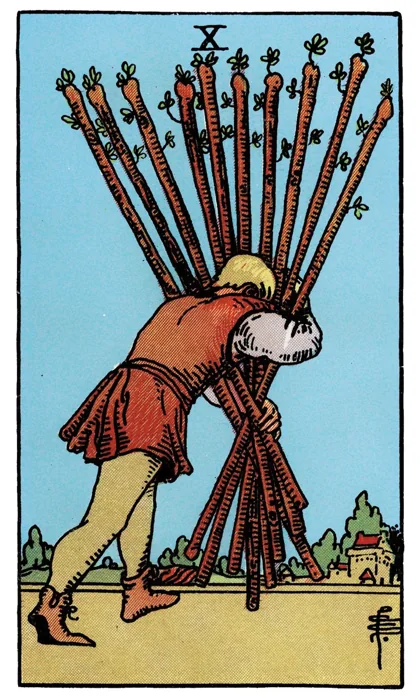
With Ten of Wands
With the Ten of Wands, persistence may have become overloaded responsibility. Review what belongs to you, what can be shared, and what can end. The pairing asks for a change in the arrangement, rather than another compliment about how much you are capable of carrying.
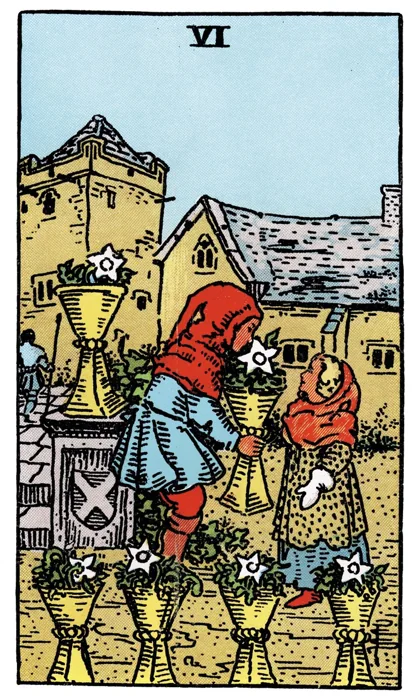
With Six of Cups
With the Six of Cups, past experience may strongly shape a present response. Notice what is genuinely familiar and what is different. A memory can provide useful context without deciding in advance how a new person or situation will behave.
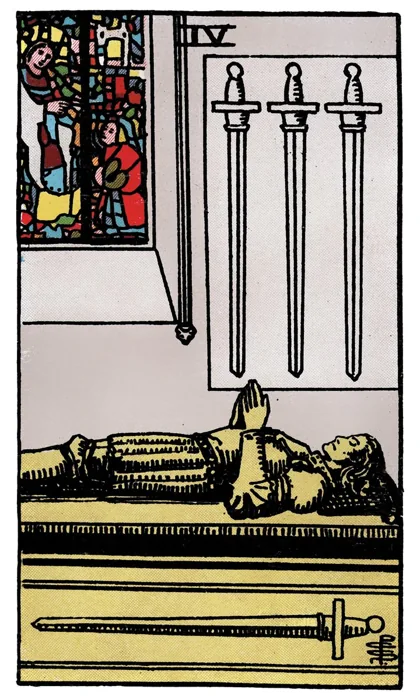
With Four of Swords
With the Four of Swords, a deliberate pause may protect the work more than continued vigilance. Establish what can wait and who can cover what remains. Rest does not need to be earned through collapse or postponed until every possible concern has disappeared.
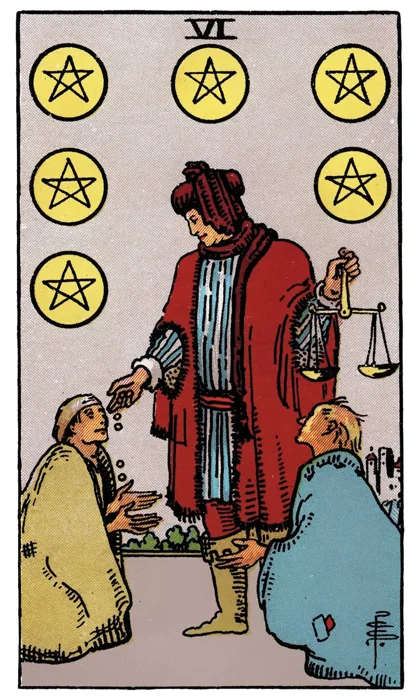
With Six of Pentacles
With the Six of Pentacles, support and the terms of receiving it become important. Ask for help that addresses the actual burden, and clarify any expectations attached. Shared responsibility can preserve your agency more effectively than continuing alone in order to avoid feeling indebted.
The experienced guard and the repaired tool
The experienced guard knows the difference between an unfamiliar sound and a reason to act. Their value lies in judgement, not in sounding the alarm continuously. Mature caution resembles this watch: attention leads to a proportionate response because the guard knows what to look for. The surrounding system also matters, particularly whether someone else can take over.
The repaired tool carries a history without becoming useless. Its owner knows where it needs care and what it can still do well. As a metaphor, it suggests respect for experience and limitation without reducing a person to damage. A mark can inform how something is used without defining every future possibility.
The long-distance walker nearing a stopping place gives another echo. Determination matters, but so do pace, supplies, and an honest account of the remaining route. The most encouraging companion may be the one who helps carry a bag or checks the map, rather than the one who repeatedly insists that strength alone will be enough.
Write a boundary that gives you something back
Choose one commitment that still matters but has become draining. Write what you are willing to continue, the condition that needs to change, and the point at which you will review the arrangement. Make the boundary specific enough that another person could understand what it means in practice.
Find one change that would provide relief. A task may be ready to return to its owner, or someone could share a responsibility you have carried alone. Consider a pause if the work allows it. Notice whether the adjustment restores attention to other parts of your life. Your experience can help you protect that room as well as meet the commitment.
Artwork & interpretation
Waite emphasises the watchful figure, the upright staffs behind them, and strength under opposition. This original guide explores experienced caution, sustainable persistence, specific boundaries, and the difference between present evidence and an expectation shaped by the past. A. E. Waite, The Pictorial Key to the Tarot: Nine of Wands.
The symbolic associations and examples offer ways to read a situation. They do not establish another person’s thoughts or fix an outcome.
Experience can teach you to protect yourself without requiring you to expect the same difficulty everywhere.
Use the cards in a spread →