Wands · Eight
Eight of Wands
When several things begin to move at once
The Eight of Wands catches events developing quickly after a period of waiting. A message may allow a decision to proceed, which sets further changes in motion. Respond with enough care to be understood. Something happening fast does not necessarily make it the most important thing to attend to.
- Momentum
- Communication
- Speed
- Coordination
15 min read
In this guide
The pause ends and the next steps arrive together
After days of waiting, three replies arrive in the same hour. A decision releases the next task, which releases another. The situation suddenly has a pace you can feel. The Eight of Wands describes this change from suspended possibility to active development, when events begin to connect and your attention must shift from wondering to responding.
The Eight of Wands often concerns a period when preparation begins to produce visible movement. Messages may arrive quickly, or a journey may follow after arrangements have been underway for some time. Several actions can now happen close together. The speed you see at this stage may depend on earlier work that attracted little attention while it was being done.
Speed is not automatically good or bad. A prompt response can clear a blockage, while an unnecessary rush can create confusion. The useful question is whether the movement serves a clear purpose. Several tasks advancing together feel very different from several people demanding immediate attention without agreeing on what needs to happen.
Communication is central, but the card does not promise a particular message from a particular person. Look at the communication already underway. Check whether a sent message still needs a reply or whether a missing piece of information is holding up the next step. Clear messages can create momentum more reliably than repeatedly watching for an imagined one.
A situation may also be approaching a point where action has consequences that cannot be fully recalled. Once an email has been read, it cannot be fully taken back. Setting out on a journey or announcing a decision also changes the situation you are in. This need not be ominous. It simply makes a brief check worthwhile: destination, recipient, terms, timing, and whether the action still matches the intention behind it.
In an outcome position, the Eight can help you prepare for a development that needs a timely response. Think about what you would need to coordinate once it arrives. The card cannot supply a reliable number of days or promise that every delay will end. Its practical use is in making you better prepared to respond when the circumstances actually begin to move.
No one is holding the staffs now
Eight leafy staffs cross an open blue sky on a descending diagonal. Below them lie low green hills, a small distant building, and a winding river. There is no visible human figure. The image directs attention towards movement itself, with the staffs already between departure and arrival.
Their broadly parallel direction gives the scene coherence. Unlike the crossing rods of the Five of Wands, these do not appear to obstruct one another. As a visual metaphor, the arrangement suggests several actions aligned towards a shared destination. Coordination can make a busy period feel surprisingly fluid when each movement supports the next.
The staffs remain separate. Alignment does not require them to become one object. This can be a useful way to think about collaboration or communication: different people and tasks may retain their distinct roles while moving in a compatible direction. The shared path matters more than making every contribution identical.
The landscape beneath them is quiet and spacious. That contrast gives speed a setting. A fast interval occurs within a larger life that still has its own scale and rhythms. The image invites you to keep some awareness of that ground, even when the immediate movement fills most of your attention.
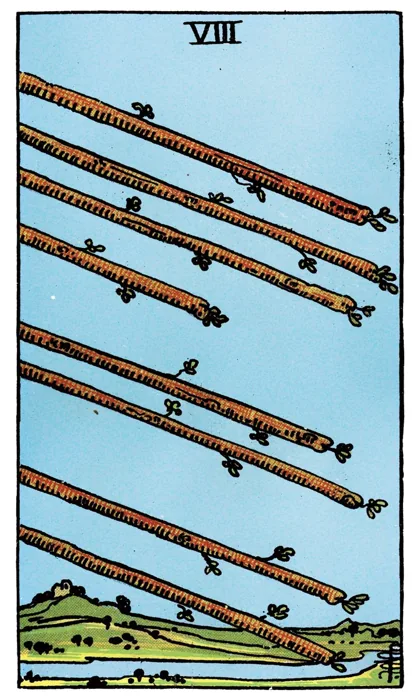
The rods are distinct but broadly aligned. Several tasks can advance quickly when their purpose and sequence are clear. The image offers a way to distinguish useful momentum from a crowd of unrelated demands competing for immediate attention.
The quiet landscape keeps the rapid movement in perspective. A busy interval is part of a larger life. Maintain enough awareness of ordinary needs and longer commitments that the immediate pace does not become your only measure of what matters.
The urge to respond as soon as something arrives
The Eight of Wands can feel mentally bright. Connections between ideas seem easier to follow, and you find yourself replying without the usual hesitation. Acting on a thought becomes enjoyable in itself. There is pleasure in a period when effort meets response without repeated obstruction. Let yourself use that fluency while noticing which decisions actually benefit from being made at the same pace.
Excitement can make every new input feel equally significant. A message interrupts a thought, another possibility interrupts the message, and attention begins to fragment. You may be busy while losing the thread of what you intended. A short list of the current priorities can preserve direction without requiring the whole situation to slow down.
The card may also describe relief after uncertainty. Once something begins moving, you no longer have to imagine every possible outcome at once. Yet relief can lead to premature agreement. Check whether you are saying yes because the terms suit you or because any clear development feels preferable to another period of waiting.
There is a useful distinction between responsiveness and permanent availability. You can answer promptly where it matters while allowing other messages to wait. People often learn your pace from what you repeatedly provide. If every request receives an immediate response, a temporary burst of energy can quietly become an expectation you never consciously accepted.
As a personal style, the Eight suggests quick thinking, enthusiasm, and the ability to connect people or ideas. Its mature expression includes checking understanding. What feels obvious to a fast thinker may be missing essential steps for everyone else. A little explicitness can save the time that speed would otherwise lose through confusion.
Once an action leaves your hands, it enters relationships
The absence of a human figure gives the card a distinctive lesson about agency. We can initiate a movement, but we do not occupy every point of its journey. A message encounters another person's attention, context, and interpretation. A decision becomes part of circumstances we influence without entirely controlling. Action requires a measure of release.
Once you send a message, the other person's response is beyond your control. Prepare by making your meaning clear and choosing a suitable way to communicate it. Consider what the message may set in motion. Then give the reply room to tell you something new. An exchange develops when the other person can contribute their own understanding, including where it differs from yours.
Momentum can be self-reinforcing. One completed task makes another possible; one clear exchange reduces the uncertainty of the next. The card therefore invites attention to connections rather than sheer effort. A small decision at the right point can create more progress than working harder on several tasks that remain blocked by the same unresolved question.
There is also a cultural pressure to treat speed as virtue. A fast reply may be read as care, just as a quick decision can give an impression of confidence. Frequent updates can make work appear to be progressing even when little has changed. Sometimes those appearances are accurate; sometimes they conceal haste or anxiety. The Eight asks what tempo the task actually requires, rather than assuming that the quickest possible response is always the best one.
Its deeper skill is timely participation. When something is ready to move, you can act on what is clear enough. Holding it back simply to preserve a feeling of control may no longer improve the decision. Equally, you can introduce a pause when the movement has outrun understanding. Good timing includes both acceleration and the ability to interrupt it.
Clear the handovers before adding more speed
At work, the Eight of Wands can describe a launch, a busy exchange, approvals arriving, rapid delivery, or several connected tasks advancing together. Identify the current bottleneck. The most useful action may be a small decision or concise update that allows others to proceed, rather than another long session spent on work that is already moving.
Communication should become more explicit as the pace increases. State the decision, the owner, the next action, and any real deadline. Avoid assuming that everyone has read the entire message history or shares the same understanding of what was agreed. A brief written record can protect momentum by preventing the same ambiguity from being rediscovered later.
Distinguish requests that are urgent because of a genuine dependency from those that merely arrive in an urgent tone. If everything jumps the queue, important work loses continuity. Ask what happens if the task waits and who is affected. This can clarify the right response without turning every exchange into a negotiation over whose anxiety is greatest.
For creative work, a period of fluency can be used to generate, assemble, or finish material. Capture the movement without requiring every idea to be evaluated immediately. Later review may be slower and more selective. Different stages of the work need different tempos; the fast draft should not be forced to carry the responsibilities of the final edit.
A new opportunity may require a prompt answer. Prepare the questions that matter most: scope, timing, resources, authority, and the next commitment. You may not need complete certainty, but you do need enough information to know what you are accepting. Enthusiasm from the other side does not resolve an unclear agreement.
The professional shadow is mistaking activity for progress. A growing stream of messages can keep reopening decisions, so that everyone appears responsive while the result remains distant. Choose a concrete measure of movement: a resolved question, a completed handover, a delivered piece of work. The pace should be judged by what it enables, not by how many notifications it produces.
A lively exchange still needs room for two people
In relationships, the Eight of Wands can describe frequent communication, attraction developing quickly, plans taking shape, or a conversation that clears a long-standing uncertainty. The ease of exchange can be exciting. Let it reveal the person over time, rather than treating the number or speed of messages as a complete measure of closeness.
Fast communication can create an unspoken expectation of constant access. One person enjoys rapid replies; the other needs longer stretches of uninterrupted attention. Discuss the rhythm before interpreting every pause as a statement about affection. A workable pace respects both people's lives and does not require either to prove interest through permanent availability.
If a relationship is moving quickly, pause at decisions with lasting consequences. Attraction may be clear while practical compatibility remains unknown. You can enjoy the momentum and still ask about expectations, boundaries, and what each person wants. A brief honest conversation can protect the liveliness of the connection by preventing avoidable misunderstanding.
In an established relationship, the card may encourage a direct message rather than another elaborate interpretation of silence. Say what you need to discuss and choose a suitable moment. Some subjects can be handled in a short exchange; others deserve a conversation in which tone, questions, and uncertainty have more room. Match the channel to the issue.
Arguments can also accelerate through rapid replies. You answer the last sentence before understanding the whole concern, and each message creates another point to defend. If the exchange is losing clarity, agree to pause and return in a more suitable format. A slower conversation can preserve the relationship better than winning the next thirty seconds of the thread.
If a visit is being planned, confirm what each person expects from it. Agree on arrival and departure dates, then discuss how the time together will work around existing commitments. Enthusiasm may have made these details seem settled before anyone actually asked. Especially at a distance, clear arrangements help the anticipated meeting become an experience both people can comfortably share.
A short deadline still leaves room for essential questions
Material questions may involve payments moving, a purchase being arranged, travel costs, or a decision presented with a short deadline. Establish what is actually time-sensitive. The card's association with speed is not a reason to hurry a financial commitment. Important terms should remain understandable even when the opportunity has a limited window.
Fast exchanges can create small errors with disproportionate consequences: an incorrect detail, an assumed amount, a booking made for the wrong date. A brief check is part of efficient action, not its enemy. Confirm the recipient, the figure, and the agreement before an action leaves your hands. Use actual records rather than confidence in the pace of the conversation.
If several expenses or practical tasks arrive together, make the sequence visible. Some may depend on others; some can wait; some need clarification before any action. A short ordered list can reduce the feeling that everything must happen at once. The aim is to coordinate the flow, rather than respond to whichever item demands attention most loudly.
At home, the card may describe a busy transition, visitors, deliveries, or plans finally becoming active. Share the relevant information with everyone affected. An efficient arrangement for one person can become a confusing surprise for another if the communication has stayed inside a single head or message thread.
Let a fast period have an endpoint
A burst of coordinated activity can feel satisfying, but it still uses capacity. Notice when stimulation begins to substitute for actual energy. You may continue answering and acting because the inputs keep arriving, long after the quality of attention has changed. Build small pauses into the flow before mistakes become the only signal to stop.
Set some edges around availability. A period for focused work, a quieter evening, or a clear time to revisit messages can help you remain responsive where it matters. The goal is not to reject communication. It is to prevent every incoming item from deciding the shape of the day.
The card cannot assess health or establish how much activity is suitable for you. Use the actual demands of your life and body as the reference. A busy phase may be manageable precisely because it is temporary. If its intensity becomes permanent, the arrangement may need to change rather than requiring endless adaptation from you.
Make the next message clear enough to act on
Make your request easy to find in the message. Give enough context for the other person to understand it, then state what answer or decision you need. Explain the next step where relevant. When replying, address their actual question first. Extra possibilities can follow once the main exchange is clear, keeping the conversation from becoming a chain of unfinished thoughts.
Use momentum where it already exists. Complete the connected task, confirm the arrangement, or make the decision that releases the next piece of work. Avoid opening several unrelated projects simply because the day feels energetic. Direction is what turns speed into progress; otherwise the same energy can create a larger field of unfinished obligations.
The shadow is treating urgency as authority. A message arrives quickly and seems to require an equally quick commitment. Ask whether the pace belongs to the situation or to the person presenting it. You can acknowledge receipt, ask a necessary question, or state when you will respond without surrendering the decision itself.
Another shadow is trying to recall every action after it has been taken. You send, then repeatedly reinterpret and second-guess. If a correction is needed, make it clearly. If not, allow the exchange to continue. Responsible action includes a moment when you stop editing the imagined reception and wait for the real one.
The movement has outrun the message, or the message has not arrived
Reversed, the Eight of Wands asks you to locate the source of a communication or timing problem. A message may have gone to the wrong person, or an unresolved dependency may be delaying the work. In other cases, everyone is moving so quickly that they have lost a shared understanding. These situations need different responses, so establish which one you are facing.
If a response is delayed, check the practical channel and the agreed timing. A message may not have reached the right person, or the next step may depend on something you cannot see. Follow up clearly where appropriate. Do not use the card to fill an information gap with a story about rejection, secrecy, or deliberate obstruction.
If events are moving too quickly, introduce a deliberate pause at the next meaningful decision. Summarise what has been agreed and what remains open. A short reset can prevent a larger correction later. Slowing one part of a process may preserve the overall momentum by restoring the understanding on which it depends.
The reversal may also describe scattered communication: many updates, little clarity, and no shared record of the decision. Reduce the number of channels or consolidate the information. People often need a clear place to find the current answer more than they need another notification that something has changed.
A constructive reversal can be a chosen deceleration. You stop responding instantly, delay a nonessential launch, or give a relationship time to become more real. The question is whether the slower pace serves understanding and capacity. Movement remains valuable, but it does not have to remain fast in order to remain alive.
What needs to move, and what needs a pause?
These pairings explore timing, communication, and coordination. They do not supply exact dates or promise that a particular person will make contact.

With The Chariot
With the Chariot, momentum benefits from a clear destination and coordinated decisions. Confirm that the people and tasks involved are moving towards the same result. Strong pace becomes useful when the direction is shared, rather than merely imposed by whoever is acting fastest.
With The Hanged Man
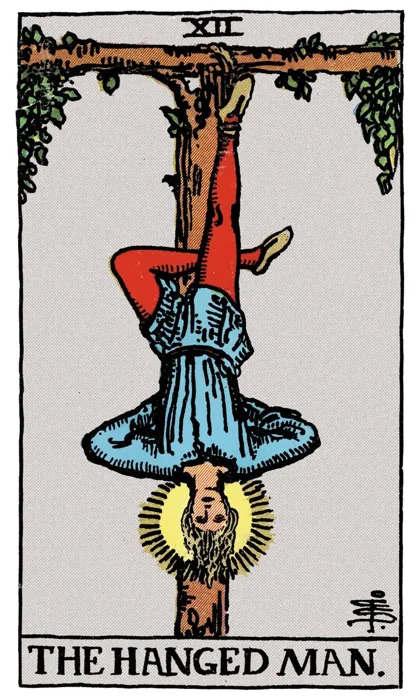
With the Hanged Man, a moving situation may require one deliberate pause. Identify the assumption or dependency that needs a different view. The pause can protect progress by preventing a fast sequence of actions from carrying an unresolved misunderstanding further.

With Temperance
With Temperance, different speeds need to be brought into a workable rhythm. Adjust the handovers and communication rather than expecting everyone to respond identically. A coordinated pace can be efficient while allowing time for the parts that genuinely require care.
With Three of Wands
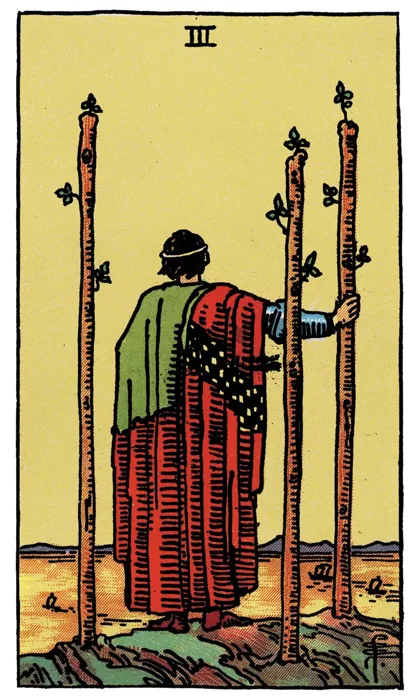
With the Three of Wands, an outward commitment may begin receiving responses. Be ready to follow up and translate interest into a clear next step. The combination suggests preparation for movement, not a guarantee about when the answer will arrive.
With Ten of Wands
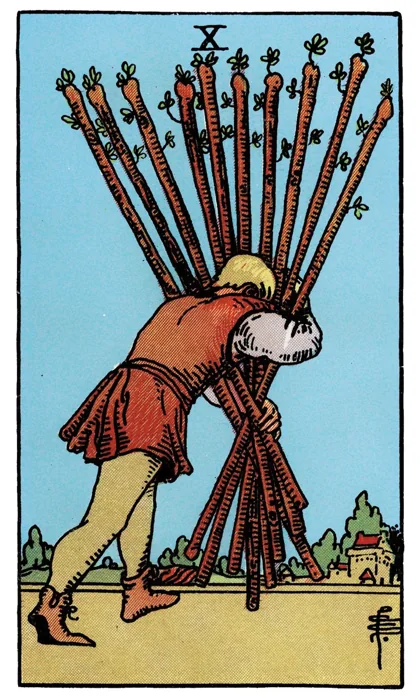
With the Ten of Wands, rapid developments may be adding to an already heavy load. Triage the requests and make capacity visible. A quick response can include a boundary, a revised deadline, or a request for help rather than another automatic acceptance.
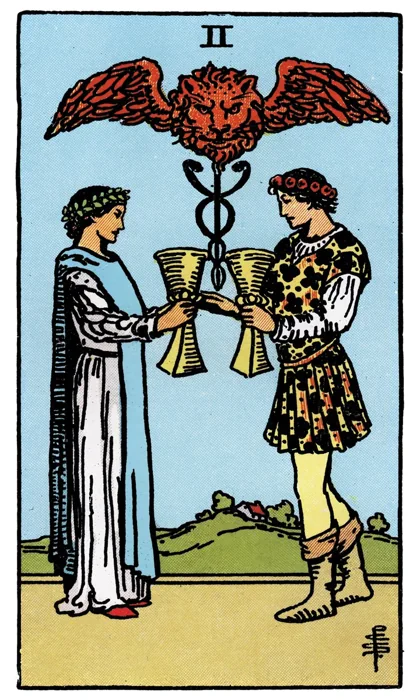
With Two of Cups
With the Two of Cups, lively communication can support a developing connection. Keep the exchange reciprocal and check that the pace suits both people. Frequent messages can express interest, but understanding grows through what is communicated and how each person responds to the other.
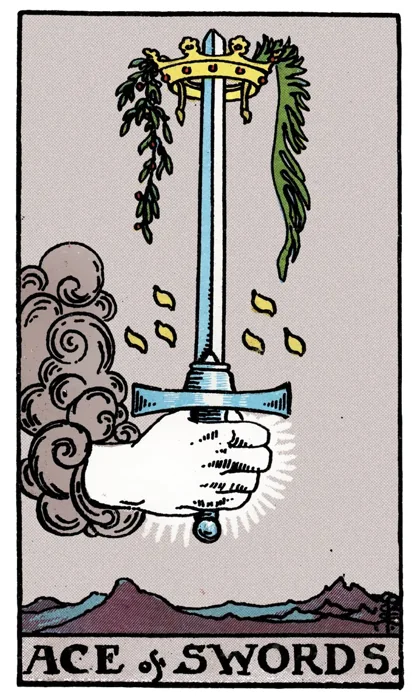
With Ace of Swords
With the Ace of Swords, a clear decision or precise message can release stalled activity. State the essential point and its consequence. Clarity is especially useful when several people have been moving quickly while holding different assumptions about what has actually been agreed.

With Two of Pentacles
With the Two of Pentacles, several moving demands need a realistic sequence. Identify dependencies, available time, and what can wait. Flexibility helps when it serves a visible set of priorities, rather than leaving you permanently responsive to the latest interruption.
What happens once an action leaves your hands
The relay offers an image of coordinated speed. Each runner matters, but so does the handover. A dropped or unclear transfer can undo individual effort. In ordinary work and relationships, the equivalent is often a concise message, a confirmed decision, or enough shared context for the next person to act without guessing.
The letter in transit gives a quieter echo. The writer has chosen the words, but the message now travels through time and another person's life. There is a necessary interval between expression and response. Communication includes the discipline of allowing that interval without filling it entirely with imagined reactions.
The moment of release captures the card's active trust. Preparation has reached the point where holding on no longer improves the result. You let the work, message, or decision move. This is not a guarantee of its destination; it is an acceptance that participation requires actions whose full consequences cannot be rehearsed in advance.
Clear one message and one bottleneck
Choose an exchange that has become longer without becoming clearer. Write a short summary of what is agreed, what question remains, who needs to act, and the relevant timing. Send or use that summary in the appropriate setting, leaving room for the other person to correct your understanding.
Find one task that would allow another part of the work to proceed, and finish it before starting a separate activity. Then check whether people have a clearer understanding of what comes next. Progress is more useful when the work remains coordinated as it speeds up, with the purpose still apparent to those taking part.
Artwork & interpretation
Waite emphasises the staffs in flight and associates the image with swift activity, including messages moving towards an endpoint. This guide considers how people communicate and coordinate when things happen quickly. It gives attention to timely action while keeping the speed of an exchange separate from certainty about its result. A. E. Waite, The Pictorial Key to the Tarot: Eight of Wands.
The symbolic associations and examples offer ways to read a situation. They do not establish another person’s thoughts or fix an outcome.
You can move promptly without allowing urgency to make every decision for you.
Use the cards in a spread →