Major arcana · 7
The Chariot
Give your momentum a direction
The Chariot commits to a direction despite competing demands. Leaving familiar ground takes courage, and continuing takes effort. Keep the destination in view as you move: determination alone cannot tell you whether the course still makes sense.
- Direction
- Determination
- Coordination
- Momentum
15 min read
In this guide
Putting a decision into motion
There comes a point when a plan needs departure more than another improvement. An application eventually has to be sent. Preparing for a move or starting a project brings a similar moment when a promising discussion needs to lead to action. The Chariot describes the effort of taking a chosen direction into the world, where progress requires more than agreement with yourself.
In a reading, the Chariot often concerns an undertaking that needs sustained direction. You may be preparing for a journey or trying to coordinate responsibilities that compete for your attention. Mixed feelings do not necessarily prevent you from acting. Decide where you intend to go so that the next distraction does not quietly become the thing that determines your course.
This is a card of agency under pressure. You may still feel afraid or wonder whether you have prepared enough. You have decided that the destination matters enough to organise your effort around it. Fear can come along without being allowed to choose every turn, and enthusiasm can contribute without being mistaken for a complete method.
The Chariot often has a visible side: an achievement, a successful presentation, a competitive result, a move that others recognise as progress. Recognition may be deserved and enjoyable. Still, the public result tells only part of the story. Consider what the achievement cost alongside the opportunities it opened. Sustaining the position you have reached may require further work.
The Chariot can help you direct your effort towards something you want. As overcoming resistance becomes familiar, however, continuing to move can become satisfying in its own right. A pause may then feel like defeat even when it would help. Return to the reason you set out and let it inform whether to continue on this course or choose another.
A vehicle that is not yet moving
The charioteer stands beneath a star-patterned canopy, armoured and facing outward. Behind him are buildings; before him sit two contrasting sphinxes. The scene is full of readiness, but the creatures are at rest. That stillness complicates the immediate association with speed. Power has been assembled; direction and coordination remain part of the task.
The dark and light sphinxes are alike without being interchangeable. They make a useful image for motives that must work together: ambition and caution, independence and responsibility, the wish to advance and the wish to remain safe. Progress need not require destroying one side. It may require a workable relationship between them.
There are no visible reins joining the figure's hands to the creatures. Read symbolically, the picture asks how direction is maintained when ordinary means of control are absent. A declared intention will not move a complex undertaking by itself. Agreements, attention, repeated adjustments, and a clear purpose may do work that a single forceful command cannot.
The armour and enclosed vehicle offer protection while also separating the traveller from the surrounding landscape. The city remains behind him, visible but no longer containing the whole scene. The image can suggest leaving an established identity or environment while carrying enough structure to keep functioning beyond familiar support.
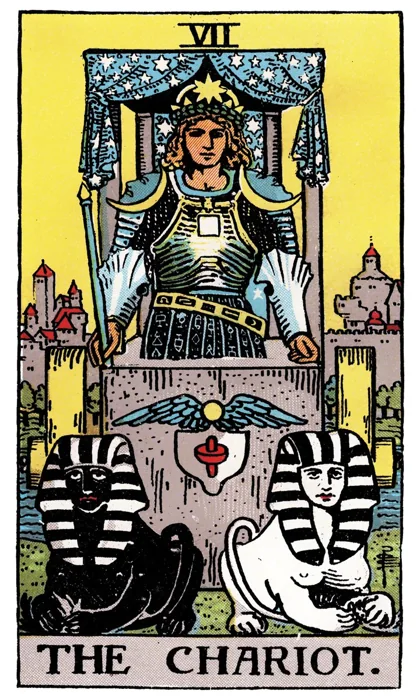
The sphinxes share a position without losing their differences. The image invites attention to competing motives and responsibilities that must be coordinated before effort becomes useful movement.
Armour and canopy give the traveller a portable frame. The protection may help a difficult departure, provided it does not become a reason to stop noticing the world outside.
The relief of having somewhere to go
The Chariot can feel like the return of decisiveness after a period of drift. Instead of evaluating every possible direction, you begin organising the next few actions. Energy that was being spent on speculation becomes available for use. The task may still be difficult, but it is a difficulty you can meet through a sequence of moves.
This state often includes a sharpened sense of identity. You begin to recognise yourself through the undertaking, including what you are leaving and the future you are working towards. A declared purpose can help you tolerate temporary discomfort. It can also become so important that any question about the method sounds like a question about your worth or seriousness.
As a person, the Chariot may be ambitious, resourceful, competitive, and capable of sustaining effort when the initial excitement fades. They can make a complicated transition happen. Their presence may reassure others that someone is willing to move the situation forward, particularly where hesitation has become habitual.
The harder version is someone who experiences most encounters as a test of will. A delay becomes disrespect; a reasonable limit becomes an obstacle to defeat. They may achieve impressive things while making life around them unnecessarily adversarial. The habit of winning can interfere with the ability to receive information without treating it as opposition.
A mature Chariot can distinguish commitment from tension. You need not keep your whole body and attention braced in order to remain serious about the goal. There is room to laugh, rest, change a method, and admit that a part of the plan failed. The course is held through judgement as well as through effort.
Who will you be when you arrive?
The Chariot raises the question of what achievement is being asked to prove. A goal may serve a real interest while also carrying a private hope: once this is done, nobody will be able to dismiss you; once you leave, the old life will lose its claim. These motives can supply extraordinary energy without necessarily delivering the relief they promise.
An external victory changes circumstances. It does not automatically settle every internal argument that helped drive the pursuit. You may reach the destination and discover that the fear of being inadequate has simply found a new standard. This does not make the work meaningless. It helps separate its actual value from an impossible burden placed upon it.
The card also concerns the formation of a will capable of acting amid contradiction. You can want a difficult change and miss the life it interrupts. You can be committed and frightened. Waiting for every part of you to prefer the same thing may leave important decisions permanently suspended. Coordination is a more realistic aim than total inner agreement.
Freedom here involves choosing which pressures receive authority. Deadlines, other people's expectations, comparisons, and opportunities will all suggest directions. A deliberate course gives you a way to respond selectively. It also needs moments of review, so a choice made in one set of circumstances does not continue governing your life after its purpose has disappeared.
Turn effort into a sequence
At work, the Chariot asks you to define the result you are working towards. A crowded task list can keep you busy without moving that result any closer. Identify the next action on which other work depends and give it priority. Some activities can wait; agreeing which ones to postpone helps the team direct its effort where it will make a difference.
This card is particularly relevant to deadlines, applications, launches, examinations, and other periods when a temporary concentration of effort may be useful. Give that concentration an actual boundary. A demanding season becomes harder to sustain when nobody knows what completion would look like or when ordinary life is expected to resume.
Competitive settings bring both the pleasure and the danger of the Chariot. A clear standard can sharpen practice and reveal progress. Comparison becomes less useful when you begin pursuing someone else's strengths at the expense of the work you wanted to make. Winning the available contest may not move you toward the life you intended.
Leadership requires coordinating people whose motives differ. The person watching the deadline may disagree with someone checking accuracy. A colleague still learning the work needs time that affects both priorities. Treating those differences as disloyalty wastes information. A workable plan explains the shared objective while giving each contribution a clear place, including a way to raise concerns before they become expensive surprises.
Creative work sometimes needs a decisive finish. Choosing which version to finish makes the remaining work more definite. Once those pieces are complete, an audience can respond to what you have made. The Chariot is useful here because endless possibility can become a way to avoid exposure. A finished work can teach you something that another month of imagining its potential cannot.
The shadow is producing momentum for its own sake. You accept another project because stopping would reveal fatigue or uncertainty, then use the new deadline to postpone that recognition. Review the queue before adding to it. A capable person still needs a limit on how many directions can be pursued at once.
Two people are not a vehicle and a driver
In relationships, the Chariot can concern an undertaking that requires both people to coordinate their efforts. Moving home, for example, brings decisions that affect everyday life as well as the journey itself. A demanding period at work can require similar cooperation. Working through it together may strengthen the relationship, provided each person can help shape the plan and has a real say in its demands.
In courtship, initiative can take the form of a clear invitation. Once you have made it, the other person needs freedom to answer on their own terms. If they decline or show no reciprocal interest, take that information seriously. Continuing to press may serve your determination while disregarding their response. Respecting the answer is part of making the invitation honestly.
The difficult pattern is managing the connection as an achievement. You may set the next milestone and remove practical obstacles without asking how your partner feels about the direction. The visible progress then seems to confirm that both of you are happy. A partner may be carried efficiently toward a future they have never fully chosen. Ask what the movement feels like from their position, including whether the pace leaves room to think.
Conflict can become a contest in which the immediate aim is to secure the better argument. You may win the exchange while making the relationship less safe for honest speech. The practical question is what the disagreement needs to produce: a decision, a repair, a clearer boundary, or simply evidence that the other person's experience has been heard.
A shared direction does not require identical ambitions. One person may be entering an intense period while the other needs stability or time for something quieter. Discuss the actual trade-offs. Support is more sustainable when the person offering it can name their needs and when the arrangement has a point at which it will be reconsidered.
Sometimes the Chariot concerns the resolve needed to leave. You might be preparing to move away or establishing a boundary while still feeling attached to what came before. Use the reading to consider the practical preparations that would support your decision. Whether leaving is right depends on the relationship itself and the choices available to you; the card cannot settle that question.
Count the cost of the journey
The Chariot may draw attention to what an opportunity requires you to travel or relocate for. Reaching the destination takes time and preparation, and the journey may become an ongoing part of your week. Consider the costs alongside the support you would have once there. These ordinary details help determine whether the move will give you what you hope to gain from it.
A tight timetable can make checking details feel like a delay you cannot afford. Yet an overlooked condition may cost more time later than a review would take now. Read the terms and prepare what the next stage needs. You can do that useful work without expecting it to remove every uncertainty before you begin.
Spending may become attached to an image of advancement. Better equipment, a more impressive vehicle, or a larger home can feel like proof that life is moving in the right direction. Ask what the change will do in an ordinary week. Status can be enjoyable, but it should be counted as part of the purchase rather than confused with practical necessity.
Shared material goals benefit from explicit agreement about pace and contribution. A saving target that seems motivating to one person may feel like indefinite deprivation to another. Decide what is being prioritised, what remains available for present life, and when you will review the arrangement. A goal is easier to support when its demands are legible.
Drive needs somewhere to stop
The Chariot can describe a period of concentrated effort in which you become unusually good at overriding distraction and discomfort. This ability is useful within limits. If every signal of fatigue is treated as resistance to defeat, the method stops distinguishing between an ordinary reluctance and a real need for recovery.
Build stopping points into the undertaking while you are still able to plan them. A day off that depends on everything being finished may never arrive. A clear handover, a reduced target, or an agreed pause can protect the effort already invested by making it possible to return with some capacity intact.
The card is no measure of physical fitness or health, and determination cannot explain every limit on capacity. Its practical question is whether your pace serves the undertaking over time. A slower rate that you can sustain may carry you further than repeated bursts followed by periods in which ordinary functioning becomes difficult.
Choose the course, then keep looking
As advice, the Chariot asks for a destination clear enough to guide the next action. Define what you are trying to achieve, why it matters, and what would count as sufficient progress for this stage. Then remove or postpone one competing commitment. Focus becomes more real when it changes what you decline.
Mixed feelings can accompany a considered choice. A wish for comfort deserves acknowledgement without necessarily deciding the whole matter. Pay particular attention when hesitation has a specific cause. The workload may be unrealistic, or an agreement may still be unclear. Understanding that objection can help you improve the plan instead of simply pushing harder against it.
The shadow is escalation. Having spent so much effort, you feel compelled to spend more even when the purpose has weakened. Stopping seems to make the earlier cost meaningless. In practice, earlier effort remains part of what you learned; it does not automatically justify every further expense.
Another shadow is using forward motion to avoid an encounter with yourself. There is always another destination, so the unsettled question can wait. Make room for a review that is not secretly another productivity exercise. Ask whether this is still a journey you choose, and allow the answer to influence the pace.
The wheels are turning, but toward what?
Reversed, the Chariot asks you to look at why progress has become difficult. You might be pushing a plan harder when it needs a decision first. A missing resource or unrealistic timetable calls for another kind of response. You may even have lost interest in the destination. Establish which problem you face before committing more effort to the same approach.
One pattern is effort without coordination. Several tasks advance separately, but the part that connects them receives no attention. Everyone is busy and the undertaking barely moves. A clear sequence, a missing conversation, or a decision about ownership may release more progress than another push from the same people.
Another pattern is overcorrection. An inconvenience provokes a dramatic change of method, then the new method creates another difficulty that must be met with equal force. The situation never has time to reveal whether an adjustment worked. Choose a proportionate change and a sensible point for reviewing its effect.
The reversal may also describe a person who has lost trust in their ability to direct their life. Too many setbacks have made initiative feel pointless. A manageable action with a visible result can be more useful than demanding renewed confidence in the entire future. Agency sometimes returns through small evidence before it returns as a feeling.
A constructive reversed Chariot stops. You may withdraw from a contest that has lost its purpose. A pause can also give you time to hear a concern you kept overriding and recognise damage caused by the current route. Such a stop can preserve the possibility of purposeful action. The absence of motion is not always the absence of resolve.
What is the momentum carrying?
Nearby cards can clarify the motive, resource, or limit around the Chariot's drive. These pairings invite a closer look at the undertaking rather than predicting its result.
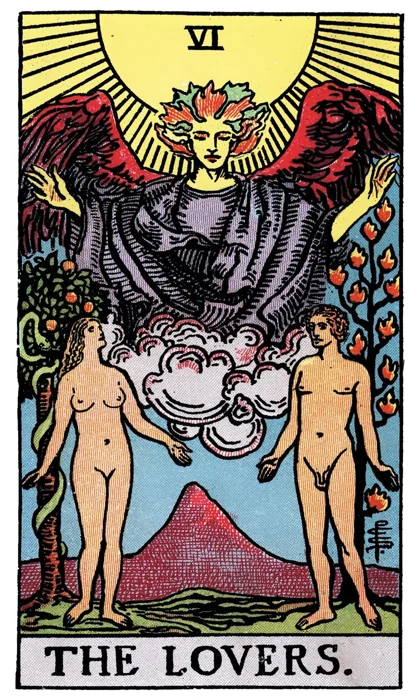
With The Lovers
With the Lovers, a chosen value needs a practical course. Make sure the destination still expresses the reason for choosing it. Where other people are involved, their continuing participation matters as much as the strength of your own commitment.
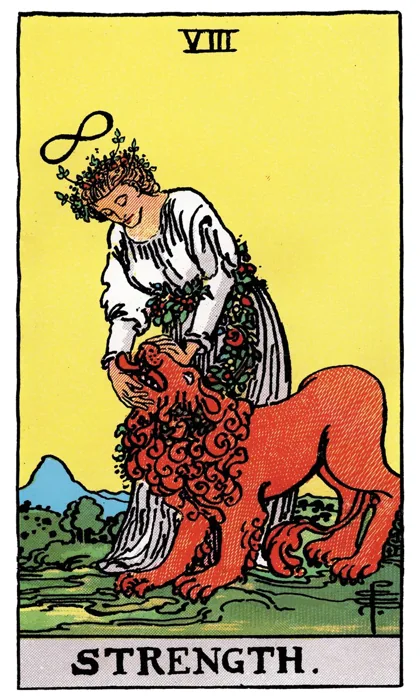
With Strength
With Strength, outward determination benefits from a less combative relationship with emotion. You may need to keep acting while allowing fear, anger, or disappointment to be present. The effort becomes more sustainable when every inner reaction does not start another battle.
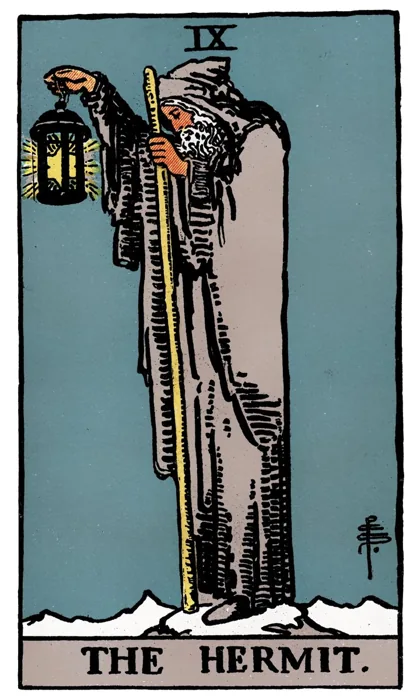
With The Hermit
With the Hermit, momentum needs a period of review. Step far enough back to distinguish useful progress from habitual activity. A temporary withdrawal can sharpen the next stage, especially if the pace has made it difficult to remember what the undertaking is for.
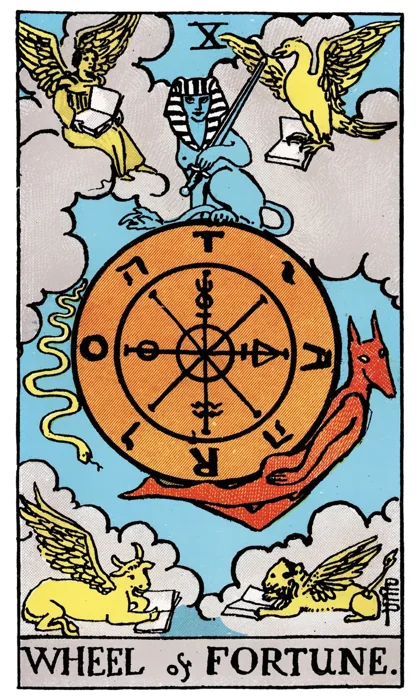
With Wheel of Fortune
With Wheel of Fortune, a deliberate course meets changing conditions. Preparation may help you use an opening, while flexibility helps when the expected route closes. The pairing asks for a distinction between what effort can influence and what must be answered as it changes.
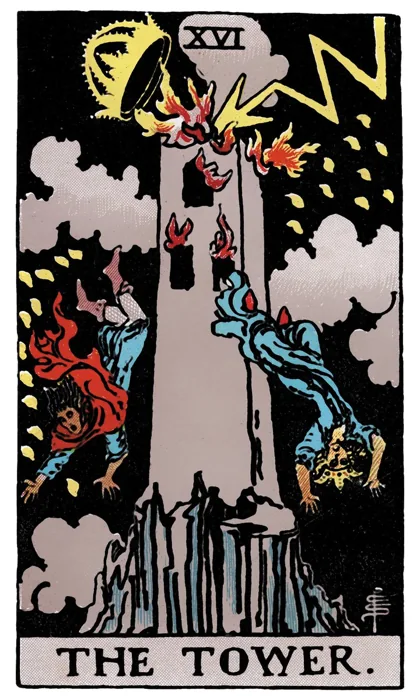
With The Tower
With the Tower, the current method may be meeting a limit it cannot solve through pressure alone. Examine what is actually failing. Revising the structure can be more responsible than treating every warning as a challenge to prove how determined you are.
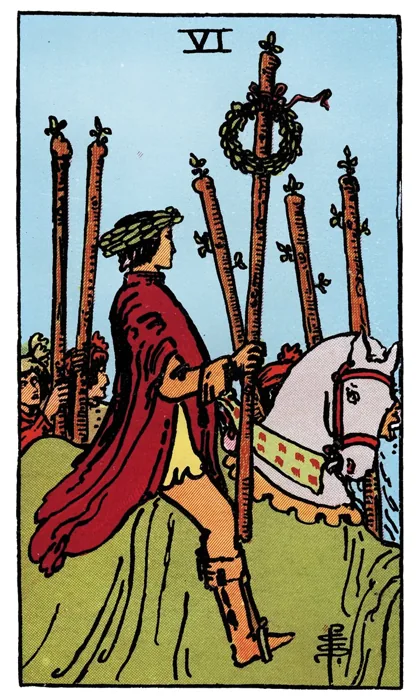
With Six of Wands
With the Six of Wands, achievement and recognition come into focus. Enjoy a deserved result while asking what comes after the visible success. A public milestone may need quieter maintenance if it is to become more than a brief demonstration of capability.
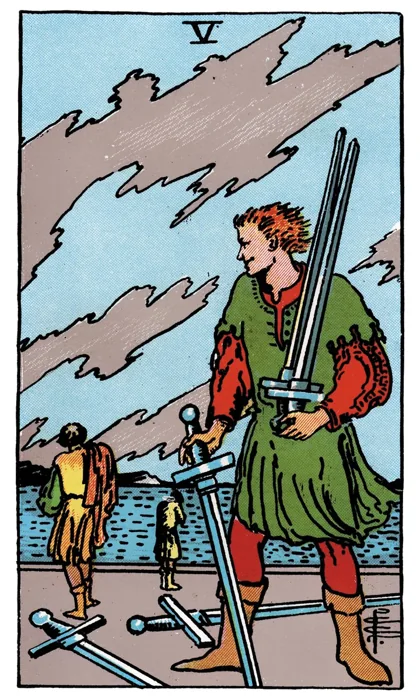
With Five of Swords
With the Five of Swords, the wish to win may be damaging the purpose of the encounter. Consider the cost to trust, cooperation, and future options. A result that leaves everyone unwilling to work together may deserve a different definition of success.
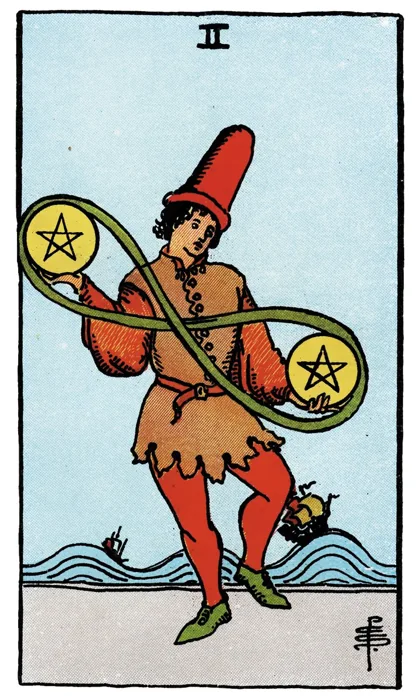
With Two of Pentacles
With the Two of Pentacles, progress depends on managing practical demands that keep changing. A plan needs some room for adjustment. If every part requires perfect timing, the undertaking may need simplification before greater discipline can make it reliable.
Keeping a destination in view through demanding work
The traveller gives the Chariot a simple form: leaving a known place for one that cannot be fully understood before arrival. Preparation matters, but eventually the journey must answer the difference between the imagined route and the actual road. Competence includes adapting without treating every deviation as a failure.
The athlete brings disciplined effort toward a visible test. Practice concentrates ability; the result offers feedback. The difficult counterpart is a life in which every day becomes competition and every ordinary limitation threatens identity. A person needs somewhere to exist outside the performance that others admire.
The campaigner gathers people and resources around a goal. This figure can accomplish what isolated effort cannot, provided the participants remain more than fuel for a personal mission. The quality of the cause includes the way people are treated while pursuing it.
Define the next stage, including its end
Choose one undertaking and write its next visible milestone. List the few actions that directly support it, the main constraint, and one commitment you can postpone. Keep the plan short enough that it helps you act instead of becoming another object to maintain.
Choose when you will review the method and what would make you change it. Also define what counts as enough for this stage, so you know when to stop. Continuing takes determination, but a deliberate change of course can serve the same goal when the evidence calls for it.
Artwork & interpretation
Waite associates the charioteer and sphinxes with outward conquest while distinguishing that achievement from inner attainment. This guide develops that tension into a contemporary reading of direction, coordinated effort, ambition, and the limits of control. A. E. Waite, The Pictorial Key to the Tarot: The Chariot.
The symbolic associations and examples offer ways to read a situation. They do not establish another person’s thoughts or fix an outcome.
A victory is worth examining for the life it delivers you into, as well as the effort it proves you can make.
Use the cards in a spread →