Major arcana · 16
The Tower
When new information overturns a familiar explanation
The Tower exposes a weakness an arrangement could no longer conceal. A failure can overturn the familiar explanation of how things work. Begin with the facts that now need a response, even before you understand everything the change will mean.
- Disruption
- Revelation
- Instability
- Reconstruction
14 min read
In this guide
The situation no longer fits the story
One piece of information can change the meaning of everything around it. You may discover that a plan relies on a resource that was never available, despite repeated assurances. Earlier exceptions now begin to look like a pattern. In another situation, someone may reveal that they never agreed to a promise made on their behalf. The Tower describes the rupture between the old account and what can now be seen.
In a reading, the Tower can concern a disruption that exposes an assumption you can no longer rely on. A failure may reveal why an arrangement cannot continue as it is. The card does not predict disaster. Use it to examine a problem already becoming visible, particularly where the explanation you have been using no longer accounts for what is happening.
The change may come from outside you. An unexpected decision can alter your options, or new information can end an arrangement you thought was secure. Recognition can also arrive internally, when separate things you have noticed finally form a clear picture. Either experience may feel forceful because afterward you cannot quite return to what you believed before.
The Tower differs from Death in emphasis. Death concerns an ending and the passage beyond it; the Tower foregrounds the break in the structure that made the old situation seem stable. What fails may be a plan, an institution, a role, a relationship pattern, or a story about yourself. The whole life need not be reduced to that one failure.
A useful response begins with the scale of the actual event. Separate what has changed from what continues to function. Decide which parts need immediate attention and which can wait until the first shock has passed. The next helpful act may be modest despite the image's drama. Gathering facts or having a clear conversation can show you which practical adjustment to make before another consequential decision.
The card can include release from an arrangement maintained through denial or fear. That possibility should not be imposed as consolation. You may recognise a freedom in the aftermath and still resent the way it arrived. The loss does not need to become a gift before you can begin responding to it.
The crown cannot keep the building intact
Lightning strikes a tower on a rocky height. A crown is displaced from the top, flames break through, and two figures fall into the surrounding space. The composition turns a symbol of elevation and security into a scene of exposure. What seemed above ordinary vulnerability is shown to be vulnerable too.
The crown matters because it resembles a claim to importance or authority. Its removal can be read as the failure of status to protect an arrangement from the conditions beneath it. A prestigious name, impressive title, or confident explanation cannot make a weak structure indefinitely sound.
Two figures fall from the tower, showing that its collapse affects people who lived within its apparent safety. Keep that cost in view when reading the image. A belief or institution may have been unsound, but its failure can still injure those who relied on it. Understanding what was wrong with the structure does not remove their need for help with the consequences.
The building stands on a narrow, steep foundation against a dark background. There is little room around it in the picture. One possible reading concerns isolation: a system that has become too enclosed to receive correction may have fewer ways to adapt when a forceful challenge finally arrives.
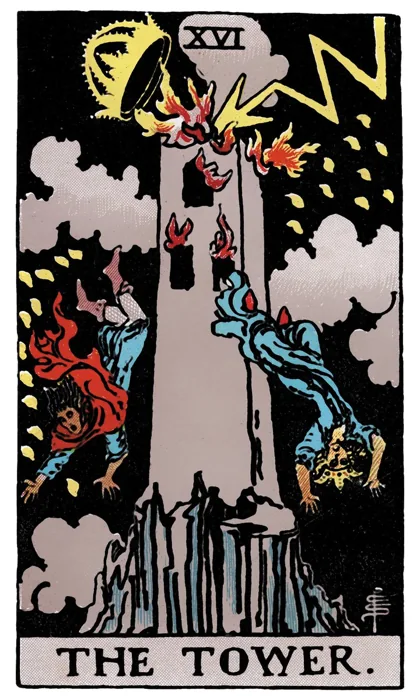
The crown is pushed away as the structure is struck. The image can suggest a moment when status or confidence no longer protects an arrangement from examination.
The falling figures prevent the scene from being only an abstract lesson. A change can expose a false assumption while still carrying a real cost for those who relied on it.
The mind keeps reaching for the earlier account
Internally, the Tower can feel like a sudden loss of orientation. You understand the new fact and then find yourself planning from the old one again. The mind may need repeated encounters with the changed situation before it becomes part of ordinary expectation. This uneven adjustment does not mean the recognition was false.
There may be anger about what you did not see or were not told. You revisit earlier details and wonder how the pattern remained hidden. Hindsight can make the past look clearer than it was while you were living it. Distinguish information that was genuinely available from meaning supplied by what you know now.
Relief can also appear. Maintaining the old explanation may have required considerable effort, and the rupture ends the need to keep defending it. The relief can coexist with fear or grief. You do not have to choose one emotion as the official meaning of the event.
As a person, the Tower may describe someone willing to expose a weak assumption that others find comfortable. They can make a neglected problem visible. This becomes less useful if provoking a reaction starts to matter more than being accurate. Someone who delivers a difficult truth still needs to consider when and how they do it, and take responsibility for the consequences of their intervention.
Mature clarity remains specific. Disappointment in one person can make trust difficult elsewhere, although it tells you little about people who were not involved. Likewise, a failed arrangement need not discredit every commitment you have made. A precise account allows learning without requiring the whole world to become a copy of the event that unsettled you.
What made the structure impossible to question?
The Tower asks how an arrangement became protected from ordinary correction. Perhaps a leader could not be challenged, a relationship had to appear perfect, or an ambition carried so much identity that doubts were treated as disloyalty. Small discrepancies accumulated because acknowledging them seemed more threatening than leaving them alone.
An organisation may become vulnerable because it cannot learn from unwelcome information. A warning is explained away, or responsibility is passed elsewhere while people preserve the appearance that everything works. Small problems then continue without correction. The Tower invites attention to those early warnings, when changing the arrangement may still be relatively manageable and people have time to respond.
This is not a claim that people always cause their own upheavals through denial. External events can disrupt even thoughtful arrangements. The useful distinction is between vulnerabilities you can address and conditions you could not reasonably prevent. Blame becomes less helpful when it is used to manufacture a feeling of control over everything that happened.
The deeper question concerns what remains trustworthy after a certainty fails. You may still have practical skills, people who respond honestly, and principles capable of being revised without disappearing. A more flexible understanding can emerge from those resources. It need not promise the kind of invulnerability the earlier structure appeared to offer.
When rebuilding, ask how the new arrangement will avoid the weakness you have identified. Changing its appearance leaves little improved if people still have reasons to conceal problems or all decisions remain with one person. Plan for inconvenient information to be heard and acted on. What you learned from the failure should influence how the next system works in practice.
Address the fault before restoring the presentation
At work, the Tower can concern a failed plan, a sudden organisational change, or a problem that has outgrown the usual workaround. The first question is what has actually stopped functioning. Distinguish the failure of a particular method from the larger purpose the work was intended to serve. Some aims may remain viable through a different arrangement.
A revealing incident can expose an earlier weakness: unclear ownership, dependence on one person, unrealistic promises, or a culture in which concerns are unwelcome. Treating the incident as an isolated mistake may restore appearances while leaving the same conditions in place. A useful review examines the sequence and the design.
Communication matters when people are trying to act under changed conditions. Explain the established facts and be explicit about uncertainty, particularly where people need to know whether their responsibilities have changed. Confident speculation can create a second problem by encouraging others to plan around information that has not been established. A limited accurate statement is often more useful.
For creative work, the Tower may be the discovery that the central premise does not support the piece. Several polished sections cannot repair a structural contradiction. This can be discouraging, particularly after substantial effort. It also gives revision a clearer task than continually improving sentences around a problem you have not named.
If you are the person raising a concern, make it specific enough to address. Explain what the evidence shows and why it requires a decision, so others can see the likely consequences. A dramatic accusation may attract attention while making it harder for others to identify the practical fault. Clarity gives the truth a better chance of becoming useful.
The shadow is crisis becoming the normal method of work. Nothing receives attention until it becomes urgent, and emergency effort is praised while maintenance remains invisible. A stronger arrangement gives ordinary review and prevention a legitimate place. It should not require repeated breakdowns to prove that a problem deserves resources.
What the revelation changes — and what it does not establish
In relationships, the Tower can describe a disruptive truth, a sudden change, or the collapse of an assumption about how the bond works. The card itself is not evidence of betrayal. Begin with what has actually been said or done, and distinguish verified information from the fear that a dramatic image can provoke.
A revelation may concern an unspoken mismatch. One person assumed a shared future, level of commitment, or division of responsibility that the other never understood in the same way. The discovery can feel shocking even without deliberate deception. What matters next is whether a truthful, workable agreement remains possible.
Conflict can expose a pattern that ordinary life had kept partly hidden. Under pressure, someone withdraws, threatens, humiliates, or refuses responsibility. Take the behaviour seriously without using the card to diagnose the person. Where fear or harm is present, practical support and appropriate boundaries matter more than preserving a reassuring interpretation.
The Tower can also describe a necessary argument after long avoidance. Something finally becomes explicit, and the relationship cannot return to its previous silence. This may create the possibility of repair, but the intensity of the conversation is not proof that repair has occurred. Look for the different conduct that follows.
The shadow is using truth as a weapon. You reveal, accuse, or threaten departure in order to produce maximum impact, then justify the method because the concern was real. Accuracy does not remove responsibility for how information is used. A difficult truth can be stated firmly without making humiliation its purpose.
If the bond is ending or substantially changing, allow the practical and emotional tasks to have different timelines. Immediate arrangements may need decisions before the full meaning is understood. You can attend to housing, contact, or shared responsibilities while still feeling unsettled about the larger story.
Start with what needs attention now
In material life, the Tower can prompt a review of visible instability in a plan, property, agreement, or source of support. It does not predict financial loss or a physical accident. Respond to actual evidence and seek relevant professional help where the issue requires knowledge you do not have.
A sudden expense or changed arrangement may make an existing weakness apparent. Separate the immediate need from the longer-term revision. You may need one practical response now and a more considered decision later. Trying to solve every implication while still gathering facts can make the situation harder to assess.
Shared households benefit from a clear account of who can do what under the changed conditions. Assumptions about time, money, or availability may no longer hold. Name the new constraints before they become accusations that someone is failing to contribute according to an arrangement that has already ceased to exist.
The temptation is to restore the old appearance as quickly as possible. Before making a large commitment, consider whether the earlier arrangement is still appropriate. A pause for relevant advice or clearer information may prevent urgency from reproducing the same vulnerability in a more expensive form.
You can respond before you understand everything it means
A disruptive event can occupy attention through repeated checking, retelling, and attempts to understand what happens next. Give the immediate practical questions a place without demanding that every emotional response become an insight. You may need ordinary support and a smaller field of responsibility for a time.
It can help to distinguish urgent tasks from decisions made mainly to escape uncertainty. Some action may be necessary; other choices can wait until you have more information or capacity. The card's intensity should not become an instruction to make every change immediately.
The Tower cannot diagnose a condition or predict a health emergency. If symptoms or safety concerns are present, respond to them through appropriate care and real-world information. In a symbolic reading, the focus is the strain of disruption and the practical support that helps you meet it.
Let the new fact alter the plan
As advice, the Tower asks you to stop spending effort defending an account that the evidence no longer supports. State the changed fact plainly, then identify what it requires. This may be a correction, a conversation, a repair, a boundary, or the end of a particular approach.
Preserve what still works. A dramatic failure can make everything associated with it feel contaminated, yet some relationships, skills, and resources may remain dependable. Distinguishing them gives reconstruction a more accurate starting point than a total rejection made in the first wave of feeling.
The shadow is romanticising collapse. You assume that destruction must be liberating or that a painful event was necessary for growth. This can silence the people carrying its cost. A change may create possibilities without justifying the harm through which it arrived.
Another shadow is manufacturing a crisis because gradual correction feels insufficiently decisive. Ordinary frustration may drive you to force a confrontation, even if doing so puts a workable arrangement at risk. Examine whether the situation truly requires a break or whether a clear, less dramatic adjustment remains available.
The warning is quieter, or the impact is being absorbed
Reversed, the Tower can concern a change you have recognised privately but have not yet acted on. It may also describe the long process of absorbing a disruption that has already happened, including effects other people cannot see. Avoidance is another possibility to examine. None of these interpretations means that a worse event is waiting; stay with the conditions you can actually observe.
One expression is keeping an unstable arrangement standing through increasingly costly effort. Each new sign is treated as exceptional, and the repairs become more about preserving the story than restoring the function. Identify what would count as evidence that a more substantial revision is needed.
Another expression is a private collapse of certainty. Externally, your life looks much the same, but a belief, ambition, or account of a relationship no longer feels credible. You may need time to understand the change before making it public. Privacy can help the process without requiring indefinite pretence.
The reversal may also describe fear of recurrence. After a disruption, you scan for signs that the same thing is about to happen again. Some caution may be useful; constant alarm can make new situations difficult to assess on their own terms. Seek grounded information and appropriate support where the fear is becoming hard to carry.
A constructive reversal is preventive correction. You acknowledge a small fault, make a difficult adjustment, or allow an honest review before the problem grows. The dramatic image can then serve a modest purpose: reminding you that a structure capable of learning has more options than one that must remain unquestionable.
What has become impossible to overlook?
These pairings explore visible instability and the response it may require. They are not forecasts of accidents, betrayal, or catastrophe.
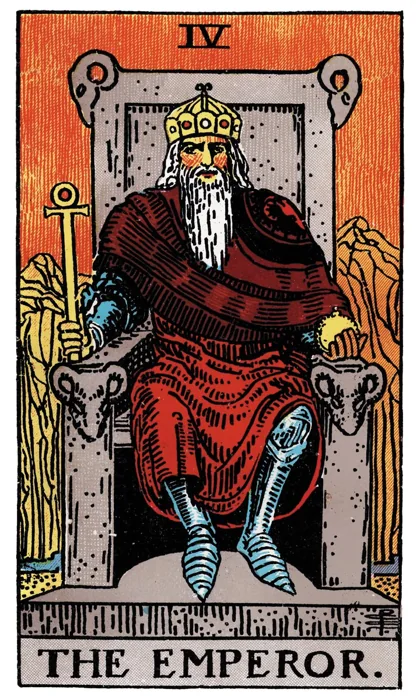
With The Emperor
With the Emperor, an established structure needs examination. Authority may help coordinate a response if it can accept relevant information. Preserving control at the expense of accuracy can make the underlying fault harder to repair.
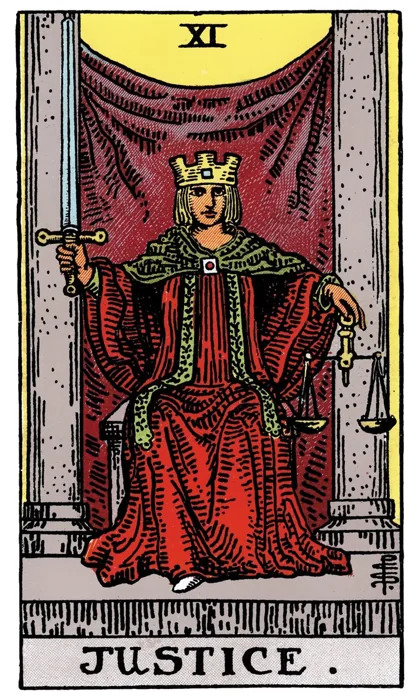
With Justice
With Justice, disruption calls for an accurate account of responsibility. Gather the relevant facts before distributing blame. A clear distinction between deliberate choices, neglected duties, and unforeseeable conditions can guide a more useful repair.
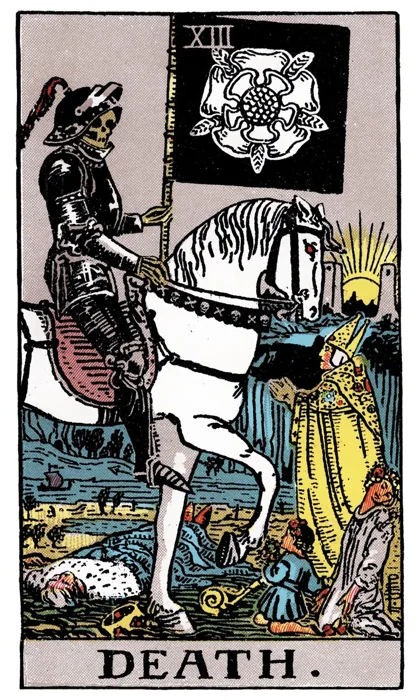
With Death
With Death, a rupture may make an ending explicit. Identify which form can no longer continue and which resources remain available. The practical work may involve closure as well as repair, without treating the entire earlier experience as worthless.

With The Devil
With the Devil, the cost of a dependency may become difficult to conceal. Focus on the actual terms and available support. Recognition can begin a change, but it does not erase practical constraints or make leaving automatically simple.

With The Star
With the Star, the aftermath may need quiet restoration and a modest sense of possibility. Do not force hope to arrive before immediate needs are met. Small, dependable acts of care can make a future feel more inhabitable.
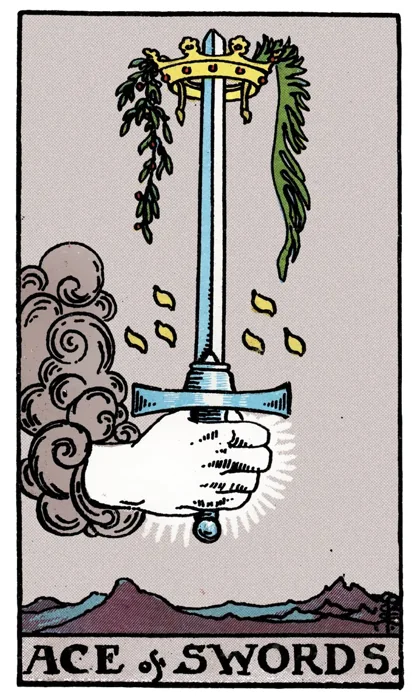
With Ace of Swords
With the Ace of Swords, a clear fact or distinction may overturn an established account. Use the clarity to identify the next necessary action. A revealing insight becomes more helpful when it is communicated accurately rather than wielded for maximum impact.
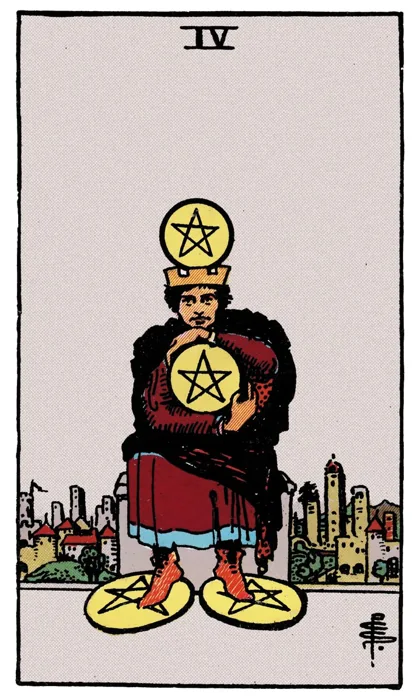
With Four of Pentacles
With the Four of Pentacles, a tight grip may be preventing adaptation. Determine what genuinely needs protection and what is being preserved mainly because change feels threatening. A deliberate revision can be more secure than maintaining an increasingly fragile arrangement.
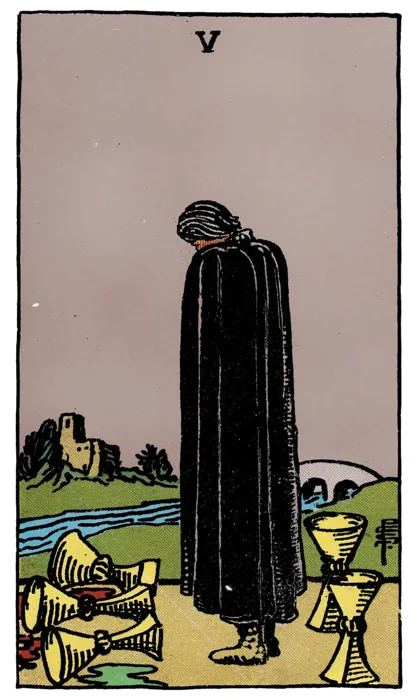
With Five of Cups
With the Five of Cups, the loss within the disruption needs room. Acknowledging remaining resources does not require dismissing what was damaged. Practical recovery and grief can proceed together at different speeds.
The failed model and the cracked façade
A model that cannot explain a new observation offers one image for the Tower. The observation may be inconvenient, but excluding it does not strengthen the model. A more useful understanding develops when the discrepancy is allowed to change the account.
The cracked façade gives another image: an attractive surface can remain intact while the supporting conditions deteriorate. Maintenance requires attention to what is less visible and less flattering. The moment of exposure may be dramatic because ordinary correction has been postponed.
The witness who names a public fiction can also belong to this card. Their contribution depends on accuracy and responsibility as well as courage. Breaking a silence matters most when it helps people understand the situation and act, rather than merely replacing one forceful story with another.
Separate the changed fact from the feared future
Write what has actually changed, what you fear may follow, and what remains dependable. Keep the three accounts separate. This can reduce the tendency to treat every imagined consequence as part of the event that has already occurred.
Choose one response to the established facts: clarify, repair, seek relevant help, or revise the plan. Leave the larger interpretation open where it is still uncertain. The Tower becomes practical when a broken assumption leads to a more accurate next step.
Artwork & interpretation
Waite discusses the Tower as a rupture in a structure of doctrine or falsehood and attends to the human figures within the image. This guide develops an original practical reading of exposed assumptions, disruption, and responsible reconstruction. A. E. Waite, The Pictorial Key to the Tarot: The Tower.
The symbolic associations and examples offer ways to read a situation. They do not establish another person’s thoughts or fix an outcome.
Seeing why something failed does not make its loss painless, deserved, or secretly welcome.
Use the cards in a spread →