Cups · Five
Five of Cups
Something mattered, and the loss changes the view
The Five of Cups acknowledges a loss that still hurts. Regret may complicate the grief, particularly if you feel responsible for part of what happened. Remaining support can help without replacing what is gone. You may be able to deal with a practical obligation before you feel ready to make sense of the experience as a whole.
- Loss
- Disappointment
- Regret
- Remaining support
16 min read
In this guide
The part that is missing has become the centre of attention
The outcome is not the one you prepared yourself to receive. A relationship changes, a project ends badly, or an ordinary reminder brings back something you thought you had put aside. The Five of Cups describes the way loss gathers attention. What is absent can become more vivid than everything still present around it.
The card concerns grief, disappointment, regret, and the experience of recognising that something cannot continue in its expected form. The loss may be large or private, recent or newly understood. An unrealised possibility can matter deeply even when other people see little that has physically changed. You may be grieving a future you had already begun to inhabit in imagination.
There is often a distinction to make between what happened and what you believe it says about you. A failed attempt can begin to look like evidence that you always fail. Rejection may raise doubts about your worth, until a single mistake seems to explain an entire history. The event deserves honest attention without being given authority over every part of your identity.
The image also contains what remains, but that should not become an instruction to replace sadness with gratitude. A surviving friendship does not cancel a lost relationship, and a useful lesson does not make an avoidable cost desirable. Remaining resources matter because they can support life now, not because they prove that the loss should no longer hurt.
The Five can invite an accurate account of responsibility. Perhaps there is something to apologise for, repair, or learn. Perhaps the outcome was largely beyond your influence. These possibilities need to be distinguished through the actual circumstances. Regret can feel like control after the fact, but feeling responsible does not establish that you could have prevented everything.
In an outcome position, the Five can help you respond to a disappointment you are already facing. Consider what has changed and which immediate obligation needs attention. Available support may make that task easier. The card does not predict another loss. You can do something useful for today while the larger meaning of the experience remains unresolved and your feelings continue to change.
Three fallen cups, two standing, and a bridge beyond them
A cloaked figure stands with head lowered towards three fallen cups. Two other cups remain upright behind them. A river crosses the scene, with a bridge leading towards buildings on the opposite side. The dark cloak occupies much of the foreground, making the person's absorption in the immediate loss visually difficult to miss.
The spilled contents cannot simply be put back into the vessels. This gives the image a quality of irreversibility without telling us what event it represents. Some experiences require an acknowledgement that the original arrangement is no longer available. Repair may still be possible, but it may create something different from restoring the exact previous state.
The two standing cups are outside the figure's present gaze. They are visible to the viewer, which can make it tempting to lecture the person for failing to turn around. A more careful reading recognises the difference between available support and the capacity to notice or use it. The presence of resources does not make their reception automatic.
The bridge offers a route through the wider landscape. It does not erase the river or transport the figure without effort. As a metaphor, it suggests that movement may become possible through practical connections: another person, a clear arrangement, or a small action. The route can exist before the person is ready to take it.
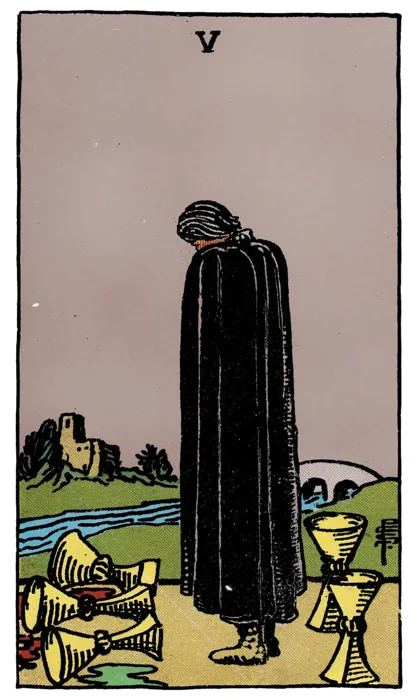
The fallen vessels make the loss concrete. A useful response begins by naming what has actually changed. Repair, learning, or a new arrangement may follow, but none requires pretending that the original experience can be made untouched again.
The standing cups and bridge offer possibilities beyond the immediate focus. They can be noticed gradually. What remains is valuable as support for the next part of life, without being asked to cancel the significance of what is missing.
Regret keeps trying to reopen a closed moment
The Five of Cups can feel like returning repeatedly to a point where things might have gone differently. You may keep rewriting the conversation in your head, looking for the decision that could have changed it. Earlier details begin to seem like signs you should have recognised. Some review can clarify a lesson. Beyond that, repetition may preserve the feeling of working on an event that is no longer available to change.
Try separating responsibility from hindsight. What did you know then, what choices were realistically available, and what belongs to other people or circumstances? An honest account may include mistakes without making you the sole author of the outcome. Precision can support accountability more effectively than a global judgement that you ruined everything.
Disappointment may also include anger, relief, embarrassment, or numbness. A complicated response does not invalidate the loss. You can miss a relationship that was difficult, feel relieved by an ending you did not want, or grieve an opportunity whose demands would have been considerable. The experience need not become emotionally simple before it can be acknowledged.
The card can reveal a wish for someone else to understand the scale of what happened. You may keep explaining because their response seems too small. Choose a listener capable of receiving the experience where possible. Not everyone will understand, and their limitation does not decide whether the loss deserves a place in your account of your life.
If you feel little, do not use the image to demand visible grief from yourself. People respond differently, and a card cannot establish the correct emotional form. Attend to what is actually present: practical disruption, a changed routine, a recurring thought, or a need for distance. The reading should help you notice rather than prescribe a performance of sadness.
Meaning does not have to arrive as compensation
A common response to loss is the attempt to extract a lesson quickly enough to make the event acceptable. The Five of Cups allows another possibility: you may learn something and still wish it had not happened. Understanding can become useful without serving as compensation. Not every painful experience needs an uplifting conclusion in order to belong to your history.
Loss also reveals attachment. Something mattered because you invested attention, hope, work, or affection in it. The fact that the arrangement ended does not automatically make the investment foolish. A life without the possibility of disappointment would also exclude many forms of participation. The task is to learn proportionately, rather than turn pain into a rule against caring.
There is a distinction between remembering and remaining responsible for the past. You can carry affection or knowledge without continually reopening every obligation associated with it. A former role may have ended even while its emotional significance remains. This distinction can make room for continuity without requiring permanent availability to a situation that has changed.
The two standing cups suggest that life is not exhausted by the loss, but they do not determine when that fact becomes emotionally available. Remaining possibilities need to be encountered as themselves, not enlisted to prove that you have moved on properly. A friendship, task, or ordinary pleasure can matter without replacing what came before.
The deeper invitation is to let the event become part of a larger account without reducing its weight artificially. That account may remain unfinished. You can name the loss honestly while admitting how much remains uncertain. Whatever still needs your care can have a place in that account too. A next step need not mean closure; it may simply mean that the present also has a claim on you.
A relationship can matter after its form has changed
In relationships, the Five of Cups can describe disappointment, separation, an unmet expectation, or sorrow about how a connection has developed. Begin with the actual change. Has the relationship ended, has trust been damaged, or has an imagined future become less likely? These are different experiences even when they produce a similar feeling of absence.
If repair is possible and wanted by both people, it needs more than regret. Describe the action and acknowledge its effect before explaining how you would behave differently. An apology can open the conversation, but it cannot require the other person to restore trust immediately. The work of repair belongs to the current behaviour as well as to the account of the past.
When a relationship has ended, you may grieve both the person and the version of life organised around them. Ordinary routines can become reminders. Allow the practical transition to be specific: contact, shared belongings, responsibilities, and the people who can support you. These arrangements do not resolve every feeling, but they can reduce avoidable confusion around it.
The card does not establish that a former partner regrets leaving, wants to return, or is secretly suffering. Those questions need communication and observable behaviour. Your own longing can be acknowledged without being turned into evidence about another person's inner life. This helps you make choices based on the relationship that exists, rather than the one a reading might allow you to imagine.
In an ongoing bond, attention may have become fixed on a disappointment while other forms of care go unseen. Notice what remains without using it to silence the issue. A relationship can contain genuine affection and a serious problem together. The useful question is whether both people can recognise the whole picture and participate in an appropriate response.
Friendship and family losses deserve the same care of attention as romantic ones. A changed friendship, estrangement, or the disappearance of a familiar role can alter daily life profoundly. You do not need a conventional script to recognise that something mattered. Seek a form of acknowledgement that fits the actual relationship and your experience of it.
Separate the result from the whole account of your ability
At work, the Five of Cups can describe rejection, a failed project, a missed opportunity, or disappointment after substantial effort. Start by establishing what the result actually means. A proposal was not selected, a product did not meet its aim, or a role ended. Those facts matter, but they do not automatically establish that every part of the work lacked value.
Review the undertaking when you have enough distance to learn from it. Distinguish choices within your control, information that was missing, and conditions that changed. Identify a small number of useful lessons rather than constructing a total indictment of your judgement. A practical review should improve future action, not merely make the failure feel more comprehensively explained.
If your decision affected others, accountability may require a direct acknowledgement and a repair plan. Avoid making your distress the centre of a conversation about their consequences. Explain what happened and the action you are taking, being clear where you cannot yet offer certainty. Regret becomes useful when it supports action rather than asking the affected people to reassure you.
For creative work, a disappointing response can make the entire piece feel contaminated by its reception. Give yourself time before deciding what to discard. Some feedback may be useful, some may reflect fit or taste, and some may be too vague to guide revision. The work deserves an assessment more specific than the first sting of being misunderstood or overlooked.
There may be resources worth carrying forward: skills, material, relationships, or a clearer understanding of the audience. Name them without pretending they repay every cost. Salvage is a practical act, not a demand to call the experience a success. It can help prevent one outcome from taking usable work out of your future unnecessarily.
The professional shadow is continuing an unworkable project because ending it would make the loss official. Review what remains to be gained and what further effort would cost. Previous investment deserves respect, but it cannot decide the next commitment alone. A careful ending may preserve more capacity and integrity than another attempt to make the past come out differently.
Name the actual loss before letting it become everything
In material matters, the Five can prompt an honest inventory after a setback: what is gone, what obligations remain, what can be recovered, and what decisions still need to be made. Use records and actual terms. A distressing outcome can make the situation feel more total than it is, while avoidance can conceal details that need timely attention.
Regret about spending or a financial decision may invite a specific lesson. What information would you seek next time, what limit would help, or which assumption proved unreliable? Avoid trying to erase the discomfort through another hurried commitment. The card does not predict recovery or loss; it asks for a clearer relationship with the facts and the next available choice.
Objects and places can carry emotional meaning beyond their financial value. Losing a home, possession, or familiar setting may involve identity, memory, and routine as well as money. Acknowledge those layers while attending to practical needs. Replacing the function of something and recognising its personal significance may require different kinds of action.
If support is available, clarify what would help and what the terms are. A practical offer can reduce the immediate burden without asking you to feel cheerful about needing it. Receiving assistance does not have to mean agreeing that the situation is acceptable. It may simply provide a steadier place from which to decide what comes next.
Keep one ordinary part of the day within reach
Disappointment can occupy attention even while daily obligations continue. You may find ordinary decisions unusually effortful because part of the mind keeps returning to what happened. Simplify where possible. One manageable task, a clear plan for the next hour, or practical help can be useful without being presented as a cure for the feeling.
Company may help, or quiet may be more suitable. Ask for the form of support you can actually receive: listening, distraction, help with a task, or time without questions. You do not need to provide an improving narrative in exchange for care. A person can accompany you without knowing how the whole experience will eventually make sense.
The card cannot diagnose grief, depression, or any health condition, and it does not predict a death. If distress is interfering with daily life, support beyond a reading may be useful. Within the card's reflective role, the question is what makes the present a little more manageable while leaving the significance of the loss intact.
Give the loss its name and the next task its proper size
Describe what has changed as specifically as you can. Include the hoped-for future if that is part of what hurts. Then separate the emotional meaning from the practical actions that remain. You may need to mourn, apologise, return something, make a decision, or ask for help. These tasks can coexist without being completed at the same pace.
Where responsibility is yours, choose a proportionate repair or lesson. Where it is not, notice the temptation to invent a better past in which perfect foresight would have protected everyone. The aim is an accurate account, not a comforting one. Accuracy can include limits on what you knew and what any available choice could have achieved.
The shadow is making loss the only authorised fact about the present. A kind encounter or a moment of pleasure feels disloyal, as though noticing it would reduce what happened. It need not. The remaining parts of life can receive attention without becoming arguments against your sadness or proof that you should already be finished with it.
Another shadow is refusing to acknowledge regret because you fear being trapped in it. A clear admission can sometimes reduce the need for repeated private argument. It is possible to admit how much something mattered and how strongly you wish it had gone differently. Choosing a next step does not withdraw that admission. None of those statements has to cancel the others.
Attention may be widening, or the loss may remain unspoken
Reversed, the Five of Cups can describe a gradual return of attention to what remains, a willingness to accept support, or a changed relationship with an old disappointment. This may be quiet and uneven. A day with more interest does not require declaring the loss resolved, and a difficult reminder does not erase the movement that has occurred.
The reversal can also indicate sorrow that has been minimised or hidden. You keep saying that it is fine because the loss seems too small, too private, or too inconvenient to explain. Consider a suitable form of acknowledgement. It may be a conversation, a private note, or a practical ritual that gives the experience a place without requiring public disclosure.
Regret may have become a repeated self-punishment rather than a source of information. Return to the distinction between responsibility and total blame. What repair remains possible, and what question are you asking the past to answer that it cannot? A next action can be chosen even while some uncertainty or sorrow remains.
A reconnection may become possible, but the card does not promise a return or establish that resuming the old arrangement would be wise. Look at what has changed, what each person wants, and whether the practical conditions are different. Familiar feeling alone cannot carry the work that the earlier relationship left unfinished.
A constructive reversal can mean allowing a good thing to exist alongside a painful history. You accept an invitation, use a skill from a failed project, or enjoy an ordinary moment without making it a verdict on your grief. The remaining cups become part of life when they can be received for what they are, rather than as compulsory replacements.
What kind of response does the loss need?
These pairings explore disappointment, accountability, support, and change. They do not predict death, prove another person's regret, or prescribe how quickly someone should recover from a loss.

With Justice
With Justice, distinguish responsibility from a general feeling of blame. Examine the facts, the agreements, and the choices actually available at the time. A fair account can support repair without assigning one person control over every part of the outcome.
With Death
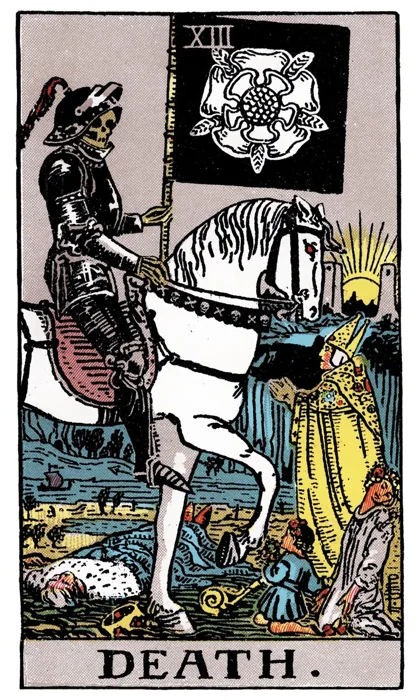
With Death, an ending may need to be recognised before a new arrangement becomes possible. Allow practical closure and emotional adjustment to have different tempos. The pairing describes change symbolically; it is not a prediction of physical death or another inevitable loss.

With The Star
With the Star, support or a modest possibility may become easier to receive. Let hope remain proportionate to what is actually present. A small good experience can matter without being required to explain, compensate for, or redeem the difficulty that came before it.

With The World
With the World, a chapter may be ready for a clearer ending even while its meaning remains complex. Complete the obligations that genuinely remain and recognise what you carry forward. Closure can be a practical decision without becoming a claim that every feeling is settled.
With Three of Cups
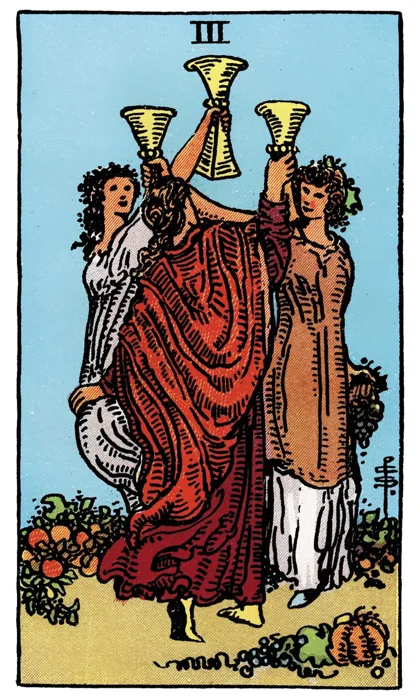
With the Three of Cups, companionship may make the experience less solitary. Ask for or offer the form of support that fits: listening, practical help, or simple company. Shared care does not need to hurry the person towards celebration in order to be useful.
With Six of Cups
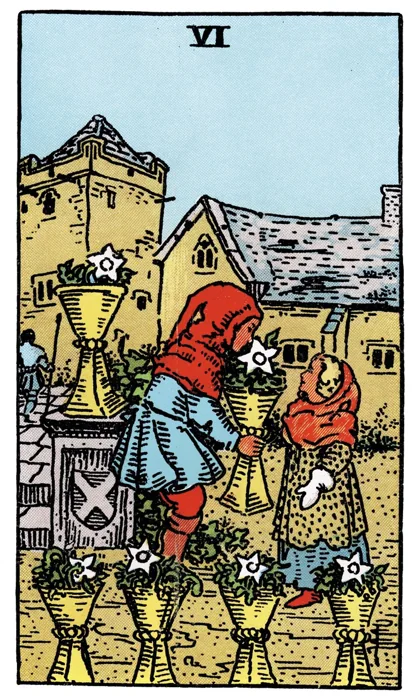
With the Six of Cups, memory may make an absence especially vivid. Notice both what is remembered and what the past could not provide. A meaningful memory can be kept without requiring the present to recreate the whole relationship or period in which it occurred.
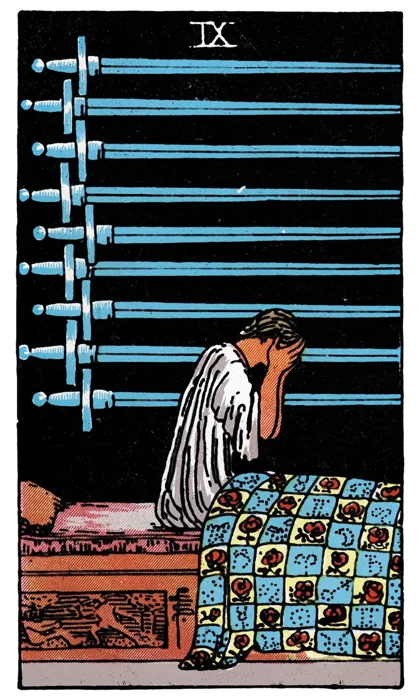
With Nine of Swords
With the Nine of Swords, regret may be expanding into repeated imagined alternatives or global self-blame. Separate known facts from feared conclusions and identify any practical action still available. The cards cannot assess mental health; use appropriate support when the distress needs more than reflection.
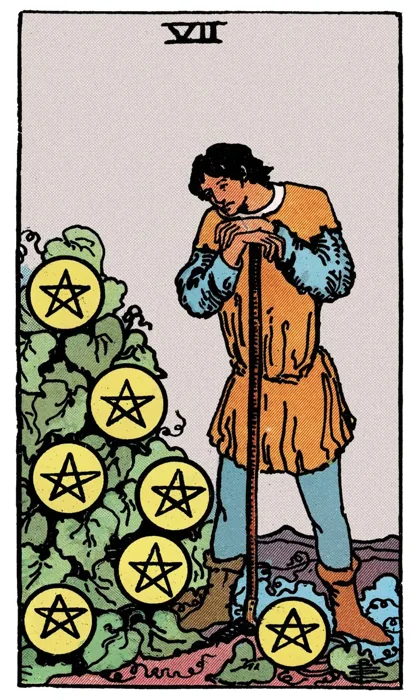
With Seven of Pentacles
With the Seven of Pentacles, disappointment may require a review of further investment. Examine what can still develop, what needs changing, and what additional effort would cost. Previous work matters, but it should not be the sole reason to keep committing resources to the same path.
The empty chair and the work that can be carried forward
The empty chair makes absence visible through an ordinary place. The room continues to exist, yet its arrangement now means something different. This image respects the particularity of loss: another chair can be occupied without replacing the person or experience associated with the one that remains empty.
The craftsperson examining a damaged piece offers another echo. They must decide what can be repaired, what material can be reused, and what has to be accepted as changed. Careful assessment need not deny disappointment. It gives that disappointment a practical companion without requiring the original result to become possible again.
The traveller carrying a letter from a place they have left suggests continuity without return. Something of the former life remains meaningful and portable, while the whole setting cannot be carried intact. The task is to decide how memory and knowledge can accompany the next part of life without requiring every future road to lead back.
Find one practical response to the loss
Choose a disappointment that keeps returning to your attention. Write three short accounts: what has actually been lost, what responsibility or practical action remains yours, and what support is still available. Keep these separate long enough that neither gratitude nor blame is allowed to erase the specific facts of the experience.
Choose one manageable action from the second or third account. You might make an apology, close an obligation, ask for company, or preserve something useful from the work. The Five of Cups becomes practical when the next step supports your present life without requiring you to declare the past acceptable or emotionally complete.
Artwork & interpretation
Waite describes the fallen and standing cups, the cloaked figure, and the bridge, emphasising loss with something remaining. This original guide explores disappointment, grief, proportionate responsibility, support, and the distinction between continuing life and cancelling what has been lost. A. E. Waite, The Pictorial Key to the Tarot: Five of Cups.
The symbolic associations and examples offer ways to read a situation. They do not establish another person’s thoughts or fix an outcome.
What remains can support you without being required to make what happened acceptable.
Use the cards in a spread →