Pentacles · Seven
Seven of Pentacles
The pause in which effort meets its results
The Seven of Pentacles pauses beside work that has taken time to develop. There may be good reason to wait for results. It may also be time to reconsider the approach, especially if expectations have changed. What you have already invested deserves recognition, but the decision to continue depends on what further effort can achieve.
- Assessment
- Patient development
- Return on effort
- Reconsidering direction
16 min read
In this guide
You have done enough to have something to assess
There comes a point when the work has a history. You have kept working through the early uncertainty, making changes along the way and committing resources to them. Something is growing, but perhaps more slowly or differently than you expected. The Seven of Pentacles is the pause beside that developing thing: an opportunity to look carefully before deciding what the next period of effort should be for.
Upright, the card can describe patient cultivation, a review of progress, delayed gratification, or uncertainty about whether an undertaking is worth continuing. It is neither an automatic instruction to wait nor a verdict that the effort has failed. It asks you to compare the actual development with the aim, the conditions, and a reasonable timescale for the kind of work involved.
The distinction between slow progress and no useful progress matters. Some processes cannot be hurried without damaging them. Others remain stalled because the method is ineffective, the resources are inadequate, or the aim no longer fits. Look for observable signs of development and ask what would count as evidence that the current approach needs revision.
You may also be discovering that achieving a result would not feel as satisfying as you imagined. The goal was chosen under earlier circumstances, or the work required has changed your understanding of the life around it. This is valuable information. A plan can be reconsidered without declaring that every previous hour was wasted or that the earlier desire was foolish.
You may be proud of what exists and tired from maintaining it, especially while waiting for a more visible return. Those feelings can coexist. You do not have to choose between praising the project unreservedly and abandoning it. A review can identify what is working, what remains costly, and what a smaller or different next stage might make possible.
Its practical invitation is to give patience a structure. Decide which signs of progress to watch for and when to review them, allowing for the care the work still needs in the meantime. Waiting becomes more deliberate when it is attached to a process you understand. Otherwise it can become an indefinite obligation to keep hoping because you have already hoped for so long.
The worker stops beside the growing thing
A figure leans on a long-handled tool and looks towards a leafy plant bearing pentacles. Another pentacle sits low near the figure's feet. The posture suggests a break in activity. The person is not planting or gathering at this instant; they are looking at the result of work that has already been done.
The leaning body introduces effort and time into the scene. Growth has not appeared in an empty landscape as a sudden gift. Someone has been involved in tending it. At the same time, the image does not tell us whether the worker is satisfied, disappointed, tired, or simply attentive. Leave those possibilities open until the actual situation gives the pause a character.
The plant already carries something valuable, although the harvest remains unfinished. Both facts matter when you assess the work. Give the developing result credit for what it has achieved so far, then look at what still needs to happen. This makes it easier to judge its promise without confusing a hopeful expectation with a benefit you have actually received.
The tool remains available. The pause does not remove the capacity to act. In a contemporary reading, this can represent a useful relationship between doing and reviewing: step back far enough to see the whole, then return with a clearer purpose. Reflection is part of the work when it changes the next action, not merely another way of delaying contact with the task.
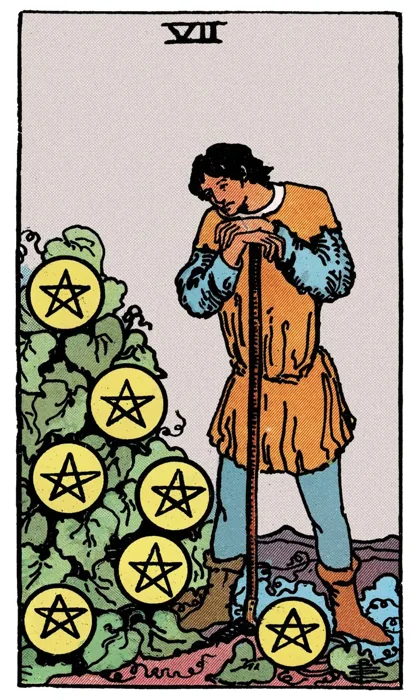
The tool remains in reach while the person looks. A review can be part of responsible work when it helps determine the next action. The posture does not by itself tell us whether the pause holds pride, fatigue, doubt, or satisfaction.
Visible growth deserves recognition without being mistaken for the final harvest. Ask what has genuinely changed, what remains uncertain, and which conditions will determine whether further effort is worthwhile.
The tired question beneath the patient face
The inner Seven may ask whether anyone understands how long you have been trying. From outside, the project still looks promising; from inside, it contains months of small decisions and repeated uncertainty. You may want recognition for the effort before the final result makes that effort easy to admire. The card gives that wish a place without pretending effort alone determines the outcome.
As a temporary disposition, the Seven can be thoughtful, persistent, and willing to consider the long term. You know that worthwhile things often need development. The difficulty is that patience can become part of your identity, making reconsideration feel like a personal defeat. Ask whether you are serving the undertaking or protecting an image of yourself as someone who never gives up.
There may be envy of quicker results elsewhere. Another person seems to progress in a season while your own work remains unfinished. Comparison rarely reveals every difference in starting point, resources, scope, or visibility. Use it carefully. It may suggest a method worth learning, but it should not automatically become a verdict that your pace proves inferior ability.
The card can also mark a change in desire. You still know how to pursue the goal, yet feel less certain you want the life that success would create. Allow that question before increasing the effort. Sometimes the work needs better conditions; sometimes your priorities have changed. Neither possibility can be understood if the only permitted interpretation of doubt is laziness.
Its more settled expression accepts an honest review without demanding an immediate dramatic decision. Disappointment need not end your curiosity about the result. You can acknowledge it while choosing a limited next stage to explore. This gives commitment room to become informed by experience. You are allowed to know more now than you knew when you began.
Time is an ingredient, not a guarantee
The Seven explores the difference between allowing time and asking time to do work that nobody else is doing. Skills need time to consolidate, as trust does to develop between people. A project may likewise take a while to reach its audience. Yet duration alone does not correct an unsuitable method or supply a missing resource. Patience works best alongside an understanding of the process being given time.
The card also asks how past effort influences present choice. What you have already spent is part of the history, but it cannot be recovered simply by spending more. The next decision concerns what future effort is likely to make possible under current conditions. This does not make the past meaningless. It keeps the past from becoming an unlimited claim on everything still available.
Value may develop in forms that were not part of the original aim. You acquire a skill, discover a preference, or make a useful relationship even when the expected outcome remains uncertain. These gains deserve recognition. They should not be used to rationalise every continuing cost, but they can provide a fuller account than either total success or total waste.
The deeper discipline is learning to remain in relationship with a changing undertaking. A project is not a promise frozen at the moment of conception. It reveals its needs and possibilities through contact with reality. Good stewardship can include continuing, altering, harvesting a smaller result, or allowing the work to end with its value honestly understood.
Review the evidence before adding another season
At work, the Seven favours a considered review of effort and results. Clarify the aim, the measures that actually reflect it, and the timescale on which meaningful change could reasonably appear. A metric is useful only if it relates to the purpose. Visible activity can accumulate while the underlying need remains unmet, and some valuable progress may initially be difficult to count.
For a long project, distinguish leading signs from final outcomes. A clearer draft or a learner's growing capability can show progress well before publication or an examination. Similarly, a process may be becoming more reliable before its wider benefits are visible. Notice these intermediate changes while retaining a clear account of what still has not been achieved. Encouragement and honest assessment can operate together.
If results are disappointing, investigate the method rather than immediately doubling the effort. Check whether the task reaches the people it is intended for, and whether expectations are realistic given the project's resources. A targeted adjustment may be more useful than another period of identical work performed with greater intensity. The pause earns its place by informing what happens next.
The card can also concern promotion, recognition, or professional development that has been promised vaguely for too long. Ask what criteria and timing actually apply. Patience should not be used by others to avoid making an agreement concrete. A clear answer may support continued commitment or reveal that the opportunity is less available than you have been encouraged to believe.
In creative work, the Seven is the moment of reading the whole draft rather than polishing the next sentence. What is emerging? Which part has energy, which part is being maintained mainly because it was in the plan, and what does the work now ask to become? A review can preserve the living project by allowing the original outline to change.
The professional shadow is perpetual evaluation. You inspect results so frequently that the work never receives a long enough interval to develop. Choose review points appropriate to the process and use the time between them for the required action. Assessment should improve the work's direction, not consume the attention needed to give the direction a fair trial.
Time together does not answer every question about the future
In relationships, the Seven can describe taking stock of a connection that has developed over time. You may ask what has grown, what remains difficult, and whether both people still want to continue in the same direction. The history matters. It also needs to be considered alongside present conduct and the actual life the relationship now creates.
Trust and intimacy often need patience, especially when people are learning how to understand one another. Look for meaningful signs of participation: conversations become more honest, agreements are kept, repair becomes possible, or daily life makes more room for both people's needs. Slow change can be real without being spectacular.
The difficult expression is waiting indefinitely for potential to become behaviour. You know how caring, available, or responsible someone could be, while the same unmet need keeps returning. Ask what is changing in observable terms and what conditions would justify continuing to wait. A relationship should not depend entirely on one person tending an imagined future the other has not chosen.
For dating, the card may invite a slower assessment rather than an immediate conclusion. A connection can be promising while still unfamiliar. Give yourself enough contact to learn how the person acts across ordinary circumstances. At the same time, do not use patience to talk yourself out of a clear incompatibility you already understand.
When asking about feelings, the Seven cannot establish that someone is secretly planning a future with you. It can suggest reflecting on investment and pace, but the evidence comes from their choices and communication. Ask what each person wants to develop and what contribution is actually being made. Time elapsed is not the same as shared intention.
In established partnerships, a review need not be a threat. You can discuss which routines support closeness, what has changed, and where more attention is needed. Appreciate what works as specifically as you name what does not. The aim is a more accurate shared account from which a next stage can be chosen, rather than a trial in which the entire history must be declared either worthwhile or mistaken.
Maintenance and return belong in the same picture
In material matters, the Seven encourages looking at what a commitment requires over time and what it actually provides. This can concern money, a home project, a possession, or a practical arrangement. Use current facts and appropriate expertise for consequential decisions. The card cannot predict a return, select an investment, or determine when a financial commitment should be continued or ended.
Include maintenance in the assessment. Something attractive at the beginning may demand time, repairs, administration, or ongoing expense that was underestimated. That does not automatically make it a poor choice. It means the value should be considered in relation to the whole arrangement, rather than only the moment of acquiring it.
At home, a gradual improvement may deserve recognition. A space becomes more usable through a series of modest changes, and the cumulative result can be easy to overlook because no single step felt transformative. Compare the actual experience of living there with the earlier one. Notice what has become easier as well as what still needs attention.
The card can also ask whether an object or arrangement is being kept because it serves the present life or because too much was once spent on it. Consider the available options without demanding that the earlier decision be justified forever. A different use, a smaller commitment, or a considered ending may preserve more value than continued maintenance of a plan that no longer fits.
A pause can belong to the work
The Seven gives observation a legitimate place beside effort. You may need enough distance to notice whether the current routine is producing what it was intended to produce. A pause becomes useful when it lets you compare conditions, identify a pattern, or hear a preference that constant activity has kept out of view.
Watch the demand that every interval prove progress. Some periods are spent maintaining, recovering, or allowing a process to settle. Those functions can matter even when no new result appears. At the same time, persistent depletion should not be explained away as the inevitable price of a worthwhile goal. Consider the actual conditions and the support or adjustment they may require.
Choose a scale of review that your attention can use. A whole life can be difficult to assess fairly on a tired evening. One routine, project, or recurring commitment offers a more manageable question. You can learn whether a particular pattern works without issuing a final judgement on your capacity to build anything lasting.
Give the next stage a reason and a review point
Write what you hoped the effort would produce, what has actually changed, and what remains uncertain. Include benefits you did not anticipate and costs you have been reluctant to count. Then choose a next stage with a clear purpose. Continuing becomes more deliberate when you know what you are testing or tending rather than simply repeating the previous period.
Decide what evidence would justify adjustment or stopping. This protects patience from becoming an obligation with no endpoint. It also protects a promising process from being abandoned whenever impatience rises. The criteria need not be rigid, but they should be specific enough that you can recognise something other than your current mood.
The shadow is loyalty to effort for its own sake. You continue because stopping would make the sacrifice feel visible, or you quit because a result has not arrived quickly enough to protect you from uncertainty. Both can avoid the actual assessment. The Seven asks what the undertaking needs now and whether you still choose to provide it under the conditions that exist.
Waiting has become a question rather than an answer
Reversed, the Seven can describe impatience, disappointing results, or a review that reveals a poor fit between effort and outcome. It may be time to change the approach. Identify what the evidence supports before making a broad conclusion. A method can fail without the larger goal being impossible, and a goal can lose relevance without your earlier commitment becoming foolish.
Another expression is refusing to review. You keep working because looking closely might force a difficult choice. The activity provides reassurance even when the result remains unclear. Set aside a bounded interval to examine the actual development. Avoiding the review does not preserve the opportunity; it may simply allow more resources to pass into an arrangement nobody is currently assessing.
The reversal can also show premature harvesting. You demand a result before the process has had a reasonable chance to develop, then interpret its incompleteness as failure. Learn what the undertaking requires and compare expectations with relevant evidence. Patience becomes more credible when its duration has a basis beyond a vague instruction to trust the process.
Sometimes the card reflects a useful decision to stop. You have learned enough, the goal no longer fits, or the continuing cost exceeds what you are willing to give. Preserve what remains valuable and close the commitment responsibly. An ending can be the result of attention rather than a lapse in determination.
The constructive reversed Seven reclaims choice from habit. You continue with a revised method, reduce the scale, set a clearer boundary around waiting, or redirect effort towards a more suitable aim. The important change is that the next period is chosen on present information. The past is acknowledged without being allowed to make every future decision for you.
What would make continued effort worthwhile?
These pairings explore pace, evidence, and the purpose of sustained work. They do not guarantee a return or supply a timetable for events that depend on actual conditions.
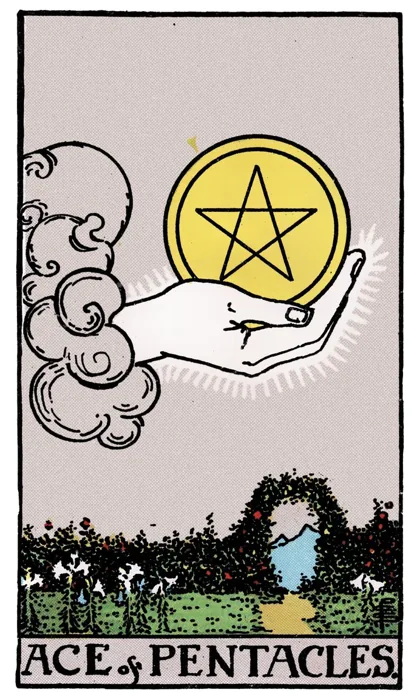
With Ace of Pentacles
With the Ace of Pentacles, an early opportunity is entering a period of development. Check what the beginning now requires and whether the original terms still fit. Potential becomes more informative through use, and a small trial may reveal which resources deserve a larger commitment.
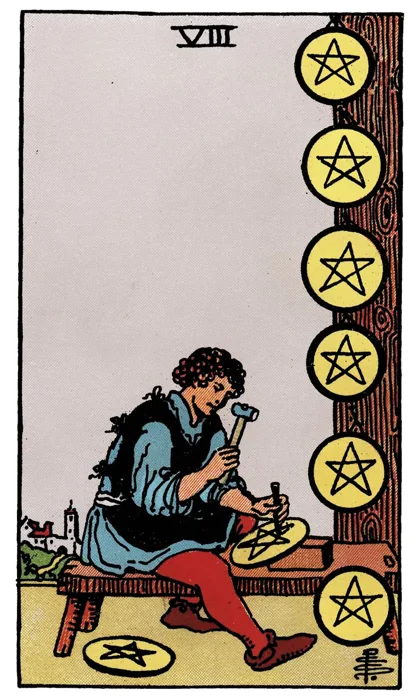
With Eight of Pentacles
With the Eight of Pentacles, sustained practice needs occasional assessment. Repetition becomes more useful when feedback identifies what to refine. Let the review improve the next attempt rather than interrupting every attempt before enough practice has occurred to make a difference.

With Temperance
With Temperance, gradual adjustment may serve the work better than a dramatic change. Look at pace, proportions, and the interaction of different needs. A sustainable method can produce more than repeated bursts of effort followed by depletion, especially when the undertaking requires continuity.
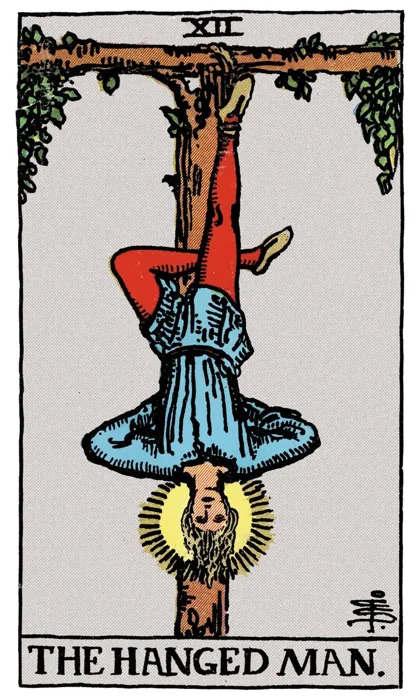
With The Hanged Man
With the Hanged Man, the pause may be longer or less voluntary than expected. Ask what can be understood or prepared while direct progress is limited. Waiting should still have a relationship to the actual situation, rather than becoming an indefinite proof of devotion to an unavailable outcome.
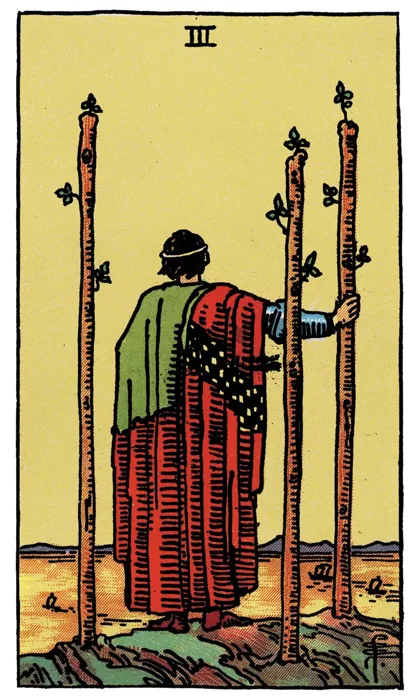
With Three of Wands
With the Three of Wands, your effort is meeting a response from beyond the immediate task. Examine what that response reveals about direction, timing, or fit. Expansion may be possible, but it should be informed by what is actually arriving rather than the scale of the original ambition.
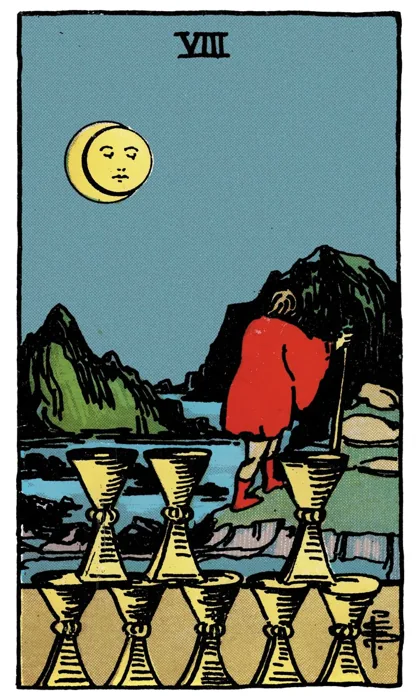
With Eight of Cups
With the Eight of Cups, a review may reveal that something no longer provides the meaning you hoped to find. Acknowledge what was valuable before deciding what to leave. Continued affection for part of the undertaking does not require an unlimited commitment to the whole arrangement.

With Ten of Pentacles
With the Ten of Pentacles, consider whether the current work supports a longer-lived structure. What will remain useful beyond the immediate result, and who will maintain it? A durable outcome needs more than accumulation; it needs conditions under which value can be carried forward.
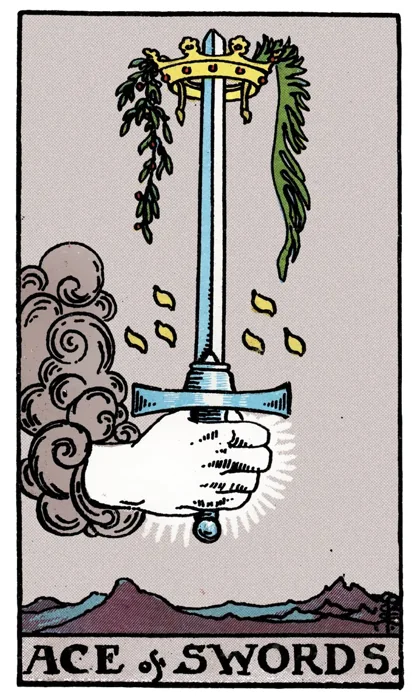
With Ace of Swords
With the Ace of Swords, one clear distinction may change the review. Ask whether slow progress reflects the process or an ineffective method. You may also need to distinguish your current desires from an inherited goal, and necessary costs from ones you could avoid. Precision can turn vague disappointment into a decision you can actually make.
The orchard and the unfinished house
An orchard keeper knows that fruit does not ripen because it is inspected more often. They also notice disease, poor conditions, or the need for a different method. Patience and intervention are both part of the craft. The Seven asks which is required now, rather than turning either waiting or action into a universal virtue.
Someone stands inside a half-finished house and realises that the room they once wanted no longer suits the life they are building. The earlier plan explains how the structure reached this point. It does not have to dictate every remaining choice. Revising now may honour the actual purpose of the house more than completing the original drawing unchanged.
A maker opens a box of early attempts and sees progress that daily familiarity had hidden. The result is not finished, yet it is no longer where it began. The Seven can offer this kind of perspective: enough distance to recognise development without needing to declare the whole undertaking complete.
Review one undertaking without putting yourself on trial
Choose a project or recurring commitment. Record the original aim, the present result, the ongoing cost, and one important uncertainty. Look for concrete evidence rather than only how the work feels today. Decide whether the next stage calls for continued care, a targeted adjustment, a smaller scope, or a responsible ending.
Set a reasonable point to review that choice. Until then, give the chosen action enough room to show what it can do. The Seven of Pentacles becomes a practical ally when assessment leads to a better relationship with the work, and patience remains something you can choose rather than a debt you owe to everything you have already done.
Artwork & interpretation
The historical scene presents a worker contemplating pentacles in growing foliage. This original interpretation develops the pause into questions of patience, evidence, and chosen commitment; it does not predict financial returns or fixed timing. A. E. Waite, The Pictorial Key to the Tarot: Seven of Pentacles.
The symbolic associations and examples offer ways to read a situation. They do not establish another person’s thoughts or fix an outcome.
Something can deserve more time without deserving unlimited time, and stopping can be a considered response rather than a failure of patience.
Use the cards in a spread →