Pentacles · Ten
Ten of Pentacles
What a secure life passes on
The Ten of Pentacles shows a life built across generations. Shared resources give established customs a place to continue, and people can find security in belonging to something older than themselves. Look at who gets to participate. An inheritance is most useful when the people receiving it can adapt it to the lives they actually lead.
- Continuity
- Shared security
- Inheritance
- Belonging
16 min read
In this guide
A life rests inside something larger
The place has routines, stories, people who remember, and resources that do not need to be invented every morning. Documents can be found, and there are people to ask who have handled the problem before. The roof and the relationships both have a history. The Ten of Pentacles describes the security of a structure that can carry more than one person's immediate effort. Its wealth includes continuity.
Upright, the card can represent an established household, family or chosen family, shared prosperity, a durable institution, or work whose value reaches beyond the present moment. It asks what remains when one task is finished or one person steps away. A system becomes substantial when knowledge, care, and practical responsibility can continue without depending entirely on a single individual's constant presence.
Belonging can be a profound resource. You have people to consult, a place to return, or a framework that makes the next stage less uncertain. The card recognises that support without assuming it is available to everyone. For someone building continuity after a long period of instability, even a modest dependable arrangement may carry the emotional weight of the whole image.
The Ten is also interested in the terms of membership. A family, organisation, or community may offer security while expecting obedience to a particular account of how life should be lived. Ask whether belonging allows difference. A structure that preserves itself by excluding inconvenient people may be durable in appearance while failing part of the purpose for which it deserves to endure.
Material success is one possible theme, but the card does not guarantee wealth, an inheritance, marriage, or a property outcome. It invites examination of the actual foundations: resources, agreements, relationships, maintenance, and the way responsibility passes between people. The impressive surface matters less than whether the arrangement can support ordinary life over time.
Its invitation is to think beyond acquisition. What would make the good thing last, who will care for it, and what should be carried forward? A lasting result may be an object, a body of work, a useful process, or a way of treating people. The Ten asks not only what you have built, but what kind of life the building makes possible for others.
Several generations share an architectural frame
An older figure sits in the foreground near two dogs. Beneath an archway stand two adults and a child, with buildings and decorative details around them. Ten pentacles are arranged across the scene, overlaying the people and architecture. The image is crowded with different scales of life: individual bodies, relationships, a household, and the larger structure containing them.
The older figure's richly patterned clothing gives the foreground a sense of accumulated history. Yet the person is not the only centre of attention. The adults, child, and animals occupy their own relationships within the same space. This can be read as continuity that exceeds any one participant: the shared life contains more than one generation's immediate concern.
The arch creates a threshold between the household and the world beyond. It can suggest welcome, protection, status, or the terms under which a person is admitted. The picture does not settle which meaning applies to your situation. Ask who can pass through the actual threshold and whether membership depends on remaining recognisable to an inherited expectation.
The pentacles form a pattern across the whole scene. Their distribution makes wealth appear connected to the shared structure, beyond any one person's possessions. Consider how those resources are used and who can decide what happens to them. Everyone may live beneath the same prosperous roof while having very different access to money or influence over the household's choices.
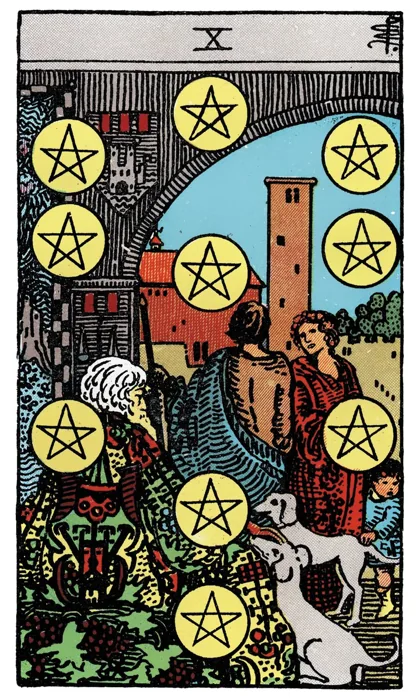
The older figure occupies the shared space without being its only focus. Consider what previous effort and experience contribute now, and how that contribution can be respected without deciding every choice for the people who follow.
The arch can protect and welcome, but it can also mark conditions of entry. Ask whether the actual household or community makes room for different lives, and whose needs are missing from its preferred picture of security.
Wanting roots is not the same as wanting a prescribed life
The inner Ten may express a longing for continuity: a home that remains, relationships that survive ordinary difficulty, or a future not organised entirely around the next move. This wish is not necessarily conventional ambition. It may be a desire to stop spending so much energy rebuilding the basic conditions of life and to have somewhere effort can accumulate instead of continually starting over.
As a temporary way of being, the card can be protective, future-minded, and attentive to what others will inherit from today's choices. You want the work to outlast the immediate excitement. The difficulty is that responsibility for continuity can become responsibility for keeping everyone inside one fixed pattern, even when the people involved need the pattern to change.
You may feel caught between gratitude and independence. A family or institution gave you something valuable, yet its expectations no longer fit. Acknowledging the support does not require endorsing every rule attached to it. Try to distinguish what you want to preserve from what you need to revise. Loyalty can be expressed through thoughtful change as well as repetition.
For someone without a secure inherited structure, the card can stir grief or envy. Other people appear to possess a starting point you have had to create through effort. Let that difference be real without allowing it to decide that continuity is forever unavailable. Chosen relationships, repeated practices, and a modest stable place can begin a different kind of lineage.
The more mature Ten allows belonging to contain distinct lives. You can contribute to a shared structure while remaining a person with your own preferences and direction. The foundation becomes stronger when it can receive honest information about what its members need, rather than requiring everyone to perform contentment so that the family or organisation continues to look secure.
Inheritance includes the way people are treated
The Ten broadens inheritance beyond property. People pass on habits of care, silence, conflict, skill, expectation, and permission. A practical resource may arrive with a story about who deserves it or how its recipient must live. The card asks what has been transmitted alongside the visible benefit and which parts deserve deliberate continuation.
It also explores the tension between durability and adaptation. Something lasts partly because it can withstand change, but sometimes because it can change appropriately. A tradition that cannot respond to the people practising it may survive as an empty performance. A living continuity keeps enough of its purpose to remain recognisable while allowing its form to serve a new set of circumstances.
There is a question of stewardship across time. Present choices can make future life easier or transfer costs to people who had no part in the decision. The card invites a wider account of responsibility, without pretending one person can control every later outcome. Documentation, maintenance, fair agreements, and the sharing of knowledge are ordinary ways of caring beyond the immediate moment.
The deeper promise is a structure that makes room for rest as well as effort. If a shared life is genuinely dependable, no one person must remain indispensable at every hour. People can age, learn, become ill, change roles, or step away without the whole arrangement collapsing. Continuity becomes humane when it supports those variations instead of demanding that everyone remain permanently useful in the same way.
Build something that survives your absence
At work, the Ten can describe an established organisation, a durable professional reputation, a family enterprise, or a project intended to have lasting use. Ask what makes it dependable beyond current enthusiasm. Clear responsibilities, maintained resources, shared knowledge, and a realistic account of ongoing work matter more than the declaration that something has been built for the long term.
Documentation is one expression of care here. A process held only in one person's memory may function well until that person is unavailable. Make the relevant knowledge accessible to the people who need it, with appropriate boundaries around sensitive information. The aim is continuity that does not require constant rescue by the same experienced individual.
The card can also concern joining an established institution. Its resources and reputation may offer real support, while its culture carries unwritten expectations. Learn both the formal role and the actual conditions of belonging. A prestigious name does not automatically mean the environment will fit your values or give you a meaningful share in decisions affecting your work.
For leadership, consider succession and the development of others. A strong system should not require every important choice to remain with its founder or current manager forever. Give people the training and clear authority they need, then allow them to exercise judgement within their responsibilities. The ability to step away can be evidence of good stewardship rather than proof that your contribution has become unnecessary.
In creative work, the Ten can ask what you want the finished work to contribute over time. That might be pleasure, a useful idea, a body of knowledge, or a world people return to. Let that aim inform craft and preservation without turning every piece into a monument. Lasting value often begins with work that serves its present audience honestly and well.
The professional shadow is preserving the organisation at the expense of the people it depends on. Tradition becomes an answer to every objection, and loyalty is measured by willingness to absorb avoidable harm. Ask what the institution is for and whether its current practices still support that purpose. A durable structure deserves maintenance and, when needed, correction.
Belonging needs room for the person you actually are
In relationships, the Ten can describe a shared home, established partnership, family integration, or the wish to create a stable future together. It values the practical and social setting of love: how people live, who supports them, what obligations they share, and how their lives fit into a wider network. Affection is held within a structure that can either support or constrain it.
For a developing relationship, discuss what security means to each person. One may imagine proximity to family, another privacy; one continuity of tradition, another freedom to build a different household. These preferences are not small details to be settled automatically after commitment. They shape the ordinary life the relationship is being asked to inhabit.
An established bond may benefit from appreciating the infrastructure already built. Familiar routines, trusted agreements, and people who show up can become invisible precisely because they are dependable. Notice that value without using it to dismiss a current problem. A relationship can have substantial strengths and still need changes in how care, authority, or responsibility is distributed.
The difficult expression is belonging made conditional on conformity. A person is welcome as long as they choose the approved partner, role, career, or way of living. Material support may intensify the pressure. Examine the actual terms and the options available, including support beyond the group. Gratitude for a shared history does not erase the right to have a life of your own.
The card cannot guarantee marriage, children, inheritance, or acceptance by a family. It can invite attention to the agreements and conversations that would make a shared future real. Look at how people respond when plans become concrete or differences emerge. A secure relationship is more than a pleasing picture of what the household might eventually look like.
Chosen family belongs within the Ten's territory. People who are not biologically related can build continuity by showing up for one another, providing practical care and keeping agreements. The useful question is who actually participates in sustaining life. A bond earns substance through conduct, and a household can be meaningful even when it does not resemble the inherited image of what a family should be.
Shared security requires clear ownership and maintenance
The Ten often directs attention to long-term resources, property, family assets, or shared obligations. These matters require actual documents, current information, and suitable professional advice when consequences are substantial. The card cannot establish an entitlement, predict an inheritance, or determine a financial plan. Its reflective value is in asking which responsibilities and assumptions need to become explicit.
Distinguish ownership from access. A resource may exist in a family or institution without being freely available to every member. Find out who can authorise use of the resource and under what terms, including any obligations that follow. A vague expectation can become a painful conflict when one person has planned around something another never agreed to provide.
At home, durability includes the ordinary work of upkeep. Consider who notices repairs and keeps records, as well as who coordinates care when people's capacity changes. Make that labour visible enough to share. A stable household is not simply one with valuable possessions; it is one with workable ways of caring for the people and resources inside it.
Consider what should remain flexible. A home intended to support several stages of life may need changes as people grow, age, leave, or return. Preserving a meaningful place does not require keeping every arrangement untouched. The structure serves continuity best when it can adapt to the lives it is meant to hold.
A dependable system should let people stop for a while
The Ten asks whether shared life actually distributes responsibility or merely gives one person a larger family or organisation to maintain. If everything depends on you remembering and initiating, the apparent stability may conceal a private load. Identify the decisions and tasks that could be owned more clearly by others.
Rituals can provide continuity without much explanation: a regular meal, a familiar conversation, a way of marking important transitions. Keep them connected to the people participating. When a ritual becomes exhausting or exclusionary, its purpose may be better served by adjustment than by insisting that everyone perform the old form with the right attitude.
The card can also invite a longer view of effort. Not every day must generate a new achievement if some of its work maintains a worthwhile shared life. At the same time, continuity should include room for individual rest and pleasure. A structure that survives only through perpetual sacrifice has not yet made security available to everyone beneath its roof.
Preserve the purpose, and question the form when needed
Identify what you want to endure: a relationship, a place, a body of work, a practical resource, or a way of caring for people. Then ask what maintenance and agreements it actually requires. Make one part less dependent on assumption, memory, or a single person's constant availability. Small acts of clarification can have long consequences.
Examine the conditions of belonging. Look at whether the people carrying the work have a voice, and whether anyone is expected to change who they are to remain welcome. A stable structure can tolerate these questions when its purpose includes the wellbeing of its members. Protecting its image by silencing them may preserve appearances while weakening the trust beneath.
The shadow is inherited authority treated as inherited correctness. Something has lasted, so it must be right; someone has provided, so they must decide. The opposite shadow dismisses all continuity as constraint and overlooks real support. The Ten asks for discernment: which parts are worth preserving with gratitude, and where would change help that value continue?
The shared structure is not supporting everyone equally
Reversed, the Ten can describe family conflict, unstable foundations, unclear agreements, or a gap between the image of security and the actual experience of living inside it. Identify the specific weakness. A resource may be insufficient, a role unfair, or a shared expectation no longer shared. Naming the issue allows a more useful response than declaring the whole structure either perfect or worthless.
Another expression is a break with an inherited pattern. You choose a different household, relationship, or direction and discover that belonging was more conditional than you hoped. This can contain both relief and grief. Seek support for the practical transition while allowing the loss of expected acceptance to matter in its own right.
The reversal can also show a plan for the future that has not become an agreement. People assume they share an understanding about care, property, work, or responsibility without having discussed the details. Bring those assumptions into an appropriate conversation. For consequential matters, use relevant expertise and the actual documents rather than relying on affection to prevent every misunderstanding.
Sometimes the card marks necessary renovation of a durable institution or household. The old structure contains value, but its current form cannot accommodate the people who now depend on it. Change need not erase the history. It can preserve the central purpose by releasing rules that have become obstacles to that purpose.
A constructive reversed Ten builds a more deliberate continuity. You clarify ownership, share knowledge, renegotiate a role, or create a chosen network where the inherited one could not provide enough room. The result may look less traditional while becoming more dependable. What matters is whether the structure now supports the lives actually being lived inside it.
What is being carried forward?
These pairings explore continuity, shared resources, and membership. They do not predict inheritance, marriage, or a particular family event, and should be read through actual agreements and conduct.
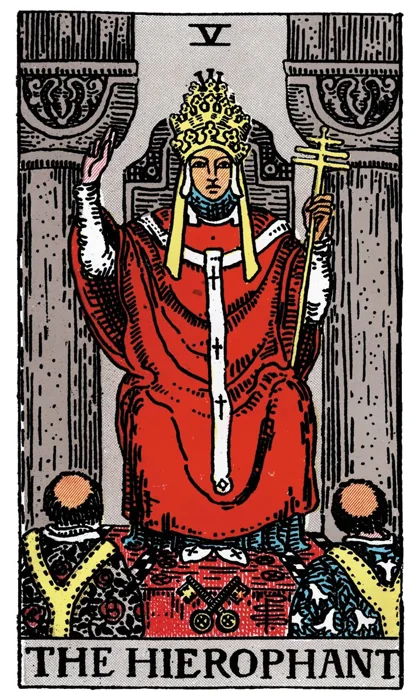
With The Hierophant
With the Hierophant, tradition and institutional belonging may shape the shared structure. Learn what the customs are for and which expectations are genuinely agreed. A useful tradition can carry knowledge and care forward while still allowing its practice to change when the people involved need something different.
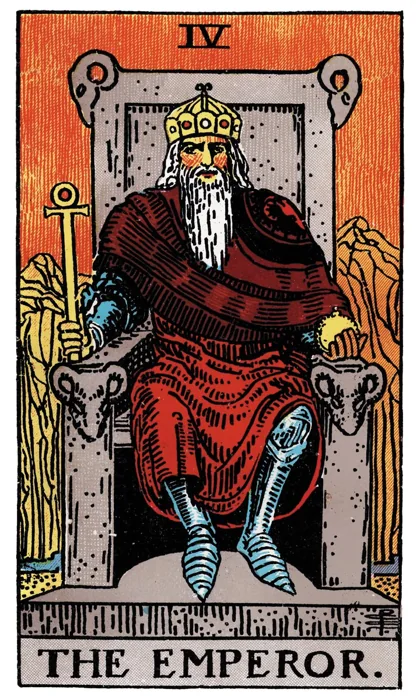
With The Emperor
With the Emperor, durable security needs clear responsibility and workable organisation. Review who has authority and how it is held accountable. Structure supports a shared life best when it distributes responsibility appropriately instead of keeping every important decision with the person who first established it.
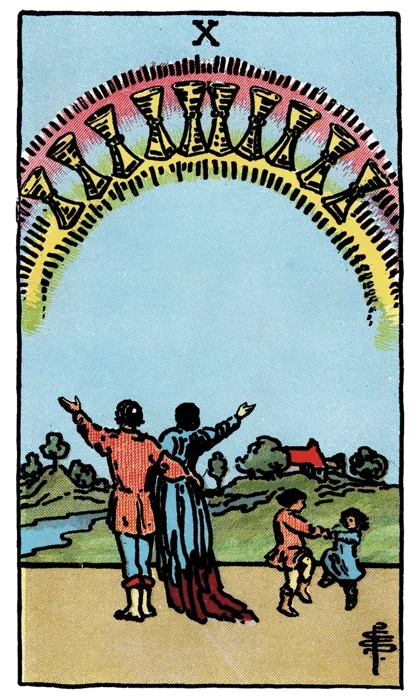
With Ten of Cups
With the Ten of Cups, the practical structure and the experience of belonging can be considered together. A stable home and a loving atmosphere may support each other, but neither should be assumed from the other. Ask whether the people inside feel able to participate honestly in the life being presented as complete.
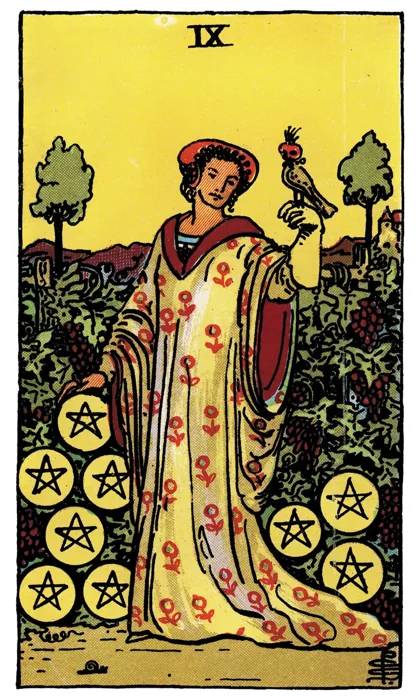
With Nine of Pentacles
With the Nine of Pentacles, individual autonomy meets shared continuity. Consider how a family, community, or partnership can support independent lives without treating difference as disloyalty. Personal freedom and belonging need explicit room for each other rather than an assumption that one must always yield.
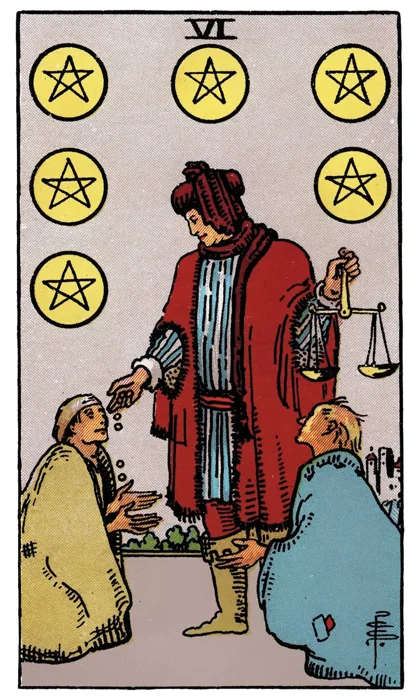
With Six of Pentacles
With the Six of Pentacles, examine how shared resources are distributed and what obligations accompany support. A prosperous structure may still contain unequal access. Clear terms and respect for the recipient’s judgement help assistance become part of belonging rather than a recurring demonstration of who holds the power.
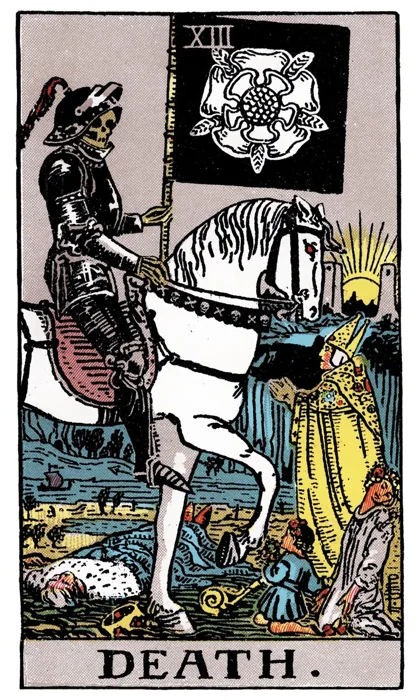
With Death
With Death, a household or institution may be entering a transition that changes familiar roles. Identify what can be preserved and what cannot continue in its current form. The pairing concerns transformation of a structure; it is not a prediction of a death in the family.
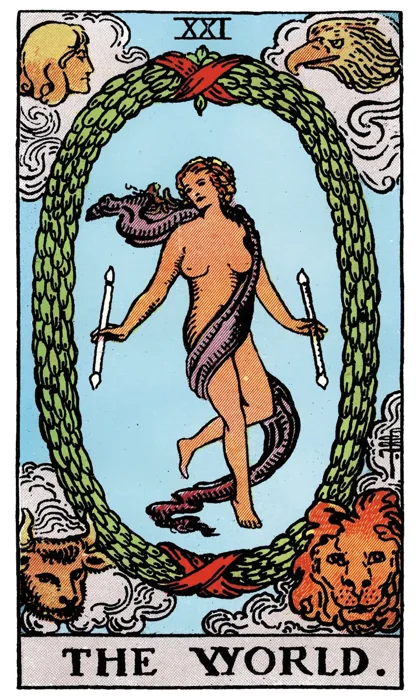
With The World
With the World, a substantial undertaking may be reaching a stage of completion or integration. Consider the handover, maintenance, and access that will make the result useful beyond its creation. Finishing well includes allowing others to inhabit or use what has been built.
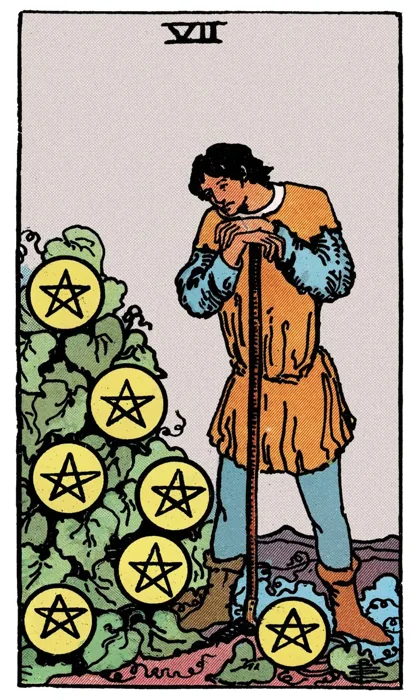
With Seven of Pentacles
With the Seven of Pentacles, review whether present effort is creating the kind of future structure you actually want. Include ongoing maintenance and the needs of those who will share it. A long horizon is valuable when it guides concrete choices, rather than postponing every question about whether the arrangement works now.
Making room for the people who come after
A house passes through several generations. Some rooms remain recognisable; others are changed so that new people can live there well. Continuity lies partly in the willingness to keep making the place usable, rather than preserving it so perfectly that it becomes a monument nobody can inhabit.
An archive preserves knowledge that would otherwise disappear with its maker. Its value depends on organisation, access, and someone continuing to care for it. The Ten reminds us that legacy is not only the act of leaving something behind. It includes the conditions under which another person can understand and use what was left.
A familiar table gains another place setting for someone whose arrival was not part of the old plan. The household changes without losing the possibility of being a household. This is belonging as a living practice: a structure substantial enough to make room, rather than so fragile that every difference threatens its identity.
Make one valuable thing easier to carry forward
Choose something you want to remain useful beyond your immediate attention. It may be a household process, shared knowledge, a relationship ritual, or a piece of work. Identify who else is affected and what they would need to maintain or understand it. Clarify one responsibility, record one necessary detail, or revise one assumption together.
Then ask whether the change creates more room for the people involved. The Ten of Pentacles becomes more than an image of prosperity when practical arrangements let people share knowledge and continue a life together without copying the person who first built the house.
Artwork & interpretation
The historical scene brings several generations, animals, and a household together. This original essay considers continuity, inheritance, and chosen belonging, without treating a traditional family structure or a predicted material gain as the only meaning of the card. A. E. Waite, The Pictorial Key to the Tarot: Ten of Pentacles.
The symbolic associations and examples offer ways to read a situation. They do not establish another person’s thoughts or fix an outcome.
A lasting structure is valuable when it can hold living people, including the ones whose lives differ from the plan it was built to preserve.
Use the cards in a spread →