Pentacles · Page
Page of Pentacles
Taking the first real lesson seriously
The Page of Pentacles wants to find out how something works and is prepared to practise. A beginner's questions lead to another attempt with the materials at hand. This interest can develop into a skill, although its eventual place in your life may still be unclear. For now, there is value in being willing to learn.
- Practical learning
- Early commitment
- Attentiveness
- A first foothold
16 min read
In this guide
Interest becomes something you can practise
You have found something worth learning. It might be a skill, a subject, a role, or a practical way to change part of your life. The Page of Pentacles does more than admire the possibility from a distance. You want to try it for yourself, learning enough about the details to understand what a first attempt requires. The energy is hopeful because it is becoming specific.
Upright, the card can describe study, training, an early opportunity, a useful message, or a modest commitment with room to develop. It favours the stage where an intention begins acquiring habits and materials. You may not yet know whether the undertaking will become a long-term direction. You know enough to give it a fair, concrete trial.
You can read the Page as a person or as the way someone approaches a task. Age and gender do not determine the role. A highly experienced person may become a beginner again in an unfamiliar field, bringing patience with their own mistakes. What matters here is a practical interest in learning and a willingness to let experience change what you think you know.
The Page differs from the Ace's offered opportunity by showing someone in relationship with the resource. There is attention, a body, a setting, and the beginning of a response. The question is no longer only what is available. It is what you are willing to learn and do with what is available, under the conditions you actually have.
A message associated with the card should be examined for its concrete content. Perhaps a course has a place, a task has been offered, or someone has supplied the missing information. The card cannot guarantee favourable news. It can prompt you to notice a small practical opening that may matter more than its lack of drama initially suggests.
Its invitation is to begin without pretending to be finished. Choose the first useful exercise, ask the necessary question, or make a small promise you can keep. A beginning gains credibility when it leads to contact with the task. It does not need to be announced as your permanent calling before it is allowed to receive serious attention.
The pentacle is held at the centre of attention
A young figure stands in a landscape, holding a pentacle in both raised hands and looking towards it. The clothing includes a green tunic and a red head covering. Flowers, trees, distant mountains, and a cultivated patch of earth give the scene a mixture of natural growth and worked ground. The figure's attention is concentrated on the object being held.
The raised hands suggest deliberate engagement rather than possession by habit. The pentacle is being considered, almost studied. As a metaphor, this is the moment a possibility becomes interesting enough to deserve close observation. The card asks what you notice when you stop treating the subject as a general ambition and begin looking at its actual form.
The stance remains on the ground while attention rises towards the symbol. That relationship can suggest imagination supported by practical conditions. A learner needs both an idea of what might become possible and a place to begin. The Page's promise is strongest when enthusiasm remains connected to the next action rather than floating entirely in a future identity.
The cultivated earth in the distance adds a useful counterpoint. Attention alone will not grow the undertaking; some work will need to follow. Yet the image does not show the person already burdened by every later responsibility. It leaves room for the distinct value of this stage: giving a new interest close attention while learning how to approach it for the first time.
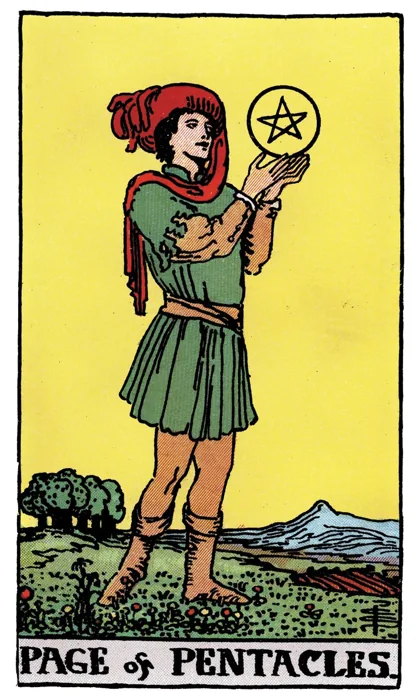
The figure studies the resource rather than merely owning it. Ask what you are ready to examine or try in a concrete way, and which practical question would make the opportunity more usable.
The landscape gives the promise material conditions. Connect the larger possibility to a manageable task, suitable resources, and room to be inexperienced. A grounded first step does not need to contain the entire journey.
You can care before you are good at it
The inner Page often feels earnest in a way that can be vulnerable. You want to do the task properly, and your lack of experience is visible. A question that would feel simple to an expert may require courage to ask. The card gives this stage dignity. Interest and effort can be real before competence has become something you can demonstrate reliably.
As a temperament, the Page may be observant, grounded, patient with detail, and quietly ambitious. They enjoy discovering how something works and often prefer a useful example to an impressive abstraction. Their questions can reveal practical gaps that more experienced people have forgotten need explaining. A good learning environment makes room for that perspective instead of treating it as an inconvenience.
The difficulty is confusing seriousness with the need to avoid error. You prepare carefully, then hesitate to make the attempt because it may reveal how much you still do not know. Yet the attempt is often what supplies the next piece of knowledge. Choose a scale where mistakes can be examined and corrected without carrying the whole weight of your imagined future.
The Page can also describe the temptation to collect identities through beginnings. You become the person who owns the materials, enrols in the course, or reads about the practice. These can be valid first steps. They become substitutes when the activity itself remains indefinitely postponed. Ask what you would actually do for a short interval if nobody needed to know what kind of person the activity made you.
Its more confident expression allows learning to remain local. You can struggle with this technique without declaring yourself incapable, and enjoy this lesson without promising lifelong devotion. That freedom makes sustained engagement easier. The subject can earn its place through experience rather than being asked to justify a complete reinvention before the first week is over.
Attention is the first form of commitment
The Page explores how a possibility becomes part of a life. At first, the resource is simply available. Someone begins making room for it, giving it attention and asking questions despite the inconvenience of learning. Commitment begins through those small acts before it becomes a public declaration. What receives repeated practical attention gradually acquires a different kind of reality.
The card also values the material world's ability to correct an idea. Trying to use a tool can reveal a step a lesson left out. A plant's response may likewise show that the conditions you expected to suit it need changing. These responses are not insults. They are information from a task that exists beyond your preferred account of yourself. Learning becomes more generous when reality is allowed to teach rather than being required to confirm immediate aptitude.
There is humility here without self-diminishment. You can respect expertise and still ask for an explanation you understand. A teacher's authority is useful when it helps you develop your own judgement, not when it makes you afraid to admit confusion. The Page's best seriousness includes responsibility for actually learning, rather than merely appearing compliant in front of someone who knows more.
The deeper promise is an open future supported by a real present action. You do not need certainty about the final destination to take a reasonable first step. Equally, a promising beginning does not oblige you to continue forever if experience reveals a poor fit. Attention can lead to deeper commitment or a well-informed change of direction; both are forms of learning.
Make the first assignment clear enough to learn from
At work, the Page can describe onboarding, a new responsibility, a practical course, or a first opportunity to apply a skill. Make sure the learner understands the task and the expected standard, with a clear person or place to turn to for questions. A beginner can contribute more effectively when the environment makes the route to understanding visible. Guessing silently at hidden expectations is not a reliable test of potential.
For study, connect the material to something you can attempt. An example, small exercise, or explanation in your own words can reveal whether the idea is usable. Reading and listening matter, but they may create a feeling of familiarity that exceeds actual understanding. Let a practical trial show which part needs another look.
The Page can also represent a junior colleague whose careful attention deserves respect. They may notice a missing instruction or a confusing assumption precisely because the process is not yet habitual. If you are guiding them, explain the reason as well as the step where useful. The aim is to develop judgement, not only a person who can reproduce your actions while you are watching.
For a new project, choose an achievable first deliverable. A small result can establish contact with the real task and expose the next need. Avoid making the first stage so large that it requires all the expertise you are hoping to gain through doing it. A suitable beginning offers challenge without making completion depend on already being the person the project is meant to help you become.
In creative work, the Page may be the notebook, the first scene, the study from a reference, or an experiment with unfamiliar material. Let the exercise have a clear purpose without demanding publication-ready quality. Early work can be valuable because it teaches you how the medium responds and what kind of attention you enjoy bringing to it.
The professional shadow is permanent preparation. You keep obtaining another credential, tool, or explanation before allowing yourself to attempt the role. Sometimes further training is genuinely required, especially where competence carries serious consequences. In other situations, a bounded supervised attempt may be the appropriate next stage. Distinguish the real requirement from the wish to make all uncertainty disappear before beginning.
A small promise kept can be more meaningful than a grand intention
In relationships, the Page can describe tentative but practical interest. Someone learns your preferences, makes a simple plan, or follows up on something you mentioned. The feeling may still be developing, yet attention has begun to take a usable form. The card values those modest signs without claiming they guarantee a particular future.
For dating, it can encourage curiosity about how the connection works in ordinary life. Notice whether making arrangements involves clear communication and whether a small misunderstanding changes how you approach each other next time. Early compatibility is not only chemistry. It also includes the willingness to discover another person's habits without assuming they should already match your own.
The Page may describe someone inexperienced in a particular kind of closeness. Their awkwardness may coexist with sincerity and a careful but uncertain effort to get things right. They may simply not yet know what that requires. Patience can help when there is mutual effort. It should not mean indefinitely accepting a pattern that never becomes more considerate or accountable.
In an established partnership, the card can invite learning something together or approaching a familiar issue with fresh attention. Ask a practical question rather than assuming the other person's preference has remained unchanged. A small shared activity may restore curiosity where the relationship has become organised entirely around established roles and unfinished obligations.
When asking about feelings, the Page cannot establish that someone wants commitment or is planning an offer. Look for what is actually communicated and done. The useful question is whether interest is becoming a pattern of participation. A pleasant possibility remains a possibility until both people have enough information and intention to make an agreement around it.
The shadow is treating love as a curriculum in which perfect technique will secure a guaranteed response. You may try to learn every preference so thoroughly that rejection becomes impossible. Care is not control over the outcome. A relationship needs room for your own preferences, the other person's freedom, and the fact that good intentions do not always produce a compatible bond.
Learn the ordinary process before making the larger commitment
In material matters, the Page favours understanding the basics of an unfamiliar task. Find a reliable explanation of how the process works and use it to identify the terms that matter to your decision. The card does not supply financial, legal, or technical expertise. It encourages the questions and suitable guidance that make a practical decision better informed.
A modest opportunity may deserve attention without immediate expansion. You could try a small project, learn to use an existing tool, or assess a resource before committing more. Keep the scale appropriate to the actual stakes. The Page's enthusiasm becomes useful when it accepts that learning the terms is part of taking the opportunity seriously.
At home, the card can concern acquiring a practical skill or building a manageable routine. Start with the task as it really is, including materials, time, and any safety or expertise requirements. There is no shame in being new to an ordinary skill that other people learned earlier. Different lives provide different opportunities for instruction.
The material shadow is purchasing the feeling of a beginning repeatedly. New supplies make the future look vivid while the present activity remains untouched. Before adding more, choose one thing already available and use it for its intended purpose. A small experience with the task can clarify which resource is genuinely missing and which merely looks like progress from a distance.
Give curiosity a place in the day
The Page's attention is focused without yet carrying the whole weight of mastery. Protect a small interval in which the subject can be explored on its own terms. The exact routine matters less than having a clear enough starting point that each encounter does not begin with a fresh negotiation about what to do.
Keep the scale compatible with your current capacity. A short, meaningful practice can be more sustainable than an ambitious schedule abandoned after its first collision with ordinary life. This is not a universal rule about learning speed. It is a question of designing a beginning you can return to under the actual conditions in which it must exist.
Enjoyment is useful information. Notice which part of the activity holds attention, which part feels difficult in an interesting way, and which part you repeatedly avoid. Those observations can guide the next lesson or reveal a different direction. The Page does not need to turn every curiosity into a lifelong obligation to prove that the original interest was sincere.
Make a small commitment that produces information
Choose one practical question and an attempt that could help answer it. Work out what you need to understand and obtain before beginning, then describe what would count as completing the first step. Make the scope small enough that the result can be examined without becoming a verdict on your entire potential.
Ask for guidance at the point where it can change the attempt. A precise question often receives a more useful answer than a broad request to explain everything. Try the guidance and examine the result, so that your next question grows out of what you have learned through the attempt. This turns support into growing capability rather than a collection of reassuring explanations.
The shadow is waiting to deserve the beginning. You believe you must already have the discipline, talent, or certainty that the process is meant to develop. Another shadow treats every early success as proof that no further instruction is needed. The Page's better confidence can remain both hopeful and teachable: there is something worth trying, and much of its meaning will be learned through the trying.
The beginning is waiting for contact with reality
Reversed, the Page can describe distraction, vague plans, neglected practice, or a resource acquired without a usable next step. Identify the specific obstacle. Is the task unclear, the scope too large, the instruction unsuitable, or the interest weaker than expected? A practical diagnosis of the process is more useful than deciding that you are generally incapable of follow-through.
Another expression is fear of being visibly inexperienced. You delay the application, lesson, or first attempt because the imagined embarrassment feels larger than the task. Choose an appropriate low-stakes setting for learning, or seek guidance suited to the level you are actually at. The right conditions can make it easier to ask questions before uncertainty becomes concealment.
The reversal may also show impatience with foundations. You want the expressive freedom or professional result without spending time on the basic skill. Ask which fundamentals genuinely support the desired outcome and how to practise them meaningfully. The aim is not obedience to every traditional exercise, but enough understanding to know what can safely be varied and what still needs to be learned.
Sometimes a beginning has simply served its purpose. Trying the subject revealed that you do not want to continue. That can be useful information rather than evidence that the attempt was wasted. Distinguish a considered change of direction from abandoning the task whenever it first becomes uncomfortable. Both are possible, and the actual experience should guide the reading.
A constructive reversed Page redesigns the entry point. You choose a clearer exercise, obtain a better explanation, reduce unnecessary preparation, or release a borrowed ambition. The next step becomes more honest and usable. The promise returns when the activity is allowed to meet the person you are, rather than only the ideal beginner you think you ought to be.
What would help the first step become a practice?
These pairings explore learning and early commitment. They do not guarantee an offer, establish another person's intentions, or make a modest beginning responsible for proving the whole future in advance.
With Ace of Pentacles
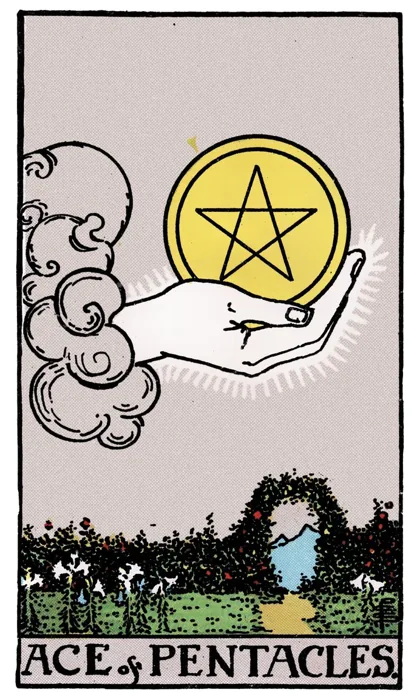
With the Ace of Pentacles, an offered resource meets a willing learner. Clarify the actual opportunity and choose a small application that reveals what it requires. The pairing is promising as a starting point, but the useful result comes through engagement rather than assuming the offer develops itself.
With Eight of Pentacles
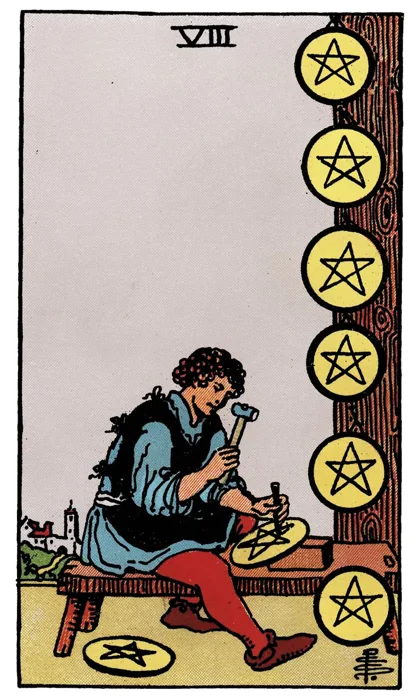
With the Eight of Pentacles, early interest can become deliberate practice. Choose one skill, obtain useful feedback, and let the next attempt respond to it. Repetition should have a question inside it, so that enthusiasm gradually becomes capability rather than only a longer record of time spent.

With The Hierophant
With the Hierophant, a teacher, course, or established method may provide a route into the subject. Seek instruction that helps you understand as well as imitate. Respect for expertise can coexist with the right to ask for clarification and to recognise when a method is not meeting your actual learning needs.
With Page of Swords
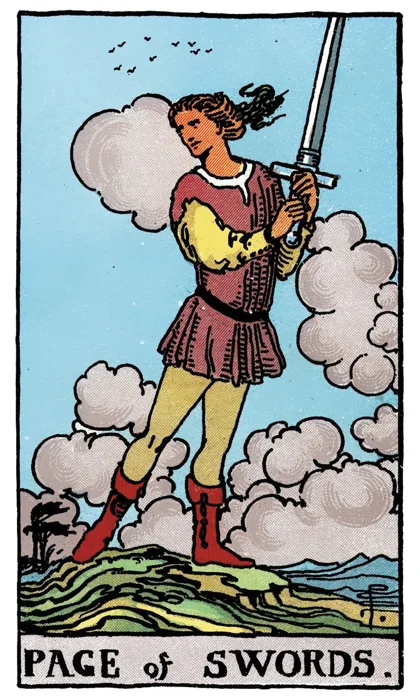
With the Page of Swords, curiosity and practical experimentation can support each other. Ask the question, check the information, and try a suitable small application. Avoid remaining entirely in research or rushing into action before the basic terms are understood; each mode can supply what the other misses.
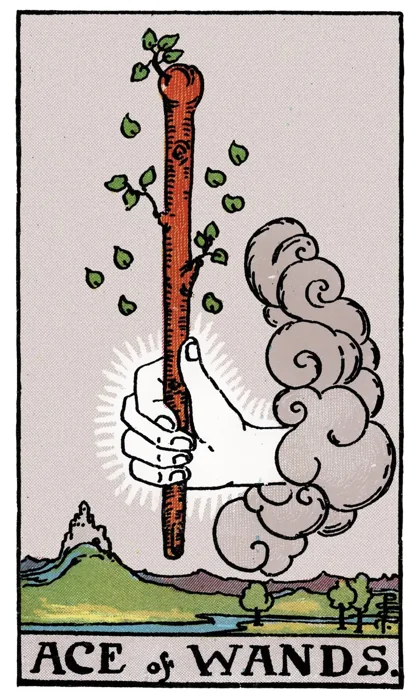
With Ace of Wands
With the Ace of Wands, a strong spark needs a manageable beginning. Use the enthusiasm to make one real attempt before committing to an ambitious identity or schedule. The trial can reveal whether the activity itself holds your interest once the pleasure of imagining it meets its ordinary demands.
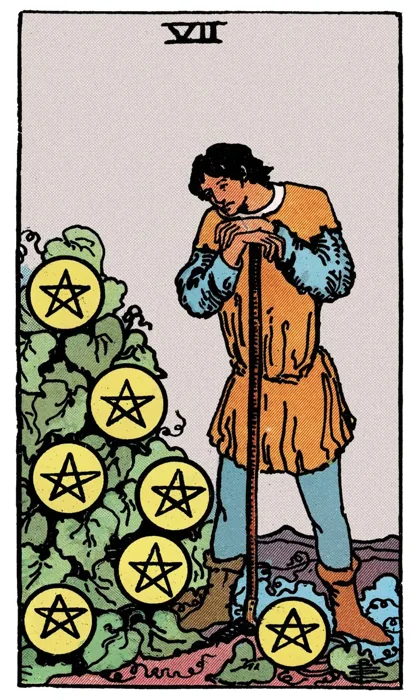
With Seven of Pentacles
With the Seven of Pentacles, give a new practice enough time to produce meaningful information. Set a reasonable point for review and notice specific signs of learning. Patience should support an observable process, not become an indefinite instruction to continue regardless of fit, method, or result.
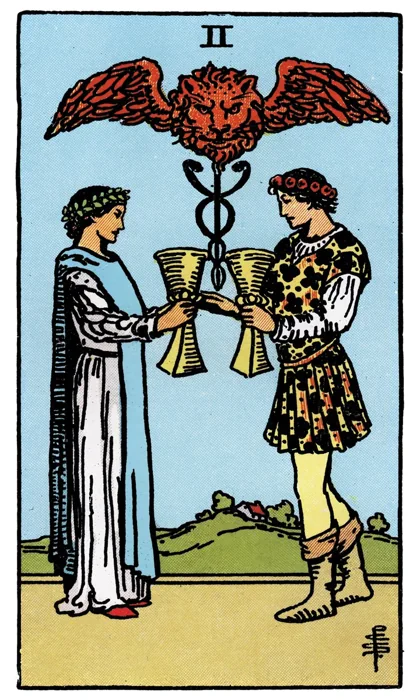
With Two of Cups
With the Two of Cups, learning may occur through a reciprocal connection. Ask about each person’s preferences and let small agreements show how the relationship works in practice. Sincerity becomes more trustworthy through conduct, while neither person needs to perform perfect understanding from the first conversation.

With The Fool
With the Fool, openness gains a practical foothold. You can try something unfamiliar while still asking what the first step requires. A beginning need not be burdened with every future consequence, but curiosity is better supported when the immediate conditions are clear enough to make the experiment real.
The apprentice and the first pot of soil
An apprentice watches a skilled person perform a familiar task and then discovers how different it feels in their own hands. The gap is the beginning of learning, not evidence that the demonstration was wasted. Good instruction helps turn that gap into a specific question the next attempt can address.
Someone plants a seed in a small pot and learns that care has details: light, water, time, and attention to what the plant actually does. The future garden may remain a pleasant idea. The present relationship with this one living thing is already real enough to teach something about cultivation.
A reader returns to a difficult page and finds one sentence clearer than before. Progress can have this quiet scale. The Page of Pentacles values a genuine foothold because it changes the next encounter with the subject, even when it would be too small to announce as a transformation.
Complete a first lesson with a clear question
Choose a practical skill or subject you genuinely want to explore. Define one question and one small exercise that can make the answer more concrete. Gather only what the exercise requires, use suitable instruction where needed, and complete an attempt without asking it to demonstrate polished ability.
Write what you noticed, what you can now do or explain, and what the next useful question would be. Then decide whether you want another encounter. The Page of Pentacles becomes a credible beginning through this ordinary sequence: trying an interest in practice and using what you observe to decide whether to continue, with more knowledge than you had before.
Artwork & interpretation
The historical figure studies the pentacle with concentrated attention. This original essay interprets the Page through practical learning and early commitment, without fixing the role to age, gender, or a guaranteed message about future events. A. E. Waite, The Pictorial Key to the Tarot: Page of Pentacles.
The symbolic associations and examples offer ways to read a situation. They do not establish another person’s thoughts or fix an outcome.
A beginning becomes substantial through use, while the right to be inexperienced remains part of learning.
Use the cards in a spread →