Major arcana · 5
The Hierophant
What you inherit, and what you choose to keep
The Hierophant introduces you to a tradition other people have spent years learning. Its familiar practices offer a way to participate and understand one another. Belonging can be valuable, though some expectations deserve to be questioned before you accept them.
- Tradition
- Teaching
- Belonging
- Conviction
15 min read
In this guide
You do not have to invent everything alone
There is relief in meeting someone who knows how to teach the thing you have been struggling to learn. They recognise where you are having difficulty and can explain a method that has helped other learners work through it. The Hierophant begins with this possibility: an individual life can draw on knowledge it did not have to create.
In a reading, the Hierophant may concern learning within an established tradition or becoming part of a community. Entering a profession brings you into contact with its standards and teachers. Formalising a commitment can raise questions about customs you have inherited and whether they still express your values. Consider what belonging to this shared framework would make possible for you.
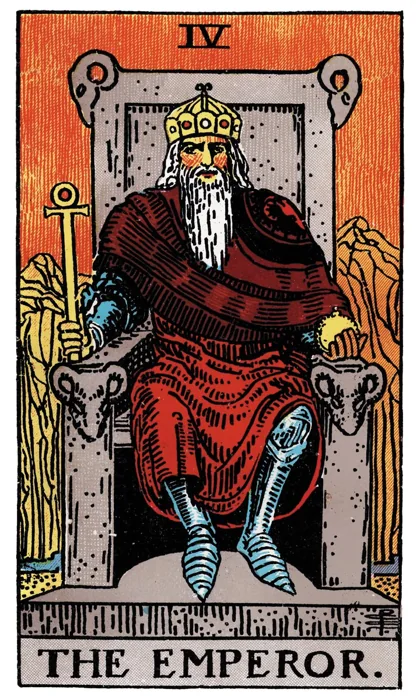
The Hierophant differs from the Emperor in the source of his authority. The Emperor takes responsibility for an arrangement. The Hierophant speaks on behalf of an established teaching, often through an office that gives him that role. His influence rests partly on the belief that the knowledge extends beyond his personal preferences and will remain after he leaves the role.
Shared practices can be valuable. Professional training preserves skills that took earlier generations considerable effort to learn. Agreed standards make working together easier. At a significant moment in life, a familiar ritual gives people a way to participate even when they cannot find words. They can welcome someone or share grief through a form whose meaning they already understand.
The difficulty is that a framework can protect itself as readily as it protects its members. The accepted explanation may become immune to questions, and belonging may depend on concealing doubt. The card asks you to examine both the value of what is offered and the conditions attached to receiving it. Guidance is strongest when it develops your judgement.
A teaching has an audience
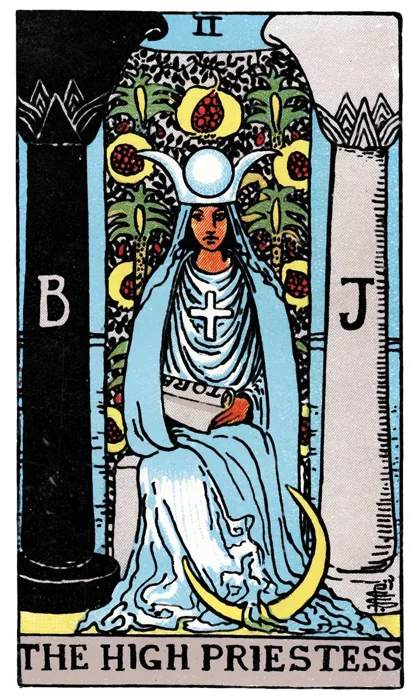
The Hierophant sits between stone pillars, facing two kneeling figures. Unlike the High Priestess, whose scroll is partly concealed and whose attention feels inward, he is visibly engaged in a public role. His gesture and the people before him make the scene about transmission: something is being taught, affirmed, or received.
His elaborate crown and triple-cross staff mark an office larger than an ordinary conversation. The clothing gives his words an institutional setting. Read this way, the image invites you to notice how a title, room, costume, or ceremony changes what people are prepared to believe before they have examined the substance.
The crossed keys near the bottom of the picture suggest access. A teacher can open a subject that previously felt closed, providing the concepts and practices through which you can enter. Keys can also be withheld. The image contains both the promise of initiation and the question of who is permitted to pass.
The two listeners matter as much as the central figure. They will take what they learn into their own lives and may eventually teach it to someone else. Along the way, they will encounter questions that the original lesson did not answer. How they respond helps determine whether the tradition continues to serve people or is repeated without much understanding of its purpose.
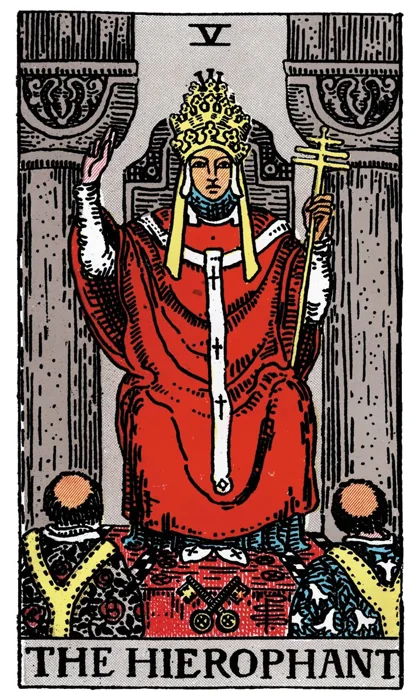
Keys can open a path into knowledge. Their position between the teacher and listeners also makes it possible to ask whether access is being shared or guarded as a privilege.
Gesture, clothing, and setting work together before a word is spoken. The picture invites attention to how a recognised role shapes the reception of its teaching.
Wanting a place in the conversation
Internally, the Hierophant can describe a wish for guidance and coherence. You are tired of improvising, or you have reached the point where independent experimentation keeps reproducing the same mistakes. A course, mentor, community, or serious practice may offer both useful knowledge and the reassurance that difficulty is part of learning.
There is dignity in becoming a beginner within a tradition. You accept that some distinctions are not yet visible to you and that repetition may teach what explanation alone cannot. The challenge is to remain receptive without concluding that your inexperience makes every question you have illegitimate. A good learning relationship can accommodate both humility and curiosity.
As a person, the Hierophant may take principles seriously and be able to explain how they apply to a particular concern. Others consult them because they can draw on knowledge beyond one person's experience. You might encounter this quality in a mentor or community organiser. They help people find language for something they have experienced but struggled to describe.
The shadow is borrowed certainty. You can quote the correct position fluently while having little contact with the experience it is meant to describe. The doctrine becomes a way to avoid the discomfort of thinking through a particular case. A person in front of you is reduced to an example of a rule.
Another inner conflict concerns belonging. You may know that your views are changing while fearing what the change would cost socially. Doubt can then feel like disloyalty before you have even decided what you believe. The Hierophant asks whether there is room in your community for a member whose understanding is still developing.
An inheritance needs interpretation
We learn ideas about a worthwhile life long before we can examine them. A family teaches certain obligations; school introduces its own version of success. Books and communities later offer other ways to understand love or decency. Even rejecting an inherited belief involves distinctions learned somewhere. The Hierophant invites you to look at where your assumptions came from so you can decide more consciously which ones to carry forward.
A tradition carries both insight and the conditions under which that insight was formed. A practice that once solved a real problem may continue after the circumstances change. Understanding its original purpose can help you decide whether to preserve the form, adapt it, or let it go. Repetition alone cannot answer that question.
A familiar ceremony can bring people of different ages into the same activity. Through repetition, it gives a shared relationship a form that any participant can recognise. Nobody has to own its entire meaning. A song or a regular gathering may be valuable for this reason, even when the people taking part disagree about the beliefs associated with it.
The deeper task is to become an interpreter of what you receive. This involves enough patience to understand a teaching before dismissing it and enough independence to recognise where it fails. You can be grateful to a tradition without treating it as complete. You can leave one without pretending that nothing in it ever sustained you.
Teaching carries a related responsibility: the learner should gradually become more capable of seeing for themselves. If every advance leads only to greater dependence on the teacher's approval, something has narrowed. An inheritance becomes generous when it equips people to enter the conversation, including the parts its current guardians find uncomfortable.
Learn the method well enough to judge it
At work, the Hierophant may favour training, mentorship, standards, and using an established method before trying to replace it. There is little benefit in repeatedly discovering a mistake that competent instruction could help you avoid. A period of following the practice carefully can reveal why details that initially looked fussy actually matter.
Apprenticeship is not permanent obedience. Growing understanding should let you explain why the method works. You can then recognise its limits and judge how to adapt it when the circumstances change. A procedure that cannot tolerate any explanation beyond this is how we do it may be preserving habit more successfully than knowledge.
For someone seeking a teacher or course, the card invites attention to the learning relationship. What will you practise? How is feedback given? Are the teacher's claims specific enough to assess? Prestige and a compelling personal story may attract you, but the actual structure of learning determines what you can take away.
Inside an organisation, shared standards can make work fairer and more dependable. They become less helpful when informal privilege decides who must follow them. A policy may sound neutral while exemptions reveal the real hierarchy. Notice the distance between the values displayed publicly and the behaviour rewarded in ordinary decisions.
Creative work develops through contact with earlier work. Learning how a form operates gives you choices you might otherwise have missed, and understanding your influences can help you recognise what is particular to your own voice. Approval becomes a problem when it keeps you within an approach you have outgrown. A teacher's guidance can remain valuable even when your next work goes somewhere they would not choose.
If you are the teacher, explain the reason for a correction wherever possible. Distinguish a requirement from a preference and a useful convention from an absolute truth. These distinctions help learners develop judgement. They also make it easier for your own practice to improve when someone asks a question you cannot answer automatically.
Whose idea of commitment is this?
In relationships, the Hierophant often concerns shared values and the forms through which commitment is recognised. This may include marriage, family customs, religious practice, or simply a clear agreement about what the relationship means. A public or familiar form can support a bond by giving it language, witnesses, and continuity.
The card does not promise marriage or require a conventional relationship. Its more useful question is whether the form matches the people inhabiting it. Two people can want a lasting commitment while disagreeing about ceremonies, roles, money, children, or the involvement of extended family. Those differences deserve conversation before familiarity is mistaken for agreement.
Family expectations may be particularly audible. You find yourself saying that a good partner should do something, then realise the standard was inherited rather than jointly chosen. Some inherited expectations will still make sense. Others may ask one person to carry a burden that the relationship has never consciously accepted.
Shared beliefs can be a source of intimacy, especially when they shape how people meet difficulty and celebrate what matters. Yet agreement about principles does not guarantee kindness in practice. Look at what happens during a disagreement and whether responsibility for resolving it is shared. Each person also needs room to develop views that the other does not hold.
The shadow is using the accepted form to silence the actual experience. The relationship looks correct to the community, so unhappiness is treated as ingratitude or a failure of commitment. A meaningful promise asks people to take the bond seriously; it does not make every existing arrangement beyond revision.
For someone seeking a relationship, this card can prompt a useful distinction between wanting companionship and wanting social recognition. Both desires can be understandable, but they are not identical. Knowing which is strongest may help you avoid choosing a role that looks reassuring while leaving your actual need for connection unmet.
The rules you learned before you chose
Money often carries inherited moral language: sensible, wasteful, respectable, selfish, secure. The Hierophant invites you to examine where these words came from and what they mean in your present circumstances. A family rule formed under scarcity may still be valuable, or it may make ordinary enjoyment feel like a breach of character.
Established procedures can help when a commitment is unfamiliar. Read the terms, keep records, and seek qualified guidance when the question requires it. The card is not a signal that an institution or adviser is automatically trustworthy. Credentials identify a claimed area of competence; the actual advice still needs to be relevant, understandable, and appropriate to your situation.
At home, customs create continuity. A regular meal, a way of welcoming guests, or a shared observance can make a household feel like a place with its own life. These rituals work best when people understand their meaning and have some say in their form, rather than being required to perform enthusiasm.
The material shadow is spending to remain acceptable to a group. The expected celebration, home, clothing, or gift may exceed what feels comfortable, yet declining seems socially dangerous. Naming the expectation can help separate the relationship you value from the price of displaying it in the approved way.
A rhythm that supports you
The Hierophant can suggest the value of a repeated practice that does not depend on daily inspiration. A regular walk, a class, shared meals, or a scheduled period of reflection may give the week a useful rhythm. The practice becomes supportive when it helps you inhabit your life, rather than merely demonstrating that you are disciplined.
Community can make a practice easier to sustain, but comparison can change its character. You begin by seeking support and end by monitoring whether you are doing enough to count as a proper member. Notice whether participation leaves room for illness, limited resources, changing circumstances, and ordinary human inconsistency.
This card does not certify a treatment, teacher, or spiritual explanation of symptoms. Health concerns need relevant evidence and appropriate professional care. In a symbolic reading, the useful question is whether the habits and communities around you support your wellbeing and leave you free to ask informed questions.
Ask what the rule is trying to preserve
As advice, the Hierophant encourages learning from an existing body of experience. Find a competent guide, study the method, or return to the principles beneath a practice. You may be making the task harder by assuming that independence requires working without instruction. Receiving knowledge does not make the eventual work less yours.
When a rule irritates you, ask what problem it addresses. The answer may reveal a useful protection, an outdated assumption, or a preference that has acquired institutional force. Understanding the reason gives you a better basis for deciding whether to follow, adapt, or challenge it. Opposition becomes more effective when it is informed.
His shadow is moral certainty that has lost interest in the person affected. A principle is repeated where listening is needed, and complexity is treated as an attempt to avoid the truth. Conviction can guide conduct without pretending that every difficult case is already settled. Sometimes applying a value honestly requires revising the familiar rule.
Another shadow is outsourcing judgement to a respected figure. You may want someone to remove the burden of choosing, especially when the decision threatens your place in a group. Guidance can help you see the options more clearly. The consequences still enter your life, so your own understanding needs a place in the decision.
When the inherited answer no longer fits
Reversed, the Hierophant can describe a necessary separation from an accepted teaching or role. You may no longer believe what you once repeated, or find that a community has little room for the life you are actually living. Recognising the mismatch can bring relief alongside grief. Leaving a framework can mean losing language, routine, and familiar company as well as a set of ideas.
The reversal may also indicate rigidity within an institution. People who question a practice may be accused of disrespect. Official values can then become a means of disciplining those with less power, while exceptions protect insiders. Focus on concrete practices and their effects. A respectable name cannot by itself resolve what is happening inside the arrangement.
The opposite difficulty is rejecting every form of instruction. You become suspicious of anything established, even where a method is useful and the teacher is open to questions. Independence then becomes another identity that must be defended. You may be free to learn from a source without accepting its whole worldview.
Sometimes the reversed card concerns the search for a new form of belonging. You have outgrown one community but have not yet found another, and the interval feels less liberating than expected. Give yourself permission to miss what was good without treating that feeling as proof that leaving was wrong. A mixed inheritance can produce mixed grief.
The constructive reversal is a living revision. A community may change a ritual so that more people can participate. Adapting a family custom to current needs, or a teacher acknowledging a limitation, can reflect the same willingness to reconsider. The tradition does not have to vanish in order to become more honest. It may survive precisely because someone cared enough to question its current form.
What does belonging ask of you?
These pairings consider how teaching, shared values, and institutional authority interact with the surrounding situation. They suggest questions to explore, rather than fixed outcomes.

With The Fool
With the Fool, a new path meets an established way. The beginner may need instruction without losing curiosity. Conversely, a familiar tradition may need the question everyone else stopped asking. Look for a relationship in which experience and fresh attention can both contribute.
With The High Priestess
With the High Priestess, private understanding meets public teaching. A tradition may give language to an experience, or fail to recognise it. Allow time to examine the difference before assuming that either the accepted account or your first intuition must be complete.
With The Emperor
With the Emperor, institutional belief and practical authority reinforce one another. This can create dependable standards and continuity. It can also make dissent unusually costly. Ask where an ordinary member can raise a concern and what happens when they do.

With The Lovers
With the Lovers, inherited values become a matter of personal choice. A commitment is more meaningful when you understand what you are agreeing to. The pairing may highlight a difference between the relationship you want and the form others expect it to take.
With The Hermit
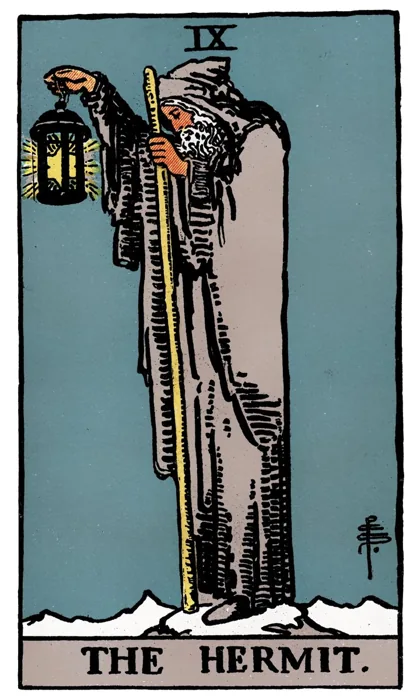
With the Hermit, received knowledge needs private examination. You may benefit from stepping back to discover which teachings remain alive in your own experience. Solitude can support that work without requiring permanent separation from every source of guidance or community.

With The Devil
With the Devil, belonging may carry a difficult dependency. Approval, status, or fear of exclusion can make an arrangement hard to question. Look for the actual freedom to disagree, leave, or seek another perspective without being punished for the attempt.
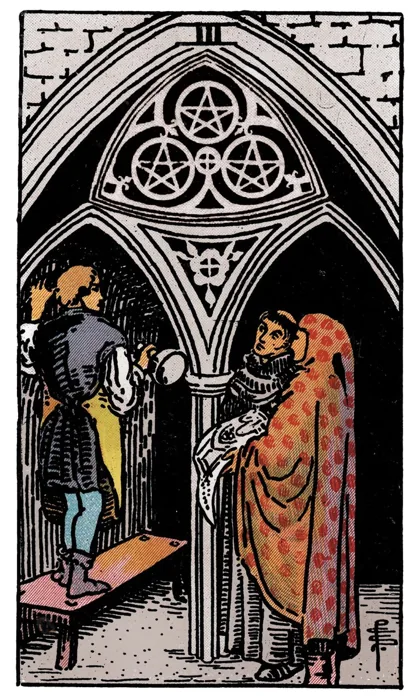
With Three of Pentacles
With the Three of Pentacles, learning is grounded in shared work. Skilled feedback and clear standards can help an apprentice develop. The strongest teaching makes its reasons visible and gradually gives the learner more responsibility for their own decisions.
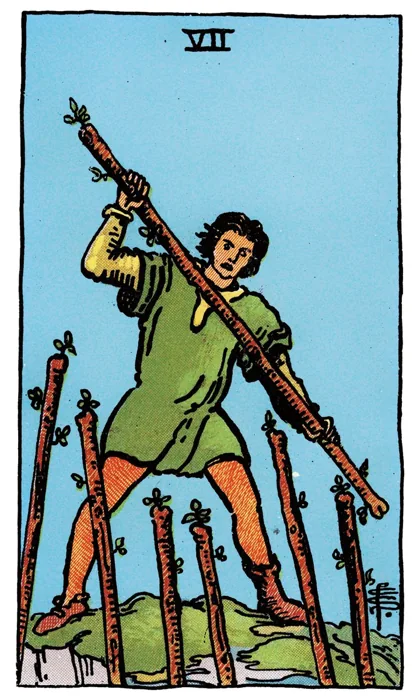
With Seven of Wands
With the Seven of Wands, conviction may put you at odds with a group. Clarify what you are defending and what response would be proportionate. A challenge to one practice does not require rejecting every person or value associated with the institution.
The teacher who lends you a language
The teacher is the clearest Hierophant figure: someone who introduces distinctions you could not previously make. Their explanation may make a difficult passage readable. With practice, a technique that seemed beyond you becomes repeatable; you may also gain language for an experience you struggled to describe. At their best, teachers make a subject larger while helping you feel more capable of entering it.
The custodian offers another aspect. A collection, practice, or ceremony survives because someone remembers its details and does the unglamorous work of preservation. Innovation depends partly on such continuity. The question is whether preservation keeps something available to life or turns it into an object nobody is permitted to touch.
The gatekeeper is the troubling counterpart. The entrance becomes more important than the knowledge beyond it, and status depends on deciding who belongs. A useful community needs standards, but it also needs to distinguish genuine competence from familiarity with the right manners, background, or language of approval.
Keep one thing for a reason of your own
Choose a rule, custom, or belief you follow almost automatically. Write where you learned it, what it originally helped with, and what it does in your life now. Try to describe its value and its cost without rushing to defend or discard it.
Then make one conscious choice: practise it more thoughtfully, adapt its form, ask someone to explain it, or stop following it. The aim is not to become a person without an inheritance. It is to participate in what you carry forward, with enough understanding that your agreement means something.
Artwork & interpretation
Waite describes the ceremonial crown, raised hand, crossed keys, and kneeling figures, connecting the card with recognised religious teaching and hierarchy. This guide extends that institutional imagery to learning, shared values, belonging, and the interpretation of inherited practice. A. E. Waite, The Pictorial Key to the Tarot: The Hierophant.
The symbolic associations and examples offer ways to read a situation. They do not establish another person’s thoughts or fix an outcome.
A tradition stays alive when people can understand, practise, and question what they receive.
Use the cards in a spread →