Wands · Seven
Seven of Wands
The position you are prepared to hold
You have explained your decision. Someone asks again, as though a longer conversation might produce a different answer. The Seven of Wands begins where explanation turns into the work of holding your ground.
- Conviction
- Resistance
- Boundaries
- Standing
15 min read
In this guide
When having a position means defending it
The Seven of Wands concerns pressure on a position you have taken. Perhaps you have protected time for your work, and someone expects you to make it available to them. A principle or relationship may meet similar resistance. What was previously your own choice now requires a response to another person's objection. Consider what you are defending and why it matters to keep it.
The card carries urgency, but also an advantage: the figure already occupies the higher ground. He has something to stand on. In everyday terms, that may be experience, evidence, an established agreement, responsibility for the work, or simply the right to decide what happens to his own time and space. Pressure can make those resources easy to forget. You begin arguing as though your position has to be granted by the very people contesting it.
This card often makes sense just after a gain. More people notice your work and begin scrutinising it. A promotion may bring new requests, while a successful project can attract people who want a say in its direction. What was applauded in principle becomes inconvenient when it has practical consequences. The person who encouraged you to become more assertive may not enjoy being the first recipient of a refusal.
Resistance can also appear when you cease doing something others have learned to expect. A new boundary changes the distribution of effort. People who benefited from the previous arrangement may experience your decision as an unexpected loss, even if you have been privately exhausted for months. Their surprise does not settle the fairness of the boundary. It does explain why a reasonable change can produce a disproportionate reaction.
There is no automatic moral victory in being the lone defender. An unpopular position can be courageous, mistaken, or both in different respects. The Seven asks what supports the stance and what the defence is costing. Its strength lies in commitment under challenge; its danger lies in becoming unable to recognise a valid challenge at all.
Six approaching wands and no visible faces
The man stands above six wands rising from below the picture. His own staff cuts diagonally across his body. The posture is active and exposed: feet apart, arms engaged, attention directed toward what is coming at him. Whatever brought him here, the image catches him in the middle of responding.
His footwear appears mismatched, with one foot more enclosed than the other. This makes the defence look improvised, as if he had to respond before he could prepare himself fully. That is one way to read the detail; it does not establish what the illustrator intended. The useful connection is to moments when a justified refusal comes out awkwardly. You may sound shaken or irritated while saying something you have good reason to say.
The missing faces matter. We can see pressure without knowing precisely who is applying it or whether all six wands belong to a coordinated opposition. In a reading, that leaves room for a distinction between an actual conflict and the feeling that everyone is against you. Six requests from six separate people can create a siege inside one exhausted person even when none of the requesters sees the full load.
The elevated ground gives leverage, but it also limits movement. Keeping the position requires staying engaged with it. That is the card's physical argument: a defensible place can still be tiring to inhabit. The question eventually becomes how to make the boundary part of the arrangement, so that it no longer depends on one person holding a staff all day.
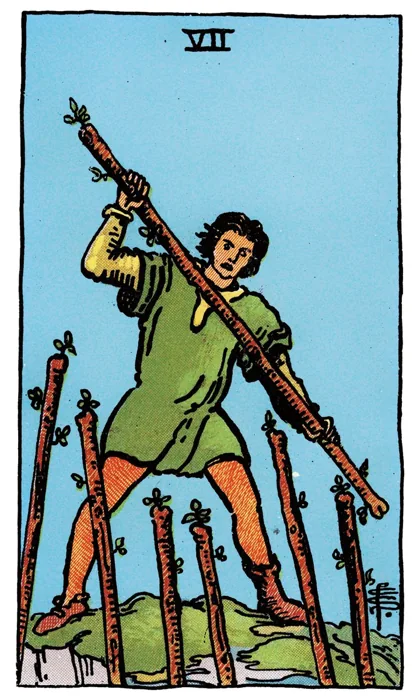
The feet do not appear equally dressed. It is a small interruption in an otherwise forceful stance: a reminder that a sound position can be defended by an imperfectly prepared person.
The whole posture is committed. Holding a position demands attention and effort even when the argument itself has become repetitive.
What holding your ground can feel like
From the inside, this card can feel bracing. A previously vague preference becomes a conviction the moment somebody challenges it. You hear yourself give an answer more definite than the one you had rehearsed. There is relief in discovering that a limit exists and that you are capable of stating it.
The same state can produce hair-trigger defensiveness. A question sounds like a demand for justification; a suggestion sounds like a takeover. Your response contains the force of several earlier conversations the current person never heard. Then you must deal with the original issue and with their understandable surprise at your intensity.
As a person, the Seven can describe a vigorous advocate, a stubborn independent, an outsider with a well-earned place, or the colleague who will say what a room is avoiding. They may be excellent in a crisis and uncomfortable in a setting where nobody requires opposition. Being capable of resistance can become an identity, particularly if agreement has previously meant surrendering too much.
The emotional cost is often loneliness. It is difficult to receive comfort while making a case, and difficult to admit uncertainty when you believe it will be used against you. The defender may need a place where doubt is allowed without becoming ammunition. Support does not have to mean that someone endorses every detail of the position. It may mean helping you think clearly enough to defend the part that matters.
Mature confidence can survive a correction. You can concede an error, alter the method, or apologise for your tone without withdrawing the underlying limit. Those distinctions are easy to lose when a disagreement has started to feel like a referendum on your right to exist as a separate person.
The right to take up space
At a deeper level, the Seven concerns the passage from permission to ownership. It is one thing to choose a direction while everyone approves; it is another to remain answerable for that choice when approval is withdrawn. The card asks whether your position rests entirely on being accepted or has acquired a basis you can articulate for yourself.
This can be a necessary stage in becoming separate from a family, group, profession, or former role. A person accustomed to keeping peace may experience their first sustained disagreement as evidence that something has gone terribly wrong. Sometimes the conflict merely reveals that the old peace depended on their continued compliance.
There is also a less flattering possibility. A cherished position may have become so entangled with self-respect that new evidence cannot be considered. The person begins defending yesterday's defence. Each additional argument raises the emotional price of changing course, until persistence is serving the public record of persistence rather than the original value.
The deeper work is to preserve a distinction between your dignity and your every conclusion. Dignity does not require universal agreement. It also does not require permanent correctness. You can remain the person entitled to choose while changing the choice in response to something you have learned.
Responsibility without unlimited availability
At work, the Seven may concern presenting a proposal to a critical audience or protecting an agreed standard near a deadline. Prepare for the decision actually being made. Gather the evidence relevant to it, and identify which objections deserve an answer. Knowing who can settle the issue also helps. You will be better prepared if you understand that specific decision than if you try to win every possible argument.
A new request can arrive as if the work you have already promised no longer counts. Its urgency is clear, while the cost of accepting it is left for you to discover later. Explain what would have to change. You might need an existing deadline moved, or someone else may need to take over a task. If neither is possible, discuss a smaller result with the person authorised to decide.
For leaders, the card may involve carrying pressure so it does not fall indiscriminately on the team. That can be valuable work. It becomes precarious when the whole system depends on your personal willingness to intercept demands. A clear intake process, named priorities, and an escalation route can protect people after you have left the room.
Creative work has its own version. A writer, designer, or researcher may need to defend an unfamiliar approach before the audience can see its value. But the work must remain available to useful criticism. “They do not understand it” is sometimes accurate; sometimes it means you have not yet made the idea legible. Ask which criticism would improve the result and which would change it into an undertaking you never intended.
Competition is another possible reading. You may need to demonstrate the value of your contribution, retain a role, or distinguish your offer. The card does not ask you to behave as though resources are unlimited. It asks you to compete without confusing every other capable person with a threat to your legitimacy.
Who gets to commit your resources?
A request for resources can become difficult when it turns into a judgement about your character. Someone may need urgent help, or a shared project may have exceeded its budget. Before long, the conversation is about whether you are loyal or generous enough. Return to what is being asked of you and the practical consequences of agreeing.
Check which resources you are free to offer. Shared money affects another person, and time promised elsewhere already carries an obligation. An urgent request does not remove those commitments. You may still decide to give substantial help, but first understand what that choice involves and discuss it with anyone who would also live with its consequences.
At home, the card can concern visits, privacy, noise, possessions, or the assumption that your time is always interruptible. A useful agreement is observable. “Ask before inviting people” gives everyone something to act on; “respect my space” may leave different interpretations untouched. Once the agreement is clear, repeated discussion should not become the price of having it honoured.
Where a disagreement involves formal rights or a contract, use the actual documents and appropriate advice. The card can sharpen your attention to pressure, but it cannot determine who is legally entitled to what or establish the outcome of a dispute.
Protecting a connection, defending against it
The Seven of Wands can describe a relationship that needs protection from outside demands. Family expectations, social disapproval, intrusive advice, or obligations to other people may be taking up the space in which the couple would otherwise decide for themselves. The important question is whether the people inside the relationship share the position being defended. One person's dramatic resistance is not automatically a joint decision.
Within a connection, this is the card of remaining a separate person. Affection does not remove the need for privacy, friendships, work, solitude, or a pace of closeness you can sustain. A limit can preserve your ability to participate willingly. If the relationship requires every refusal to be withdrawn before warmth returns, the terms deserve careful examination.
Yet defensiveness can also prevent repair. Someone says they were hurt, and the entire conversation becomes an account of why you did not intend to hurt them. Your intentions may be accurately described while their experience receives no answer. Holding your ground is useful when the ground is a real boundary. It is less useful when it protects you from acknowledging an effect you dislike.
A revealing moment comes after a clear answer. Does the discussion become more specific, with room for both people's needs? Or does the same pressure restart until one person is too tired to continue? In the first case, disagreement can become negotiation. In the second, the duration of the conversation may be functioning as a way to wear down the limit.
The card can also describe defending an unavailable or unsatisfying relationship to everyone around you. Outside criticism is not always correct, but the effort of answering it can make you stop privately assessing the connection. Give yourself somewhere to consider the relationship without having to prove that staying was wise. Your decision can remain yours while your account of it becomes more honest.
The argument can end before your body knows it
A defended boundary may be sensible and still leave you shaking, restless, or exhausted afterward. Holding your ground does not always feel calm. The body can remain prepared to answer long after the exchange has ended, especially if you expect the issue to return through another message or another person.
Consider the period after the confrontation as part of the practical task. Decide when you will next read messages, whether someone can share the responsibility, and what actually requires an immediate response. A few hours away from rebuttal may return more capacity than devising the perfect final sentence.
If every ordinary interaction has begun to feel adversarial, the load deserves attention. That does not prove your position is wrong. It may mean you need support, a different environment, or a less personally demanding way of enforcing the agreement. Tarot cannot identify a medical cause for persistent distress; the concrete strain matters more than making it fit the card.
Choose the ground, then choose the response
State what you are protecting in language that does not depend on winning the whole argument. Time for existing work. A fair distribution of responsibility. Privacy. A standard you are accountable for maintaining. If the object of the defence becomes increasingly vague, you may be responding more to the experience of being challenged than to the issue itself.
Match the response to the kind of pressure. Consider new evidence and answer genuine questions, while recognising when a demand merely repeats something already discussed. In that case, restating the limit may be enough. These do not require the same amount of explanation. Treating them as identical either makes you needlessly harsh or leaves you doing endless work for someone who has already understood.
Defending yourself can become a role that persists after the pressure has eased. You start looking for an opponent in each situation and find quiet periods difficult to trust. Return to the reason you wanted the boundary in the first place. If it now protects your time or relationship, allow yourself to enjoy what you have preserved rather than continually preparing for another challenge.
When the stance begins to give way
Reversed, the Seven can describe exhaustion, loss of confidence, a defence that has become excessive, or a deliberate withdrawal from a contest. These possibilities can look similar from the outside. A person stops arguing; the meaning depends on what they have stopped believing in and what resources remain available.
One expression is surrender through attrition. The limit still matters, but maintaining it has become so tiring that agreement offers immediate relief. That relief may be real and short-lived. If the arrangement stays unchanged, the person inherits the original burden plus the knowledge that their refusal can be negotiated away through persistence. Support and a more enforceable agreement may be needed here.
The reversal may describe responding to too many challenges as if they were equally serious. A minor criticism begins to occupy as much attention as an intrusion with real consequences. Separate those situations before deciding where to put your effort. Choose the issue that needs a response and allow some lesser disagreements to remain unresolved.
The reversal can also be a release from pride. You recognise that the disputed role no longer suits you, that a method has failed, or that the audience is not entitled to another explanation. Leaving the argument does not erase the value of what you defended. It may show that the cost of occupying this particular position has exceeded its purpose.
A useful question is what would be possible if the contest ended. If the answer is more room for the work or relationship you care about, stepping back may serve the original aim. If the answer is that another person would gain unchecked access to something you need to protect, the boundary may require reinforcement rather than abandonment.
Pressure changes with its surroundings
Read these pairings in relation to the positions they occupy. A card of pressure beside a card of authority might describe a useful structure, an overreaching institution, or your own use of power; the question decides where to look.
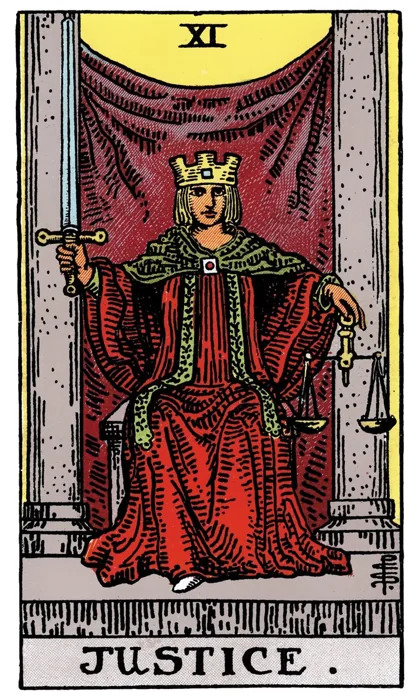
With Justice
Justice asks for evidence, consistent standards, and an agreement that can be examined. A fair process may carry some of the work currently resting on personal assertiveness. Apply the same standard to your position as to the objection.
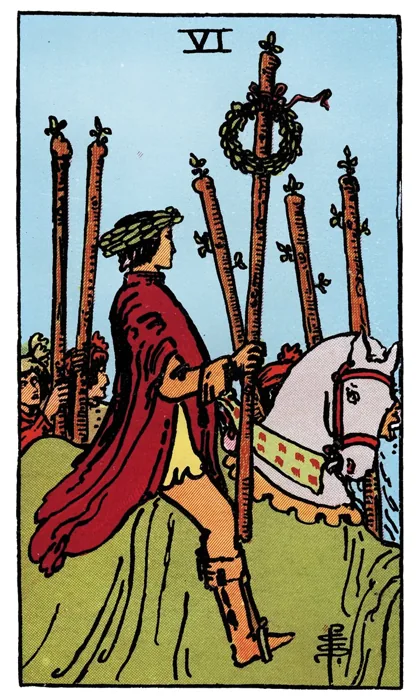
With Six of Wands
The Six of Wands brings visibility and recognition before the challenge. Success may have increased expectations or attracted competition. Decide what new responsibility you have actually accepted, rather than assuming public approval obliges you to remain endlessly available.
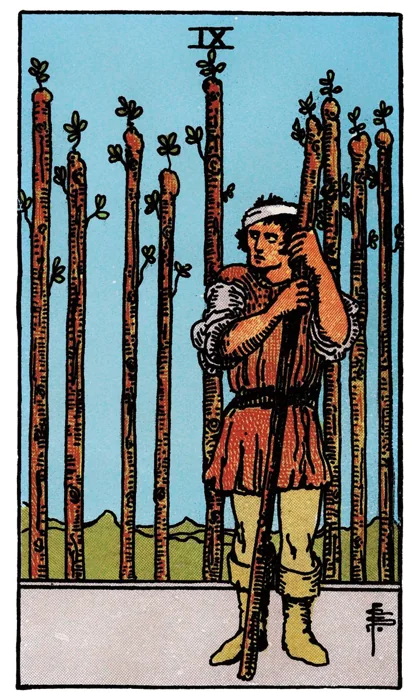
With Nine of Wands
The Nine of Wands adds the memory of previous difficulty. A present request may be activating an older defence. Keep the precautions supported by current evidence and notice where accumulated strain is enlarging the current event.
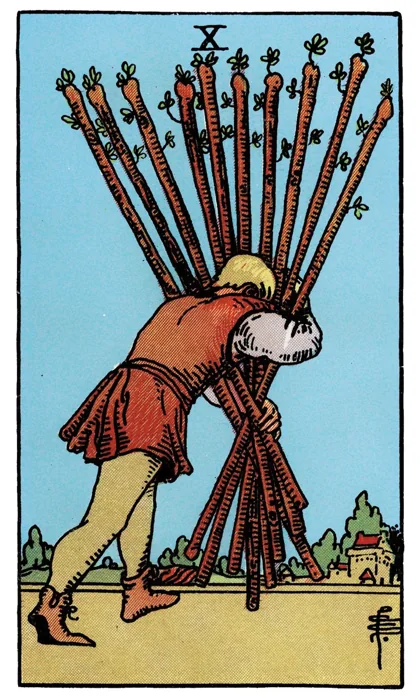
With Ten of Wands
The Ten of Wands makes the total load impossible to ignore. A boundary against new demands will help, but it will not remove work already accepted. Redistribution and scope changes belong alongside the refusal.
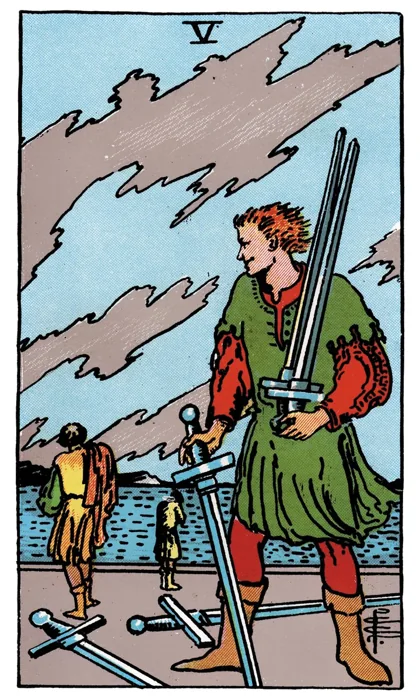
With Five of Swords
The Five of Swords asks what winning would damage. A necessary defence may be turning into a contest of humiliation or status. Define the result you need and the conduct you will not use to obtain it.
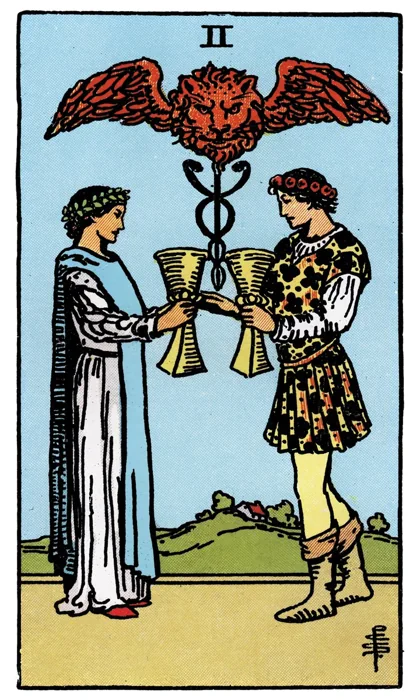
With Two of Cups
The Two of Cups brings reciprocity into the disagreement. A connection can accommodate a boundary when both people can state needs and revise arrangements. The aim is a workable exchange, rather than proof that one person cares more.
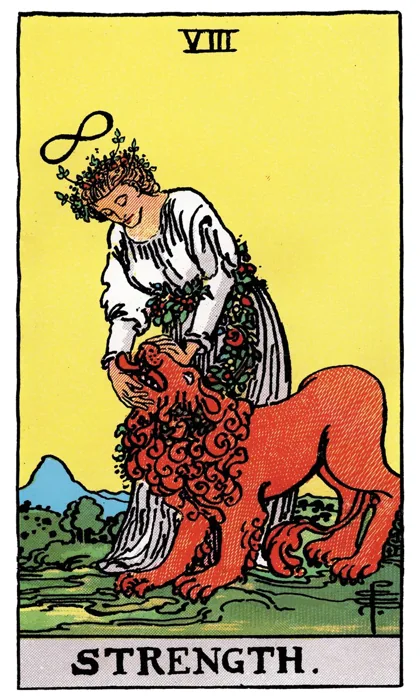
With Strength
Strength adds patience and the capacity to remain responsive under pressure. Firmness can survive a slower voice. This pairing is useful when anger contains valid information but its first expression would obscure the point.

With The Fool
The Fool introduces an unfamiliar choice that others may question. Some objections will reveal practical details worth checking; others will mainly defend the old arrangement. You can learn from the first without surrendering your decision to the second.
The defender at the threshold
The defender, the dissenter, the advocate, and the gatekeeper all belong near this image. Each stands between a claim and what that claim would change. Their value depends partly on what they protect and partly on whether the protection remains proportionate to the threat.
The gatekeeper can preserve a vulnerable space or keep a necessary change outside it. The dissenter can reveal a group's blind spot or become so attached to opposition that cooperation feels like disappearance. These ambiguities give the card its depth. A forceful stance tells us that something matters to the defender; it does not yet tell us whether their judgment is sound.
A satisfying development of this figure is the person who creates a dependable boundary and then returns to life behind it. The protected place should contain more than the work of protecting it.
Put one limit into the arrangement
Choose one recurring request that produces the same argument. Write the actual limit, the reason it matters, and the practical response if the request returns. Keep the explanation short enough that you would still be willing to use it when tired.
Then identify what would reduce the need for personal defence: a changed deadline, a shared calendar, written responsibilities, a closed door, or another person taking ownership. The experiment is complete when the arrangement requires less repeated argument, not when you have finally found words nobody can object to.
Artwork & interpretation
Waite connects the elevated defender with courage, debate, and competition. This essay develops those themes through present-day situations; its image annotations are interpretive readings, not claims about the artist’s intention. A. E. Waite, The Pictorial Key to the Tarot: Seven of Wands.
The symbolic associations and examples offer ways to read a situation. They do not establish another person’s thoughts or fix an outcome.
A necessary defence can become a way of living after the immediate challenge has passed.
Use the cards in a spread →