Swords · Six
Six of Swords
A quieter shore, reached with some of the old life still aboard
The Six of Swords follows the decision to leave. Someone helps with a crossing, and necessary things travel with you. Relief may arrive gradually, without much ceremony. For now, progress means gaining a little distance from circumstances that could no longer continue.
- Transition
- Passage
- Assistance
- Gradual change
16 min read
In this guide
The journey begins before the relief arrives
You thought the right decision might feel more triumphant. Instead, there are bags to carry, forms to complete, an unfamiliar route, and a tiredness that becomes noticeable only once the argument has stopped. The Six of Swords belongs to this undramatic beginning. Life has started moving in a more workable direction, but your feelings have not been required to march ahead and announce it.
The Six often reflects the period of transition after leaving difficult circumstances. A change of environment may provide more room, sometimes with practical help from another person. Pay attention to the crossing itself. You still need support while moving, and progress may be modest. Reaching a less pressured point in the day can matter before the larger transition is complete.
The move need not be geographical. You may be transferring responsibility, changing a working arrangement, adjusting to a separation, or learning to inhabit a life after an intense period. A familiar subject can lose some of its power as the days acquire other contents. The distance develops through ordinary experience, not necessarily through a single decisive moment of understanding.
Help is central to the image. The passengers are not shown propelling the boat themselves. Somebody else contributes skill and effort while they make the journey. This invites a practical question about support: who knows the route, who can carry one part of the work, and what assistance would make a change possible without requiring you to manage every detail alone?
The swords travel too. Experience, responsibilities, habits, and unresolved questions may come with you into the next setting. Their presence does not invalidate the departure. Some things can only be worked through once the immediate pressure is lower. The task is to notice what must be carried, what has become useful knowledge, and what may eventually be set down.
The Six is hopeful in a measured way. A quieter arrangement can matter even before it becomes joyful. Look for evidence in daily life: fewer confrontations, clearer responsibilities, a little more choice about the evening. These changes may be less spectacular than reinvention, but they give a future somewhere to begin taking shape.
What the passengers take with them
A standing figure guides a narrow boat with a long pole. Ahead sit a cloaked adult and a smaller figure, facing away from us. Six swords stand upright near the front of the boat. The composition gives movement a shared structure: one person provides the means of passage while the others are allowed to be passengers.
The cloaked figure’s face is hidden. We cannot know whether the person feels grief, relief, fatigue, or something else. That restraint is useful. A transition does not have to display the emotion an observer expects. The person leaving may need privacy more than a persuasive explanation of why this should be counted as progress.
The water beside the boat is visibly rippled, while the wider surface towards the distant shore looks smoother. Read symbolically, the contrast suggests movement away from disturbance towards conditions that may be easier to navigate. It is a direction in the picture, not a guarantee that the next chapter will contain no difficulty.
The swords occupy space in the vessel instead of being left behind on land. Their arrangement can be read as the knowledge, obligations, and memories that accompany a move. The picture does not show the boat sinking under them. Carrying history and making a viable passage are allowed to coexist.
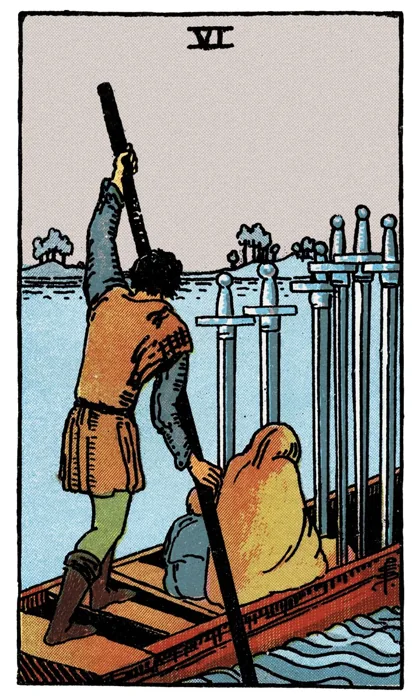
The journey is not performed through solitary willpower. Consider the practical skill, time, transport, introduction, or steady company that could help a change become manageable in the circumstances you actually have.
The passengers do not arrive empty of history. Notice which experiences offer useful knowledge and which obligations need a plan, without assuming that a good departure requires immediate emotional lightness.
Relief can be quiet enough to miss
The inner state of the Six may be subdued. You know a change is needed and are willing to make it, but enthusiasm is not readily available. This can be especially confusing if others expect celebration. You may first notice the improvement when an expected difficulty no longer occurs. That absence can be harder to recognise than the anticipation of something good.
There may be grief for the version of events in which leaving would not have been necessary. You can miss the good parts of a place or relationship while remaining clear about why the whole arrangement had become unworkable. Mixed feeling is not automatically a sign that the decision was mistaken. It may be an accurate response to a mixed history.
The Six can also describe a person becoming less interested in arguing their case. They have explained enough, or recognised the limits of explanation, and now want a day organised around something other than the dispute. This quieter stance may be a form of resolve. The lack of a dramatic declaration should not be mistaken for an absence of seriousness.
At times, the old setting remains a reference point for every new experience. A kind remark is examined for its hidden cost; a quiet afternoon feels suspiciously temporary. You need not scold yourself for having learned from the past. Instead, allow current evidence to accumulate slowly enough that the new situation can acquire a character of its own.
The constructive personal quality is patience with being between versions of life. You may no longer belong comfortably to the old arrangement and not yet feel established in the new one. A few reliable routines and relationships can provide continuity while larger questions remain open. You are allowed to be in passage without treating the interval as a failure to arrive.
Change does not require the destruction of continuity
The Six questions the fantasy of a clean beginning. In that fantasy, the new address, role, or relationship receives a person untouched by what came before. Actual transitions are more entangled. Skills, sensitivities, loyalties, and unfinished feelings make the journey with you. The deeper task is to change your relationship with that inheritance rather than pretending you can travel without one.
The presence of a helper also challenges a solitary account of freedom. We often describe a departure as something a person finally found the courage to do, while overlooking the lift, spare room, reference, translation, or patient conversation that made it possible. Courage can matter. So can the ordinary infrastructure supplied by other people.
There is dignity in being carried for part of the way. Accepting assistance need not erase your judgement or make your life somebody else’s project. A good helper contributes to the passage without claiming ownership of the destination. The distinction matters when gratitude begins to feel like a debt that could determine all your subsequent choices.
The card also asks how much resolution a departure requires. Some situations end without a shared account, a complete apology, or a satisfying explanation. Waiting for those things can leave the old shore in control of the journey. You can continue seeking understanding where it is useful while allowing practical life to move on a separate timetable.
Finally, progress can be comparative rather than absolute. The new arrangement may be imperfect but less injuring, less chaotic, or more open to negotiation. Such improvements deserve accurate recognition. They do not require declaring the past entirely worthless or the future entirely safe. A more livable direction is meaningful even when it comes without a finished story.
A transition succeeds through the details of the crossing
At work, the Six can describe changing teams, leaving a role, transferring a project, or moving away from an arrangement that has become dominated by friction. The reflective emphasis is on how the transition will happen. A clear destination helps, but so do the less glamorous details: access, documentation, introductions, timelines, and a realistic account of what remains unfinished.
If you are leaving a difficult workplace, avoid making the new role responsible for immediately restoring your confidence. It may take time to learn the new expectations and discover which old precautions are still necessary. Let the new environment show you its actual habits. A calmer meeting is useful evidence; one good day does not have to settle the whole question.
A handover can preserve what was valuable without requiring attachment to the old structure. Leave a record of decisions and unresolved questions, selecting the knowledge someone will actually need from the material nobody is likely to use. The aim is to make the work portable. You can leave a role responsibly without remaining indefinitely available as its invisible support system.
For a project that has become stuck, the card may suggest a change in method or setting. A different collaborator, a smaller scope, or a move from abstract discussion to a workable draft can provide the crossing. The useful change is the one that alters the conditions producing the difficulty, rather than merely giving the same process a new name.
There is also a professional skill in helping others through change. A colleague who knows the procedure can save someone hours of uncertainty. A helpful colleague checks what the newcomer needs to know about the process. As that person learns, the need for guidance gradually diminishes. It does not turn the learner’s temporary unfamiliarity into evidence that they should never be allowed to steer.
The shadow is assuming a new setting will automatically remove every old pattern. If unclear boundaries, habitual overcommitment, or reluctance to ask questions contributed to the previous difficulty, those habits may travel. This is not a reason to stay where you are. It is a reason to include one deliberate change in how you will inhabit the next place.
Some departures are quieter than the feelings they carry
In relationships, the Six can describe moving out of a period of conflict, changing the terms of contact, or leaving a connection that cannot continue in its present form. It does not decide which of these applies. Look at the actual agreements and actions: are people working towards a different way of relating, or arranging a more workable distance?
When a relationship continues, the crossing may involve retiring an old pattern. You agree to discuss difficult subjects at a different time, stop recruiting friends into disputes, or share a responsibility more clearly. The change becomes credible through repeated ordinary conduct. A moving conversation can start the journey, but it cannot complete every mile on behalf of the days that follow.
After a separation, affection may remain alongside certainty that the arrangement has ended. This can feel untidy, especially if others want a clear villain or a story of liberation. You are allowed to preserve a more complicated account. Missing someone does not necessarily create a workable reason to resume the relationship.
For families, a transition may involve people moving at different emotional speeds. Relief and anger may coexist in the family, while someone else concentrates on practical questions. Shared routines and clear information can matter more than requiring everyone to adopt the same interpretation. The Six favours enough steadiness for each person to make the crossing without being asked to perform somebody else’s feelings.
If you are the helper, ask what assistance is actually welcome. A lift, a meal, or company during an administrative task may be more useful than an ambitious explanation of the person’s life. Help can be generous without becoming intrusive. Leave room for the person receiving it to make decisions you would not necessarily make for yourself.
The relational shadow is changing location while leaving every difficult subject unspeakable. Distance can lower pressure, but some agreements still need words. Clarify contact, shared obligations, and the limits of your availability where relevant. A peaceful passage often depends on practical clarity that gives feelings room to be less orderly.
The passage needs a workable arrangement
Materially, the Six draws attention to the means of transition. A move may involve deposits, transport, time away from work, or a temporary overlap between arrangements. Treat these as facts to investigate, not as details that optimism must somehow overcome. A realistic bridge can make a modest change possible without requiring an ideal destination to be immediately available.
Temporary arrangements deserve clear expectations. If someone offers a room, storage, or financial help, discuss the scope and timing as plainly as possible. Clarity can protect affection from assumptions neither person intended to make. Receiving help need not mean silently accepting an indefinite obligation to organise your life around the helper’s preferences.
At home, the card may concern the gradual process of making an unfamiliar place habitable. One familiar object, a reliable route, or a simple daily ritual can provide continuity. You do not need to furnish an entire new identity along with the room. Belonging often develops through repeated use rather than arriving fully assembled with the keys.
The Six can also invite a review of what is worth transporting. Alongside useful or personally meaningful possessions, you may find things you have kept simply because deciding about them felt difficult. Give that sorting a manageable scale. The point is a more workable load, not a dramatic purge that turns every memory into evidence you have failed to move on.
A quieter day can still leave you tired
Once immediate pressure decreases, you may notice how much effort the previous period required. This is a possible personal experience to reflect on, not a medical explanation. Leave room for the new arrangement to be easier without demanding that you instantly feel energetic enough to prove it. The journey itself may also involve a great deal of practical work.
Reduce the number of decisions where you can. A short list of essential tasks, familiar meals, or one dependable point of contact can make an unsettled period less demanding. These ordinary supports do not make the transition small; they preserve attention for the parts that are genuinely unfamiliar.
Notice modest changes in what holds your interest. An hour spent reading, a conversation unrelated to the old conflict, or a plan made without checking someone’s likely reaction can signal a widening life. You do not have to monitor these signs constantly. Their value is that other things are gradually becoming possible.
Plan the next stretch, and let someone help
The advice is to make the crossing concrete. Name the next destination in practical terms: a calmer arrangement, a completed transfer, a different routine, or a period with less contact. Then identify the next few actions and the assistance each might require. You do not need a complete map of the rest of your life to begin the first manageable stretch.
Distinguish what must travel now from what can be addressed later. Important responsibilities need a plan; some emotional questions may need time; other possessions or expectations can be released. Treat these categories separately. Trying to achieve perfect closure before making any practical change can leave you standing on the shore indefinitely.
The shadow is treating departure as proof that the past should no longer affect you. You may then judge every difficult feeling as evidence that the journey has failed. A more useful measure is whether the present offers different choices. Carrying a memory is not the same as continuing to live under the arrangement that produced it.
Another shadow is allowing a helper to choose the destination simply because they supplied the boat. Gratitude and self-direction can coexist. Be clear about what you want so that practical advice can inform your decisions without replacing your own judgement. Assistance is most valuable when it increases your future room to act.
What is keeping the boat close to the shore?
Reversed, the Six can describe a transition that stalls. The reasons may be practical: missing information, limited resources, an obligation without a clear handover, or a destination that is not yet available. Begin there. A delay is not automatically resistance to growth, and a person cannot be expected to cross a river by adopting a more inspiring description of it.
It may also reveal an emotional tether. You keep returning to the old argument, seeking one final explanation, or checking whether the people you left have understood. Ask what you hope that return will supply and whether they have shown any ability to supply it. The answer may help separate a legitimate unfinished task from a wish with no reliable route to completion.
Sometimes the reversal points to a change of scenery without a change of conditions. The same unclear agreement, isolation, or overcommitment has been recreated elsewhere. This does not make the move meaningless. It identifies the next part of the crossing: something about how the new arrangement works needs attention as well as where it is located.
A return can occasionally be deliberate and useful. You revisit a place to collect something, complete a responsibility, or test whether circumstances have materially changed. Keep the purpose bounded and assess current evidence. Returning is not inherently failure, just as leaving is not inherently progress; the value depends on what the action makes possible now.
The reversed card therefore asks for a closer look at the passage. What is blocked, what support is missing, and what part of the old life still has a legitimate claim on your attention? A revised route may be wiser than more force. The goal is a workable movement, not an impressive story about never looking back.
What would help with this transition?
The surrounding cards can clarify the transition’s practical and emotional conditions. Read each pairing against the actual situation rather than treating it as a prediction of travel or departure.
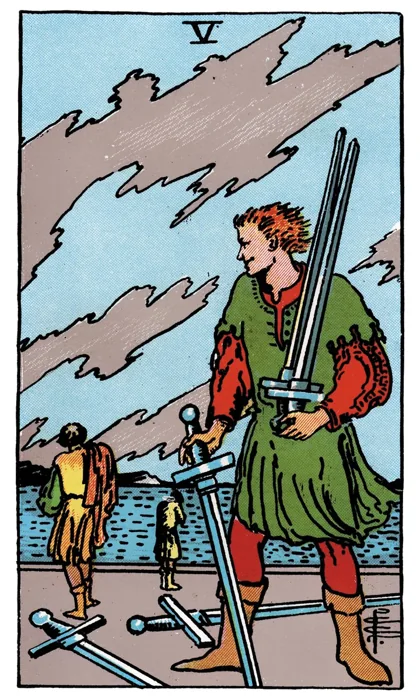
With Five of Swords
With the Five of Swords, the journey may begin with a decision to stop participating in a damaging contest. Practical distance can matter more than winning the last exchange. Consider what needs to be arranged so that leaving the argument does not leave an important responsibility or boundary unaddressed.

With Eight of Cups
With the Eight of Cups, a recognition that something no longer satisfies is followed by the work of departure. The emotional decision and the practical crossing may happen at different speeds. Give both a place, without requiring complete certainty or immediate relief before taking a well-considered next step.

With Death
With Death, the transition is shaped by an ending that changes the available future. Attention may need to move from preserving the previous arrangement to making the next stage livable. This is symbolic language for change, not a prediction of physical death or a reason to force an ending.
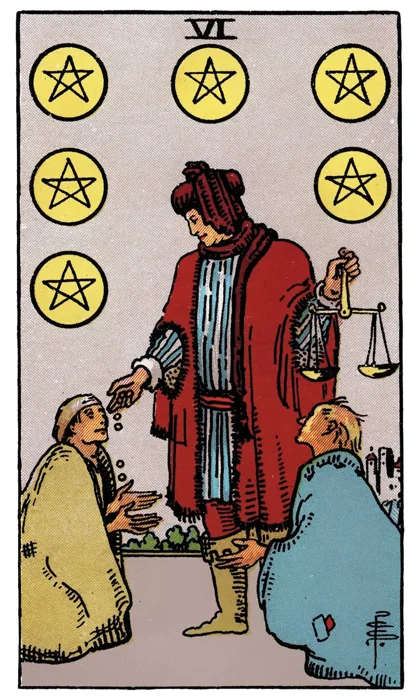
With Six of Pentacles
With the Six of Pentacles, assistance has a material form: time, access, resources, or a practical favour. Clarify expectations so that help supports your agency. The pairing also asks whether you can offer useful support to someone else without making their journey a demonstration of your own generosity.

With The Star
With the Star, a quieter setting may allow hope to become credible again. Keep the scale gentle. A small future plan can matter before you feel ready for a sweeping new vision. The passage gives possibility room to return through experience rather than through a demand to feel optimistic.
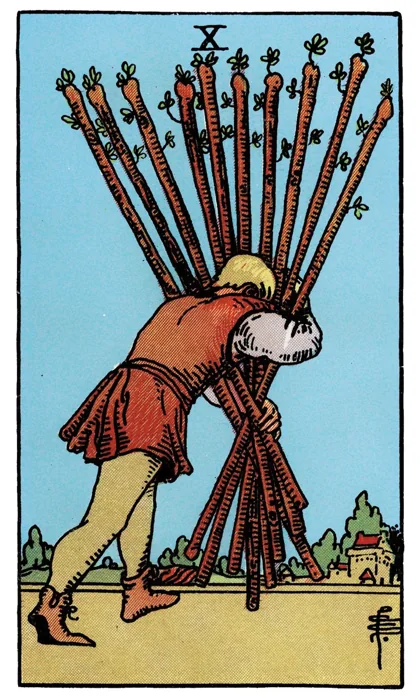
With Ten of Wands
With the Ten of Wands, examine the load being transported. Some duties must continue, but others may belong to a role you are leaving. A careful handover or a direct request for help can keep the next chapter from beginning with every burden of the previous one already assigned to you.
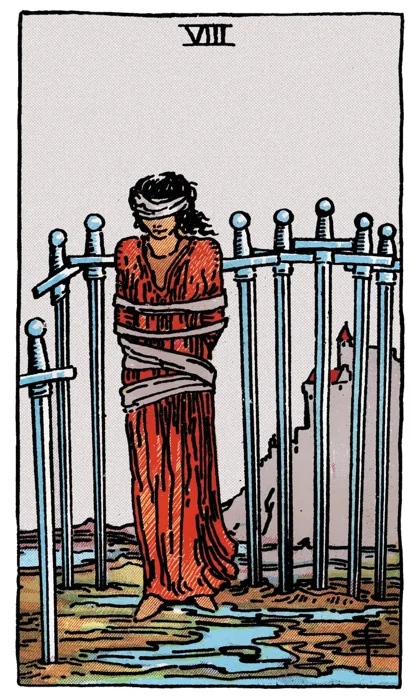
With Eight of Swords
With the Eight of Swords, the route may be difficult to see or costly to take. Avoid assuming the obstacle is only fear. Better information, an ally, or a practical resource may be needed before movement becomes realistic. Identify the smallest condition that would make one option more accessible.

With The World
With the World, the passage may be approaching a point of completion. Notice what has actually been integrated or finished, and what can now be organised around the present. Arrival need not erase your history; it can mean that the old journey no longer determines the shape of every day.
The first night elsewhere and the person who knows the route
Someone spends the first night in a new room with a bag still unpacked. The place is not yet home, but a familiar cup sits beside the bed. Nothing announces a transformation. The scene holds the Six’s modest continuity: a person carries enough of themselves forward to begin inhabiting an unfamiliar day.
An experienced colleague walks a newcomer through a complicated process. Knowing their way around, they can point the newcomer towards the right person to ask and explain why an apparently urgent task can wait. Their knowledge becomes a temporary vessel. The help is successful when the newcomer can eventually make the journey without needing the guide beside them.
A traveller sees the old shore becoming smaller but can still recognise its landmarks. Distance has not erased the place. It has changed the proportion it occupies in the view. This is a useful image for transitions whose meaning develops gradually, as other parts of the landscape begin to enter the picture.
Draw a practical map of one crossing
Choose one transition already under consideration. Write where you are now and describe a more workable arrangement in concrete terms. Between them, list three necessary steps, the main obstacle, and one person or resource that could help. Include anything that must be carried forward, so the plan does not depend on pretending you have no history or responsibilities.
Take one manageable step and choose a modest sign by which to assess it: clearer information, a completed handover, a quieter evening, or an option that has become available. Let your feelings have their own pace. The Six of Swords becomes practical when change is supported by a route you can actually travel, including the stretches for which you need another pair of hands.
Artwork & interpretation
Waite describes a ferryman taking passengers to the further shore and associates the card with journeys and routes. This original essay extends the image into practical transitions, receiving assistance, and carrying history into changed circumstances; these reflections are not literal travel predictions. A. E. Waite, The Pictorial Key to the Tarot: Six of Swords.
The symbolic associations and examples offer ways to read a situation. They do not establish another person’s thoughts or fix an outcome.
You can move towards a more workable life without arriving as an entirely different person.
Use the cards in a spread →