Wands · Queen
Queen of Wands
Taking up space without asking everyone to approve of it
The Queen of Wands is comfortable taking part on her own terms. Her enthusiasm can encourage others, especially when she has room to pursue work she considers her own. That warmth is easier to sustain when she is free to disappoint someone occasionally instead of keeping everyone pleased.
- Confidence
- Warmth
- Independence
- Magnetism
16 min read
In this guide
You are allowed to have a preference and let it be visible
There is a kind of confidence that does not announce itself as confidence. A person wears a colour because they like it. When something interests them, they can speak about it and invite others to take part without needing much reassurance first. They do not spend the whole encounter checking whether their presence is permitted. The Queen of Wands gives that ease a recognisable shape.
The Queen can describe someone whose enthusiasm makes other people want to take part. It may also point to work that needs your visible contribution, or to a wish for more independence in how you live. Her warmth comes from participating on her own terms. Creative energy needs somewhere to go, but it also belongs to the person using it. Being able to step out of view is part of that freedom.
The Queen can describe how someone uses their energy and influence, without specifying their gender or age. A quiet person may be comfortable with their preferences and assured in the work they do. They can welcome others into a room without wanting to become its centre. This confidence does not depend on having an outgoing personality.
There is often permission here to stop treating desire as an inconvenience that must be justified. You can want the role, enjoy attention, dislike an arrangement, or take pride in something you made. These responses still need judgement, but they do not have to be hidden until everyone else has been consulted about whether they are acceptable.
The Queen may describe the effect someone has on a group through their confidence and care. In a classroom, for example, humour can make participation easier, while clear boundaries help people feel able to try. A team or household can benefit similarly. Look at what the person actually contributes and how their presence gives others more room to take part.
As an outcome, this card may invite a more inhabited form of participation. Consider where your own point of view could contribute to the work. Giving it a visible form may help, along with choosing conditions in which you can use your abilities comfortably. The aim is not to manufacture a magnetic persona. It is to reduce the distance between what matters to you and what you allow yourself to express.
A sunflower in one hand, a staff in the other
The Queen sits upright on a throne decorated with lions, holding a leafy staff and a large sunflower. A small black cat sits at the front of the platform. The yellow robe, flower, and warm backdrop give the scene brightness, while the seated posture offers composure. The image combines animation with an established place from which to act.
The staff and flower are different forms of living growth. One can be read as direction or agency, the other as pleasure and cultivated life. Held together, they suggest that effectiveness need not exclude enjoyment. A person can care about what they are doing and take visible pleasure in it without making that pleasure a sign of unseriousness.
The lions appear both on the throne and behind the figure, giving the seat a forceful visual character. Yet the Queen is not shown attacking or struggling. The strength belongs to the setting of her presence. Read symbolically, this can suggest authority that does not need to be demonstrated through repeated confrontation.
The cat introduces an independent presence at the Queen's feet. We need not assign it a fixed occult meaning to notice its effect: the scene contains something alert and self-contained that is not performing for the central figure. It can prompt a useful question about whether confidence makes room for other beings to remain themselves.
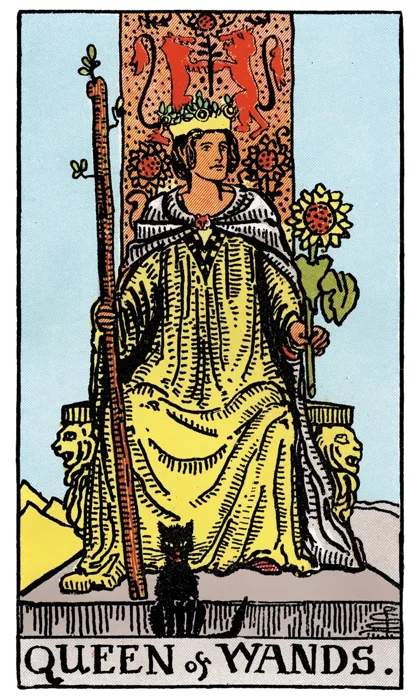
The flower brings enjoyment into an image of authority. What you find beautiful, absorbing, or enlivening can inform how you work and live. Pleasure does not have to be hidden until every responsibility has been satisfied.
The cat has its own posture and attention. A generous atmosphere need not require everyone to become alike or continuously responsive to its host. Confidence can include room for privacy, difference, and a separate point of view.
Less time spent monitoring how you are coming across
The Queen of Wands can concern becoming more comfortable with your own preferences. You recognise what interests you and allow yourself to dislike something without immediately having to justify it. Less attention then goes into guessing how you appear to others. You can become more involved in the conversation or activity in front of you, noticing the people who are actually there.
This ease does not require the absence of insecurity. You may feel nervous and still choose to participate. Confidence grows through discovering that an uncomfortable feeling does not have to decide every action. The Queen's composure can be understood as the ability to remain connected to a purpose while uncertainty is also in the room.
There may be renewed pleasure in expression: clothes, movement, voice, humour, or the way you arrange a space. These are not trivial simply because they are personal. They can help a life feel more recognisably yours. The useful question is whether the expression gives you pleasure and freedom, rather than becoming another standard you must perform flawlessly.
The card may also bring awareness of anger when your space or contribution has been reduced. Anger can reveal where accommodation has gone too far. Use the information to establish a clearer position. You do not need to choose between smiling through resentment and making every boundary an explosive announcement.
If the Queen describes someone else, notice how their presence affects your own. Do you feel encouraged to participate, or pressured to admire? Does their confidence leave room for disagreement? Attraction and warmth can be real while still requiring observation of how the relationship works when preferences differ.
Warmth is more generous when it can be chosen
The Queen of Wands questions the bargain in which belonging is purchased through constant pleasantness. If you must always welcome, reassure, or entertain, your warmth becomes an obligation rather than a gift. A more sustainable generosity includes the ability to decline. What is freely offered has a different quality from what is extracted through expectation.
The Queen invites you to acknowledge what you want without treating the wish as a judgement on your character. Wanting influence or recognition deserves honest examination, as wanting pleasure does. If you hide the wish, it may emerge through resentment or tests that others do not understand. Naming it gives you a chance to discuss it and decide how you want to act on it.
Magnetism is not a guarantee of goodness or competence. A vivid person can draw attention before anyone has evaluated what they do with it. The deeper question is how influence is used. Do other people become more confident about participating, with room to exercise their own judgement? Or does the surrounding world have to keep confirming the central person's importance?
Creative ownership involves accepting that your work will have a point of view. You cannot make something distinctive while ensuring that nobody could dislike it. The Queen asks whether you can make definite choices as you shape the work, then stand beside a result that expresses those preferences. This leaves room for correction without requiring you to dissolve into every response.
A mature presence also allows others to shine. Another person's talent need not reduce the space available to yours. Comparison becomes less urgent when you are engaged with what you actually want to contribute. The Queen's warmth is strongest when it grows from a life she inhabits, rather than from the need to remain the sole source of light in every room.
Let the work carry a recognisable point of view
At work, the Queen of Wands can describe leadership through presence, creative direction, teaching, advocacy, or the confidence to make your contribution visible. A useful first step is to state what you think clearly. You can remain open to discussion without weakening every sentence in advance to protect yourself from the possibility of disagreement.
If you work creatively, choose what the piece is trying to do and allow that intention to shape its form. Endless accommodation can make work technically acceptable while leaving it without a centre. Feedback is valuable, but it needs to meet a purpose. Otherwise every response becomes a new instruction and your own judgement never develops authority.
The Queen may also describe someone who makes a team more capable through encouragement. By noticing strengths and giving people credit for them, they help create an atmosphere in which a difficult attempt feels possible. This is practical work. Its value should be recognised without assuming that the person who does it naturally can provide unlimited emotional energy on demand.
Being seen may require you to present your work or ask directly for a role. Choose an approach that uses your strengths. A considered written proposal can be as clear as speaking in a meeting, and a demonstration may explain your contribution better than either. You do not need to imitate someone else's manner, but you do need to give people a way to recognise what you offer.
For someone in authority, examine how your preferences shape the room. People may agree because your enthusiasm is compelling or because they are unsure whether disagreement is welcome. Invite specific objections and respond usefully when they arrive. Confidence becomes more trustworthy when others do not have to protect it from ordinary information.
The professional shadow is becoming responsible for the atmosphere while your own work receives less space. Much of your effort goes into encouraging people and remembering details that make difficult situations easier. With so much attention spread around the team, your own contribution can become hard to identify. Define the role. Warmth can support your work, but it should not quietly become an additional job that nobody has agreed to share or recognise.
Closeness can make room for a full-sized person
In relationships, the Queen of Wands can describe attraction, warmth, confidence, and the pleasure of being with someone who inhabits their own life. The connection may feel lively because neither person has to disappear into the other. Independence can support desire when it gives both people something real to bring back into the relationship.
Express what you want with enough clarity to allow a genuine response. Preferences about affection, time, intimacy, and shared plans deserve language. Hoping to be intuitively understood can feel romantic, but it may leave the other person guessing at a standard they do not know. Directness gives the relationship a better chance to meet the actual need.
The card can also support enjoying your own attractiveness without making attention an obligation. You may welcome interest, decline it, or simply enjoy feeling at home in your expression. Another person's response does not create a debt. Warmth and clear boundaries can coexist without either becoming an apology for the other.
In an established bond, notice whether each person has room for friendships, interests, and development. A relationship can be close without becoming the sole source of vitality. At the same time, independence should not be used to avoid shared responsibility. Freedom works better when the practical agreements make both people less constrained, not only the more forceful partner.
Jealousy may be a topic to discuss if comparison or uneven attention has entered the connection, but the Queen does not establish that someone is jealous, unfaithful, or a rival. Look at what has actually happened. Name the concern without building a case from a card, and distinguish a request for reassurance from an attempt to control another person's life.
With friends and family, the Queen can describe the pleasure of bringing people together while retaining your own limits. Enjoy bringing people together and encouraging their participation, while letting them contribute to the occasion too. A relationship in which you are always the host can become lonely beneath its sociability. You deserve encounters in which someone else makes room for you, too.
Make room for pleasure without asking it to prove status
Materially, the Queen may invite spending that supports a more inhabited life: useful creative tools, a space that suits you, or an experience you actually enjoy. Clarify the purpose and the available resources. A choice is easier to assess when its value is specific, rather than resting on the hope that possessing it will make you a different kind of person.
Generosity can be pleasurable, but it needs a boundary. Paying, hosting, or giving repeatedly may become a way of securing a role in a group. Notice whether you can say no without fearing that the relationship will vanish. Affection should not depend entirely on your ability to finance an atmosphere of ease.
At home, start with a place you can use regularly. One corner might give you room to work or enjoy a private interest without waiting until the whole house changes. Arrange it around what you actually want to do there, then use it. Over time, that habit can give the space more personal meaning than its appearance alone.
In business, confidence can help you state a price or negotiate the value of your contribution. Ground the conversation in the work and its terms. The card does not promise profit. It can help you notice where discomfort with being valued leads you to provide more than was agreed or make your needs unnecessarily invisible.
Being warm does not require being available all the time
A lively presence can conceal how much energy social participation uses. Others see the version of you that appears in the room and assume it is endlessly available. Give yourself time outside that role. Privacy, quiet, and less expressive days are compatible with warmth; they may be part of what makes it possible.
Notice the activities that leave you more connected to yourself. Making, moving, arranging, teaching, or spending time with chosen people may help in different ways. The card does not prescribe one temperament or level of activity. Its useful question is what kind of participation feels like your own rather than an imitation of someone else's vitality.
The Queen is not a measure of health, attractiveness, or physical capacity. You do not need to feel radiant to use the image. A small act of preference can be enough: choose a comfortable setting, decline a draining invitation, or make room for something you enjoy without requiring it to improve your productivity afterwards.
Choose something because you mean it
Let a real preference become visible. Offer the idea, choose the style, ask for the role, or state the boundary in a plain sentence. Keep the action connected to something you actually value. Confidence built through honest participation is more durable than a performance designed to persuade everyone that you never hesitate.
Be generous where you can choose generosity freely. Encourage someone's effort, share credit, or make a useful introduction. Then allow their response to remain their own. Support loses some of its warmth when it becomes an indirect contract requiring admiration, loyalty, or the same kind of attention in return.
The shadow is making the room responsible for your sense of importance. You need to be liked, deferred to, or seen as the person who makes everything possible. Notice what happens when someone else leads. A moment of discomfort may reveal a need for recognition that can be addressed more directly than by competing for every centre.
Another shadow is hiding a firm will beneath perpetual charm. If you want something, say so rather than arranging the atmosphere until disagreement becomes socially difficult. Clear requests respect other people's agency. The Queen's influence becomes more trustworthy when warmth and intention can both be seen.
When confidence becomes performance, or retreats from view
Reversed, the Queen of Wands may describe diminished confidence, discomfort with visibility, overextended sociability, or a need to reclaim energy from other people's expectations. Begin with the actual experience. Are you withdrawing because the setting is unsuitable, because you need rest, or because fear is preventing a contribution you still want to make?
The reversal can expose the strain of maintaining an appealing persona. You remain encouraging while becoming resentful, or look assured while privately monitoring every response. Reduce the performance where possible. A trustworthy relationship or working setting should allow some ordinary uncertainty without making you earn your place again from the beginning.
At another extreme, influence may become controlling. Warmth is offered when others agree and withdrawn when they do not. If you recognise this pattern in yourself, make the underlying request explicit and allow a real answer. If you encounter it elsewhere, judge the arrangement by its behaviour rather than by the charm of its most pleasant moments.
Comparison can also crowd out creative pleasure. You watch how others are received and begin altering your work before you have heard your own intention clearly. Spend some time with the activity away from immediate evaluation. Ask what you would choose if the next attempt did not have to settle your place in an imagined ranking.
A constructive reversal may make confidence quieter and more selective. You stop attending every gathering, protect a private interest, or choose fewer settings in which to invest your presence. The aim is not to become smaller. It is to inhabit the spaces that matter with less obligation to keep proving warmth, desirability, or strength everywhere else.
What does confidence make possible around it?
These combinations explore presence, creativity, attraction, and influence. They do not identify a rival or establish another person's feelings. Court cards can describe useful qualities and roles as well as people.
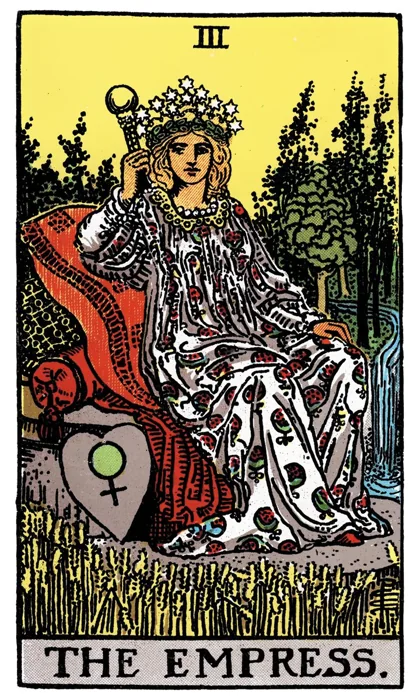
With The Empress
With the Empress, creative confidence can become a welcoming environment. Attend to materials, comfort, and the conditions in which people or projects grow. Make the care sustainable, so that the person providing the warmth also has room to receive it.
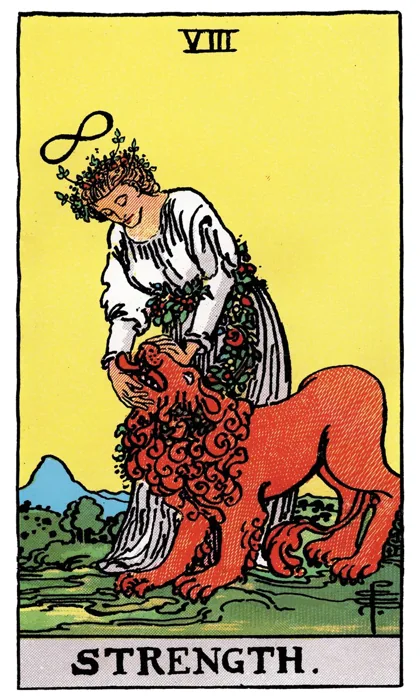
With Strength
With Strength, self-possession supports a firm but proportionate response. You can state what matters without humiliating someone or turning the exchange into a display of power. Warmth becomes more credible when it can coexist with a clear and consistent boundary.

With The Sun
With the Sun, enjoyment and visibility can reinforce one another. Let yourself participate without continuously evaluating the impression. A good moment can be openly enjoyed while leaving room for the fact that your life and personality contain quieter, less certain moments too.
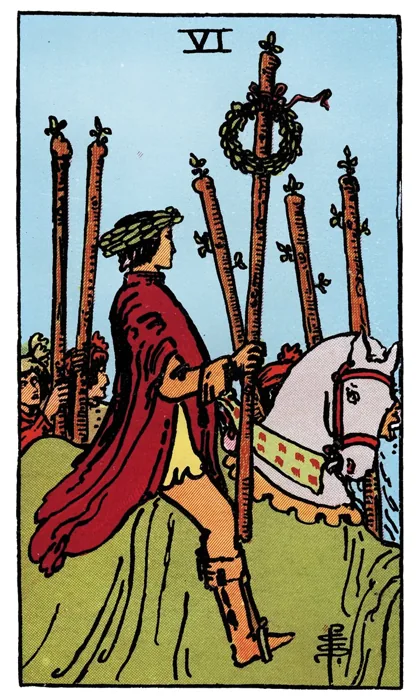
With Six of Wands
With the Six of Wands, recognition may invite you into a more visible role. Receive the credit accurately and decide what new expectations you want to accept. Being admired does not require making yourself available for every request that follows.
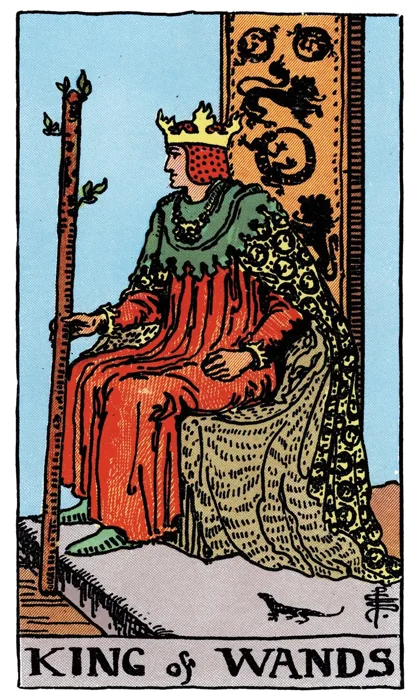
With King of Wands
With the King of Wands, personal confidence meets responsibility for a wider direction. The combination can support strong collaboration when roles and authority are clear. Ensure that two vivid points of view can influence the work without turning every decision into a contest for the centre.
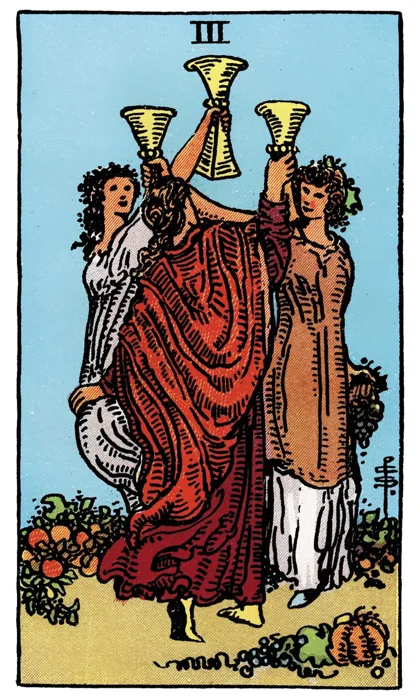
With Three of Cups
With the Three of Cups, friendship and shared enjoyment nourish confidence. Choose company in which you can contribute without performing continuously. A lively gathering is more generous when attention and care circulate, rather than depending on one person to sustain the whole atmosphere.
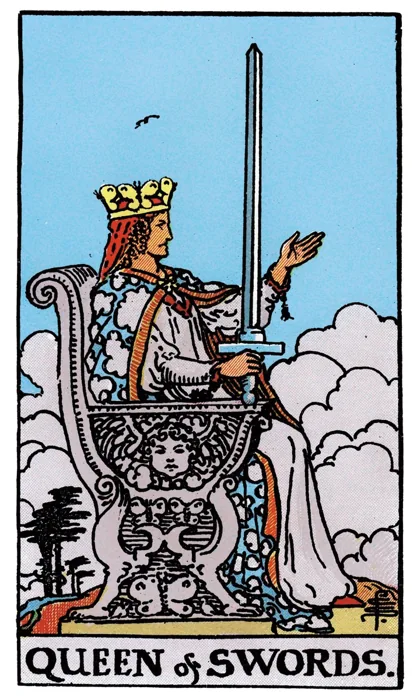
With Queen of Swords
With the Queen of Swords, warmth benefits from precise language and discernment. Say what you mean and let the other person answer. Clear limits can protect a connection more effectively than charm used to conceal a request or soften it until it becomes impossible to understand.
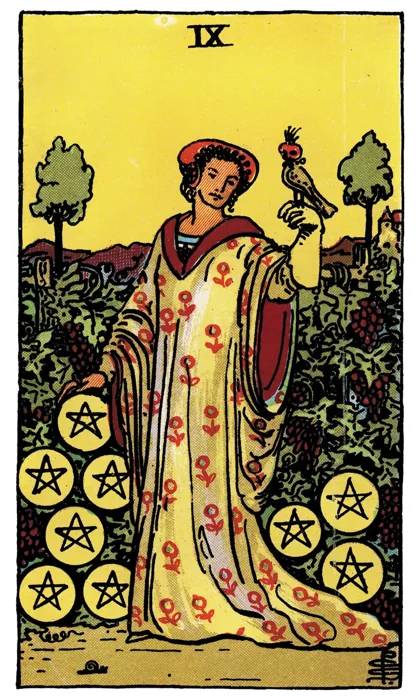
With Nine of Pentacles
With the Nine of Pentacles, independence supports pleasure and self-expression. Use what you have cultivated in ways that make daily life more satisfying. The reward may be privacy, choice, and a space that suits you, rather than a more impressive performance for others.
The host who sits down and the artist beside the work
The host who can sit down at their own gathering gives a useful image of the Queen. They have created welcome without becoming permanently trapped in providing it. Their pleasure belongs to the occasion as much as anyone else's. Hospitality becomes fuller when its maker is allowed to be a participant.
The artist standing beside a finished piece offers another echo. The work has a point of view, and the maker can let it meet different responses without apologising for having chosen. This is neither indifference to criticism nor dependence on applause. It is a willingness to remain in relationship with something recognisably their own.
The teacher who expects participation without demanding imitation gives a quieter form of influence. Their confidence creates room for students to try, disagree, and develop separate judgement. The room becomes more alive because the central person's authority supports other people's agency rather than requiring everyone to reflect it back.
Make one preference visible and one limit clear
Choose a small area in which you routinely defer before noticing what you want. Form a specific preference and express it without a long apology. It may concern a plan, a piece of work, your space, or how you spend an evening. Leave room for discussion without erasing your position before it has been heard.
Then identify one place where your warmth has become an assumed obligation. State what you can offer and what you cannot. Notice whether the boundary makes genuine generosity easier afterwards. The Queen of Wands becomes practical when you can be present with others while remaining present in your own life.
Artwork & interpretation
Waite associates the Wands with animation and describes the Queen through magnetism and warmth. This original contemporary guide develops confidence, creative ownership, chosen generosity, and independence, without treating the older text’s gendered descriptions as rules about who the card represents. A. E. Waite, The Pictorial Key to the Tarot: Queen of Wands.
The symbolic associations and examples offer ways to read a situation. They do not establish another person’s thoughts or fix an outcome.
You can be generous with your presence without making your availability unlimited.
Use the cards in a spread →