Wands · King
King of Wands
Giving a strong idea a form other people can help build
The King of Wands takes responsibility for a direction and helps others understand why it matters. People can commit their effort once they know what they are working towards. His conviction is useful when it allows capable people to contribute their judgement, including ideas that differ from his own.
- Vision
- Leadership
- Responsibility
- Enterprise
16 min read
In this guide
The idea now has people and consequences attached to it
At first, the question was whether the idea could begin. Now other people need decisions from you so they can proceed. They want to understand the direction of the work and the standard you expect it to meet. The King of Wands describes that change of scale. Enthusiasm has become influence, and influence brings responsibility for conditions that affect more than your own experience.
The King of Wands concerns taking responsibility for an idea and organising work around it. You may be the person who sees what a group could make, or find yourself in a role where a scattered effort needs direction. Express the purpose clearly enough that others can contribute. Keep the consequences of your decisions in view as the undertaking develops.
The King can describe the authority someone holds within a modest undertaking. A household or small creative project still involves decisions whose effects must be considered. The card need not refer to a man or older person, and it does not establish organisational rank. Look at the responsibility actually available to you and how thoughtfully you use it.
There may be enough information to choose a workable direction now. Waiting for an option nobody could criticise can leave everyone else's work suspended. A considered decision will still involve uncertainty. Explain the reasons for the choice and accept responsibility for what follows, including the possibility that new evidence will require you to adjust it.
The King also asks whether the aim is coherent enough for others to act without constant interpretation. A compelling ambition needs practical shape: what matters, what takes priority, what is outside the scope, and where people have freedom to use their own judgement. Otherwise a strong vision can remain surprisingly difficult to work with.
In an outcome position, the King can invite you to take clearer responsibility for the direction of an undertaking. Explain what you want to achieve and agree on how results will be assessed. Arrange appropriate help, giving others enough authority to use their initiative. The work can then develop without requiring you to become the source of every answer.
Seated authority with attention already turned outwards
The King sits on a throne, holding a leafy staff beside a red robe and green collar. The head and upper body turn towards the left of the image. Lions and curling dark creatures decorate the throne and garment, while a small lizard-like creature appears on the ground. The figure is seated, but the attention does not feel withdrawn from action.
The upright staff connects authority with something living. It is not merely a polished emblem held for ceremony; small leaves remain visible along it. As a symbolic reading, this suggests responsibility for a purpose that must continue to develop. A leader cannot preserve vitality simply by repeating the gesture that once made the beginning successful.
The throne gives the King a stable position from which to act, unlike the Knight's immediate movement. From that position, he can consider which challenges deserve the undertaking's resources. He need not enter each one personally. Choosing where to refrain can protect the commitments already made and leave people with enough support to carry them through.
The small creature at ground level offers a useful counterpoint to the grand seat. The larger purpose exists alongside ordinary, easily overlooked life. Read practically, the image invites attention to the details and people that a broad view can miss. A direction is only as workable as the conditions through which it must be carried out.
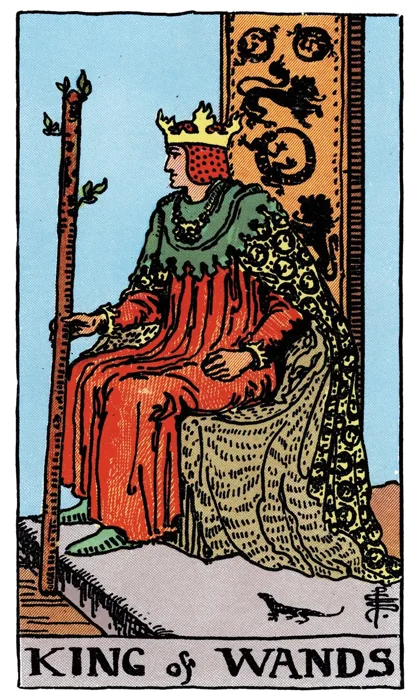
The turned posture gives the seated figure an outward orientation. Authority is useful when it remains engaged with what is happening beyond its own position. A clear direction needs continued observation, not only confidence in the original decision.
The small creature draws the eye back towards the ground. Consider the ordinary conditions that support a larger ambition: time, materials, handovers, and the people doing the work. These details determine whether the vision can be lived.
Willing to choose without needing to be infallible
The King of Wands can feel like a clearer relationship with your own judgement. You know what you want to build or protect and are prepared to make decisions in its service. This does not require perfect confidence. It requires enough trust in your ability to assess, act, listen, and correct when the situation supplies new information.
Responsibility may also bring loneliness. Other people see the decisive role while you carry uncertainty they do not encounter directly. Find somewhere to think honestly without performing certainty. A trusted colleague, clear records, or a structured review can help you distinguish the weight of the role from the assumption that you must carry it without support.
There may be impatience with what looks like small thinking. You can see the larger possibility and want others to meet it. Before dismissing their caution, ask which part of the work they can see more closely than you. Their concern may reveal a condition the vision needs, rather than a failure to understand why it matters.
The card can also reveal an attachment to being the person with direction. When someone else offers a better idea, do you feel relief or displacement? A leader's identity becomes more flexible when the purpose matters more than being its sole author. You can retain responsibility while allowing the work to become more intelligent than your first version.
If the King describes another person, observe how conviction behaves under correction. Can they explain a decision while hearing a useful objection? Notice also whether they acknowledge the consequences once the choice has been made. A forceful manner can resemble leadership before these qualities are tested. The role becomes trustworthy through patterns of action, not through the confidence with which its owner occupies the room.
Giving others room to shape a project you believe in
A private vision is easy to keep pure because it has no independent participants. Once others join, they bring knowledge, needs, and interpretations of their own. The King of Wands faces the task of allowing a purpose to become shared without letting it dissolve into unrelated preferences. Direction and participation must develop together.
Authority can create freedom by clarifying the field. People know the aim, the limits, and where their decisions are welcome. They can then act with less need for permission. Authority becomes restrictive when the stated freedom is continually withdrawn whenever someone chooses differently from the leader's unspoken preference.
The card also asks whose ambition is being served. A leader may sincerely believe that an undertaking benefits everyone while accepting most of its rewards and distributing most of its costs. Make the arrangement visible. Responsibility includes examining the relationship between influence, labour, recognition, and the ability to refuse.
There is a difference between holding a purpose and owning every expression of it. A teacher's aim may be for students to think independently, just as a founder needs an organisation that can function beyond their constant supervision. Collaborative art also depends on others being able to bring the project to completion. These aims may eventually require less personal centrality. The mature achievement can be a structure that remains alive when its initiator is not in the room.
The King's deeper lesson is accountable conviction. You do not have to become neutral about what matters to you. You do need to remain answerable for how you pursue it. Leadership becomes more human when a person can make a definite choice and still learn from its effects. The inspiring claim then has to answer for the practical conditions it creates.
Give the undertaking a clear centre and usable boundaries
At work, the King of Wands may concern leading a project or making a decision others have avoided. Put the purpose into concrete terms so the group knows what it is working towards. Describe who the result is for and how they would use it. That understanding gives people a basis for coordinating their effort beyond the temporary encouragement of an inspiring speech.
Set priorities that acknowledge limits. If speed, quality, cost, novelty, and scope are all described as equally non-negotiable, people are left to absorb the contradiction. Leadership includes choosing among desirable things. Explain the trade-offs so that others can make compatible decisions when you are unavailable.
Delegation should transfer a real area of responsibility. Give the person enough authority, context, and resources to deliver the outcome. Agree on review points without reclaiming every detail between them. A team becomes more capable when members can develop judgement, not merely execute tasks whose meaning and consequences remain exclusively in the leader's head.
The card can favour entrepreneurship or a more independent role, but desire for autonomy is only part of the decision. Examine the work of maintaining the undertaking: administration, relationships, money, delivery, and the ability to continue through ordinary weeks. A vision becomes credible through these arrangements, rather than through the strength of the declaration that you are ready to lead.
In creative work, hold the core intention while inviting expertise. An editor, designer, performer, or collaborator may improve the piece in ways you could not produce alone. Explain what must remain true and where alternatives are welcome. This allows collaboration to challenge the execution without repeatedly reopening the entire purpose.
The professional shadow is a culture organised around one person's energy. Everything moves when you are excited and stalls when your attention shifts. Build continuity through clear ownership, documentation, and realistic commitments. Your influence becomes more valuable when it enables good work beyond the hours in which you are personally generating momentum.
A strong person can still be one half of a conversation
In relationships, the King of Wands can describe confidence, commitment to a shared direction, or attraction to someone with a vivid purpose. A person who knows what they want can make a connection feel clear and energetic. The important question is whether that clarity includes curiosity about what the other person wants.
Initiative can be caring. You make the plan, address a practical problem, or begin the conversation that has been avoided. Yet taking initiative is different from deciding for both people. Explain your intention and leave room for a meaningful response. A relationship gains direction through agreement, not simply through the stronger will becoming its default organiser.
Ambition may play a large part in the relationship. One person's work or creative project can shape where both people live and how they spend their time. Discuss those effects alongside the costs and need for care. Supporting another person's aim should be a choice you can revisit. An ambition that attracts less public attention still deserves consideration in your shared plans.
The card can also expose the difficulty of leaving leadership at the door. A useful workplace habit becomes unhelpful when a partner wants to be heard rather than managed. Ask whether the conversation needs a decision, practical help, or attention. Competence includes recognising when another person's experience does not need to become your next project.
For someone single, the King may invite greater authorship of your social life. Be clear about the connection you want and participate in settings that suit your values. At the same time, allow a real person to differ from the imagined role. Compatibility is learned through reciprocal experience, not established by how well someone fits the first account of your future.
With family and friends, responsibility can be generous when it remains shared. You may be the person others trust to organise or decide, but their trust should not erase their participation. Make room for different preferences and for occasions when someone else leads. A strong bond can hold more than one centre of initiative.
The budget should tell the same story as the vision
Materially, the King of Wands asks whether resources are being directed towards a coherent purpose. A plan may sound clear while spending and time are scattered across unrelated ambitions. Put the commitments beside the stated priorities. The mismatch can reveal where enthusiasm has accumulated faster than decisions about what the undertaking can actually support.
Confidence can be useful in negotiation when it rests on preparation. Know the contribution, the terms you need, and the room for adjustment. A commanding manner does not replace understanding the agreement. The card is not evidence that a venture will be profitable or that a bold financial decision will be rewarded.
If others rely on your decisions, make the relevant information accessible. Shared resources should not depend entirely on one person's memory or reassurance. Clear records and agreed authority protect everyone involved, including the person leading. Transparency allows trust to rest on an arrangement that can be understood rather than on personality alone.
At home, a larger project may need a decision about scope and ownership. Agree on the result, the budget, and how choices will be made. Someone has to coordinate, but coordination need not mean unilateral control. The place being created should support the lives of the people who will use it, not only the vision of the person most eager to begin.
Make a pace others can sustain part of the plan
Leadership can create a habit of setting the pace through your own energy. When you are excited, everyone accelerates; when you are tired, decisions wait. Notice whether the arrangement has other supports. A stable rhythm should include clear priorities and shared judgement, rather than requiring you to remain continuously forceful for anything to happen.
Responsibility also needs places where you do not have to lead. Time alone, ordinary friendship, or an activity in which someone else provides the structure can restore perspective. You remain a person beyond the role. The fact that others depend on your decisions does not mean every part of life should be organised around producing them.
The card cannot determine health or capacity. Its practical question is whether the scope of responsibility fits the resources available, including your own attention. If the role has grown, the support may need to grow with it. Another burst of determination should not become the only response to a structural mismatch.
Give others enough direction to contribute independently
State the aim and make the next decision that belongs to you. Include what matters most, what can change, and what is outside the present scope. This gives action a centre. If you are waiting for universal agreement, consider whether your responsibility is now to choose fairly and explain the choice rather than keep the whole situation suspended.
Invite information that could improve the plan. Ask a person close to the practical work what you may be missing, and respond in a way that makes future honesty easier. A leader who requests challenge but punishes its arrival quickly loses access to the very knowledge that would make their decisions more reliable.
A deeply held idea can make it easy to assume others should help realise it. They may have different priorities, even if they value you or admire the work. Explain what joining the undertaking would require and how its benefits would be shared. Give people enough information and freedom to decide whether they want to make that commitment.
Another shadow is defending the original vision after evidence has changed. Revising a method need not diminish your authority. It can show that the purpose matters more than protecting your first judgement. The King is most useful when responsibility includes correction, not only the privilege of making the initial decision.
When direction becomes domination, or remains only a speech
Reversed, the King of Wands may describe controlling leadership, poorly supported ambition, inconsistent direction, or reluctance to take responsibility for a needed choice. Identify the actual pattern. Too much authority concentrated in one place and too little authority being exercised at all can both leave others unable to work freely.
A group may hear the goal repeatedly while still lacking what it needs to act. Find out where the next piece of work is stuck. It may need resources, or someone may have to make a decision before an owner can proceed. Agree on a result that is achievable under the revised conditions. Delivering it gives people a practical reason to trust the undertaking again.
The reversal can also expose a leader who needs agreement more than information. Differences are treated as disloyalty, and others learn to conceal problems until they become impossible to hide. If you hold authority, examine the cost of disagreeing with you. If you do not, consider what forms of clarification, support, or boundary are realistically available.
Sometimes you are avoiding a role you are capable of holding because responsibility feels like a demand for infallibility. Define its actual scope and seek appropriate support. You may be ready to lead one part of the undertaking without claiming expertise over everything. A bounded responsibility is easier to inhabit honestly than a vague expectation to become the person with all the answers.
A constructive reversal can redistribute leadership. You step out of a central role, bring in missing expertise, or allow an undertaking to change beyond your original design. This can feel like loss while improving the work. The useful measure is whether the purpose and the people involved become better supported, rather than whether your personal prominence remains unchanged.
What makes the direction credible?
These pairings examine authority, purpose, and shared effort. They describe possible dynamics rather than fixed personality types, and they do not establish that a forceful person is either trustworthy or untrustworthy.
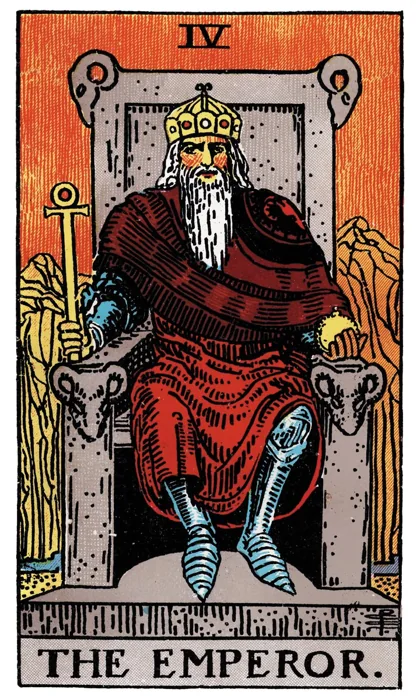
With The Emperor
With the Emperor, a vision needs durable structure. Clarify roles, authority, and practical limits so that initiative can continue without constant improvisation. The structure should support the purpose and the people doing the work, rather than become a monument to the person who created it.
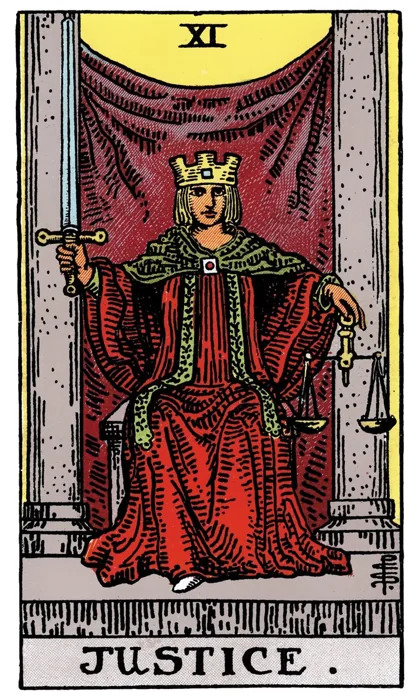
With Justice
With Justice, leadership requires transparent criteria and accountability. Explain how decisions are made and how their consequences will be reviewed. A strong direction becomes easier to trust when the person setting it is also willing to be assessed by the standards applied to others.
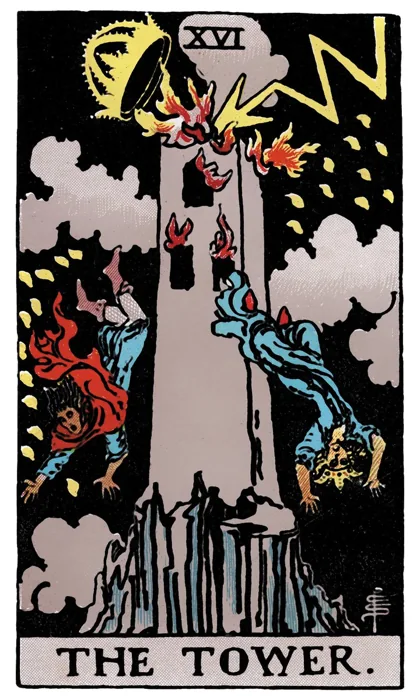
With The Tower
With the Tower, an established direction may need substantial revision. Examine which assumptions no longer fit the facts and what practical support is required during change. The pairing does not predict disaster; it asks whether authority can respond honestly when its previous structure is challenged.
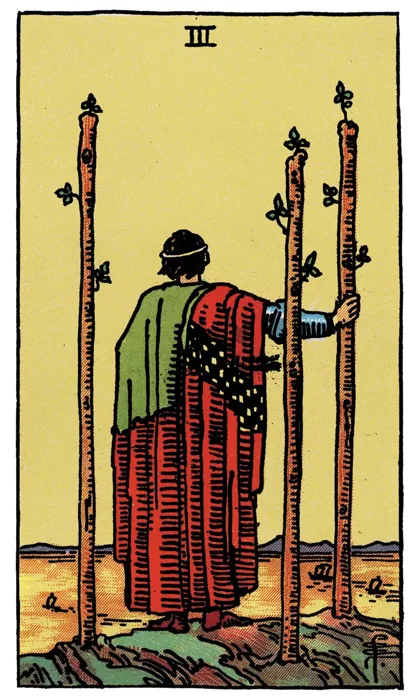
With Three of Wands
With the Three of Wands, a venture may be ready for broader reach. Establish what is stable enough to extend and what depends on your personal attention. Expansion becomes more workable when the relationships and processes can support the larger scope.
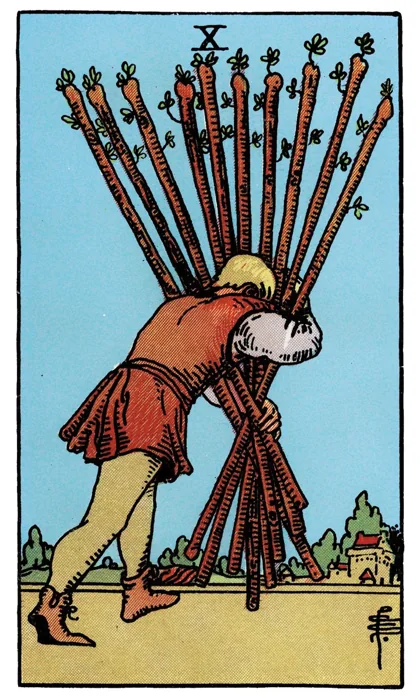
With Ten of Wands
With the Ten of Wands, responsibility may have become overcentralised. Review what can be delegated, simplified, or ended. A leader's usefulness is not measured by carrying the largest burden, but partly by creating an arrangement in which necessary work has appropriate owners and support.
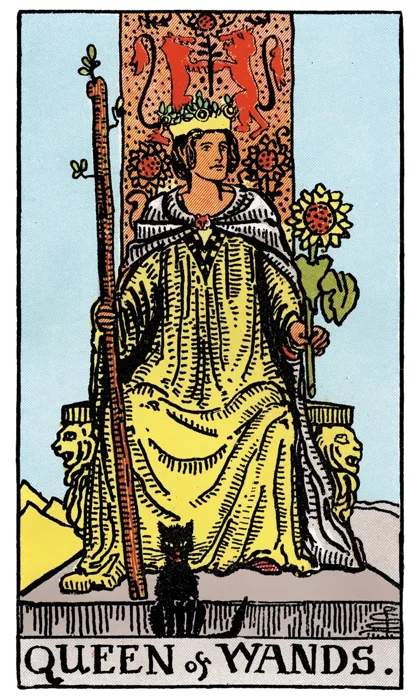
With Queen of Wands
With the Queen of Wands, confidence and direction can create a lively partnership. Make roles and decision rights explicit so that strong personalities can collaborate. The aim is a shared undertaking with room for distinct judgement, rather than a permanent contest over whose enthusiasm defines it.
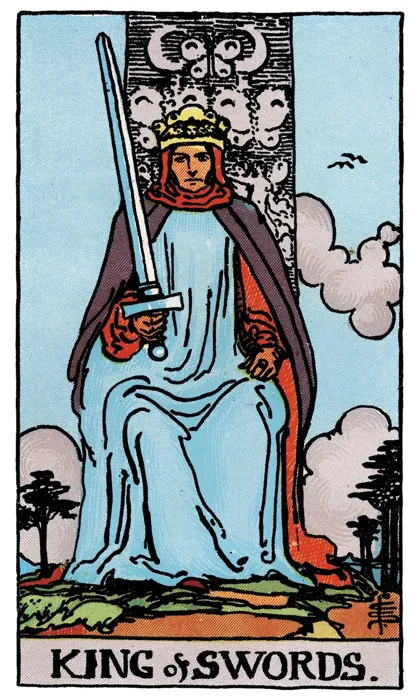
With King of Swords
With the King of Swords, conviction benefits from clear reasoning and an examination of consequences. Test the plan against evidence and articulate its assumptions. Decisiveness becomes more reliable when the desired outcome does not determine in advance which information is allowed to count.
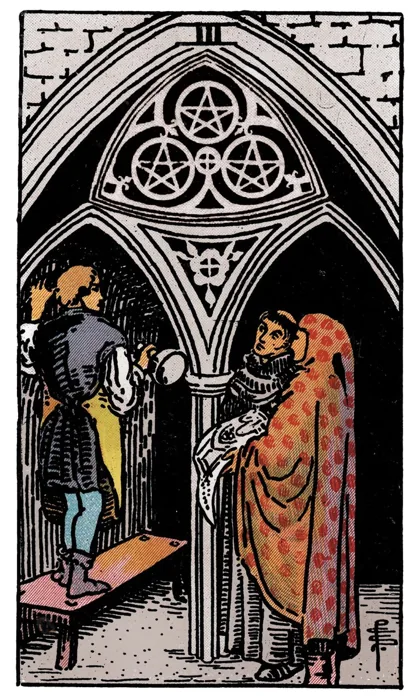
With Three of Pentacles
With the Three of Pentacles, vision meets complementary expertise. Once the purpose and standards are understood, skilled people need room to shape how the work is carried out. The work can become stronger than the original idea when collaboration includes real influence rather than only assigned labour.
Leading people who have knowledge of their own
The director holds a sense of the whole while relying on people who know particular parts more deeply. Their task is to connect those contributions without flattening them into imitation. A useful direction gives the work coherence and leaves enough room for the unexpected improvement that another person's judgement can provide.
The founder begins with something intensely personal and eventually faces the question of whether it can belong to a wider group. Growth may require a change in identity: from the person who does everything to the person who creates conditions for others to act. The undertaking becomes more durable as its life becomes less dependent on one temperament.
The captain who listens offers another image. Someone must choose a course, but the choice improves through reports from people observing different conditions. Authority and listening are not opposing qualities here. The responsibility to decide gives the captain a reason to seek information that a purely decorative role could afford to ignore.
Write a direction someone else could use
Choose an undertaking for which you hold some responsibility. Write its purpose, the next useful result, the practical limits, and the decisions others can make without you. Ask someone involved whether this account is clear and workable. Notice where your intention has relied on assumptions that were never actually shared.
Then make one change that gives another person genuine agency: transfer ownership, clarify authority, or invite a decision in an area they understand. The King of Wands becomes practical when your conviction helps capable people participate, and when the work can move with intelligence that does not have to originate entirely from you.
Artwork & interpretation
Waite links the King with ardour, animation, and conscientiousness, noting the living staff and lion imagery. This original guide develops contemporary questions of leadership, accountable conviction, enterprise, and shared agency without assigning the card to a fixed gender or demographic. A. E. Waite, The Pictorial Key to the Tarot: King of Wands.
The symbolic associations and examples offer ways to read a situation. They do not establish another person’s thoughts or fix an outcome.
A clear direction becomes stronger when other people can contribute judgement rather than merely follow instructions.
Use the cards in a spread →