Wands · Knight
Knight of Wands
The desire to find out by doing
The Knight of Wands is ready to enter an experience that others are still discussing. Enthusiasm gives this movement courage, though it can also make waiting difficult. Acting with a purpose can feel liberating. Constantly needing another departure can become exhausting for everyone involved.
- Action
- Adventure
- Boldness
- Restlessness
16 min read
In this guide
At some point, the idea needs a person willing to move
The conversation has reached the point where another round of speculation will not teach much. Someone has to make contact and try the work, even if the difficult parts will become clear only once they have begun. The Knight of Wands supplies that readiness. There is appetite for experience and a willingness to discover ability through contact with a task that cannot be fully rehearsed beforehand.
The Knight concerns pursuing an aim with enough initiative to enter unfamiliar circumstances. That may involve travel or an adventure you have been considering. Compared with the Page, interest has become a movement with consequences. The Knight wants to participate at speed. This energy can be especially useful where hesitation has become habitual and a manageable risk is being treated as though certainty should be available first.
A court card may concern the way you act in a situation, as well as a role or a person of any age or gender. The Knight puts energy directly into action, often trusting the first move more than considering how it will continue. Decide whether the present circumstances call for that confidence or whether a little more attention to what follows would help.
The Knight may appear when a change of setting becomes appealing. A journey, move, demanding assignment, or unfamiliar social world promises to make life feel larger. That appeal can contain a genuine wish for growth. It can also contain relief at leaving a difficult conversation or unfinished task behind. Ask what the movement approaches as well as what it escapes.
There is no need to make the card either heroic or unreliable by definition. Someone may handle a fast-moving situation courageously and make others feel welcome within it. That skill can coexist with a need for help maintaining the work afterward or attending to its details. The useful reading identifies the actual strength and its limits. It does not turn a vivid manner into evidence of someone’s entire character.
In an outcome position, the Knight can prompt you to turn an idea into a substantial attempt. Decide what that attempt commits you to and where you will reassess. Understanding its scope allows you to act boldly while keeping unresolved questions visible. You can learn a great deal by setting out, provided enthusiasm has not been mistaken for a complete understanding of the destination.
A rider in armour on a horse already lifting forward
The Knight sits on a reddish horse whose front legs rise from the ground. A leafy staff is held upright, while a red plume streams from the helmet. Armour covers the rider, and the yellow garment is patterned with dark creatures. The dry landscape and pointed hills echo the Page’s setting, but the posture has changed from inspection to movement.
The horse makes the card’s energy visible. Its raised body suggests force that needs direction, not merely permission to exist. Rider and mount must work together. Read symbolically, this asks whether intention and momentum are aligned, or whether the strength of the impulse is already deciding more than the person riding it intended.
The armour acknowledges that action meets resistance. Yet the Knight carries a staff rather than a drawn sword. We do not need to turn the scene into a battle. The image can support a reading of purposeful departure, energetic pursuit, or the willingness to enter demanding conditions with some preparation already in place.
The flying plume and sweeping garment make stillness difficult to imagine. This visual liveliness is attractive, and that attraction is part of the card’s lesson. Movement can look convincing before its direction has been examined. The question is whether the impressive charge is taking the person somewhere they have actually chosen to go.
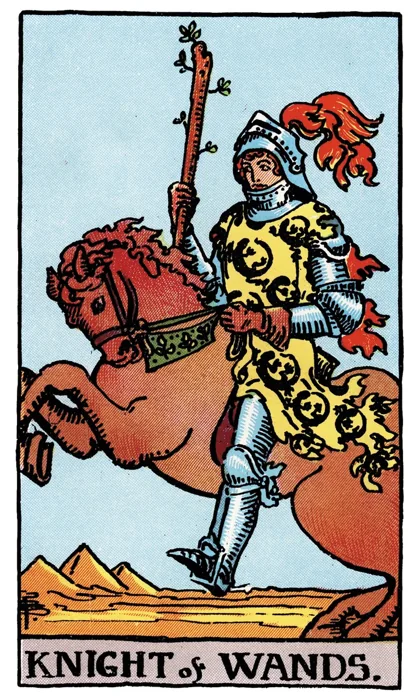
The lifted horse concentrates the image’s momentum. Strong energy can carry a task forward, but it still needs a chosen route and an appropriate pace. Ask who is directing the movement and what would make a change of course possible.
The plume and staff give the rider a vivid, animated presence. Confidence can help others join an undertaking. Its value becomes clearer when the promises made in the exciting moment remain workable after the pace changes.
Restlessness can be a signal, and it can be a habit
The Knight of Wands can feel like an urgent wish to participate more fully. You want movement, challenge, contact, or a task with enough resistance to hold your attention. A life organised around waiting may suddenly seem intolerable. The useful question is what kind of engagement would satisfy the appetite beyond the first rush of doing something different.
Confidence may arrive through action rather than before it. Once you begin, you find abilities that were difficult to access while imagining the task from outside. This is one of the Knight’s genuine gifts. A suitable challenge can interrupt a stale story about what you cannot do, because experience supplies evidence that argument alone could not provide.
Impatience can also flatten important distinctions. A request for details may sound like a refusal to believe in the idea. You begin dismissing cautious people as uninspired and treating even necessary pauses as obstruction. Slow down enough to hear the concern accurately. Some questions are attempts to make the action possible under real conditions, rather than attempts to extinguish its energy.
The card may reveal dependence on novelty. You feel most alive when arriving, pursuing, or beginning, then become restless as the work grows familiar. Notice whether you can find satisfaction in depth as well as intensity. Some worthwhile experiences become interesting in a different way after they stop continuously surprising you.
As a description of a person, the Knight suggests a lively, enterprising manner that can be exciting to encounter. Let reliability be established through behaviour. Neither charisma nor a tarot title tells you whether someone will follow through. Observe the relationship between their words, actions, and willingness to deal with the consequences of both.
Freedom includes the aftermath of the choice
The Knight embodies a necessary protest against living entirely in preparation. A person can become so careful that nothing new is allowed to happen. The card asks what knowledge becomes available only through movement. A conversation, journey, or difficult attempt may reveal possibilities that remain invisible while you insist on understanding the whole experience in advance.
Yet action does not become free merely because it feels spontaneous. It creates consequences, uses resources, and affects other people. The deeper maturity of the Knight is the ability to include that aftermath in the meaning of freedom. You choose the movement and remain willing to participate in what follows from choosing it.
There is also a distinction between courage and the wish to feel courageous. Courage responds to something that matters, despite difficulty. Performing courage may require increasingly dramatic gestures to preserve a self-image. Ask whether the action still makes sense if nobody sees it and if the result is useful rather than impressive.
Adventure can happen within a stable life. A demanding creative project, a frank conversation, or a new responsibility may ask as much openness as a distant journey. Treating distance as the only form of expansion can make the familiar world seem smaller than it is. The Knight’s appetite can be directed towards depth as well as geography.
The card’s central developmental task is continuity. Can the person who was enthusiastic at the beginning remain recognisable when repair, patience, or routine becomes necessary? This does not mean never changing direction. It means making the change consciously and communicating it, rather than expecting others to absorb the gap between your earlier promise and your present interest.
Use the burst for a real piece of work
At work, the Knight of Wands can describe a demanding assignment, a launch, a pitch, an urgent problem, or an opportunity that benefits from decisive participation. Choose an objective clear enough to direct the energy. A concentrated burst can be effective when it produces a defined result, rather than a larger collection of partially started tasks.
The card can support taking initiative where a project has become trapped in discussion. Offer a practical trial, make a prototype, or resolve the next reversible decision. State what you are testing and how you will review it. This allows action to create information without disguising an experiment as a final answer.
If you lead with enthusiasm, check the promises being made in the room. Can the team deliver the scope and timing you are describing? Do the people responsible understand the commitment? A persuasive beginning should not quietly transfer impossible work to someone who was not present when the exciting agreement was reached.
For creative work, the Knight favours an energetic stretch of making. Draft, rehearse, assemble, or test while the impulse is available. Then allow another tempo for revision. The force that produces material is not always the force that judges it well. Separating those stages can preserve spontaneity without asking it to replace craft.
A dynamic career may appeal to you, but ask what an ordinary week in the role involves. Regular travel and rapid changes can leave less time for relationships or rest than an exciting description suggests. Consider whether you would enjoy those repeated demands as well as the occasional opportunity. The role needs to fit the life you would actually be living around it.
The professional shadow is leaving maintenance to others while collecting the excitement of every new beginning. If your gift is initiating, build explicit partnerships with people who enjoy development and continuity. Share authority and credit accordingly. Different strengths can work together without making one person’s appetite the permanent source of another person’s unacknowledged workload.
Intensity is an experience; reliability is a pattern
In relationships, the Knight of Wands can concern an attraction that quickly becomes an invitation or shared adventure. You may enjoy the spontaneity and want to spend more time together before discussing where it will lead. Let yourself enjoy that experience while continuing to learn about the person. Intensity tells you how the connection feels now; compatibility takes more shared experience to understand.
Directness can be a gift. A clear invitation can express desire without leaving either person to decode every small signal. Keep that directness reciprocal. Interest should leave room for an answer, including a slower pace or a refusal. Confidence becomes more attractive when it does not require the other person to surrender their own timing.
This card is sometimes reduced to a stereotype of an unreliable lover. That reading is too narrow to be useful on its own. Look at what the person actually does. Do they communicate changes, respect agreements, and remain considerate when the encounter is less exciting? Behaviour answers those questions more accurately than the fact that a Knight appeared.
In an existing relationship, a shared adventure or more candid expression of desire may bring life back into a routine. Choose something both people want. Novelty should not become a demand that one partner continually entertain the other or accept discomfort to prove openness. The aim is mutual participation, not a test of who is more daring.
Restlessness may also indicate an issue that movement cannot solve. A trip can be enjoyable while leaving an avoided conversation untouched. Ask whether you are bringing energy into the relationship or repeatedly arranging excitement so that its ordinary difficulties never have to be addressed. The distinction becomes visible in what happens when the plans end.
With friends and family, the Knight may be the person who gathers everyone for an impromptu undertaking. This can create memorable experiences, provided the invitation includes practical consideration. Notice time, cost, access, and the right to decline. Other people’s constraints are part of the shared adventure, not evidence that they lack a spirit of fun.
Count the cost of the whole adventure
A surge of enthusiasm may make a trip or ambitious purchase especially appealing. Before committing, account for the costs that are less prominent in the first plan. Transport and maintenance can continue beyond the initial expense, and time away affects other obligations. Consider what would happen if arrangements changed. Understanding those consequences helps you choose an experience you can enjoy on realistic terms.
Urgency can make an offer feel more valuable than it is. Ask whether the opportunity fits your actual priorities and whether the terms remain clear under pressure. The Knight is a symbol of movement, not evidence that a financial gamble will succeed. Important commitments deserve the information necessary to understand what you are accepting.
If you want more freedom, consider which practical arrangements support it. A manageable base, some spare time, and fewer unnecessary obligations can create more room for spontaneity than repeated dramatic escapes from an overextended life. Adventure becomes easier to enjoy when each departure does not leave a new difficulty waiting at home.
In a shared household, sudden plans affect other people. Discuss the changes that alter schedules, expenses, or responsibilities. You may be ready to move immediately, while someone else needs preparation. A short conversation can prevent the appealing freedom of one person’s decision from becoming another person’s unexpected burden.
A burst is useful because it is not the only speed
The Knight’s energy can feel self-renewing while the activity remains exciting. It may be tempting to ignore ordinary limits and assume that enthusiasm will carry every stage. Leave room for a slower period afterwards. A demanding burst is easier to use well when the next day is not already committed at the same intensity.
Notice whether movement clears your attention or merely keeps you from hearing yourself. Both can initially feel like relief. A worthwhile challenge often leaves some satisfaction after the excitement fades. Compulsive busyness may leave only the need for another source of stimulation before the underlying discomfort becomes noticeable again.
The card cannot assess physical capacity or health. Choose activity and pace according to your actual circumstances. Its useful question is whether the current movement expresses something you value and can support, rather than becoming a standard of vitality you feel obliged to perform regardless of what your body or life requires.
Be bold about the action and precise about the promise
Identify the step that would genuinely move the situation forward. Make it specific enough to complete and proportionate to what you know. If further thought is only repeating the same uncertainty, a bounded attempt may be the right response. Let action answer the question it is capable of answering.
Before committing, name the consequences you are agreeing to carry. Include follow-through, communication, and a plan for changing direction if necessary. These details give enthusiasm credibility. People can join you more freely when they understand the scope of the undertaking and are not expected to infer its terms from your confidence.
The shadow is believing that delay always means cowardice and restraint always means repression. Some pauses protect the very possibility you want to pursue. Listen for useful limits and distinguish them from habitual discouragement. The Knight becomes more effective when energy can receive information without interpreting it as a personal challenge.
Another shadow is making departure the only available solution. You leave whenever a setting becomes ordinary, difficult, or less flattering. Ask whether the next adventure is taking you towards something chosen or merely repeating the relief of exit. A courageous act may occasionally be staying long enough to address what the next destination will not automatically resolve.
The impulse has lost its route, or its permission to move
Reversed, the Knight of Wands can describe haste, scattered action, interrupted momentum, frustration, or a powerful wish that has no workable outlet. Begin by distinguishing excess movement from blocked movement. One needs direction and restraint; the other may need a smaller opportunity to act without carrying the weight of a complete life change.
An impulsive commitment may now require revision. Communicate promptly if you cannot deliver what you promised, and take responsibility for the practical consequences where you can. Enthusiasm explains how the promise happened; it does not erase its effect. A clear correction is more useful than disappearing because the original excitement has become embarrassment.
The reversal may also show a pattern of starting at full intensity and stopping when the work becomes repetitive. Adjust the scale and rhythm. A modest continuing practice may support your interest better than repeated bursts that require ideal energy. You can remain adventurous while learning how to stay in relationship with a task after novelty fades.
If frustration is building because everything feels constrained, identify the actual source of the restriction. Lack of time, unclear authority, fear of judgement, and a genuinely unsuitable environment are different problems. Direct the energy towards the one you have. A dramatic gesture may feel satisfying while leaving the practical obstacle unchanged.
A constructive reversal can mean choosing a calmer form of action. You prepare before leaving, decline an unnecessary contest, or make fewer promises. This does not have to flatten your character. It can make the force of your participation more reliable, because the movement now has a route that your ordinary life can support.
What gives the movement direction?
These pairings consider how an energetic beginning develops over time, including what attraction asks of people as they act on it. They cannot establish anyone's fidelity or promise that a journey or significant encounter will take place.
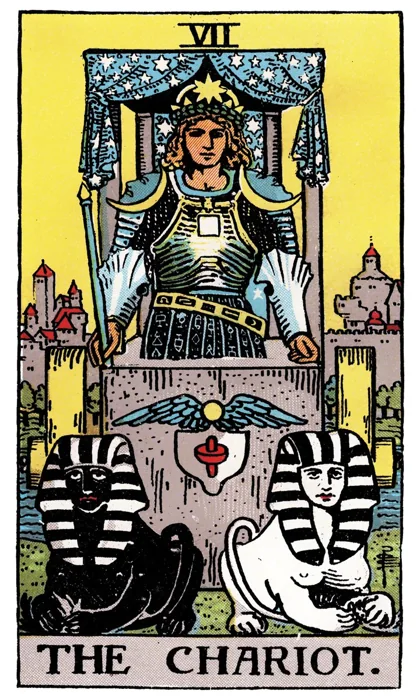
With The Chariot
With the Chariot, strong momentum needs a clearly chosen destination. Coordinate the practical pieces and decide what takes priority if demands conflict. Determination becomes more effective when it can adapt the route without losing sight of the purpose.
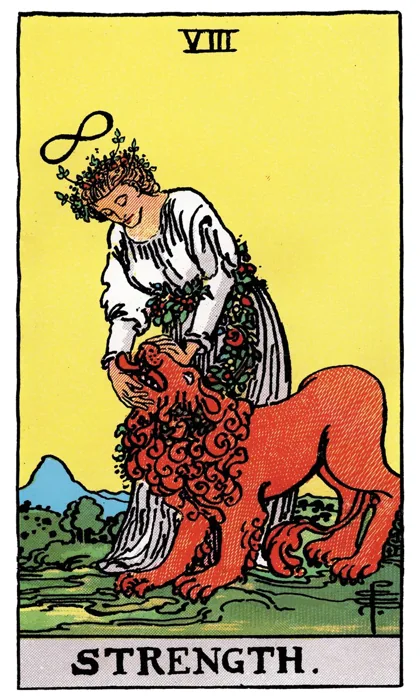
With Strength
With Strength, energy benefits from composure and proportion. You can act firmly without making every obstacle a contest. A measured response may preserve more of your power for the undertaking than a dramatic reaction that consumes it in the moment.
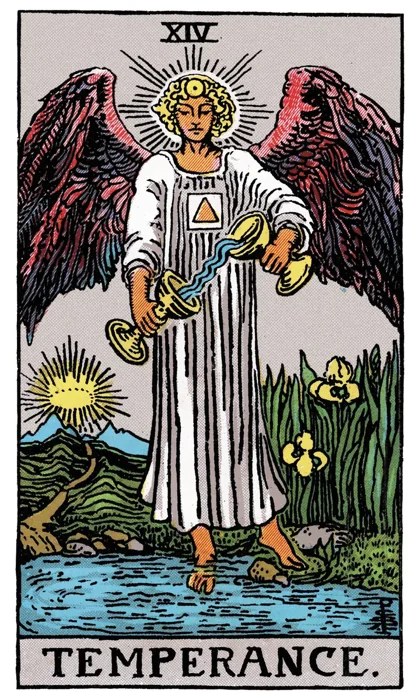
With Temperance
With Temperance, different speeds and methods need adjustment. Keep the willingness to act while allowing time for integration and feedback. Sustainable movement may depend on a rhythm that includes both concentrated effort and quieter work on the details.
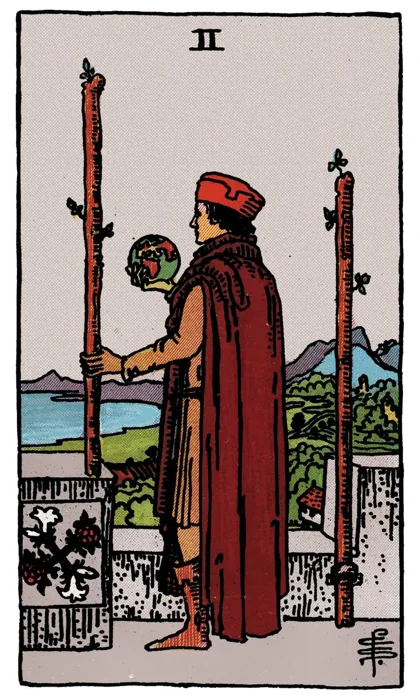
With Two of Wands
With the Two of Wands, a considered direction is ready for a practical trial. Choose a step that produces real information. The plan should guide the action without becoming a demand that experience unfold exactly as it looked from a distance.
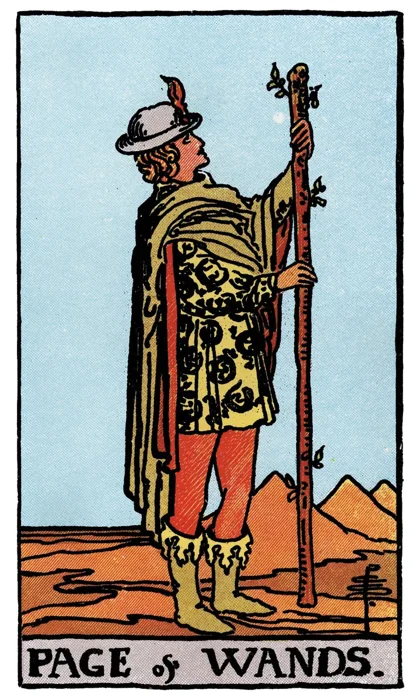
With Page of Wands
With the Page of Wands, curiosity and initiative can reinforce one another. Let the beginner ask questions before the rider accelerates. A suitable challenge can be lively and instructive without pretending that enthusiasm has already supplied the missing experience.
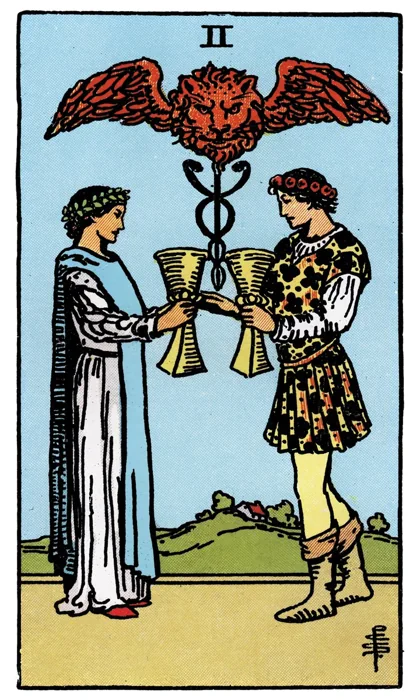
With Two of Cups
With the Two of Cups, attraction needs a reciprocal pace. Express interest clearly and learn what the other person wants. A strong beginning becomes more workable when both people can influence its direction, rather than one person’s intensity setting every term.
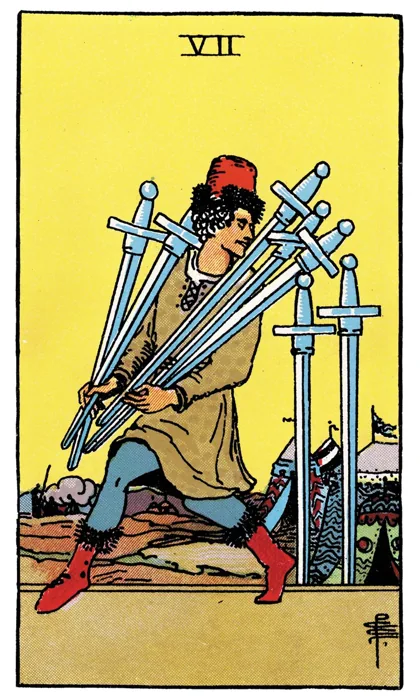
With Seven of Swords
With the Seven of Swords, examine the method as well as the aim. A shortcut may omit information or commitments that others need. Clarify what is being proposed and who is affected; the pairing is not proof that someone intends to deceive.
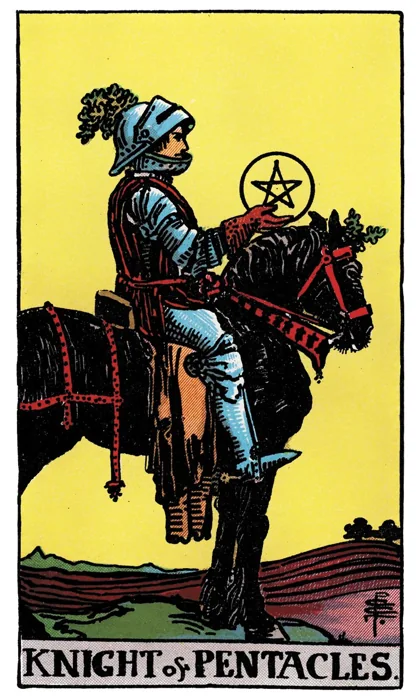
With Knight of Pentacles
With the Knight of Pentacles, initiative meets a steadier approach. These qualities can complement each other if their roles are explicit. Use energy to begin and routine to sustain, without dismissing careful work as dull or spontaneous action as inherently irresponsible.
The expedition leader and the performer entering the stage
The expedition leader embodies the power of a convincing departure. They make movement imaginable and help people cross from intention into participation. Their credibility deepens when they also understand supplies, pace, and the route home. An inspiring invitation becomes trustworthy through attention to the people who accepted it.
The performer entering the stage offers another echo. Preparation reaches a point where thinking must become action in front of real people. The moment requires commitment despite uncertainty. Afterwards, the performer can reflect and improve, but during the act they must inhabit the choice rather than continually stand outside it evaluating themselves.
The traveller who discovers a place by walking through it gives a less theatrical image. Contact provides knowledge that maps cannot contain. Yet the traveller remains a guest in other people’s surroundings. Curiosity and courage become richer when accompanied by attention to the world entered, rather than only to the feeling of being adventurous.
Choose a bold step with an honest boundary
Name something you have been discussing without testing. Choose one substantial but manageable action that would teach you more. Write down what it commits you to, what remains open, and who needs to understand the plan. Then act within that boundary instead of enlarging the promise as excitement builds.
Afterwards, complete the small piece of follow-through that makes the action trustworthy: send the update, return the tool, finish the agreed task, or explain the change of direction. The Knight of Wands becomes more than a thrilling arrival when the person who began is also present for what the beginning requires next.
Artwork & interpretation
Waite associates the mounted figure with departure and a journey, describing an impetuous quality in the horse. This guide considers the appeal of acting on an attraction or pursuing an adventure. It also explores what is required to sustain a commitment once the first energetic movement has passed. A. E. Waite, The Pictorial Key to the Tarot: Knight of Wands.
The symbolic associations and examples offer ways to read a situation. They do not establish another person’s thoughts or fix an outcome.
You can move with conviction while remaining responsible for what your arrival, promises, and departure set in motion.
Use the cards in a spread →