Pentacles · King
King of Pentacles
The responsibility of having something substantial to offer
The King of Pentacles uses experience and resources to make commitments dependable. His work supports a prosperity people can feel in daily life, beyond an impressive appearance. How he exercises authority matters as much as what he provides. Others should be able to use that security to make choices of their own, including choices he would not make himself.
- Stewardship
- Established competence
- Practical authority
- Responsible provision
16 min read
In this guide
The structure works because someone understands what keeps it working
The promise has acquired a budget, a method, maintenance, and people who know their responsibilities. The King of Pentacles represents the ability to make an undertaking substantial enough to be relied upon. He looks beyond a persuasive explanation to whether a product holds up in use or a home supports its inhabitants. A commitment matters to him when its practical conditions have been considered.
Upright, the card can describe established competence, resource stewardship, sound practical judgement, or a role involving responsibility for material stability. It can also invite enjoyment of the results. Prosperity is not useful only as proof that more can be accumulated. It can provide comfort, choice, generosity, and the capacity to support worthwhile work without every decision being governed by immediate shortage.
As a court card, the King may represent a person, a role, or a quality of action. He is not limited by age, gender, profession, or personal wealth. Someone managing a modest shared resource responsibly can embody the card more fully than a wealthy person who cannot use resources without making others dependent. The relevant question is how capability and authority are exercised.
The King differs from the Queen's close practical care by placing more emphasis on the wider structure through which resources remain available. This is an interpretive distinction, not a ranking of worth. One may notice what makes a particular day more liveable; the other may establish the system that allows that care to continue without being improvised from nothing each morning.
Confidence can be attractive here. A person who knows the terrain may make a difficult situation feel manageable. Still, confidence and visible success are not enough to establish that every judgement is sound. Check that the person's expertise fits the question and that the terms acknowledge conditions they cannot control.
Make commitments you have the resources to keep, and remain accountable for their effects. The people who rely on your work also need room to act for themselves. Explain decisions when they affect others and help them develop their own capacity. Dependability becomes stronger when the arrangement can continue to serve people without requiring you to be acknowledged as the source of every success.
The ruler is almost absorbed into the abundance
The King sits on a dark throne decorated with bull imagery. Vines and grapes cover much of his richly patterned clothing and surroundings. He holds a sceptre and a pentacle, while a substantial building appears behind him. The figure seems embedded in the material world he governs, with growth, architecture, clothing, and symbols of authority densely joined in the composition.
The bulls give the throne a visual weight and strength. A contemporary reading can connect them with persistence, material power, and a capacity to hold a position. These qualities can support stability, but they also raise a question about movement. Strength that cannot respond to new conditions may become an obstacle to the life it was meant to protect.
The vines make abundance look cultivated rather than accidental. There is a sense of resources that have developed and been incorporated into a way of living. Yet the image cannot tell us whose labour produced them. A careful interpretation asks about the full system beneath prosperity, including the people and conditions that a single central figure may make easy to overlook.
The building behind the King gives his position a larger setting. This is more than one coin held for a moment; it suggests an established domain with ongoing needs. The symbolic question is what keeps such a domain useful and fair. Possession is one fact, but maintenance, access, distribution, and succession determine how the possession affects the lives around it.

The symbols connect material provision with a role of power. Ask how that power is used, which terms are explicit, and whether the people supported retain a meaningful say in the lives built around the resource.
The dense cultivated setting suggests a result that requires continuing care. Consider whose knowledge and labour maintain it, how they are recognised, and whether the structure can adapt rather than simply accumulating more of the same.
Being capable can become a place to stand
The inner King may feel like knowing enough to make a practical decision without being thrown by every uncertainty. You have experience, resources, or a reliable method to draw upon. This can create steadiness for yourself and others. The confidence is most useful when it remains connected to the actual domain in which it was earned, rather than expanding into an assumption of general superiority.
As a temperament, the card may be grounded, protective, discerning, and comfortable with tangible results. The person often enjoys quality and may have strong preferences about how things should function. They can be generous in concrete ways, providing an opportunity, a resource, or a stable arrangement that gives another person room to develop.
The difficulty is tying identity to being the provider. If your value rests on having more, knowing more, or making everything work, another person's independence can feel unexpectedly threatening. You may say you want them to succeed while finding reasons their decisions still require your approval. Ask whether support is meant to increase their capacity or preserve your central role.
There can also be a fear of losing the position that has made life feel secure. A change in work, resources, or status may seem to endanger the whole self. The card invites a distinction between what you possess and the judgement, skills, relationships, and values you can still bring to a changed situation. Material conditions matter without being the only place identity can live.
His more mature expression includes pleasure without display and authority without constant performance. Enjoying what works can include recognising the assistance behind it and welcoming further contributions from others. A stable sense of capability does not need every conversation to confirm who is most competent. It allows the resources to serve the life rather than making the life serve the image of having resources.
Stewardship asks what power makes possible for others
The King explores the difference between owning a resource and stewarding its consequences. A business, household, body of work, or shared asset affects people beyond the person formally in charge. Decisions determine access, workload, opportunity, and the costs carried by others. The card's authority becomes ethically substantial when it takes those effects seriously instead of treating ownership as a complete answer to every question.
It also challenges simple moral conclusions drawn from material success. A prosperous result may reflect skill and effort, but also support, timing, access, and circumstances. Recognising these factors does not erase accomplishment. It prevents success from being used as proof that everyone with fewer resources must have made poorer choices or deserves less consideration.
The card asks what enough means at the level of a system. Resources can create security, yet the pursuit of more can continue after the practical need has changed. Accumulation then becomes self-justifying. A steward needs a purpose that explains why resources are being gathered, how they will be maintained, and which lives their use is intended to support.
The deeper promise is durable provision without ownership of the recipient. You can create a foundation and allow others to build lives on it that are not copies of your own. Their different choices do not necessarily make the support wasted. The strength of the structure may be demonstrated precisely by its ability to hold people who can stand and decide for themselves.
Make success repeatable without making yourself indispensable
At work, the King favours practical leadership, reliable delivery, resource planning, and attention to the conditions that keep an undertaking viable. Define what the work must provide and what is required to provide it consistently. A compelling idea needs a workable relationship with time, tools, people, and ongoing cost before it can become a dependable promise.
For someone leading an organisation or project, include the knowledge of the people doing the work. Material authority does not make every practical detail visible from above. A process improves when relevant experience can influence decisions before those decisions become fixed. Listen especially where a polished report may conceal the effort being spent to make the system look smoother than it feels.
The card can represent an experienced professional, mentor, or provider of resources. Their support may be useful if the expertise fits the task and the terms are clear. Do not confuse confidence with universal competence. A responsible expert can identify the limits of their knowledge and distinguish a considered assessment from a promise that circumstances may not allow them to keep.
For independent work, the King can encourage a practice that is defined and sustainable. Be clear about what you offer and the standards it needs to meet, including what meeting them requires from your own life. A viable undertaking should not depend permanently on you ignoring those requirements. The aim is a structure that supports good work, not merely a growing list of clients or obligations that proves demand while consuming all available capacity.
In creative work, the card can concern bringing an ambitious project into a stable form: a finished body of work, a manageable production process, or a practical arrangement for reaching an audience. Preserve the purpose of the work while attending to its material conditions. Commercial or organisational competence can support creativity without being allowed to dictate every artistic choice.
The professional shadow is equating established success with permanent correctness. A method once worked, so new evidence is dismissed; a leader built the organisation, so every later decision must remain theirs. Good stewardship includes revision and succession. A strong system can preserve valuable knowledge while allowing different people to contribute and conditions to change.
Provision becomes loving when it leaves room for choice
In relationships, the King can describe stability, practical commitment, generosity, and a wish to make shared life secure. Someone may show affection by considering the long term, handling a concrete difficulty, or making resources available. These acts can be meaningful, especially when they reduce pressure and allow both people more room to live according to their values.
For a developing connection, notice how competence and confidence feel in practice. Do they make it easier to express a preference, or make disagreement feel ungrateful? A person can be capable and still need to learn how to share authority. The useful question is not only what they can provide, but whether the relationship allows your influence over the life being offered.
In an established partnership, different contributions need not undermine equal dignity. One person may earn more, manage a particular domain, or hold greater expertise in a practical matter. Those differences should not automatically decide every unrelated choice. Discuss where responsibility sits and which decisions require genuine agreement from both people.
The difficult expression is control justified through provision. Because someone pays, organises, or has more experience, they expect obedience in return. The card cannot establish that this is occurring; examine actual conduct and the terms of the arrangement. Support is more trustworthy when the recipient can disagree, retain appropriate privacy, and develop independence without being punished for it.
There is also a quieter limitation when practical care becomes the only permitted language of love. A comfortable home or a solved problem may not answer a need for listening, affection, or vulnerability. Ask what kind of response the person is seeking. Being able to provide does not mean every feeling is a problem that can be resolved through another material improvement.
Asked about feelings, the King does not guarantee a serious proposal, a wealthy partner, or long-term loyalty. Look at consistent behaviour, stated intentions, and how the person handles difference. The card's best relational expression is a dependable base from which both people can become more fully themselves, with enough warmth and humility that the relationship remains a meeting rather than a managed estate.
A sound arrangement can explain itself
Material resources are central to the King's imagery, but the card cannot determine a financial strategy or certify that an opportunity is safe. Use current information, actual terms, and relevant professional advice for consequential decisions. As a reflective prompt, it asks whether you understand how the arrangement can be maintained and how it will serve its intended purpose.
Look beyond the initial acquisition. What will the resource cost to maintain, who is responsible, and what happens if conditions change? A substantial possession can create options and obligations at the same time. Stewardship includes both, rather than treating ownership as the end of the practical work.
If resources are shared, make access and authority clear. The person who manages the accounts or maintains the property may need discretion within their role, but others affected should not be left dependent on information they cannot obtain. A good system remains intelligible beyond the person currently running it.
At home, the King can support a sense of settled provision: people understand their commitments and keep useful things working, giving the place enough continuity to live in without constant rescue. Allow that stability to include different preferences. A well-run home is still a home for people, not a demonstration that one person's standards have prevailed over every other way of inhabiting the space.
Let the system carry some of what you built it to carry
The King may appear when responsibility has become too concentrated. Every question reaches you because you have the resources or know how things work. Consider what could be clarified, delegated, or documented so that others can act without continuous supervision. Sharing capability can be an achievement of leadership rather than a loss of importance.
There is also a question of enjoyment. You may have built conditions intended to provide ease while remaining unable to stop monitoring them. Identify which attention is genuinely necessary and which is mainly a habit of control. A resource should ideally make some part of life less demanding, not create an ever-expanding obligation to guard its appearance of perfection.
Actual health or capacity concerns need appropriate attention beyond a symbolic reading. Within reflection, ask whether your commitments allow you to be a person with limits. Authority and competence do not eliminate ordinary needs. A sustainable structure includes provision for the person responsible for much of its provision.
Use authority to make the arrangement more dependable
Choose one area where you hold resources, knowledge, or decision-making power. Clarify what you are responsible for and who else is affected. Explain what you can realistically provide and on what terms, giving the people who will live with the result a chance to contribute information. Practical authority becomes more useful when it is connected to observation rather than only intention.
Ask what the arrangement would need if you were unavailable. Sharing appropriate knowledge helps others develop the capability to decide for themselves. Identify where your oversight remains essential and where decisions can be made elsewhere. Dependability grows when responsibility has a clear structure instead of remaining attached to one person's permanent presence.
The shadow is confusing possession with virtue or authority with ownership of people. Having more does not make every preference wiser, and providing support does not erase the recipient's autonomy. The King's stronger stewardship takes pride in what the resources enable, including the possibility that others may use the resulting freedom in ways he would not personally choose.
The impressive structure may be serving its keeper first
Reversed, the King can describe possessiveness, status anxiety, rigid management, or resources used to preserve personal control. Examine the actual arrangement. Who benefits, who carries the cost, and what happens when someone questions the terms? A polished appearance can coexist with an unfair process, just as an imperfect surface can contain genuine competence and care.
Another expression is neglect of practical responsibility. Promises are made without provision, maintenance is postponed, or a person enjoys the status of authority while leaving others to handle its work. Name the specific gap. A clearer role, a changed process, or appropriate accountability may be more useful than another appeal to the person's preferred image of being dependable.
The reversal can also show fear that any reduction in resources would erase your worth. You may keep pursuing and protecting resources, measuring them against other people's without reaching a point that feels sufficient. Ask what practical need is being addressed and what belongs to identity or approval. These questions can clarify the pattern, while actual financial decisions still require relevant information and expertise.
Sometimes the card reflects a familiar method that no longer fits. Experience has become an argument against learning from changed conditions. Return to the undertaking's purpose and the evidence about its current performance. Updating a system does not make the earlier success false. It acknowledges that responsible stewardship concerns the present as well as the history.
A constructive reversed King restores accountability and use. Explaining how authority is exercised gives others a meaningful chance to shape the arrangement, helping resources reach their intended purpose. The structure may become less centred on one impressive person and more dependable for everyone involved. That is a substantial form of maturity, even when it receives less visible admiration.
What does stewardship make possible?
These pairings explore practical authority, provision, and the use of resources. They do not certify wealth, predict a financial outcome, or establish a person's private motives or relationship intentions.

With Queen of Pentacles
With the Queen of Pentacles, broad stewardship and close practical care can support each other. Make the daily work visible within the larger plan, and ensure resources reach the people maintaining the arrangement. A stable system should make care easier to sustain rather than relying on someone to provide it invisibly.
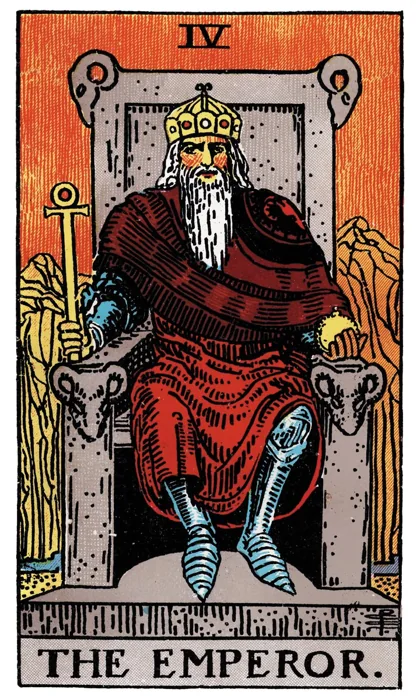
With The Emperor
With the Emperor, structure and material authority become especially prominent. Clarify roles, limits, and accountability. The pairing can support dependable organisation, but it also asks whether the rules serve the people affected or mainly protect the central figure from having their judgement questioned.
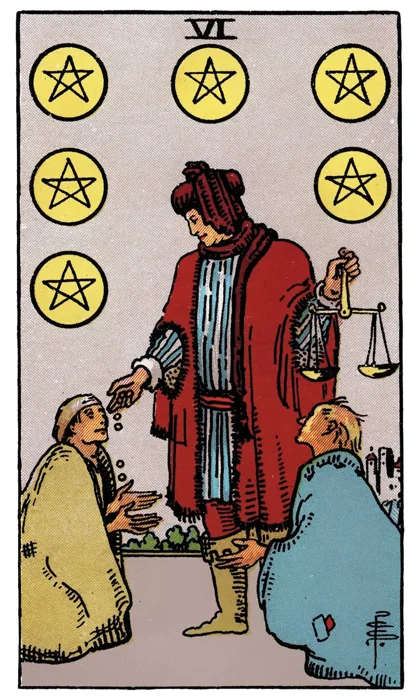
With Six of Pentacles
With the Six of Pentacles, the distribution of resources becomes part of the ethical question. Explain the terms, consider actual needs, and preserve the recipient’s agency. Generosity is more trustworthy when it does not quietly purchase obedience or make every later disagreement appear ungrateful.
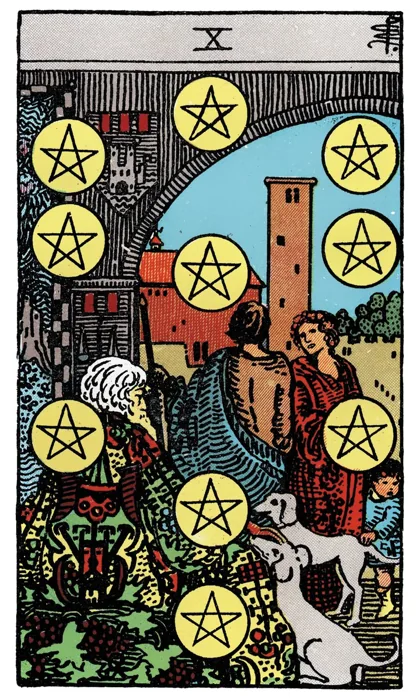
With Ten of Pentacles
With the Ten of Pentacles, stewardship may concern a structure intended to last beyond one person. Consider maintenance, shared knowledge, succession, and who belongs within the arrangement. Durable provision includes the ability to support different lives, rather than requiring future participants to preserve every preference of the original provider.
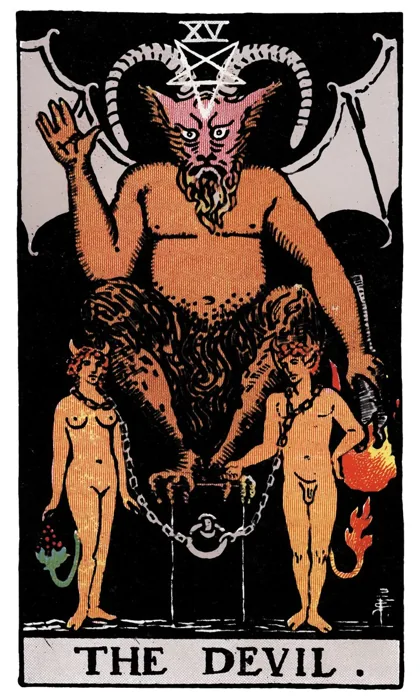
With The Devil
With the Devil, examine whether resources or status are creating an unhealthy dependence. Look at observable terms and conduct rather than assuming motive. Can people access information, make independent choices, and question the arrangement? The answers matter more than the reassuring image of a powerful person who says they provide everything.
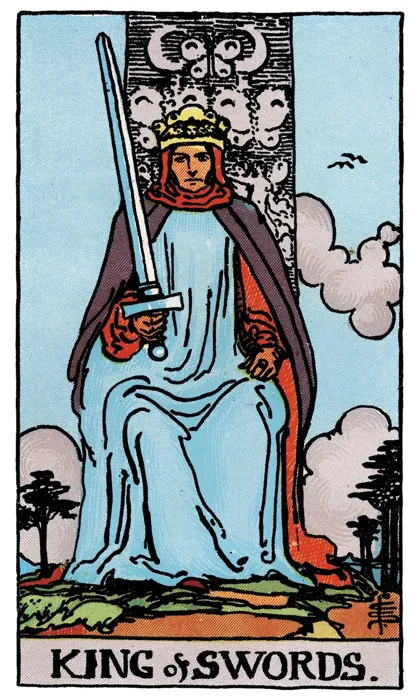
With King of Swords
With the King of Swords, practical capacity benefits from clear reasoning and accountable decisions. Define the criteria and the limits of expertise before committing resources. A strong result joins an understanding of what can be supported with a process that can explain why this use is justified.

With King of Wands
With the King of Wands, an ambitious direction needs material conditions that can carry it. Test scope, capacity, and ongoing responsibility while preserving the purpose that makes the undertaking worth doing. Vision and provision work best when neither is used to dismiss the information the other contributes.
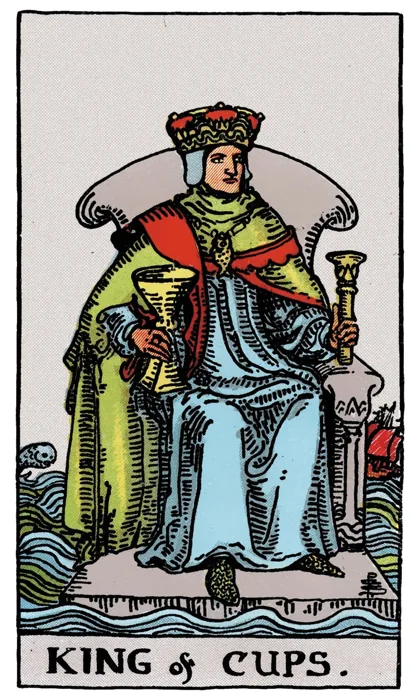
With King of Cups
With the King of Cups, dependable provision can be strengthened by emotional steadiness and attention to human consequences. Ask what kind of support is needed rather than assuming every difficulty has a material solution. A person can be well provided for and still need listening, respect, or room to make a different choice.
Providing without keeping all the power
A steward manages an estate whose wellbeing extends beyond the person formally owning it. Land, buildings, workers, and future use all belong in the account. The role becomes trustworthy through attention to those relationships, rather than through a narrow calculation of what can be extracted in the present season.
A founder trains someone capable of making decisions differently from how the founder would make them. The moment can feel like a loss of control and an achievement at once. The King matures when the strength of what was built is allowed to include other people's judgement, rather than requiring every successful action to remain recognisably his own.
A generous table has enough for guests without requiring them to flatter the host or agree with every opinion spoken there. Provision creates room for company rather than an audience for authority. This is the card's warmest image: resources substantial enough to be shared, and a person secure enough to let the people receiving them remain free.
Make one resource more useful beyond yourself
Choose a practical resource, process, or area of knowledge for which you have some responsibility. Ask who benefits from it, what keeps it available, and where access depends unnecessarily on your direct involvement. Make one proportionate improvement: clarify a term, document a process, share appropriate knowledge, or invite relevant input into a decision.
Then assess whether the change increased dependable use and meaningful choice. The King of Pentacles becomes more than a symbol of having when stewardship creates a foundation others can stand on. The strongest result may be that something continues to work well without requiring everyone to keep looking towards you for permission.
Artwork & interpretation
The historical King is associated with practical capability, material success, and recurring bull imagery on the throne. This original essay examines stewardship and accountable provision without equating wealth with virtue or using the card to determine financial choices. A. E. Waite, The Pictorial Key to the Tarot: King of Pentacles.
The symbolic associations and examples offer ways to read a situation. They do not establish another person’s thoughts or fix an outcome.
A resource becomes a foundation for others when it increases their room to act, rather than making their lives permanent extensions of the provider’s will.
Use the cards in a spread →