Pentacles · Queen
Queen of Pentacles
Care that makes a life easier to inhabit
The Queen of Pentacles pays attention to what makes daily life easier. She might notice that someone needs a meal before they can tackle a difficult task, or that a clearer arrangement would give them time to rest. Such care takes resources and effort. Her own needs belong in the arrangements she makes for everyone else.
- Resourceful care
- Comfort
- Practical intelligence
- Sustainable generosity
16 min read
In this guide
Someone has thought about what living here requires
Someone has made a place to sit and put what you need within reach. They notice the small difficulty early enough to keep it from taking over the afternoon. The Queen of Pentacles expresses care through conditions. She does not only wish you well; she considers what would make the task, the room, or the day easier to inhabit. Her intelligence often appears in the details people notice only when they are missing.
Upright, the card can describe resourcefulness, practical care, hospitality, sensible stewardship, and a grounded enjoyment of life. It brings attention to the relationship between needs and resources. Consider how what is available could meet a real need, in an arrangement that can continue without exhausting its resources. The emphasis is on making care usable without assuming that every problem requires a grand intervention.
As a court card, the Queen can represent a person, a role, or a capacity. She is not limited to women, parents, homemakers, or a particular age. A teacher who prepares a workable learning space, a colleague who notices a missing resource, or a friend who offers appropriate practical help can all embody the quality. The shared trait is attention translated into conditions that support life.
There is pleasure here, not only duty. Texture, taste, warmth, beauty, and physical ease can matter in their own right. The card does not require luxury. It asks whether ordinary surroundings and routines are allowed to provide enjoyment as well as function. A life need not become completely problem-free before comfort is permitted to enter it.
The Queen also asks whether care is responsive to the actual person. What feels supportive to you may not be what someone else needs. Finding a useful response means asking what would help and listening to the answer, including when the person declines. The most impressive solution is not necessarily the best one if it gives the recipient another obligation or solves a problem they did not ask you to take over.
Her invitation is to make the caretaker's needs part of the care being offered. Choose an improvement, an offer, or a practical arrangement that fits the resources genuinely available. Generosity becomes more dependable when it is not built on the giver's disappearance. The person who makes a place welcoming deserves to have a place within it too.
The pentacle rests in a living landscape
The Queen sits on a decorated throne, looking down towards the pentacle held in her lap. Flowers and foliage surround her, with an arch of roses above and a rabbit near the foreground. Her red clothing and pale veil stand within a landscape that feels active with growth. The scene joins a position of authority to close attention towards something held and cared for.
The Queen supports the pentacle close to her and looks towards it. This suggests attention to something in her care, perhaps a resource whose usefulness depends on how it is maintained. Her exact thoughts remain unknown. You can use the image to consider what currently needs practical attention and what would make it more secure or easier to use.
The surrounding growth makes the throne part of an environment rather than an isolated emblem of rank. A contemporary interpretation can connect this to the conditions beneath wellbeing: space, materials, food, time, and the work that keeps them available. Authority becomes meaningful through its relationship with those conditions, not merely through being recognised as authority.
The rabbit brings a quick, living presence into the still composition. It can be read as an echo of vitality and the ordinary unpredictability of life. Fertile imagery need not become a prediction about pregnancy. The broader symbolic question is whether the cultivated setting leaves room for actual living things, with needs and movements that do not always follow the caretaker's preferred plan.

The pentacle is held and considered rather than simply displayed. Ask how a resource could become useful to the life around it, and whether its care includes the needs of the person responsible for tending it.
The living landscape suggests needs and movement beyond a caretaker’s exact plan. Responsive care allows variation and asks what is actually needed, instead of requiring the recipient to fit an ideal image of being cared for.
Practical competence can be a language of affection
The inner Queen often knows what to do with an everyday difficulty. You can make a limited resource useful, arrange a space, or translate a vague need into something manageable. This competence can be quietly satisfying. It gives care a route into action and may help you feel connected to life through the things you can tend rather than only the problems you can analyse.
As a temperament, the card may be warm, observant, capable, and unembarrassed by ordinary pleasure. The person can appreciate a good object without needing it to impress anyone, and offer hospitality without making the occasion formal. Their presence often feels substantial because attention reaches the practical setting, not just the conversation happening inside it.
The difficulty is becoming identified with being the one who can manage. Others bring needs, and you find solutions before asking whether you have room. Competence becomes a route through which more responsibility enters. The Queen's growth includes pausing long enough to distinguish a freely chosen act of care from an automatic response driven by the fear of disappointing someone.
There may also be a tendency to conceal your own needs because they interrupt the role of provider. You keep the environment comfortable while becoming increasingly absent from the comfort. Ask what support you would arrange for someone else in the same position. Your knowledge of what makes life workable applies to you as well.
Her more grounded expression includes receiving without losing competence. Another person can bring the meal, solve the practical issue, or notice that you are tired. Accepting this does not erase your contribution. It makes the relationship less dependent on a single direction of care and allows your usefulness to remain a choice rather than the condition of being welcome.
Care is a relationship with actual conditions
The Queen asks what happens when care is taken seriously as practical knowledge. Remembering the specific needs of people and places informs the planning, while attention to changes lets the plan be adapted. This work is often treated as natural instinct when it is done well, which can hide both the skill and the effort involved. Naming it makes recognition and shared responsibility more possible.
The card also challenges a hierarchy in which thought is important and the material conditions of thinking are merely background. People need somewhere to sit, enough time, suitable tools, and a tolerable environment. An elegant plan that ignores those conditions may fail in ordinary use. The Queen's intelligence keeps ideas connected to the lives expected to carry them out.
There is a boundary between care and ownership. Tending a person, household, or project does not make every decision yours. The cared-for thing may grow in an unexpected direction; another person may prefer something different. Responsive care remains in conversation with that reality. Control begins when the recipient must become easier to manage in order to keep receiving support.
The deeper promise is a form of abundance that circulates through use. Resources become meals, comfort, learning, recovery, or the capacity to make something. Their value is experienced in a life rather than kept entirely as evidence of possession. The Queen's stewardship protects what is needed while allowing the good of having it to reach the present day.
Make the conditions match the promise
At work, the Queen can describe practical management, supportive teaching, resource coordination, or the ability to turn a plan into something people can actually use. Ask what the task needs on an ordinary day. Materials, clear information, suitable timing, and a workable environment may matter as much as motivation. Good preparation reduces the effort everyone must spend compensating for preventable friction.
For someone leading a team, care includes realistic expectations and attention to capacity. A warm manner does not make an unreasonable workload sustainable. Ask the people doing the work what conditions affect it and act on relevant information. Support becomes credible when it changes the arrangement, rather than remaining a reassuring statement that everyone is valued.
The card can also represent competence that is under-recognised because it keeps problems from becoming visible. The day appears to run naturally because someone has prepared for likely difficulties and follows through when they arise. Make that work legible. Recognition may involve clearer ownership, appropriate compensation, or sharing the responsibility rather than simply praising the person for always being so thoughtful.
For independent work, the Queen favours a practice that fits the actual person running it. Consider the workspace, recurring administration, tools, and boundaries around availability. A system does not need to look impressive to be effective. It needs to support the work reliably without making every ordinary task require another burst of personal determination.
In creative work, this card can invite a more hospitable relationship with the making. Having the materials ready and a usable interval gives the work a place in daily life. Care for the process without turning preparation into a substitute for contact with the material. The room need not be perfect before a page, sketch, or experiment is allowed to begin.
The professional shadow is becoming the unofficial caretaker of everyone else's working conditions while your own work is treated as secondary. Helpful tasks may expand because nobody else has taken ownership. Clarify which responsibilities belong to the role and which need to be redistributed. A supportive workplace should not depend on one person's unacknowledged willingness to keep making up the difference.
Being cared for should leave you more yourself
In love, the Queen can describe warmth expressed through attention to daily life. Someone remembers how you like things, creates a comfortable welcome, or helps with a practical difficulty without making you feel incompetent. This care can be deeply intimate because it shows that the person has noticed how you actually live rather than only the image you present on important occasions.
The card can also include desire and sensual pleasure. A meal, familiar touch, comfortable space, or unhurried time together can carry affection without needing a dramatic event. Practicality is not the absence of romance. It can provide the conditions in which people are relaxed enough to enjoy one another and to express preferences without embarrassment.
In an established partnership, examine how care is shared. One person may be doing most of the remembering, organising, and anticipating while the other contributes only when asked. A fairer arrangement may require shared ownership of needs, not simply more assistance directed by the same exhausted coordinator. The person receiving care can learn the pattern instead of waiting for instructions indefinitely.
For someone seeking a relationship, the Queen may invite attention to how you feel in the other person's ordinary presence. Are your needs taken seriously? Can you offer and receive without performing a role? Warmth becomes more trustworthy when it includes respect for limits, rather than an expectation that closeness means constant availability or automatic agreement.
Asked about another person's feelings, this card does not prove that they see you as a spouse, parent, or ideal provider. Those familiar interpretations can impose a role before a conversation has occurred. Look at what is actually expressed and whether the care is mutual. A person may value your competence without offering the kind of relationship you want.
The shadow is nurturing that leaves no room for refusal. Advice, food, gifts, or practical intervention become demands to accept the giver's preferred form of care. If you are offering, ask what is wanted. If you are receiving, a respectful boundary can preserve the relationship by clarifying the difference between appreciation for the intention and consent to the action.
Resources become valuable through the life they support
In material matters, the Queen invites a considered relationship with use, quality, and maintenance. What serves daily life, what can be repaired, and what ongoing cost accompanies an apparently attractive choice? Use actual information and suitable expertise for significant decisions. The card does not guarantee prosperity or recommend a financial course; it helps articulate the practical questions a decision should answer.
Resourcefulness can be satisfying when it increases choice, but it should not become a demand to make too little feel like enough. Real shortages deserve recognition and appropriate support. The Queen's competence is not magic. A person can be skilled at managing resources and still need more of them for the arrangement to become workable.
At home, comfort should fit the people who live there. A welcoming space may be quiet, colourful, spare, busy, communal, or private. Ask what activities and needs the setting should support. The card does not prescribe one domestic ideal or require a person to enjoy conventional household roles in order to embody practical care.
Shared comfort depends on shared labour. Consider who cleans, maintains, shops, plans, and notices when supplies or arrangements need attention. Make those contributions visible enough to distribute fairly. A home is easier to enjoy when one person's ease is not quietly produced by another person's permanent state of preparation.
Include yourself in the care you know how to give
The Queen asks what would make your own day more inhabitable. You may already know the practical answer while postponing it because someone else's need feels more legitimate. Consider one small adjustment within reach: a clearer boundary, a usable space, a less complicated routine, or an appropriate request for help. The aim is support grounded in your actual life.
Pay attention to sensory preferences without turning them into another standard to perform. Some people want warmth and company, others quiet and fewer demands. A supportive setting is one that helps the person using it. Actual health concerns need appropriate care; the card's reflective role is to make ordinary needs easier to notice and discuss.
Rest can become difficult when you see every unfinished practical task at once. Decide what genuinely needs attention now and what can remain incomplete without serious consequence. A cared-for life is not necessarily one in which everything is always done. It may be one in which the essentials are supported and the person is allowed to remain more important than the appearance of perfect management.
Offer care that the recipient can actually use
Choose a need and ask what would help before designing an elaborate response. A practical offer can be specific and limited: a task completed, a resource shared, a space prepared. Make room for the other person's preferences and their right to decline. Good care increases their ability to live their own life rather than making your solution the centre of it.
Count the resources the offer requires from you. Time, attention, money, and physical effort are finite even when affection is sincere. A sustainable contribution is easier to give without resentment. If the need exceeds what you can provide, name that honestly and consider whether other support belongs in the picture.
The shadow is becoming indispensable through care. You do everything, then feel unseen because nobody understands how much everything includes. The opposite shadow dismisses practical needs as unimportant compared with more impressive ambitions. A stronger response recognises the work well enough to share it where appropriate, ensuring that the person doing it can also benefit from the care.
The caretaker has disappeared from the care
Reversed, the Queen can describe depleted resources, neglected needs, or an arrangement in which practical care has become one-sided. Start by identifying the actual load. Which tasks are necessary, which have expanded without agreement, and whose responsibility has quietly moved to you? The reversal calls for a clearer arrangement, not simply another reminder to become better at looking after yourself privately.
Another expression is care that has become intrusive. You know how to solve the problem and act before asking whether the person wants that solution. Good intentions do not remove the need for consent. Return the choice where it belongs and offer your knowledge as a resource rather than a ruling about how the recipient should live.
It can also show difficulty enjoying material life. Comfort feels wasteful, pleasure feels undeserved, or every object becomes another maintenance obligation. Consider whether the standard has become too demanding or the resources too stretched. A smaller, more suitable form of care may be easier to receive than an idealised version of a nourishing life that requires more work to sustain.
Sometimes the reversal reflects an environment that does not support the person in it. A workspace is awkward, a routine ignores changing capacity, or a household relies on assumptions nobody has reviewed. Altering conditions may be more useful than asking the individual to become more resilient within them. Practical intelligence includes redesigning the arrangement when the arrangement is the problem.
A constructive reversed Queen restores reciprocity and choice. A boundary is stated, a task is shared, a preference is heard, or help is accepted. The person no longer has to meet every need for their care to be useful. The result may be a less polished surface and a more liveable day, with the person who provides warmth no longer required to remain outside it.
Whose needs are included in the arrangement?
These pairings explore practical support, pleasure, and the boundaries of care. They do not assign a compulsory domestic role or turn fertility imagery into a health or pregnancy prediction.
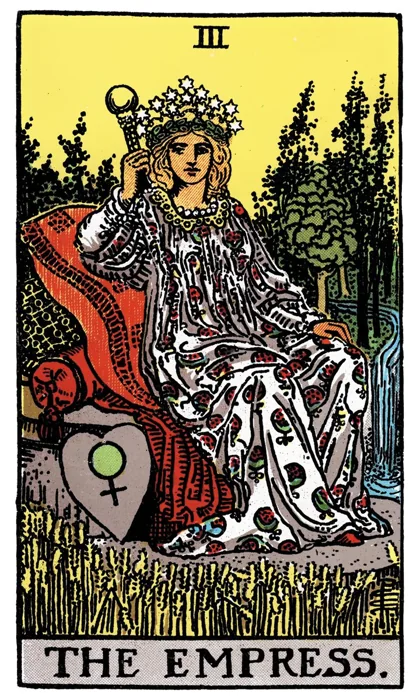
With The Empress
With the Empress, care and pleasure may need practical room to develop. Consider the conditions that support growth, creativity, or comfort. The pair can invite generous attention to life without making someone responsible for endless nurturing or treating its fertile imagery as a literal prediction.

With Six of Pentacles
With the Six of Pentacles, clarify the exchange beneath an act of care. What can be offered, what is actually useful, and are any expectations attached? A practical gift remains more generous when the recipient can choose and the giver does not have to exceed their capacity to make it meaningful.
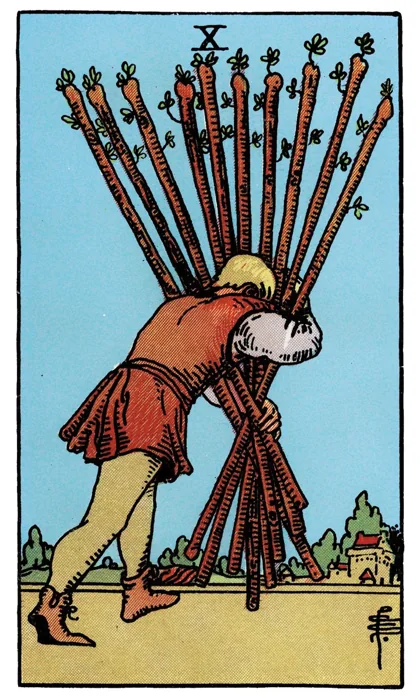
With Ten of Wands
With the Ten of Wands, the person who manages everything may be carrying too much. Identify responsibilities that can be shared, reduced, or returned to their proper owner. Care should not be measured by how much one person can absorb while everyone else enjoys the resulting ease.

With Queen of Swords
With the Queen of Swords, clear boundaries can protect practical generosity. Say what you can offer and what you cannot, without turning the limit into a withdrawal of affection. Discernment helps care remain accurate and sustainable instead of expanding until resentment becomes the only available boundary.
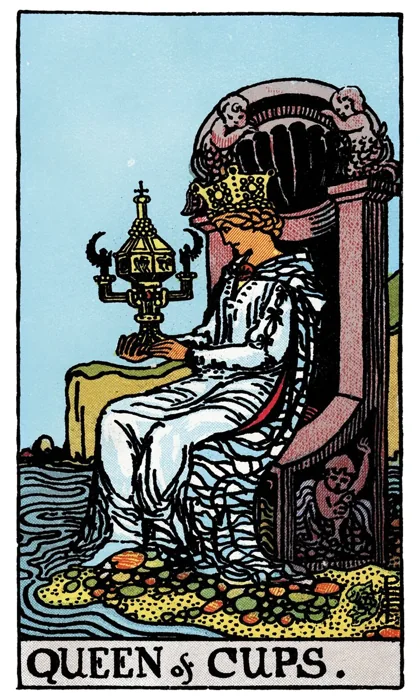
With Queen of Cups
With the Queen of Cups, emotional understanding and practical support can complement each other. Ask whether the person wants listening, assistance, or both. A sensitive interpretation of their feelings should not replace their own account of what would help in the actual circumstances.
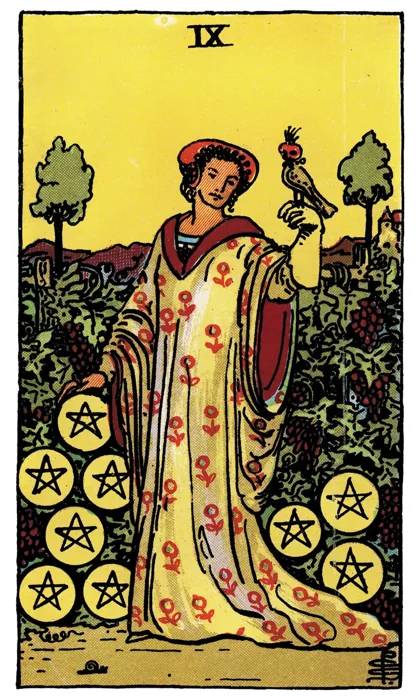
With Nine of Pentacles
With the Nine of Pentacles, a cultivated life deserves to be enjoyed by the person maintaining it. Notice what your resources and competence make possible beyond more tasks. Comfort can be part of the purpose, and receiving it does not make your care for others less sincere.

With King of Pentacles
With the King of Pentacles, personal care meets broader stewardship. Consider both the immediate needs and the systems that keep resources available. The pairing works best when authority supports the people doing the daily work, rather than taking credit for stability maintained through their invisible effort.

With The Emperor
With the Emperor, structure can make care more dependable through clear roles and realistic provision. Review whether the rules serve the people inside them. An orderly arrangement is not automatically a supportive one if it ignores differing needs or leaves one person responsible for making every rule workable.
Care that responds to the person receiving it
A host has thought about what would make guests comfortable, then accepts that one person wants quiet and another does not want what was prepared. Hospitality becomes more generous when it can adapt without taking the difference personally. The Queen's care serves the person who arrives, not only the occasion imagined beforehand.
A gardener understands that different plants need different conditions. Giving every plant the same amount of water may look equal while serving none of them well. The image offers a practical account of responsiveness: attention to the actual living thing, with enough knowledge and restraint to avoid making care synonymous with constant intervention.
A room is prepared so that a person can begin work without spending the first hour overcoming unnecessary friction. The contribution may go unnamed because nothing dramatic happens. The Queen reminds us that ease often has an author, and that the person who made it possible deserves recognition and support that brings some ease into their own day.
Make one improvement that includes the person doing the work
Choose an everyday source of friction in a space, routine, or shared task. Ask the people affected what would help and identify a manageable change. Include the work of maintaining that change in the plan, rather than assuming the person who notices the problem must own the solution forever.
Try the adjustment and assess its use. Consider whether the benefit justified the effort and whether the arrangement worked for the person providing care as well as the one receiving it. The Queen of Pentacles becomes substantial through care that reaches real conditions and remains generous because it is allowed to have limits.
Artwork & interpretation
The historical Queen is associated with generosity, security, and serious practical intelligence. This original essay develops care as skilled, responsive work and does not limit the role by gender, family status, or conventional domestic expectations. A. E. Waite, The Pictorial Key to the Tarot: Queen of Pentacles.
The symbolic associations and examples offer ways to read a situation. They do not establish another person’s thoughts or fix an outcome.
Making others comfortable can be a gift; becoming responsible for everyone’s comfort can leave the giver without a life of their own.
Use the cards in a spread →