Major arcana · 20
Judgement
What you can no longer honestly leave unanswered
Judgement brings an experience from the past into a decision you face now. Recognising what happened may reopen a possibility or require a response. What you have learned becomes useful when it changes how you act, even if you still have more to learn.
- Reassessment
- Recognition
- Responsibility
- Renewal
14 min read
In this guide
What you have learned now calls for a decision
You have heard versions of the question before. A conversation may bring it back after you thought you had set it aside. Perhaps a recurring difficulty keeps raising it, or finishing something important gives you the quiet to hear it properly. What are you doing with what you now know? Judgement belongs to the moment when understanding begins to ask for a different participation in your life.
In a reading, this card can describe reassessment, a consequential decision, renewed purpose, an important recognition, or the return of something that deserves another look. A past experience may become intelligible in a larger pattern. The value of the recognition lies partly in the response it makes possible.
Judgement is not simply condemnation. The title can evoke an external verdict, but the image also concerns awakening and answering a call. You may recognise an ability you have left unused, or become more willing to acknowledge a responsibility. A direction you keep postponing may also return because it still matters to you.
The call need not be supernatural or dramatic. A project may have outgrown the place you have given it. In a relationship, a conversation you keep postponing may make a similar demand. You may also notice how far daily choices have drifted from your values. The card asks whether the recognition is specific enough to guide action.
Something returning may offer a second chance, but you still need to assess it under present conditions. A former project may now have resources it previously lacked. With a person, consider what each of you has learned and whether your ways of relating have changed. Identify what would make another attempt different; the fact of a return cannot supply that answer by itself.
Judgement can help you enter the next stage with a clearer understanding of the past. A careful account shows you which lessons remain useful and which responsibilities still need action. It may also reveal a possibility you want to revisit. You can carry that knowledge forward without treating earlier events as instructions for every future choice.
The figures rise in answer
A large winged figure blows a trumpet above people rising from open coffins. A banner bearing a cross hangs from the instrument, and mountains form a distant boundary behind the scene. The imagery is openly religious, yet a practical symbolic reading can focus on the relationship between a call and the response it elicits.
The figures below respond to the call with raised arms. Their movement makes them participants in what is happening. An announcement alone has not completed the change: the people who hear it still have to decide how to answer. In a reading, this brings attention to what you do after recognising something that asks for a response.
There are several figures, including people farther back. The scene is larger than one private awakening. A decision can change a person's life while also entering a network of relationships, histories, and responsibilities. What feels intensely personal may still have consequences for others who share the arrangement.
The bodies are uncovered, with few signs of the roles through which people usually present themselves. Like other exposed figures in the deck, they can suggest an encounter with something more basic than status. The useful question is what remains true when the familiar defence, title, or explanation is set aside.

The trumpet gives the scene a point of address. In a practical reading, the call may be a recognition, responsibility, or opportunity that has become specific enough to require a response.
The figures answer through movement. The image can suggest that a changed understanding becomes meaningful when it affects how a person enters the next stage of life.
The old description no longer explains you
Internally, Judgement can feel like a sudden reorganisation of familiar material. Events you treated separately begin to form a pattern. A capacity you considered incidental appears central, or a repeated conflict reveals a choice you have been avoiding. The facts may be old while the relationship between them is new.
There can be relief in this recognition. You no longer have to keep presenting a version of yourself that experience has outgrown. The relief may be accompanied by embarrassment about how long it took, or fear of the consequences of admitting it. Neither feeling needs to cancel the usefulness of what has become clear.
As a person, this card may describe someone reflective, purposeful, willing to reassess, and able to recognise potential beneath an established reputation. They can help others see that a past mistake or role need not contain the whole future. Their judgement is most generous when it remains specific about responsibility.
The shadow is the permanent evaluator. Every choice becomes evidence of whether you have fulfilled your potential, answered the right calling, or become the person you ought to be. Ordinary life is repeatedly brought before an imagined final tribunal. The pressure can make action harder by requiring every step to justify an entire existence.
Maturity allows a more practical scale. You can recognise something important and respond through one decision, conversation, or changed habit. You do not need to produce a complete account of your life before acting honestly within the part that has become clear.
The past becomes a responsibility, not a sentence
Judgement asks how experience changes the person who carries it. A lesson is more than an explanation you can repeat. It becomes visible in what you notice sooner, what you stop accepting, what you repair, or what you are now willing to attempt. Understanding acquires substance through its effect on participation.
The card differs from Justice in scale. Justice examines the account, standard, and consequences of a particular matter. Judgement asks what a wider recognition means for the next stage of a life. The two can work together: a fresh direction becomes more trustworthy when it does not evade the specific responsibilities revealed by careful examination.
There is a distinction between guilt that points toward repair and shame that makes the whole person seem beyond revision. If something you did caused harm, acknowledge the action and its effects. Where repair is possible, make it concrete. A total condemnation may feel severe while avoiding the more demanding work of behaving differently.
The same principle applies to missed possibilities. Regret can identify something still worth pursuing, or something whose loss deserves acknowledgement. It need not become a permanent argument that your life was decided by an earlier choice. The available future begins under present conditions, with the resources and limits that actually exist now.
The deeper renewal is an identity capable of learning without disowning itself. You can acknowledge the consequences of a past choice while remembering what you understood at the time. What you have learned since may now require a different response. Continuity and change can belong to the same honest account.
Let the larger pattern inform the next decision
At work, Judgement can concern a review that changes your understanding of what you want to contribute. Experience may have repeatedly drawn on an ability you still regard as secondary. Look back at the work itself to see whether that impression is supported. Notice where you have done well and whether you care enough about that kind of work to keep developing it.
A sense of vocation can be useful when it gives direction. It becomes less useful when it demands that one role satisfy every need for meaning, income, identity, recognition, and belonging. A meaningful working life may have several parts. The card asks for a more conscious arrangement, rather than one perfect title that resolves everything.
A formal review may bring information that changes your account of your performance. Take specific praise as seriously as specific criticism. Distinguish the work you can improve from conditions outside your authority, and ask what support or clearer expectations would make the next stage more effective.
Returning to an old project can be fruitful when the conditions have changed. You may now have the skill, perspective, audience, or resources that were missing before. Reassess the actual material instead of trying to reproduce the excitement of the original idea. A second attempt deserves a revised method.
Creative work may reach a point at which the larger shape becomes clear. Once you understand what the piece has been about, it becomes easier to see where parts belong and where rewriting is needed. This can require substantial revision without making the earlier work wasted. The draft helped produce the understanding needed to complete it.
The shadow is waiting for a definitive calling before undertaking ordinary work. You want certainty that the path is uniquely yours, so every imperfect option is rejected. A direction often becomes meaningful through practice and experience. You can make a serious trial of something without declaring it the final explanation of your life.
A return needs new terms
In relationships, Judgement can describe a significant conversation, reassessment, reconciliation, renewed commitment, or the recognition that a familiar pattern must change. The card does not promise that someone will return or that a reunion is right. It asks what an honest next stage would require.
A past connection may reappear with genuine feeling attached. That feeling is part of the information, but so are the reasons the earlier arrangement became difficult. What has changed in conduct, circumstances, or willingness? A moving conversation can open a possibility; it cannot by itself establish that the old problem has been addressed.
In an existing bond, the card may bring a larger review of how you have been living together. Roles established years ago may no longer fit. Renewing a commitment may begin with a conversation about what still matters under changed circumstances. Both people need room to question expectations they inherited without consciously choosing them.
Accountability is central where harm or disappointment has occurred. Acknowledgement should be specific enough that the affected person recognises the event being discussed. An apology that asks for immediate absolution may place another demand on the person hurt. Give repair and trust the time and evidence they actually need.
The shadow is turning a partner into the judge of your worth. Their approval must confirm that you are lovable, changed, or forgiven enough to continue. A relationship can offer care and honest feedback without carrying the authority to settle your entire identity. Other sources of understanding and support can help restore proportion.
Sometimes the recognition is that the relationship has completed its place in your life. You can acknowledge love, value, and regret while deciding that another attempt would repeat terms you no longer accept. A thoughtful ending can be as deliberate a response to the card as a renewed commitment.
Review the commitments your earlier self made
In material matters, Judgement may invite you to review commitments made at an earlier stage of life. A possession or plan might still serve you well, while another continues mainly because you have not reconsidered it. Gather enough information to tell the difference. You can then decide whether to keep the arrangement as it is, adjust it, or bring it to an end.
A major choice may need a fuller account of what you want the resources to serve. A home, course, move, or purchase can carry an old image of success that no longer matches your priorities. Identify the present purpose rather than assuming that the earlier wish remains binding because you once wanted it strongly.
Judgement cannot predict repayment or financial recovery, and it gives no assurance that a formal decision will go your way. Seek appropriate professional guidance where the matter calls for it. Use the reading to consider what you have learned and which obligations still need attention. Any new commitment should be assessed against the facts of your present situation.
At home, a review can be shared. Household members may have changed needs, capacities, or plans while continuing under the same informal arrangement. Make room for an honest discussion before resentment becomes the only sign that the old terms have expired.
The recognition may be large; the first act can be small
A significant insight can produce a surge of energy and a wish to change everything immediately. Let the enthusiasm help, while remembering that ordinary capacity still has limits. A new direction becomes more sustainable when it can be translated into actions that fit the life you currently have.
Reassessment can also be tiring. Looking honestly at the past may bring regret, grief, or a sense of how much attention has been spent maintaining an old role. Leave room for support and ordinary routines. The process does not become more sincere because you carry it alone or turn every day into an examination.
The card cannot diagnose a condition, promise recovery, or establish that a health event has a particular spiritual meaning. Use appropriate care where needed. Symbolically, Judgement asks how a changed understanding can support renewed participation, without making your body responsible for proving the depth of the insight.
Answer the part of the call you can describe
As advice, Judgement asks for a clear statement of what you have recognised. Describe the recurring pattern or the responsibility you have avoided before attempting a grand account of your life. You may simply have realised that certain work still matters, or that a familiar role no longer fits. A precise recognition gives the next action a place to begin.
Include the past without becoming trapped in a trial of it. Identify what needs repair, what has been learned, and what cannot now be changed. These are different tasks. Spending more time condemning the irreversible part may distract from the responsibility that remains available in the present.
The shadow is dramatic self-reinvention that leaves conduct untouched. You declare a new identity, purpose, or understanding, while the daily arrangement continues exactly as before. Choose one observable change that would make the recognition credible to someone affected by your actions.
Another shadow is treating a powerful feeling as a command beyond examination. A sense of calling may deserve attention, but consequential decisions still need information, practical preparation, and respect for other people's choices. Meaning becomes more trustworthy when it can coexist with those ordinary requirements.
The answer is delayed, or the verdict is too severe
Reversed, Judgement can describe avoided reassessment, fear of answering an important question, excessive self-criticism, or a fresh start that has not yet become practical. It does not mean that you have failed a final test. The useful inquiry concerns which part of recognition or response is currently difficult.
One expression is repeatedly reaching an insight and then returning to the same arrangement. The problem may be fear, limited resources, divided loyalties, or an action too vaguely defined to begin. Clarify the actual obstacle. A smaller step or appropriate support may help more than another forceful demand to transform your life.
Another expression is living under an old verdict. A mistake, rejection, or unfinished attempt has become evidence that you are permanently incapable of something. Revisit the circumstances and the present facts. The earlier event remains part of your history, but it may no longer justify the authority you have given it.
The reversal can also concern a return made without reassessment. You resume the relationship, project, or role because familiarity feels meaningful, while the same terms remain untouched. Ask what would make this attempt different. If no concrete answer is available, the desire to return deserves further examination.
A constructive reversal quiets the imagined final judge. You stop demanding a complete explanation of your worth or purpose and take responsibility for the next available choice. The change may look modest from outside. It can still mark a substantial shift from being evaluated by your life to participating in it more consciously.
What is ready to be answered differently?
These pairings explore reassessment and response. They do not promise a reunion, establish a destiny, or decide that a past event was meant to happen.

With The Fool
With the Fool, a recognition may open a fresh beginning. Carry the useful knowledge forward without requiring the new attempt to reproduce the old one. A small, deliberate start can give the changed understanding a chance to meet reality.
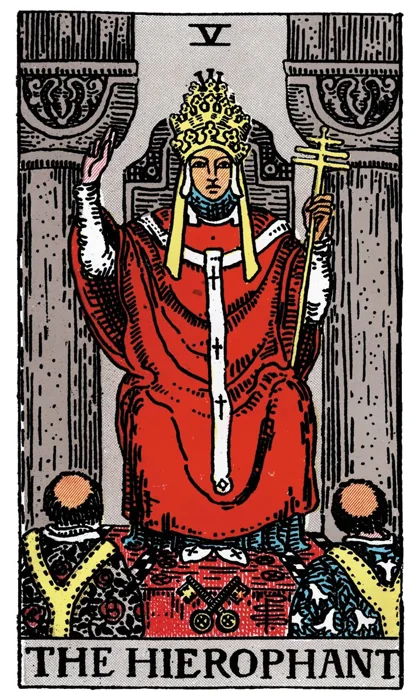
With The Hierophant
With the Hierophant, inherited values may need a conscious review. You may renew a commitment to a tradition or recognise where its present form no longer fits. Understanding what you are choosing makes either response more substantial.
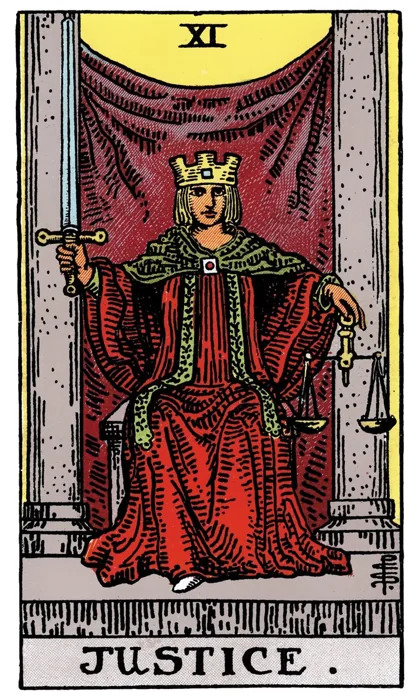
With Justice
With Justice, a larger reassessment needs a precise account of responsibility. A fresh start becomes more credible through specific repair and changed conduct. Avoid both erasing the consequences and turning one mistake into a permanent identity.
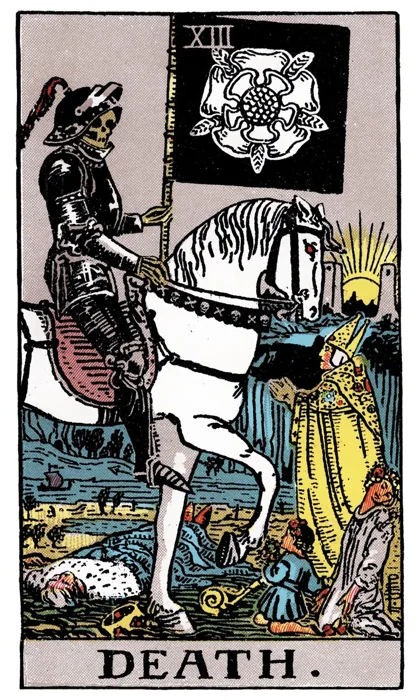
With Death
With Death, an ending may clarify the next stage of life. Recognise what has finished, what remains your responsibility, and what can be carried forward. Renewal does not require pretending that the loss was painless or entirely welcome.

With The Sun
With the Sun, a recognition can become clearer and more openly acknowledged. Let useful evidence inform your next choice, including evidence of what you do well. A positive result can matter without being asked to settle your whole future.
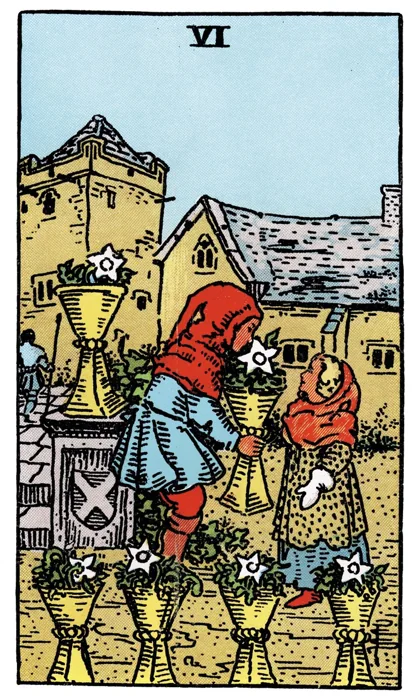
With Six of Cups
With the Six of Cups, something from the past may deserve another look. Memory can reveal value and unfinished questions, but present conditions still matter. Meet the person or possibility as it is now rather than only as it survives in recollection.
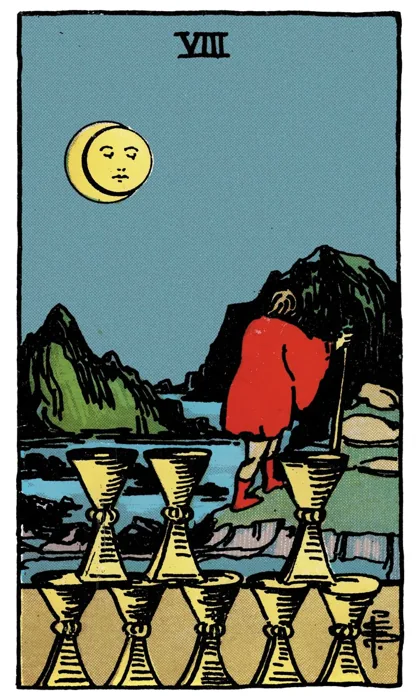
With Eight of Cups
With the Eight of Cups, reassessment may lead toward departure. A familiar arrangement can remain meaningful while no longer supporting the life you want to live. Prepare the practical transition and let the decision be more specific than a rejection of everything before it.
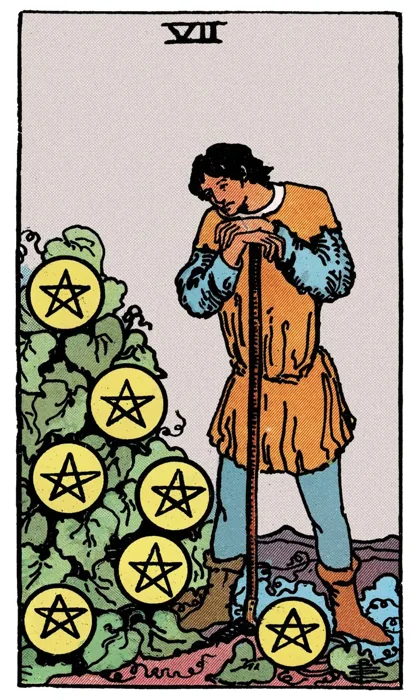
With Seven of Pentacles
With the Seven of Pentacles, review what your effort has produced so far. Consider any parts that have not developed as you hoped and the resources another stage would require. You may decide to continue, but changing the approach or ending the work can also follow from a careful assessment.
The returning apprentice and the unfinished conversation
The apprentice who returns after years away discovers that the old lesson has changed in meaning. Experience supplies what the earlier explanation could not. The return is valuable when it produces a different practice, rather than simply confirming that the teacher's words were memorable.
The unfinished conversation offers another image. A subject repeatedly avoided remains active in the relationship until someone can name it clearly. The moment of speaking may feel like an awakening because the available future changes once the issue is no longer maintained through silence.
The person offered another attempt captures both hope and responsibility. The opportunity matters partly because they understand more than they did before. A second chance is most substantial when it includes the freedom and willingness to work differently, rather than the expectation that desire alone will change the result.
Turn one recognition into an observable change
Write one thing your recent experience has made difficult to deny. Add what you previously believed, what changed your understanding, and who is affected by the next decision. Keep the account specific enough that it could guide an ordinary action.
Choose one response that makes the recognition visible: repair something, ask a clear question, revise a commitment, return with a different method, or close what is finished. Judgement becomes practical when what you have learned is allowed to change how you participate.
Artwork & interpretation
Waite describes rising figures answering a trumpet, with the summons also understood as coming from within. His account concerns transformation. This guide explores how recognising something important can lead to reassessment and a considered new commitment. It does not treat the card as a supernatural instruction to act. A. E. Waite, The Pictorial Key to the Tarot: The Last Judgement.
The symbolic associations and examples offer ways to read a situation. They do not establish another person’s thoughts or fix an outcome.
A fresh start becomes more credible when it can account for what happened before it.
Use the cards in a spread →